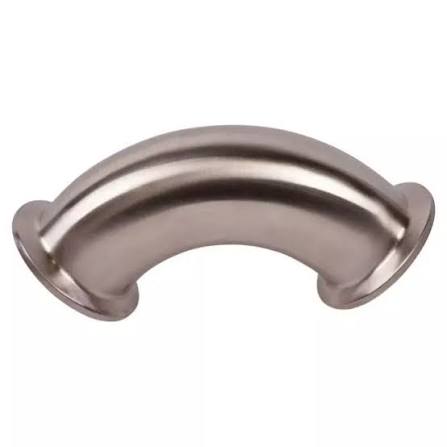
How Are Pipe Elbows Made?
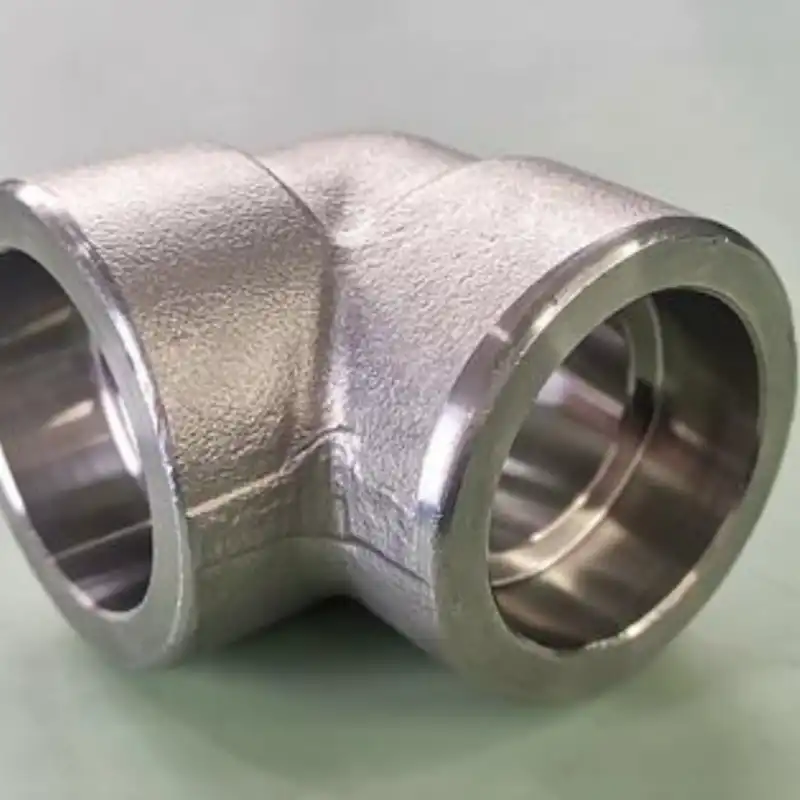
In industrial piping systems, pipe elbows are critical components that change the flow direction of media. Whether it is the high-temperature steam pipeline in onshore refineries or the complex seawater cooling circuit inside ship cabins, the manufacturing quality of pipe elbows directly determines the safety and service life of the entire piping system.
So how are these seemingly simple pipe elbows manufactured? Starting from process details, material parameters and industry standards, this article provides an in-depth analysis of the entire manufacturing process of pipe elbows.
1. Mainstream Manufacturing Process: Hot Pushing
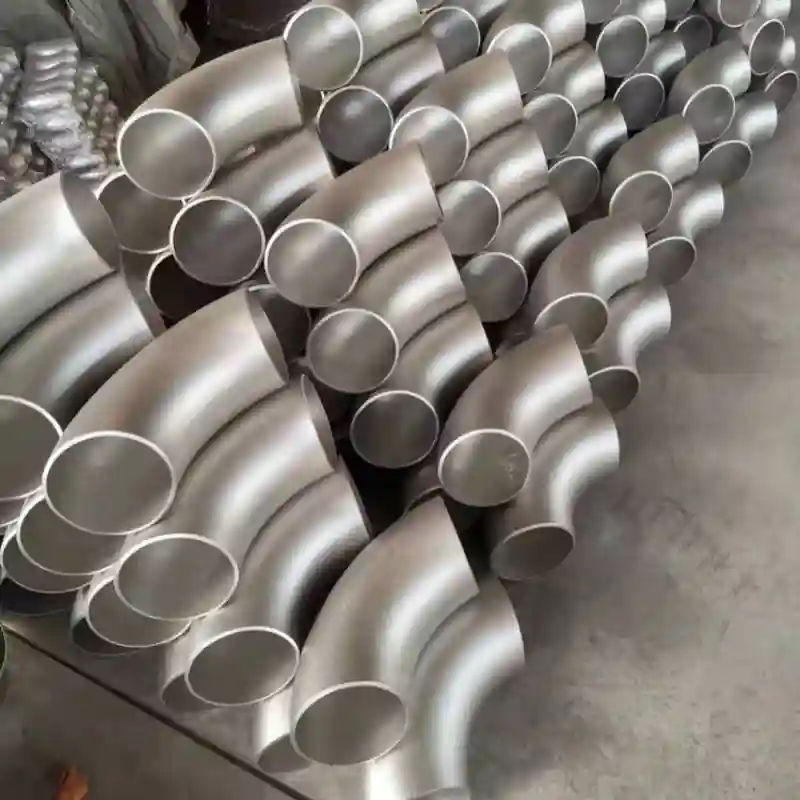
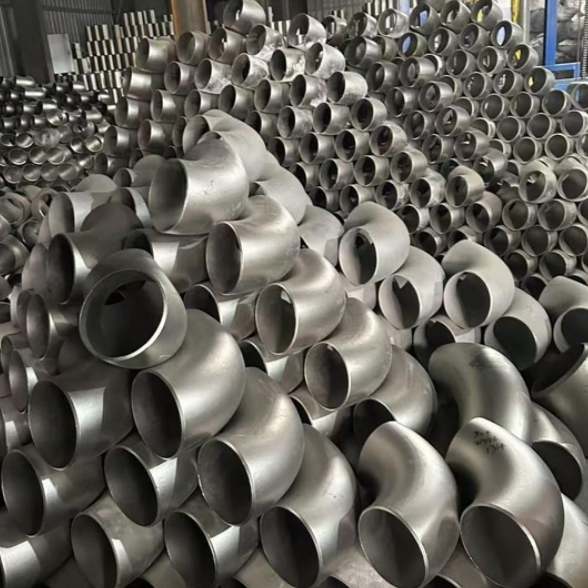
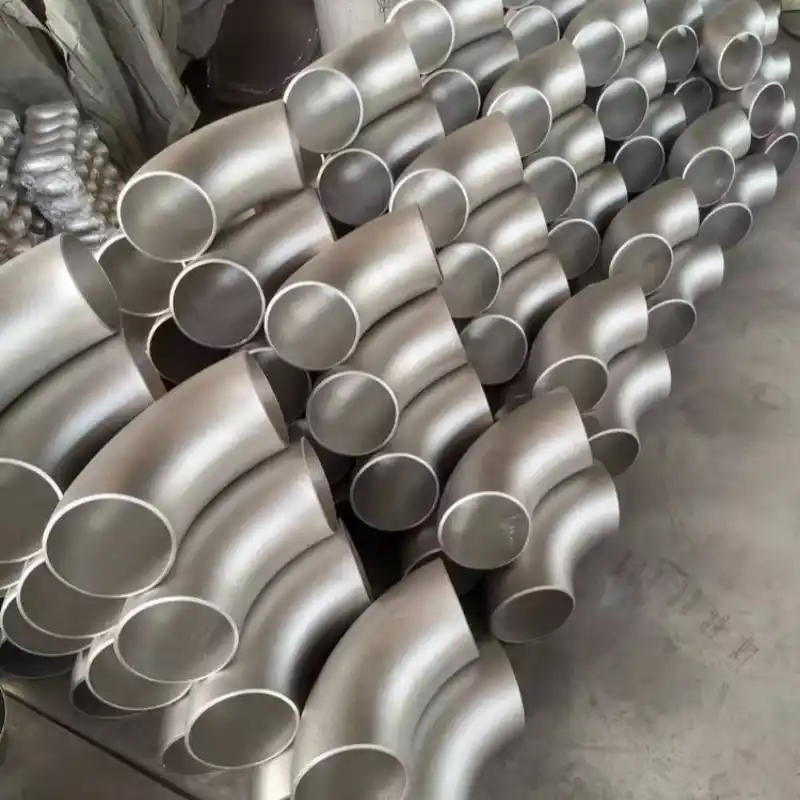
For most carbon steel and alloy steel elbows, hot pushing is the most mature and widely adopted method in the industry. Taking conventional elbow pipe fittings as an example, its core principle is to rapidly heat the pipe blank to a plastic state with a medium-frequency induction heating coil. For carbon steel, the typical temperature ranges from 950℃ to 1050℃. Under the axial thrust of the pushing machine, the pipe blank passes through a core die with a specific curvature radius. Restricted by the die, the metal undergoes radial diameter expansion and axial bending, eventually forming the required bending angle and radius.
Key parameters of this process include:
- Pushing speed: Generally controlled at 80–120 mm/min; excessive speed will cause uneven wall thickness distribution.
- Wall thickness control: The outer arc wall thickness of hot pushed elbows thins due to stretching, while the inner arc thickens due to compression. In accordance with the ASME B16.9 standard, the wall thickness of the straight pipe sections at both ends of the elbow shall not be less than 87.5% of the nominal wall thickness, and the minimum wall thickness at the back (outer arc) of the elbow must meet the calculation requirements of design pressure.
- Ovality: The ovality of finished elbows (the ratio of the difference between the maximum and minimum outer diameter on the same cross-section to the nominal outer diameter) shall generally not exceed 3%–5%, and shall be ≤1.5% for high-pressure working conditions.
For large-diameter products such as 36 inch steel pipe elbow fittings, hot pushing requires a higher-tonnage pushing machine (thrust over 800 tons) and specially designed reinforced core dies. To avoid local overheating of the pipe blank during heating, the power density of the induction coil needs to be precisely controlled within the range of 1.2–1.5 kW/cm².
2. Other Manufacturing Methods: Cold Bending & Welding
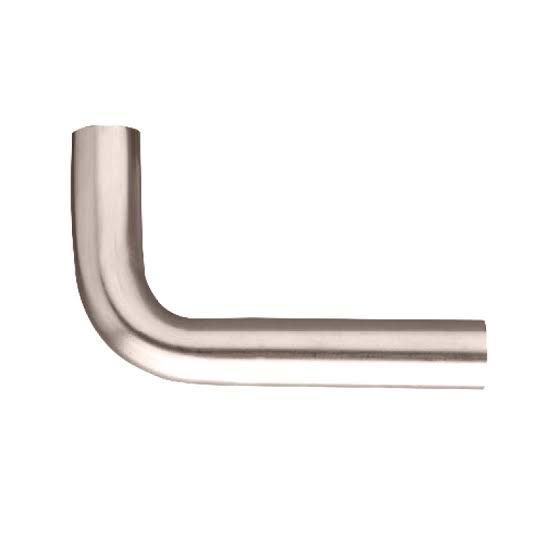
For small-diameter thin-walled pipes, such as 4 inch pipe 90 degree elbow commonly used in instrument piping or low-pressure water systems, the cold bending process can be adopted. Cold bending forms the product via bending dies at room temperature without heating, featuring lower cost. However, springback compensation is required — different grades of stainless steel (such as 304L and 316L) have a springback angle difference of up to 2°–4°.
In addition, cold bending will introduce residual stress. For elbows applied in Shipbuilding & Marine Engineering, stress relief annealing or solution treatment must be carried out after cold bending if they come into contact with chlorine-containing seawater; otherwise, stress corrosion cracking is likely to occur.
When manufacturing 90 degree elbow pipe fitting with a diameter exceeding 48 inches, or made of duplex stainless steel (such as S31803), the process of segmented/mitered elbow is sometimes adopted, which is welded by multiple wedge-shaped pipe segments. Nevertheless, this method causes high turbulence and pressure drop, so it is generally only used for large-diameter, low-pressure non-critical occasions.
3. Quality Control and Inspection Standards
Multi-node inspection is implemented during production:
- Material traceability: Complete records are kept for the melting furnace number, chemical composition (content of C, Mn, P, S, etc., accurate to 0.001%) and mechanical properties (yield strength, tensile strength, elongation) of each batch of pipe blanks.
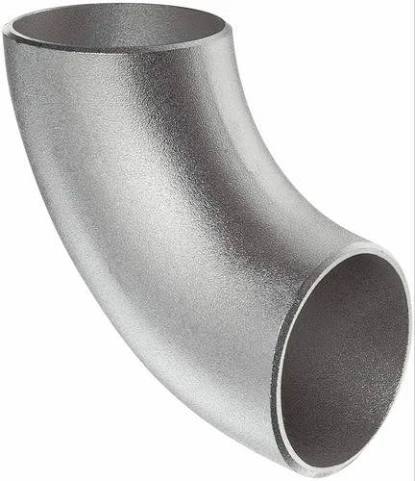
- Geometric dimension: A coordinate measuring machine or special elbow gauge is used to inspect the bending radius (Long Radius LR=1.5D, Short Radius SR=1.0D), angle deviation (allowable tolerance ±1.5° per ASME B16.9) and perpendicularity of both end faces.
- Non-destructive testing: Magnetic Particle Testing (MT) is performed on carbon steel elbows to detect surface cracks; Penetrant Testing (PT) is applied to austenitic stainless steel. For pressure classes Class 900 and above, 100% Ultrasonic Testing (UT) is required to scan for wall thickness delamination and internal defects.
Taking a typical production batch of pipe fitting elbows as an example, 90-degree long radius elbows made of ASTM A234 WPB material have a minimum tensile strength of generally 415–485 MPa and hardness not exceeding 197 HBW. These data are marked on the body of the elbow.
4. Special Requirements in Shipbuilding & Marine Engineering
Applications in shipbuilding and marine engineering impose stringent requirements on pipe elbows beyond ordinary industrial scenarios. In seawater cooling systems, ballast water pipelines, fuel oil delivery pipelines and bilge water discharge networks, elbows must not only withstand vibration load caused by wave impact but also resist high chloride corrosion of seawater.
Therefore, ship classification rules (such as DNV, ABS, LR) usually stipulate:
- Prefer materials like Copper-Nickel alloy (CuNi90/10) or Super Duplex Stainless Steel (UNS S32750) for elbows instead of ordinary carbon steel.
- For large-size marine products such as 36 inch steel pipe elbow fittings, flattening test (no cracks when the pipe sample is pressed to 2/3 of the outer diameter) and hydrostatic test (test pressure 1.5 times the design pressure with holding time no less than 5 minutes) must be conducted in accordance with ISO 15590-1 standard.
- All weld areas (for welded elbows) require 100% Radiographic Testing (RT) with a rating not lower than Grade II per ASME B31.3.
Furthermore, ship piping is densely arranged in limited cabin spaces, requiring 90 degree elbow pipe fitting to have a compact bending radius. Although Short Radius elbows (1.0D) save space, their internal flow resistance is about 15%–20% higher than that of Long Radius (1.5D) elbows. This difference must be included in the head calculation of marine pumps.
5. Summary
From pipe blank to finished product, a qualified elbow goes through more than ten procedures including precise heating, plastic forming, heat treatment (such as stress relief annealing or normalizing), non-destructive testing and final dimensional inspection. Whether it is 4 inch pipe 90 degree elbow or 36 inch steel pipe elbow fittings, the essence of manufacturing is the control of metal flow behavior.
As the “joints” of piping systems, any wall thickness deviation or angle error of pipe elbows may become the starting point of leakage or burst in the future.
For professionals engaged in shipbuilding, petrochemical engineering or high-pressure steam pipe networks, understanding the process details of pipe elbows are made can not only help you select more suitable products, but also fundamentally improve the reliability and safety of the entire pipeline design.
If you encounter problems in elbow selection or failure in actual projects, welcome to communicate with our technical team at AIFN. We focus on providing traceable and verifiable pipe fitting solutions.