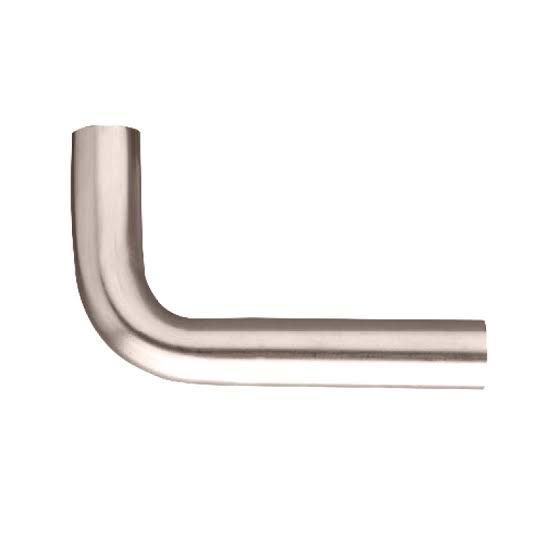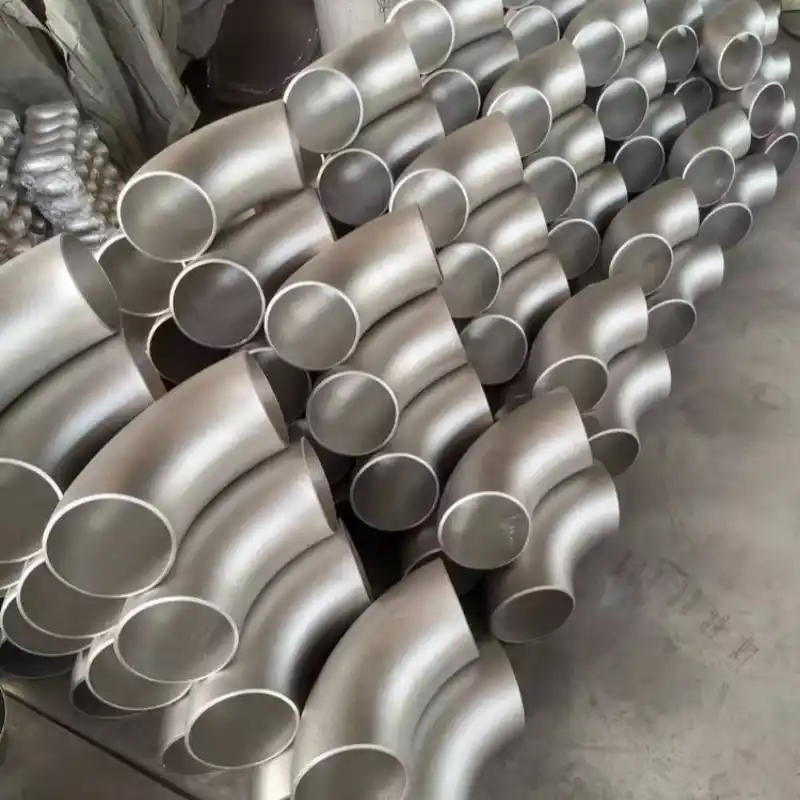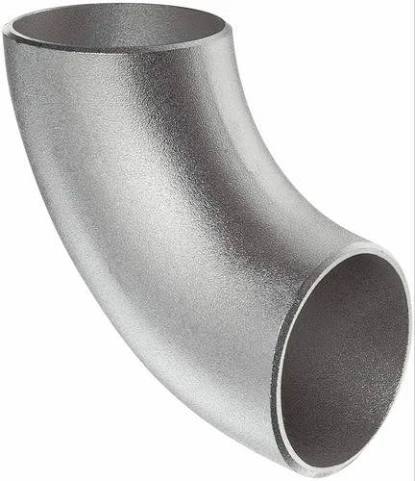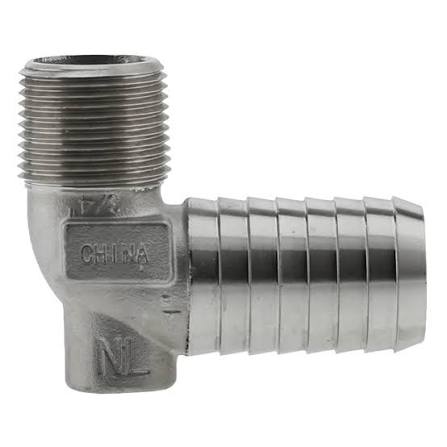
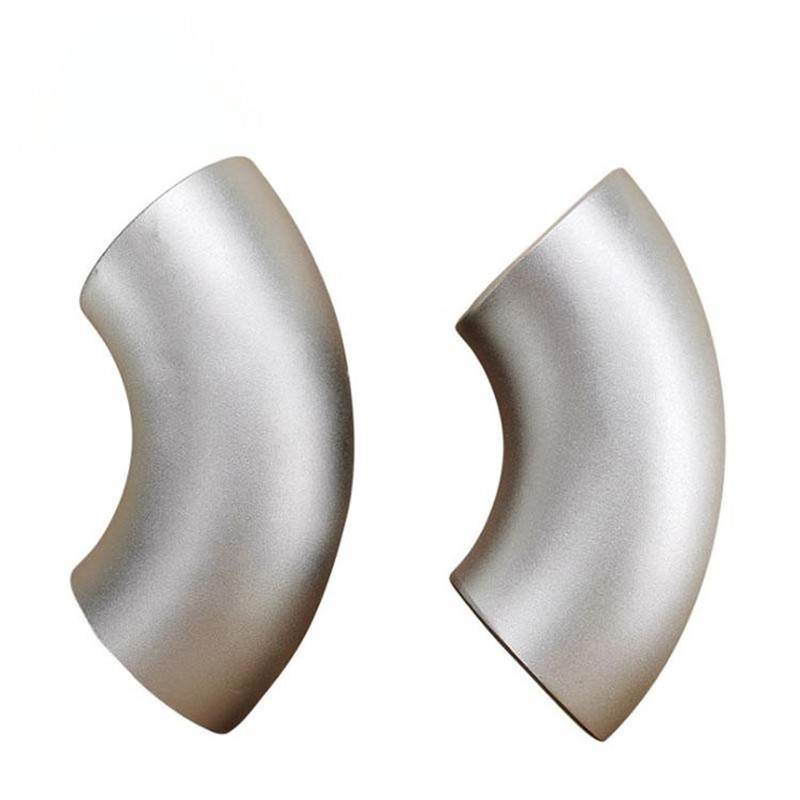
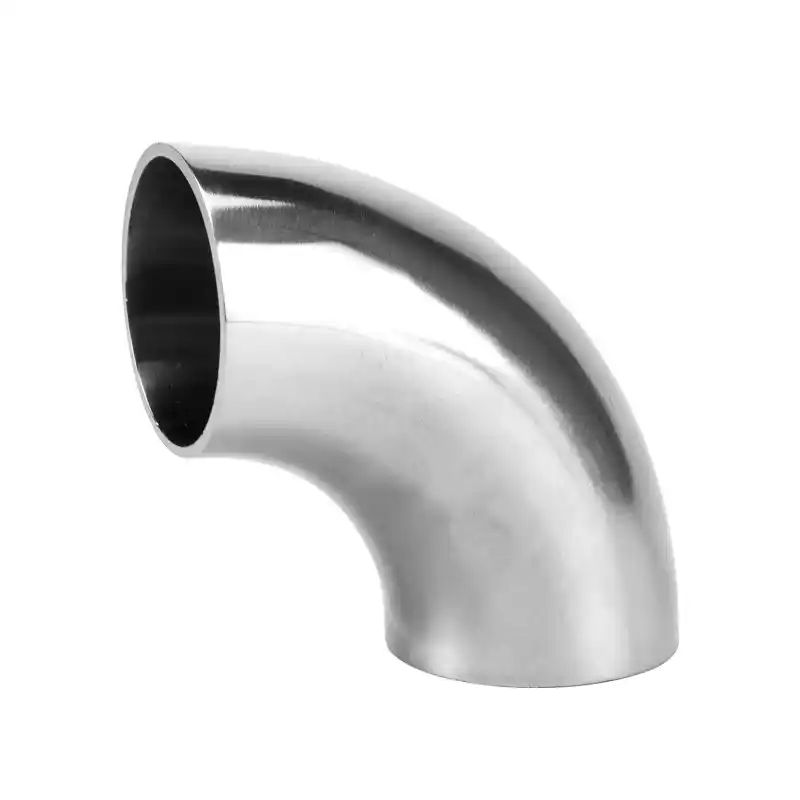
Stainless 90 Degree Elbow – Corrosion Resistant Pipe Fitting
Get durable stainless 90 degree elbow for industrial piping systems. Available in 3″, 4″ and weld elbows. Request a quote now!
Description
What is a stainless 90 degree elbow and where is it used?
A stainless 90 degree elbow is a pipe fitting that changes the pipeline direction at a right angle. When laying pipelines in a factory, it is impossible to run pipes in a straight line all the time. This elbow comes into play when bypassing equipment, walls, or when the flow direction needs to be altered.
Most elbows we commonly use are made of 304 or 316L stainless steel. 304 is suitable for general water, gas, and weak acid-alkali environments. With the addition of molybdenum, 316L performs better against chloride ions and seawater. Many buyers specifically look for stainless weld elbows, as welded connections are more secure than threaded ones with no leakage points, making them ideal for steam, high-temperature oil, or corrosive media.
How to choose between 3-inch and 4-inch stainless elbows?
3″ stainless elbow and 4″ stainless elbow are the two most frequently used sizes in industrial facilities.
- A 3-inch elbow is commonly used for connections between small and medium-sized equipment, such as cooling water inlets and outlets of reaction kettles, and compressed air branch pipes.
- A 4-inch elbow is mostly applied in main process pipelines, such as raw material transportation in chemical plants and CIP cleaning pipelines in food workshops.
For actual selection, in addition to pipe diameter, wall thickness (Sch schedule number) must also be considered. For the same 3-inch elbow, Sch10s is thinner and lighter, suitable for low-pressure water systems; Sch40s has a moderate wall thickness and can withstand approximately 1.6 MPa pressure; for high-temperature and high-pressure steam, Sch80s or even thicker grades are required.
Basic Parameter Table (304/316L Material, Butt Weld Elbows)
| Size (inch) | Outer Diameter (mm) | Common Wall Thickness (Sch) | Bend Radius (R) | Center-to-Face Distance (mm) | Reference Weight (kg) |
| 3″ | 88.9 | 10s / 40s / 80s | 1.5D | 114 | 2.1 ~ 4.5 |
| 4″ | 114.3 | 10s / 40s / 80s | 1.5D | 152 | 3.8 ~ 7.2 |
| 6″ | 168.3 | 10s / 40s | 1.5D | 229 | 7.5 ~ 12.0 |
Process Advantages of Stainless Weld Elbows
Welded elbows fall into two categories: butt weld and socket weld. Stainless weld elbows generally refer to the butt-weld type — both ends of the elbow are beveled and directly butt-welded to pipes. This connection has no gaps, features a smooth inner wall, low flow resistance, and is not prone to dirt accumulation. The food, pharmaceutical, and semiconductor industries almost exclusively specify butt-weld elbows.
In terms of manufacturing processes, cold forming and hot pushing are common. Small-diameter elbows (below 3 inches) are mostly cold-formed for high dimensional accuracy and a bright surface. Large-diameter or thick-wall elbows require hot pushing, which maintains continuous metallic fiber structure and higher mechanical strength. Every elbow produced in our factory undergoes solution treatment — carbides precipitated after welding or hot working are redissolved into grains to restore corrosion resistance. Many small factories skip this process, but experienced buyers always ask, “Has solution treatment been applied?”
Two Common Questions from Buyers
Q1: When ordering 3″ stainless elbow and 4″ stainless elbow, what is the difference between Sch40s and Sch80s wall thickness? How to decide?
A: The wall thickness of Sch40s is approximately 3.05 mm (3-inch) to 3.78 mm (4-inch), while Sch80s is 4.78 mm and 5.49 mm respectively. The extra 1–2 mm directly determines the pressure-bearing capacity of the pipe.If the pipeline operating pressure is below 1.0 MPa and the temperature does not exceed 200℃, Sch40s is sufficient. However, if the pressure exceeds 1.6 MPa, the temperature rises above 400℃, or the medium contains particles (which cause wall abrasion), Sch80s is the proper choice.
A simple judgment method: check the interface wall thickness of your upstream equipment. Keeping them consistent ensures easy alignment during welding and better weld quality.
Q2: What preparation is needed before on-site welding of purchased stainless weld elbows?
A: Do not weld directly. First, inspect the end bevels for burrs, oil stains, or paint used for factory marking (some manufacturers mark sizes with paint). Clean the area 20 mm inside and outside the bevels with a stainless steel wire brush or flap disc until the metallic luster is exposed, then wipe with acetone or alcohol.
If the elbow has been stored for more than six months, a thin layer of oxidation discoloration may form on the surface. It is recommended to wipe with pickling and passivation paste before welding.Note during welding: stainless steel has lower thermal conductivity than carbon steel, so heat tends to accumulate. Control the interpass temperature (preferably below 150℃) and provide argon back shielding immediately after welding. Otherwise, the back of the weld will turn black — this means chromium has been oxidized, and rust will first form at that location.
More Products