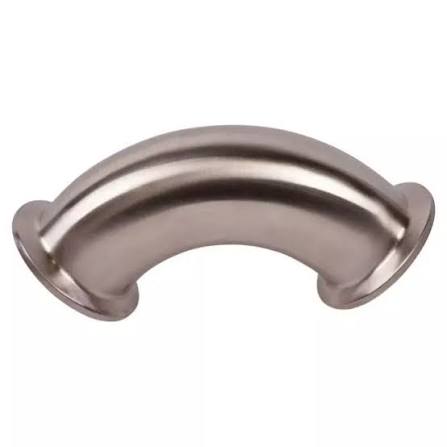
Can a Drain Pipe Have a 90° Elbow?
A common question in industrial piping system design is: can a drain pipe be fitted with a 90° elbow? The answer depends on the medium type, pipeline material, installation location and industry specifications.
For conventional building drainage such as domestic sewage, traditional engineering guidelines generally recommend avoiding a single 90° elbow. Instead, two 45° elbows or long-radius elbows are adopted to reduce the risk of blockage.
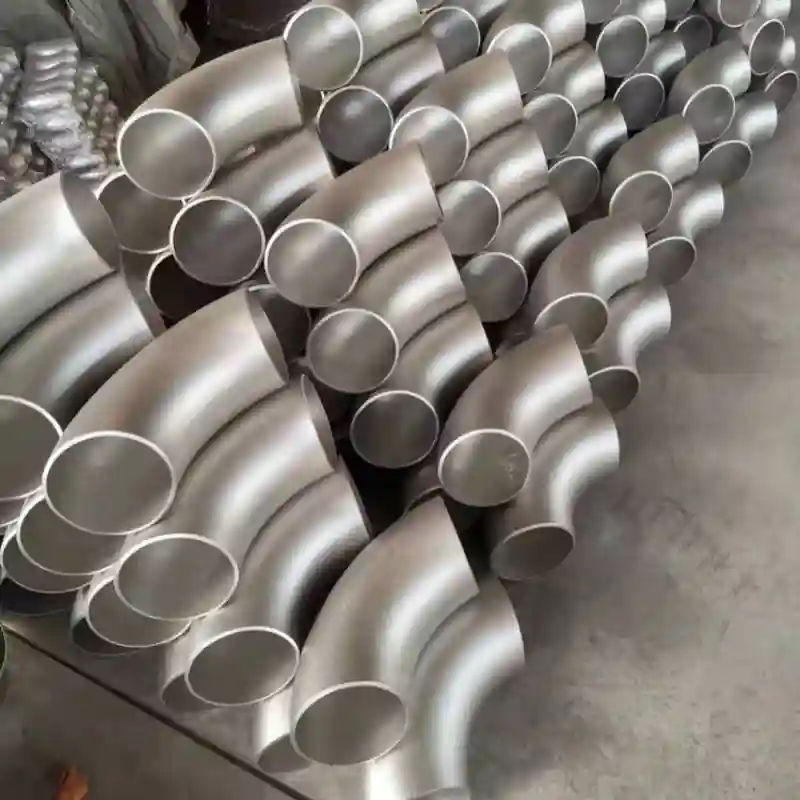
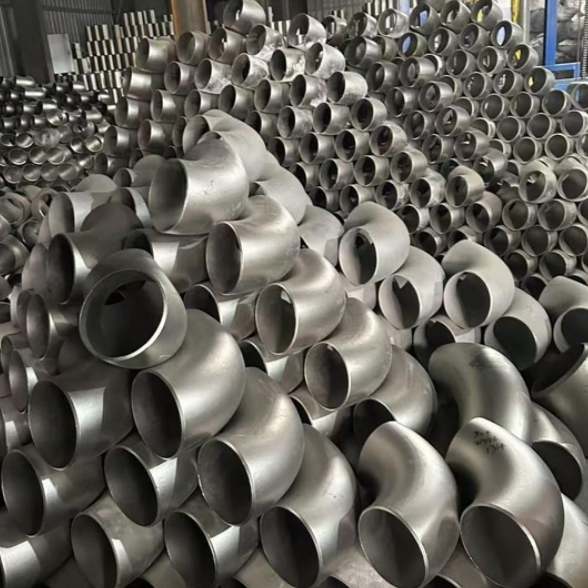
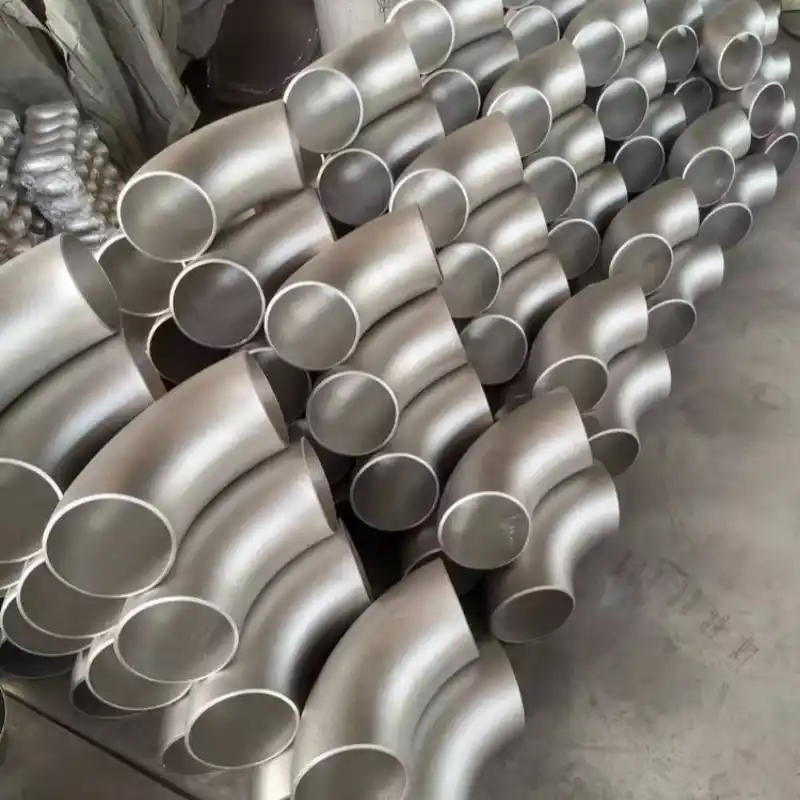
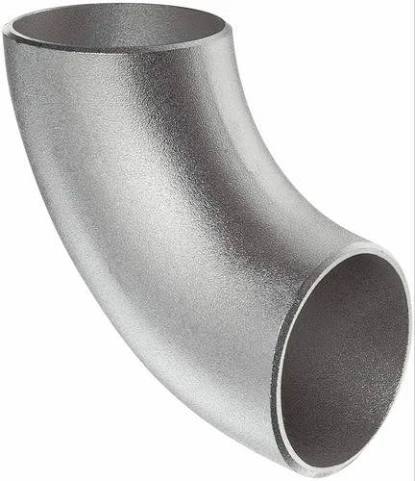
However, in specific industrial scenarios—especially in Shipbuilding & Marine Engineering—steel pipe 90 degree elbows are widely applied in drainage systems for bilge water, ballast water, cooling water and other media, provided that relevant design standards and material requirements are met.
I. Applicability Analysis of 90° Elbows in Drainage Systems
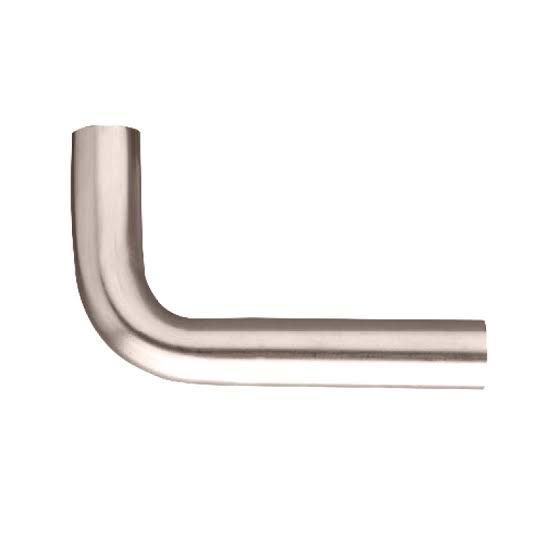
In accordance with IPC 2018 and European EN 12056 standards, the minimum curvature radius for right-angle bends in gravity drainage pipelines shall be no less than 4 times the outer diameter of the pipe. Standard short-radius 90° elbows (radius = 1D) tend to cause solid deposition or water flow turbulence due to abrupt flow direction change. Nevertheless, they are permitted under the following conditions:
- Pressurized drainage systems: Such as pump discharge pipelines with a high flow velocity (≥0.7 m/s), where particulate matter is not prone to adhesion.
- Specific media: Clean water, oil products or chemical liquids free of large granular impurities.
- Metal pipelines: Compared with plastic pipes, steel pipe 90 degree elbows feature smooth inner walls and strong impact resistance, and can be maintained via regular flushing.
In marine engineering, the drainage pipelines of ships often adopt a compact layout due to space constraints. For instance, bilge water branch pipelines of certain bulk carriers adopt pipe fitting 90 degree elbows made of ASTM A403 WP316L stainless steel to resist seawater corrosion.
In practical engineering application, engineers confirm the pressure drop at the elbow by calculating the Reynolds number. For pipelines smaller than DN25 (1 inch) nominal diameter, the equivalent length of one standard 90° elbow is approximately 1.5 meters of straight pipe, which falls within the acceptable range.
II. Key Parameters of Small-Bore Elbows (Taking 1/2 Inch as an Example)
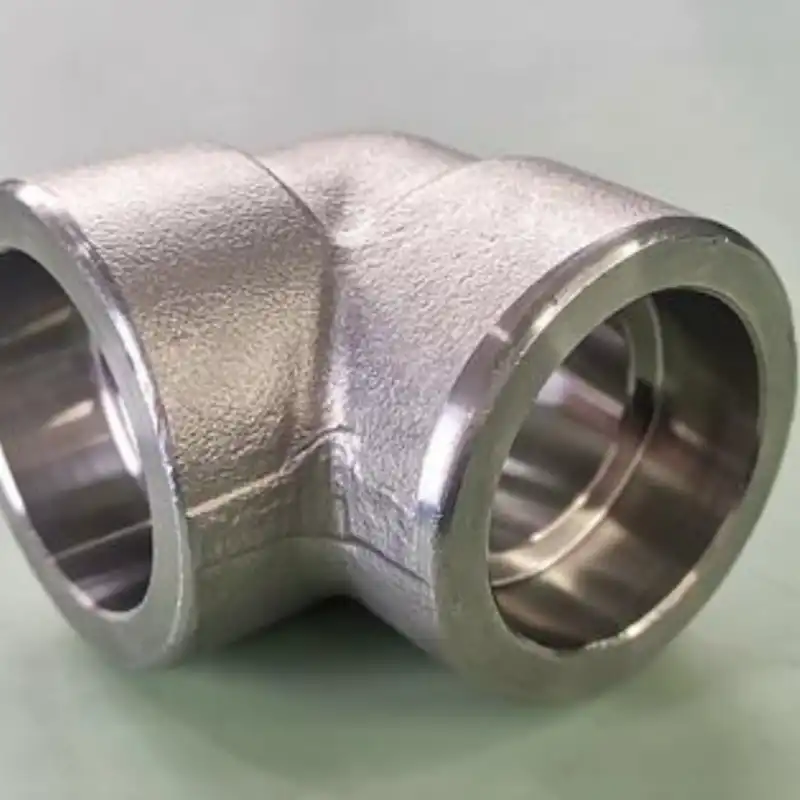
90 degree pipe elbow 1/2 inch is widely used in the design of precision drainage and instrument piping lines. The specific parameters of this size (compliant with ASME B16.9 standard, applicable to carbon steel and stainless steel) are as follows:
- Outer Diameter: 21.3 mm (Sch40) / 21.3 mm (Sch80)
- Center-to-Face (Long Radius, LR): 38.1 mm (1.5 times the nominal diameter)
- Wall Thickness: 2.77 mm for Sch40, 3.73 mm for Sch80
- Maximum Working Pressure: Approximately 14 MPa at normal temperature (for seamless steel pipes)
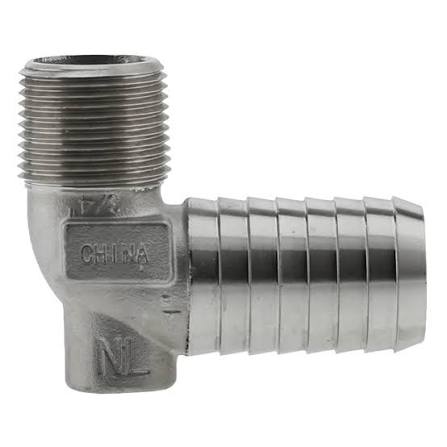
For more precise 1/2″ pipe 90 degree elbow marked in imperial units, the end threads can comply with NPT or BSPT standards, commonly used in hydraulic system return oil lines or small sewage branch lines. It should be noted that pipe 90 degree elbow dimensions must match the connected pipes. Matching Sch80 elbows with Sch40 pipes will form steps at welded or threaded joints, triggering turbulent corrosion.
Below is an excerpt of dimension table for typical long-radius 90° steel elbows (Unit: mm):
| Nominal Diameter (Inch) | Outer Diameter | Center-to-Face (LR) | Wall Thickness (Sch40) |
|---|---|---|---|
| 1/2 | 21.3 | 38.1 | 2.77 |
| 3/4 | 26.7 | 44.5 | 2.87 |
| 1 | 33.4 | 50.8 | 3.38 |
The above data is sourced from Pipe Fittings Handbook (2019 ASME Edition). Actual dimensions are recommended to be measured during on-site installation; especially in high-vibration environments such as ship engine rooms, minor deviations may lead to stress concentration.
III. Practical Cases in Shipbuilding & Marine Engineering
In the field of Shipbuilding & Marine Engineering, the design of drainage pipelines must comply with classification society regulations (DNV, ABS, LR and others). Taking the cargo hold sump drainage system of a Platform Supply Vessel (PSV) as an example: the pipeline is made of duplex stainless steel 2205, with steel pipe 90 degree elbows connected to the suction port of sewage pumps.
Since the pump suction port adopts a 1/2 inch NPT threaded interface, the design drawing clearly specifies the procurement parameters of 90 degree pipe elbow 1/2 inch, requiring a Long Radius (LR) type to reduce cavitation risk.
Sea trial test data shows that the flow velocity loss is only 0.3 m/s (initial flow velocity: 2.1 m/s) at 500mm downstream of the elbow, and the wall thickness reduction is less than 0.1mm per year after 12 months of seawater immersion.
In another case of ballast water quick discharge pipelines, to avoid air lock, the engineering team adopted pipe fitting 90 degree elbows equipped with guide vanes (installation angle: 15°), boosting discharge efficiency by 12%. It is evident that reasonable selection of pipe 90 degree elbow dimensions and types carries more weight than simply banning right-angle elbows.
IV. Professional Selection Recommendations
With 15 years of experience in pipe fitting manufacturing, AIFN recommends designers follow three steps when evaluating whether 90° elbows can be used in drain pipes:
- Calculate Reynolds number and deposition tendency: Short-radius elbows are acceptable if Re > 10⁵ and there are no fibrous solids.
- Verify material compatibility: Select steel pipe 90 degree elbows made of 316L or super duplex stainless steel for seawater and acidic sewage service.
- Reserve access points: Install flanges or quick-opening blind plates within 500mm upstream of the elbow to facilitate pigging maintenance.
For detailed dimension drawings or load calculation reports of 1/2″ pipe 90 degree elbow, refer to the appendix of NORSOK L-002 standard provided by AIFN.
Our laboratory can provide pressure-temperature rating curves covering the temperature range from -29°C to 400°C, and all test data is ISO 17025 certified.
Conclusion
90° elbows are permissible for drain pipe installation on the premise of meeting specific working conditions and design specifications. In high-pressure and corrosive environments such as Shipbuilding & Marine Engineering, steel pipe 90 degree elbows are not only viable but also indispensable.
Whether you need 90 degree pipe elbow 1/2 inch or standard-size pipe fittings, precise parameter matching and engineering judgment lay the foundation for system reliability.
Feel free to contact the technical team of AIFN to obtain the Elbow Selection Calculation Sheet tailored for your project.