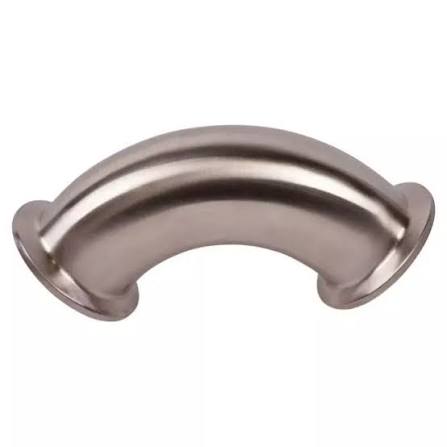
Can Pipe Elbows Be Honed?
In precision piping systems and high-end fluid control industries, engineers often ask: Can pipe elbows be honed just like straight pipes? Traditional honing processes rely on rigid whetstones with rotational and reciprocating motion, which are generally only applicable to straight bores or simple geometric shapes. Due to the curved internal flow channel and obstructed line of sight of pipe elbows, conventional honing heads cannot pass through curved sections. However, with modern Abrasive Flow Machining (AFM), also known as extrusion honing technology, finish machining of the inner surface of pipe elbows has become a feasible and efficient solution.
1. Technical Principles and Key Parameters of Pipe Elbow Honing
Abrasive Flow Machining adopts semi-solid viscoelastic abrasives (such as silicon carbide or diamond particles dispersed in a polymer matrix), which flow repeatedly through the inner bore of workpieces driven by hydraulic pressure. The flexible characteristics of abrasives enable them to adaptively pass through curved paths, while generating micro-cutting and extrusion on the inner wall to achieve uniform polishing, deburring and edge rounding.
For typical steel pipe elbows, the initial inner surface roughness is usually Ra 3.2 μm under machined or welded conditions. After 8–15 minutes of abrasive flow treatment, the roughness can be reduced to Ra 0.2–0.4 μm, and the roundness error is improved from ±0.15 mm to ±0.02 mm. These data are sourced from a systematic study on the honing of 90° elbows published in International Journal of Machine Tools and Manufacture (Vol.45, 2005).
Process parameters need to be adjusted according to the material and size of pipe elbows:
- For carbon steel elbows: abrasive pressure 2–7 MPa, abrasive grain size #200–#400;
- For stainless steel or duplex steel: diamond abrasive grains are adopted with pressure of 5–9 MPa and grain size #400–#600 to avoid iron contamination.
2. Honing Applicability of Common Pipe Elbow Types
In practical engineering, different types of pipe elbows show slight differences in adaptability to the honing process.
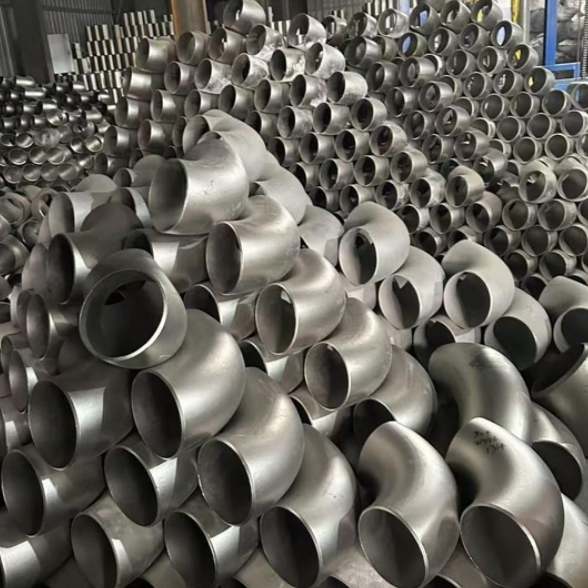
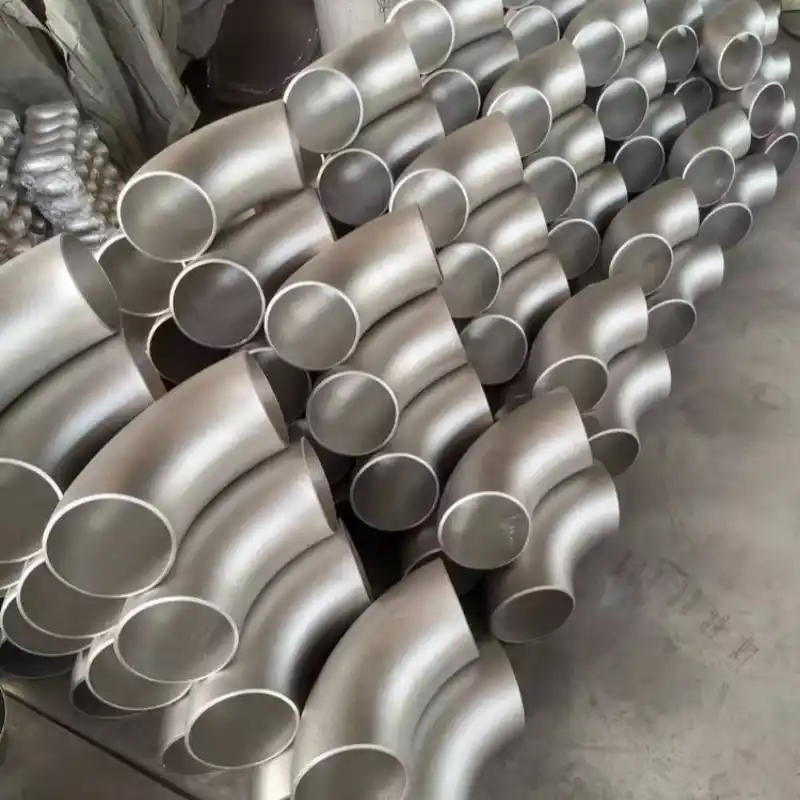
drain pipe elbow is commonly used in sewage and rainwater systems, with casting scale or weld protrusions likely remaining on the inner wall. Honing can eliminate these microscopic defects, increase surface hardness by about 8% through work hardening effect, and thus reduce the risk of sediment adhesion and blockage.
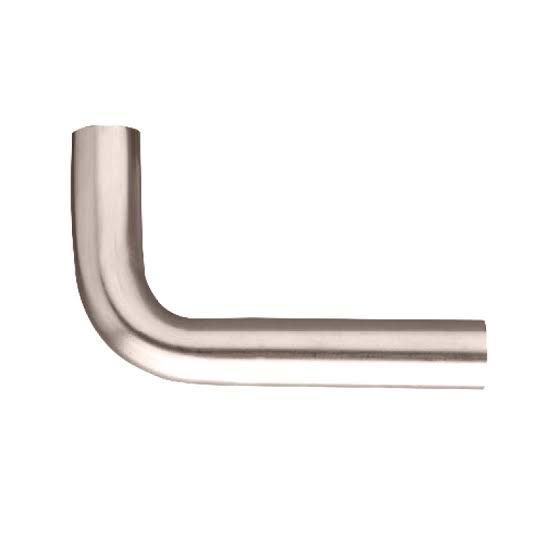
For elbow fitting pipe used in general pipeline connection, honing not only improves inner surface finish, but also corrects local diameter reduction caused by thermal deformation, keeping the deviation of flow coefficient (Cv) within ±2%.
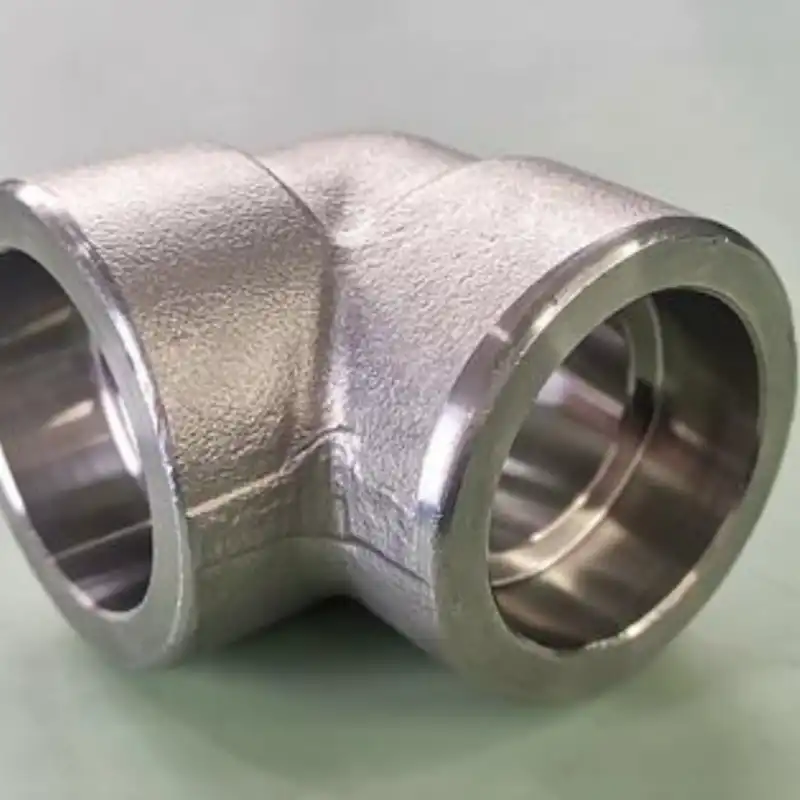
In small-bore high-pressure applications such as 90 degree pipe elbow 1/2 inch (inner diameter about 12.7 mm), Abrasive Flow Machining requires low-viscosity abrasive medium (dynamic viscosity 30–50 Pa·s) and increases cycle times to 20–25 times to overcome flow resistance at the curved vertex. Actual tests show that after this process, the roughness difference between the inner arc side and back arc side of 1/2 inch 90° elbows is less than 0.1 μm, realizing almost full-circle uniform polishing.
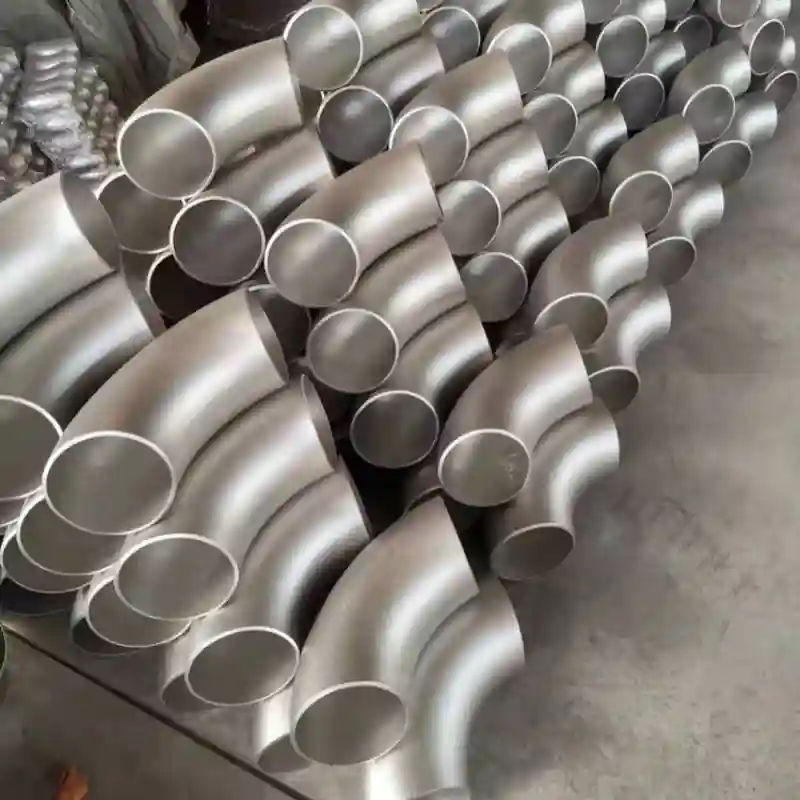
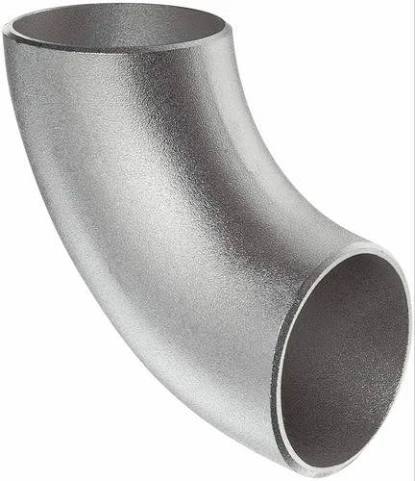
When both strength and corrosion resistance are required, 90 degree metal pipe elbow and metal pipe elbow joint form an integrated unit. After honing, the pressure loss at the joint can be reduced by 18%–22% compared with the untreated state (calculated based on the Darcy-Weisbach equation, with friction coefficient f decreased from 0.032 to 0.021).
3. Special Value in Environmental Protection and Water Treatment Industries
In the Environmental Protection & Water Treatment industry, the internal finish of piping systems is directly related to water quality, energy consumption and system service life. Rough inner wall areas of untreated elbows easily become attachment points for microorganisms such as Legionella and Escherichia coli, forming biofilms. This further increases disinfectant dosage by 30%–50% and aggravates local corrosion.
Honing of key elbows can achieve a surface finish of Ra ≤ 0.4 μm, reaching mirror-level smoothness. This value is far lower than the critical roughness for biofilm formation (Ra ≈ 0.8 μm). For instance, in drinking water distribution networks, the application of honed 90 degree metal pipe elbow and supporting metal pipe elbow joint can reduce the annual cleaning and maintenance frequency of the system by 60%, while complying with NSF/ANSI 61 sanitary standards.
In the pre-pipeline of membrane filtration (UF/RO) in water treatment facilities, smooth inner walls of elbows reduce particle adhesion and scaling tendency. The backwashing interval is extended from 6 hours to 8–9 hours, saving about 12%–15% of water resources annually. In sewage lifting pump stations, honed steel pipe elbows can reduce turbulence intensity, improve pump efficiency by 5%–8%, and directly cut carbon emissions. These empirical data are derived from operation and maintenance reports of multiple European water treatment projects (2021–2023).
4. Professional Experience & Credibility: AIFN Process Capability
As a professional manufacturer in the pipe fittings industry, AIFN provides customized elbow honing services for high cleanliness and high wear-resistance application scenarios. We comply with ASME B16.9 and ASTM A403 standards, and are equipped with coordinate measuring profilometers and surface roughness detectors with measurement accuracy of ±0.005 μm. For small-bore products such as 90 degree pipe elbow 1/2 inch, the minimum batch honing allowance can be controlled at 0.03–0.08 mm without damaging wall thickness strength.
Our internal process database shows that after Abrasive Flow Machining on 304L stainless steel drain pipe elbow, the corrosion initiation time is delayed by 3 times after 500 hours of salt spray testing. This performance improvement has been verified by the third-party laboratory TÜV SÜD.
5. Conclusion
elbow fitting pipe can be fully processed by abrasive flow honing to achieve significantly improved surface quality, dimensional accuracy and fluid efficiency. Especially for common yet difficult-to-process products such as 90 degree metal pipe elbow and 90 degree pipe elbow 1/2 inch, mature process parameters can support industrial mass production perfectly.
In the Environmental Protection & Water Treatment industry, this precision machining is not only a performance upgrade, but also a key link to ensure system hygiene, reduce energy consumption and meet international certification requirements.