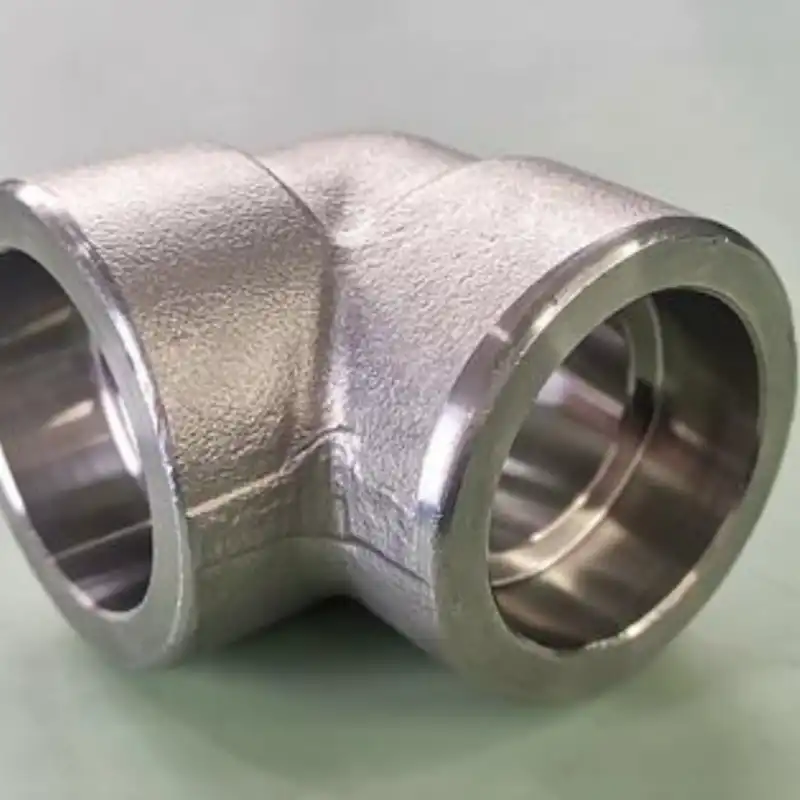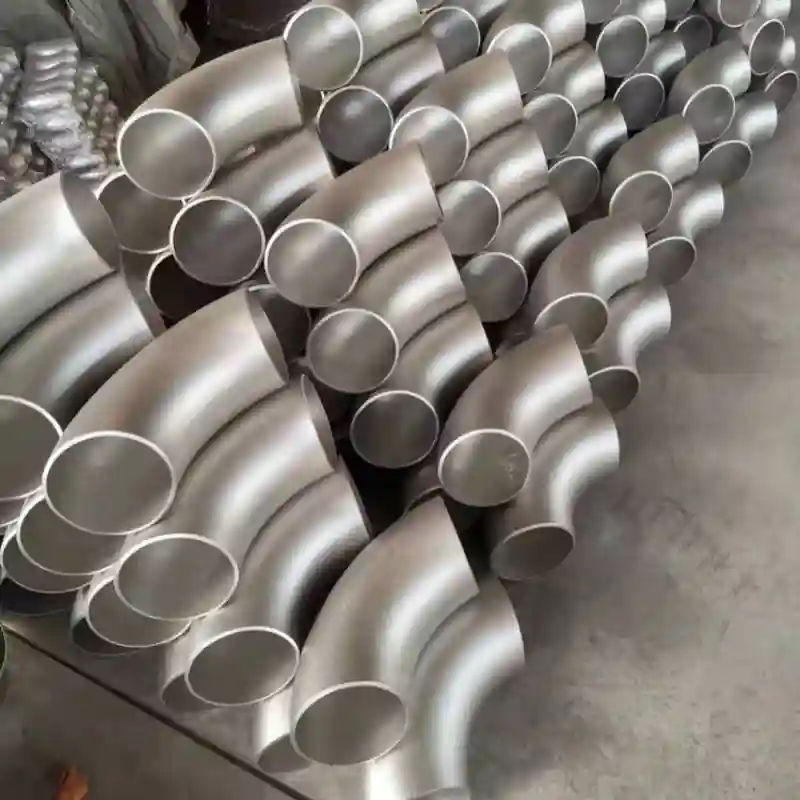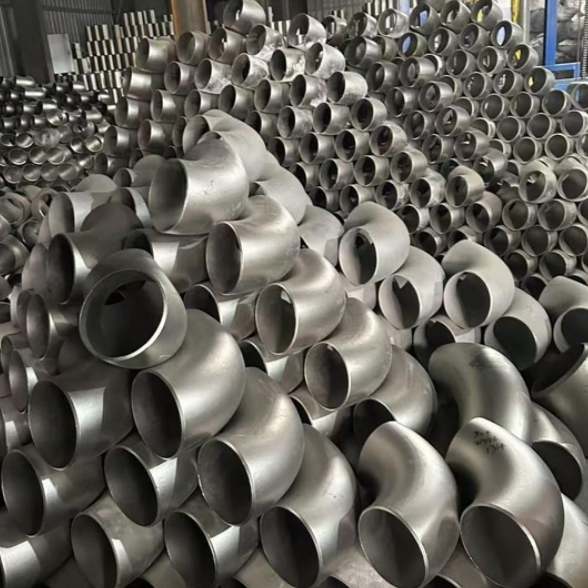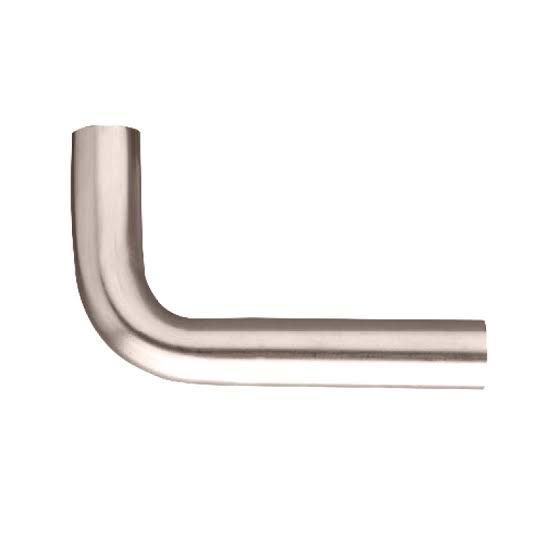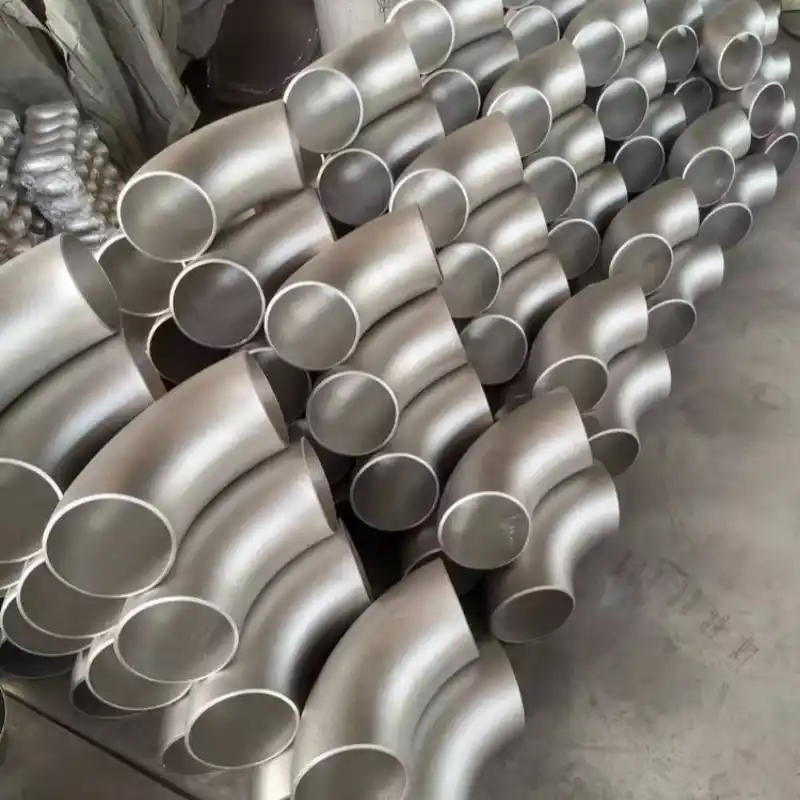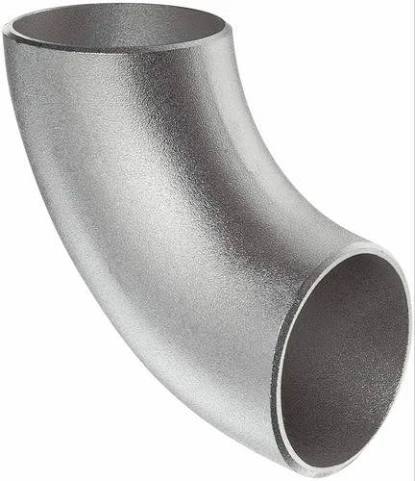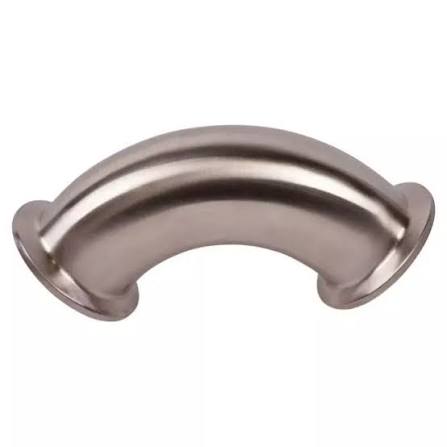
For pipeline engineers and procurement personnel, the bending radius of an elbow directly determines the flow resistance, installation space, and long-term reliability of a piping system.
➡️When it comes to a 2 inch 90 degree elbow steel, the radius value is not arbitrary—it strictly follows industry standards and is closely related to material and application scenarios.
Standard Radius of a 2 inch 90 degree elbow steel
According to the ASME B16.9 standard, the centerline bending radius of a long radius elbow is 1.5 times the nominal pipe size (NPS). Therefore, the standard radius of a 2-inch long radius 90-degree elbow is: 2 × 1.5 × 25.4 = 76.2 mm (i.e., 3 inches). For a short radius design (1D), the radius is 50.8 mm (2 inches). This value is the design basis for all 2‑inch elbows, regardless of material—carbon steel, stainless steel, or other alloys.
Material Differences and Universality of the Radius
✔️ Interestingly, the bending radius does not change with the material. For example, in petrochemical pipelines, the long radius of a 2 inch 90 degree elbow steel is also 76.2 mm; for a 2 inch stainless steel 90 degree elbow required in food processing or marine engineering, the radius is exactly the same.
✔️ Similarly, a 2 inch steel pipe 90 degree elbow manufactured from welded steel pipe blanks must also comply with the center-to-end dimensions (76.2 mm or 50.8 mm) specified in ASME B16.9. This uniformity ensures that elbows of different materials can be interchanged, reducing inventory and design complexity.
Technical Details and Data Support
✔️ On the micro level of elbow manufacturing: according to ASME B16.9, the permissible tolerance for the center-to-end dimension of a 2‑inch elbow is only ±1.6 mm. Even more critical is wall thickness control—on the elbow’s back (extrados side), due to thinning from stretching, the minimum wall thickness shall not be less than 87.5% of the nominal wall thickness of the original pipe.
✔️ For example, for a 2‑inch carbon steel elbow of Sch 40 (wall thickness 3.91 mm), the minimum allowable wall thickness at the back is about 3.42 mm. For a 2 inch stainless steel 90 degree elbow, after cold push forming, solution heat treatment must be performed to eliminate intergranular corrosion susceptibility and restore corrosion resistance.
✔️ From a fluid dynamics perspective, the choice of radius directly affects energy consumption: the local resistance coefficient ζ of a long radius elbow (1.5D) is approximately 0.2, while that of a short radius elbow (1D) is about 0.5. In a water system with a flow rate of 50 m³/h, using a long radius 2 inch 90 degree elbow steel reduces pressure loss by about 8% compared to the short radius version, corresponding to an annual pump energy saving of approximately 5% to 8%.
📝Conclusion
✅Back to the original question: What is the radius of a 2 inch rigid 90? The standard answers are—long radius = 76.2 mm (3 inches), short radius = 50.8 mm (2 inches). In most operating conditions, long radius elbows are recommended for lower flow resistance and longer service life; short radius designs should be considered only when space is extremely limited.
✅Understanding this radius parameter, and correctly matching material and wall thickness schedule, is key to ensuring a safe and efficient piping system. As a professional pipe fitting supplier, AIFN provides 2‑inch steel and stainless steel 90‑degree elbows that are strictly manufactured according to ASME B16.9, complete with full dimensional and material certification documents.