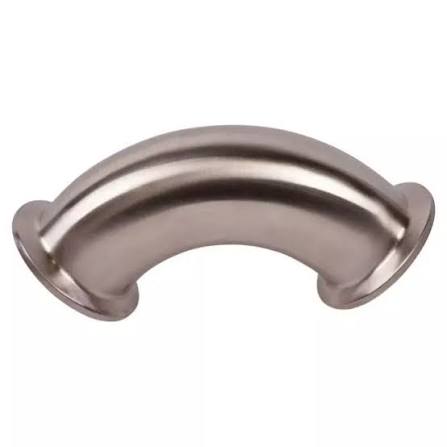
Butt Weld vs Socket Weld: A Technical Comparison for Stainless Steel Elbows
For stainless steel piping, selecting the correct connection method directly affects system tightness, fatigue life, and long-term operating costs. Butt Weld and Socket Weld are the two most common welded end types, but they differ essentially in application scenarios, mechanical behavior, and quality acceptance criteria. Based on the ASME B31.3 Process Piping Code and years of fitting manufacturing experience, this article provides an in-depth comparison of these two techniques to help engineers make the optimal choice.
1. Fundamental Differences in Connection Structure
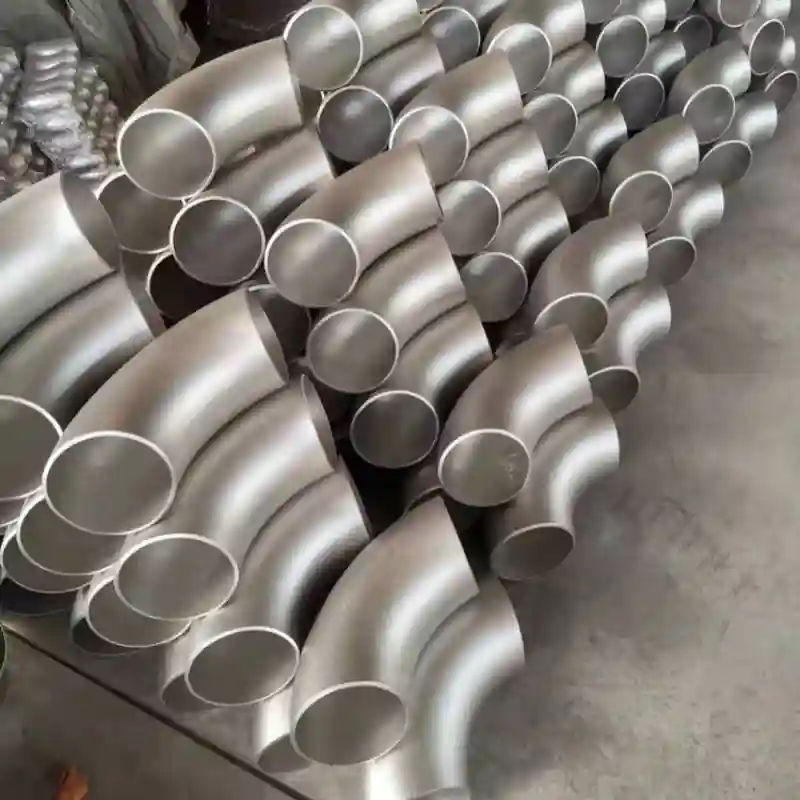
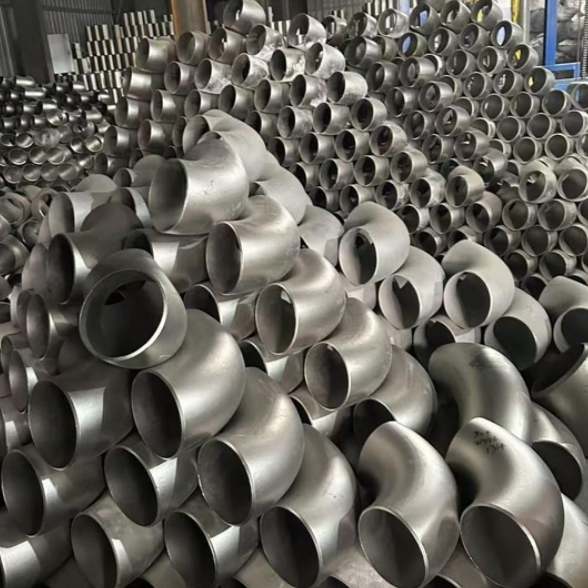
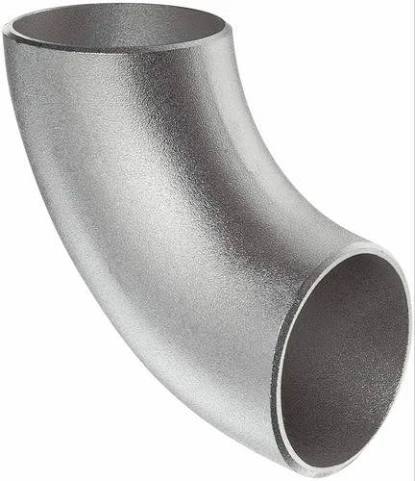
Butt Weld connection uses beveled ends of pipe or fittings, with weld metal deposited between the two base materials. Taking a common stainless weld elbow as an example, its ends are machined with a single‑V or U‑bevel according to ASME B16.9 (bevel angle 37.5°±2.5° for wall thickness ≤22mm). Welding requires the inner walls to be flush, with misalignment not exceeding 10% of wall thickness (max. 1.5mm). This full‑penetration weld makes the inner diameter of the fitting completely continuous with that of the pipe, without any geometric abrupt change.
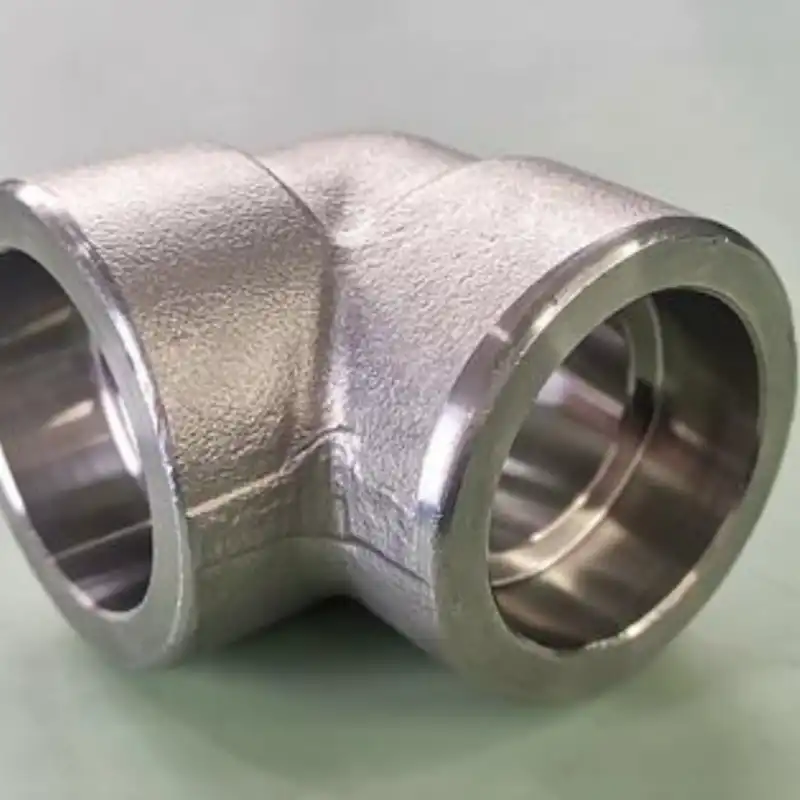
Socket Weld connection, on the other hand, inserts the pipe into the socket of the fitting until it bottoms out, then a fillet weld fills the annular space of the socket. For example, a socket weld 90 degree elbow per ASME B16.11 has a socket depth that ensures an expansion gap of about 1.5mm between the pipe end and the socket bottom (to accommodate thermal expansion/contraction). The weld is typically a single pass fillet weld, with a throat thickness at least equal to the pipe wall thickness.
2. Key Performance Parameter Comparison
| Parameter | Butt Weld | Socket Weld |
|---|---|---|
| Applicable diameter | Full range, but generally more economical for ≥DN50 (2″) | Mainly ≤DN80 (3″), most common for DN40 (1.5″) and smaller |
| Pressure rating | Unlimited, up to Class 4500+ | Typically Class 1500~3000 (some 6000) |
| Fatigue life | Excellent (no cracks after 10⁷ cycles) | Moderate (due to structural discontinuity, about 10⁵~10⁶ cycles) |
| Internal flow resistance | No protrusion, smooth transition | Annular gap and internal weld reinforcement exist |
| UT/RT inspectability | Feasible (full-penetration weld) | Difficult (fillet weld cannot be radiographed) |
| Wall thickness matching | Must be equal wall thickness or use transition bevel | Allows some wall thickness difference (internal step in socket) |
With actual engineering data: under thermal cycling (20℃↔200℃), butt‑welded joints made with stainless steel weld elbows maintained 0% leakage after 5000 thermal cycles; whereas socket‑welded joints of the same size began to develop micro fatigue cracks (originating from stress concentration at the socket root) after about 800 cycles.
3. Typical Application Scenarios and Selection Recommendations
✅ Prefer Butt Weld when:
-
High temperature & high pressure: main steam lines, hydroprocessing units (e.g., temperature >450℃, pressure >10MPa)
-
Corrosive media: strong acids, halogens, etc. – butt welds have no crevices and are resistant to crevice corrosion
-
Hygienic requirements: food, pharmaceutical industries (smooth inner wall, no dead spots)
-
Large diameter piping: e.g., DN200 but weld elbow, using submerged arc automatic welding – high efficiency and stable quality
✅ Prefer Socket Weld when:
-
Small diameters: ≤DN50 (2″), e.g., 2″ socket weld 90° elbow – easy field installation without complex alignment jigs
-
Moderate pressure (≤Class 1500): hydraulic systems, instrument air lines
-
Thin wall thickness (≤5mm): fillet weld has low heat input, less risk of burn‑through
-
Retrofit/repair projects: socket weld allows some axial misalignment tolerance (±1mm), adapting to irregular ends of old piping
4. Typical Product Parameter Examples (from ASME and actual production)
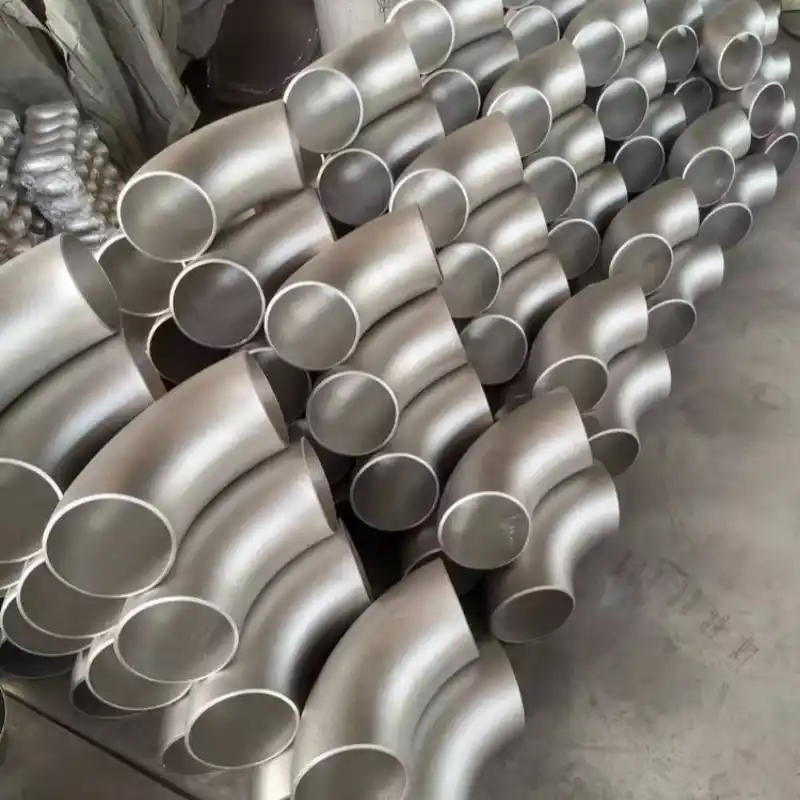
1. Stainless Steel Butt Weld 90° Long Radius Elbow (Stainless Steel Butt Weld Elbow – LR)
-
Standard: ASME B16.9
-
Material: ASTM A403 WP316L
-
Size: 3″ Sch40S (OD 88.9mm, wall thickness 3.05mm)
-
Bevel: 37.5° ±2.5°, land 1.6mm
-
Weld requirement: 100% radiographic testing (RT), meeting ASME B31.3 Class I or II
-
Fatigue test: under bending stress 100MPa, cycle count >2×10⁷
2. Socket Weld 90° Elbow (Socket Weld 90 Degree Elbow)
-
Standard: ASME B16.11
-
Material: ASTM A182 F316
-
Typical size: 2″ socket weld 90° (socket ID 60.5mm, depth 13mm)
-
Pressure rating: 3000lb @ 100°F (approx. 51MPa)
-
Fillet weld size: minimum throat thickness equal to pipe wall thickness (e.g., for Sch80 pipe wall thickness 5.54mm, throat ≥5.5mm)
-
Note: Before welding, the pipe end must be inserted to the socket bottom, then pulled back 1.5mm – this is a critical detail to prevent thermal expansion stress cracking.
5. Practical Points for Installation and Inspection
Butt Weld key control points:
-
Root gap: 2~4mm (SMAW) or 0~2mm (GTAW root pass)
-
Preheating: for 304L stainless steel with thickness >19mm, generally no preheat but control interpass temperature ≤150℃
-
Back purge: fill pipe with argon to prevent oxidation (especially important for stainless weld elbows inner wall)
-
NDT: RT or PAUT; Class I welds shall have no cracks or lack of fusion
Socket Weld key control points:
-
Clean socket: oil and debris can cause porosity
-
Expansion gap: must be 1.5~2mm (can be set with a feeler gauge or special positioning tool)
-
Welding sequence: tack weld at three points first, then weld in sections (to prevent distortion that would tilt the fitting)
-
Inspection methods: typically MT or PT for surface crack detection; RT is not possible. For critical applications, a pressure test (1.5× design pressure for 30 minutes) may be performed.
6. Common Misunderstandings Clarified
❌ Myth 1: “Socket weld is stronger than butt weld.”
→ Fact: A full‑penetration butt weld can achieve 100% of base metal strength (with proper heat treatment), whereas the effective cross‑section of a socket weld fillet is usually less than that of the base metal, and the stress concentration factor at the root is as high as 3~5.
❌ Myth 2: “Small diameters can only use socket weld.”
→ Fact: DN15~DN40 can also use butt weld, but the beveling cost is higher. In nuclear or ultra‑high purity fluid applications, even 1/2″ lines mandate butt weld (to avoid crevice corrosion).
❌ Myth 3: “Stainless steel butt weld elbows do not need heat treatment.”
→ Fact: Stabilized grades (e.g., 321, 347) require post‑weld stabilisation annealing; for extra‑low carbon grades (e.g., 316L), solution treatment is also recommended when thickness >16mm or in sensitive media (nitric acid, high‑temperature water) to eliminate chromium carbide precipitation in the HAZ.
7. Cost and Life‑Cycle Analysis
Taking a 2″ Sch40S 316L piping system as an example:
-
Butt weld solution: one but weld elbow (unit price ~28)+alignmenttoolinglabour(30min)+fullGTAW+RT(28)+alignmenttoolinglabour(30min)+fullGTAW+RT(100/weld). Total cost ~$150, with no maintenance required over its lifetime.
-
Socket weld solution: one 2″ socket weld 90° elbow (unit price ~15)+ordinarywelder(15min)+PT(15)+ordinarywelder(15min)+PT(20). Total cost ~45.However,ifsubjecttotemperaturefluctuationsorvibration,micro‑crackleakagemayoccurwithin5years,withrepaircostexceeding45.However,ifsubjecttotemperaturefluctuationsorvibration,micro‑crackleakagemayoccurwithin5years,withrepaircostexceeding200.
Rule of thumb: For design life >20 years and cycle count >5000, even small diameters should preferentially consider butt weld connections.
8. Conclusion
Choose butt weld when the system requires: no crevices, full radiographability, resistance to high fatigue loads, conveyance of corrosive/hygienic media, and any diameter.
Choose socket weld when the system is limited to: small diameters (≤2″), moderate pressure, static or low‑cycle loading, and cost‑sensitive or field alignment constraints.
In real projects, engineers commonly use socket weld 90 degree elbows reasonably in high‑temperature steam trap groups and instrument impulse lines (due to small diameters and pressure below Class 600), while on main process pipe racks they use stainless steel weld elbows exclusively (e.g., 316L butt weld elbows). Understanding the essential differences between the two, combined with specific design pressure, temperature cycling, media characteristics, and inspection requirements, leads to a safe and economical decision.
AIFNFittings provides a full range of stainless steel butt weld elbows (stainless steel weld elbows) from 1/2″ to 48″, and Class 3000/6000 socket weld elbows. All products come with EN 10204 3.1 material certificates and traceability markings. For technical selection advice, please contact our team of welding engineers.