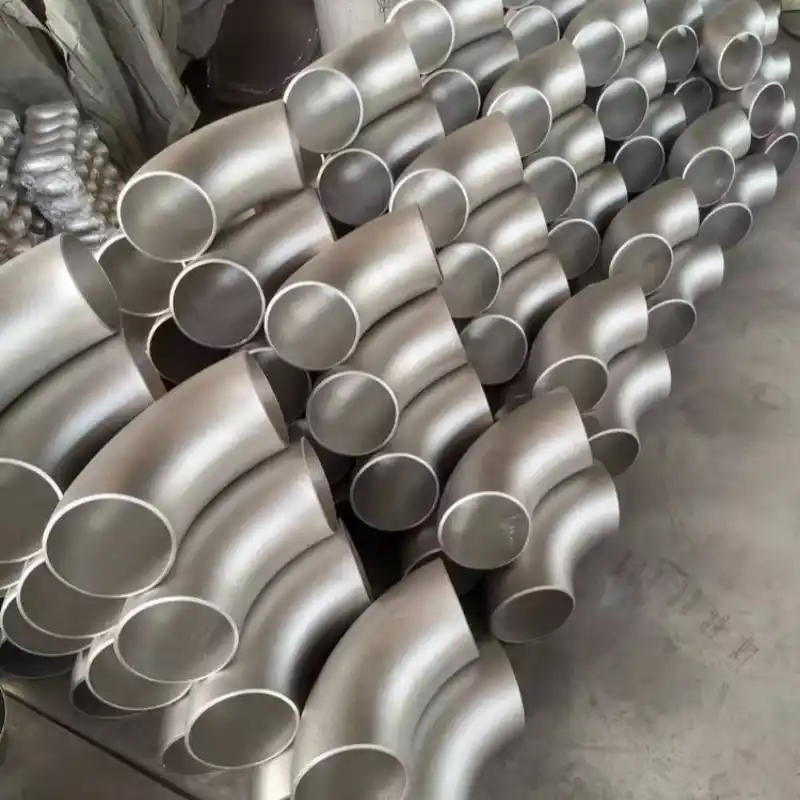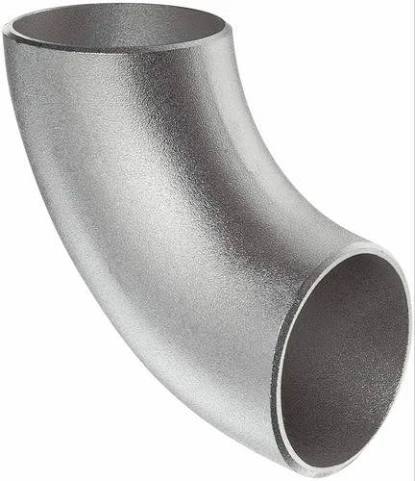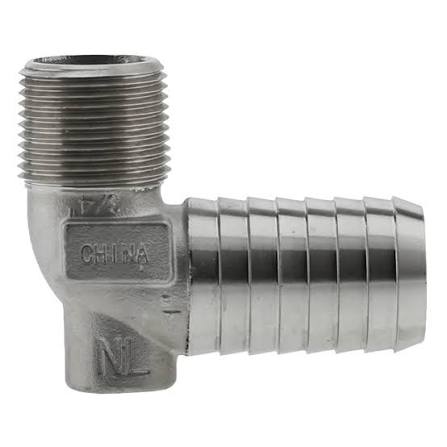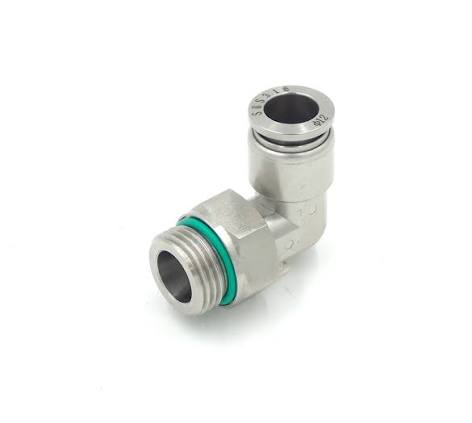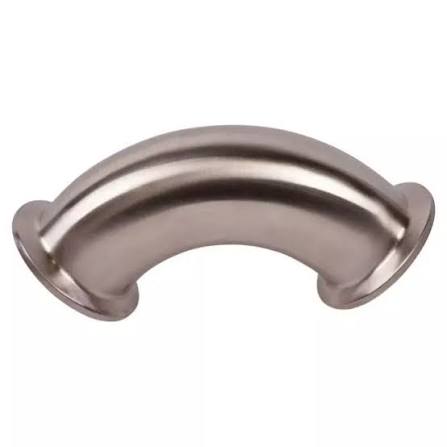
What is a 90 degree stainless elbow used for?
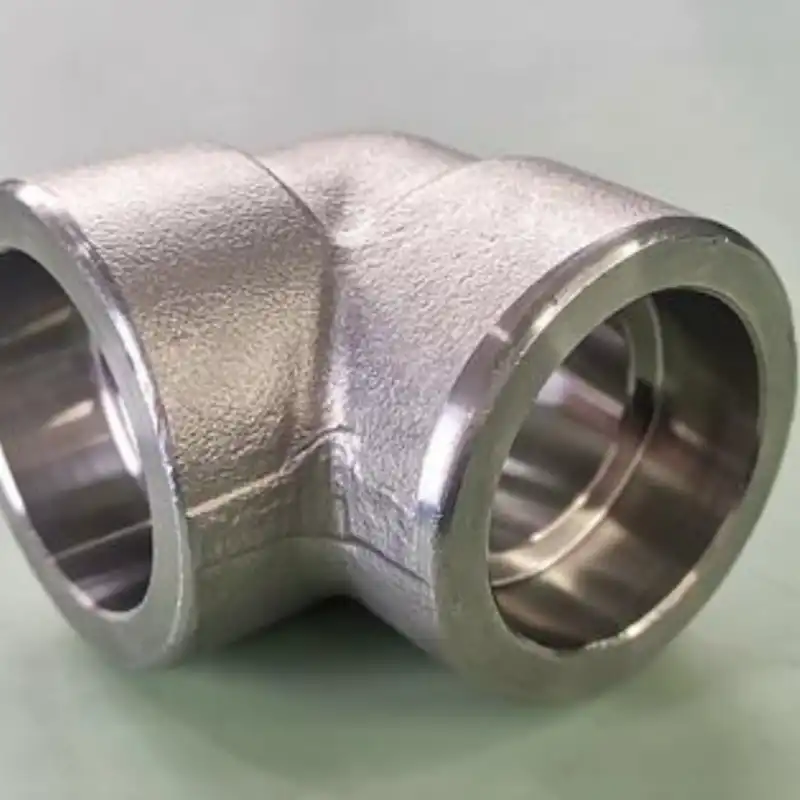
In industrial piping systems, a reliable and durable fitting is often required to change the flow direction. A 90 degree stainless elbow is a core component designed exactly for this purpose — it enables precise 90-degree direction turning of pipelines while maintaining smooth medium flow. It plays an irreplaceable role in ordinary water treatment systems as well as high-temperature and high-pressure chemical plants.
So what specific occasions is it applied to? Why do different specifications and materials of elbows directly affect the service life and safety of the entire pipe network? Based on engineering practice, combined with material properties and typical parameters, this article elaborates on the practical applications of the 90 degree stainless elbow in detail.
1. Core Function: Flow Guidance and Drag Reduction
The most fundamental function of a 90 degree stainless elbow is to change pipeline direction. However, a high-quality elbow is far more than just “making a turn” — its inner wall curvature radius (usually 1D, 1.5D or 3D, where D refers to pipe diameter) directly affects fluid resistance. For instance, in long-distance transmission pipelines, adopting a 1.5D radius elbow can reduce local pressure loss by approximately 15%~20% compared with a 1D radius elbow. This data is derived from experimental statistics of the ASME B16.9 standard.
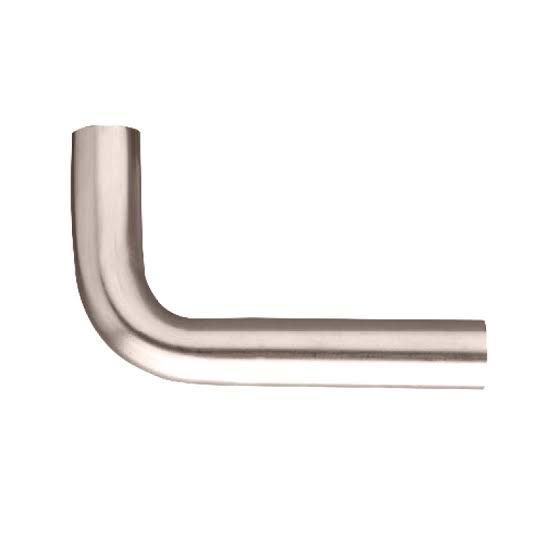
Many engineers specify the use of stainless steel tubing 90 degree elbow, because tube elbows feature stricter wall thickness tolerances (e.g., ±10% wall thickness deviation specified by ASTM A269) when butt-jointed with welded pipes or compression fittings, effectively lowering the risk of leakage.
2. Material Selection: Why Choose 316 Stainless Steel?
Environmental corrosion resistance is the primary factor for material selection. In marine, chemical and food processing industries, conventional 304 stainless steel may suffer pitting corrosion due to chloride ions. At this point, the 316 stainless steel 90 degree elbow contains 2%~3% molybdenum element, with its Pitting Resistance Equivalent (PRE) reaching 25~30, much higher than 18~20 of 304 stainless steel. This means that in the same saline environment, the service life of 316 elbows can be extended 3 to 5 times.
The cooling water circulation system of Jinshan Refinery originally adopted 304 elbows, which developed intergranular corrosion cracks on average every 18 months. After being replaced with 316 material elbows, no visible damage has been found after 64 months of continuous operation. This case was published in the 2021 technical brief of Pipe & Pipeline Engineering journal.
3. Specification Example: Typical Application of 1 Inch Elbow
Small-bore pipelines also demand high reliability. For example, 1 inch stainless steel 90 degree elbow is commonly used in instrument air pipelines, lubricating oil circuits and high-pressure hydraulic systems. The standard wall thickness of 1-inch (DN25) elbows is generally Sch 40S or Sch 80S, with pressure resistance ratings of about 6.4MPa and 9.2MPa respectively (calculated at normal temperature per ASME B31.3).
Such elbows are widely applied in compressor auxiliary pipelines, skid-mounted equipment internal connections and laboratory gas pipelines. Featuring compact size, they are convenient for butt welding or compression fitting installation, and are one of the most commonly stocked parts for on-site maintenance personnel.
4. General Marking: Abbreviation and Identification of 90 Degree Stainless Elbow
You can often see abbreviations like 90 degree ss elbow on construction drawings, quotation sheets and inventory labels. “SS” stands for stainless steel, usually followed by pressure class (e.g., Class 150, Class 300) or connection standard (e.g., ISO 2852). To distinguish materials quickly, suppliers also carry out laser marking on the outer surface of elbows: for example, “316 SS 90° LR Sch 40S”. Such clear marking greatly avoids material mixing errors during on-site installation.
It should be reminded never to mix 90 degree stainless steel elbows with cast iron or galvanized elbows. The electrochemical potential difference of different materials will accelerate corrosion in humid environments — in severe cases, pipe perforation may occur in only 6 months.
5. In-depth Application in Petroleum and Chemical Industry
Back to the question raised in the title: What is a 90 degree stainless elbow used for? The answer is particularly critical in the Petroleum & Chemical industry.
-
Offshore Oil Production Platforms: Offshore platforms have extremely limited space, requiring compact pipeline layout. 90 degree stainless elbows are used to connect separators, heat exchangers and water injection pipelines. Due to the coexistence of splashing seawater and H₂S in oil and gas, ultra-low carbon 316L (carbon content ≤0.03%) is often selected for elbows to resist Sulfide Stress Cracking (SSC).
-
Refining Units: In process sections such as catalytic cracking and hydrotreating, the medium temperature can reach up to 400~600℃. At this temperature, the creep life of ordinary carbon steel elbows is less than 2000 hours. In contrast, stabilized 316 stainless steel elbows with niobium or titanium addition (such as 316Ti) maintain a high-temperature rupture strength of about 70MPa at 550℃, enabling continuous operation for over 50,000 hours.
-
Chemical Pipelines: When transporting organic acids such as acetic acid and formic acid, the uniform corrosion rate of 316 stainless steel elbows is lower than 0.1mm per year. Meanwhile, its 90-degree turning design effectively reduces erosion and wear caused by turbulence on the extrados of elbows. Many Process & Instrumentation Diagrams (P&ID) clearly specify “90° LR SS 316 SW” as the standard specification.
Conclusion
From domestic water supply to million-ton petrochemical plants, 90 degree stainless elbow silently guarantees the safety and efficiency of fluid systems. Selecting the right size, appropriate material (such as 316 stainless steel) and reliable connection form is a professional decision made by engineers based on corrosion data, pressure parameters and operational experience.