Stainless Steel 90 Degree Elbow – Corrosion Resistant, High Pressur
Need a durable stainless steel 90 degree elbow for your piping system? Our 304/316L elbows offer precise angles, leak-proof welding, and high pressure ratings. Request a quote today!
Description
1. Material & Manufacturing Process
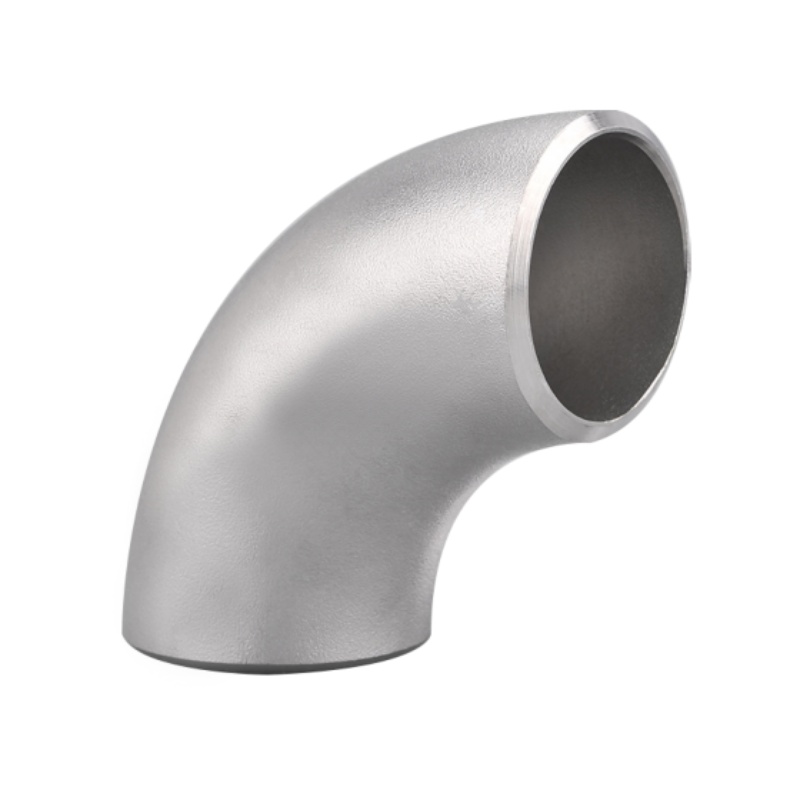
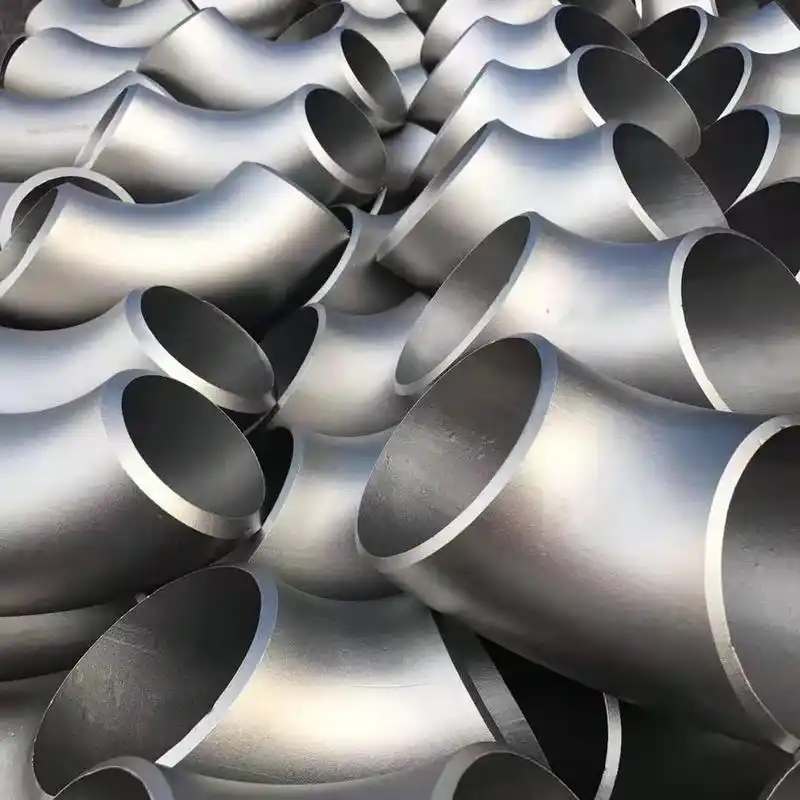
This 90° elbow is typically made from austenitic stainless steel, with 304 and 316L being the most common grades. 304 is suitable for general corrosive environments such as tap water and common chemical media, while 316L, with the addition of molybdenum, performs better against chloride ions, seawater, or acidic media. All elbows produced in our factory are formed by cold pushing or hot pressing from seamless steel pipes or welded steel plates, free from defects such as cracks or folds. Spectral material testing is performed on each batch to ensure compliance with chemical composition standards.
In addition, if you require sizes such as 1 1/2″ weld 90°, this refers to a 1.5-inch elbow in butt-weld connection type. The butt-weld process ensures a smooth transition at pipe joints, making it ideal for high-pressure or high-temperature pipelines.
2. Connection Types & Pressure Ratings
Elbows are mainly available in three connection types:
- Butt Weld: The pipe end is directly welded to the pipeline with no leakage points. Commonly used in high-temperature steam, petroleum transmission, and similar applications.
- Socket Weld: The pipe is inserted into the recess at the elbow end before welding, suitable for small diameters (generally under 2 inches).
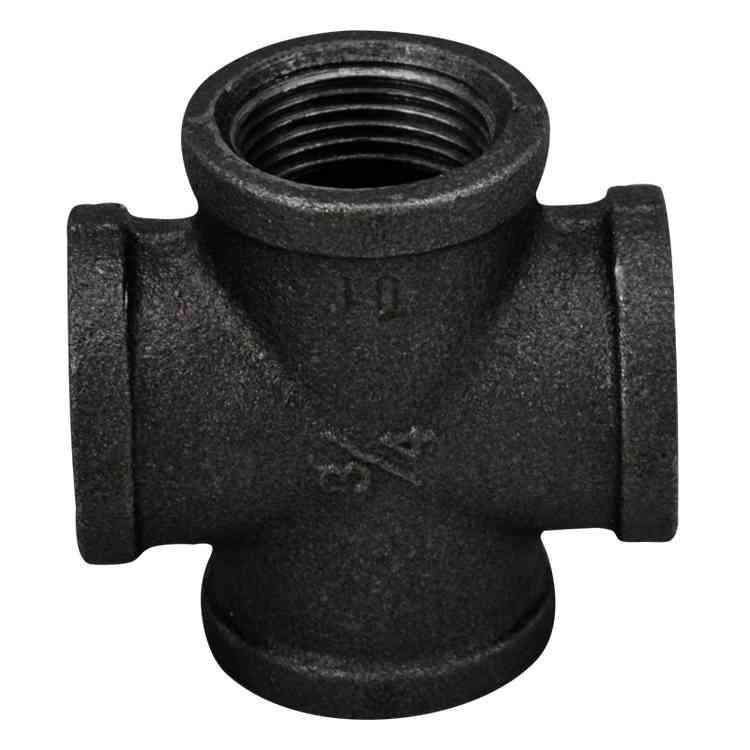
- Threaded: Connected by tightened NPT threads, allowing easy installation and disassembly, but limited to lower pressure applications.
In terms of pressure ratings, our products are manufactured in accordance with ASME B16.9. Common wall thickness schedules including Sch10, Sch40, and Sch80 correspond to different rated pressures. For example, a 1-inch 304 elbow of Sch40 can withstand approximately 1500 psi (about 10.3 MPa) at room temperature. For higher pressure requirements, Sch160 or XXS extra-heavy wall thickness can be selected. Many customers use specifications such as 1 1/4″ 90° degree elbow steel in chemical plant pipelines, with nominal pressure up to Class 1500 or even Class 2500.
3. Key Features in Practical Use
- Precise angle tolerance: The angle tolerance of our elbows is controlled within ±0.5°, ensuring accurate alignment at pipeline bends without forced pulling or distortion.
- Smooth inner wall: Stainless steel has low surface roughness; combined with our pickling and passivation treatment, it minimizes flow resistance and reduces fouling tendency.
- Wide temperature range: Suitable for pipelines from cryogenic conditions at -196°C (liquid nitrogen service) up to approximately 600°C, though derating is required at elevated temperatures.
- Corrosion resistance: Provided that the chloride ion concentration in the medium does not exceed limits (≤200 ppm for 316L, ≤50 ppm for 304).
4. Technical Parameter Table
| Item | Typical Value / Range |
| Nominal Pipe Size (NPS) | 1/2″ ~ 24″ (larger sizes customizable) |
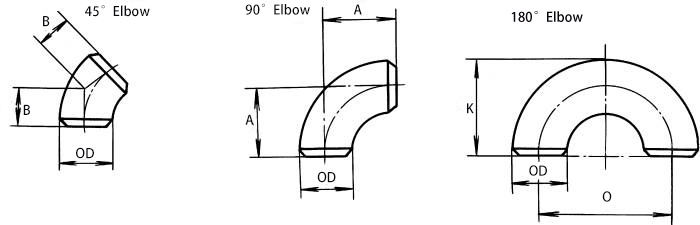
| Bend Angle | 90° (45°, 180° also available) |
| Bend Radius | Long radius (1.5D) or short radius (1.0D) |
| Wall Thickness Schedule | Sch10 / Sch20 / Sch40 / Sch80 / Sch160 / XXS |
| Material Grade | 304 / 304L / 316 / 316L / 321 / 310S |
| Connection Standard | ASME B16.9 (Butt Weld), B16.11 (Socket Weld / Threaded) |
| Pressure Class | Class 150 / 300 / 600 / 900 / 1500 / 2500 |
| Surface Treatment | Pickling & passivation, mechanical polishing (Ra≤0.8μm optional) |
5. Typical Application Scenarios
- Petrochemical Industry: Used in atmospheric and vacuum distillation overhead pipelines, FCC regenerator diplegs, where 316L elbows resist sulfide corrosion.
- Food & Beverage: Milk, beer conveying pipelines requiring inner wall polishing to Ra 0.4μm to prevent bacterial residue.
- Marine Seawater Systems: 316L elbows applied in cooling pipelines to avoid pitting corrosion.
- Pharmaceutical Industry: Purified water circulation pipelines, where elbows are electropolished to meet GMP standards.
- LNG Terminals: 304/316L elbows used in cryogenic environments with butt-weld connections to ensure toughness at -196°C.
6. FAQ for Overseas Buyers
Q1: Besides higher cost, what advantages do stainless steel 90 degree elbows have over carbon steel elbows?
A: The main differences lie in corrosion resistance and service life. Carbon steel elbows may corrode through within months in humid or acidic/alkaline environments, whereas 304 stainless steel typically lasts 5–10 years.
In addition, food and pharmaceutical regulations mandate stainless steel, as rust from carbon steel can contaminate products. For high-temperature steam pipelines, although carbon steel elbows are cheaper, rust scale easily forms on the inner wall and may block downstream valves or heat exchangers.
Q2: How to choose between butt-weld elbows and threaded elbows?
A: Follow this simple rule: for high pressure, high temperature, and large diameters, butt weld is mandatory. Threaded elbows are only suitable for low-pressure (≤600 psi), small-diameter (≤2 inches), and normal-temperature pipelines. Teflon tape is required during installation, with potential leakage risks over time. A properly welded butt-weld elbow forms an integral structure, remaining secure even under pipeline vibration or thermal expansion and contraction.
For instance, if your project specifies 1 1/2″ weld 90°, butt weld is undoubtedly the more reliable choice. Conversely, for temporary water or air lines requiring frequent disassembly, threaded elbows are more practical.
More Products