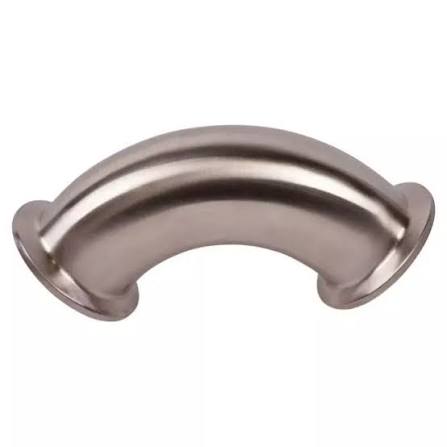
Core Factors Determining the Quality of Stainless Steel Reducing Elbows – A Selection Guide Based on International Standards and Practical Applications
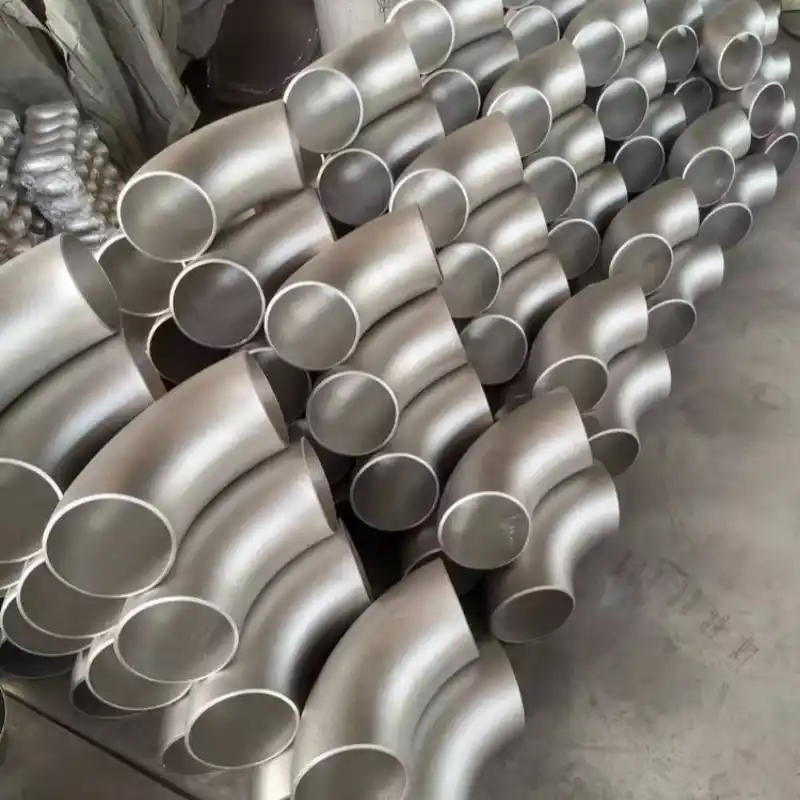
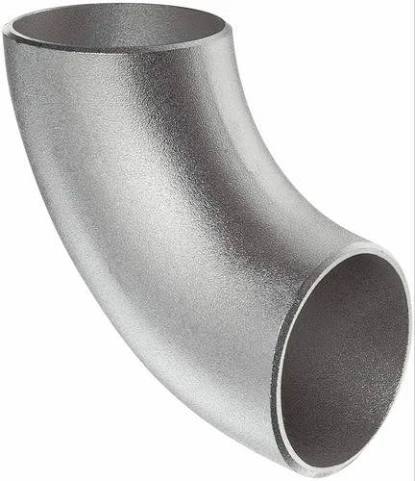
✅In piping systems for food & beverage, pharmaceutical, and chemical industries, the stainless steel reducing elbow is a critical component that simultaneously changes flow direction and pipe diameter. Unlike standard equal-diameter elbows, it requires coordinated control of angle, wall thickness variation, and hydrodynamic performance during a single forming process.
✅So, what are the core factors that determine its quality? This article, referencing international pipe fitting manufacturing standards (ASME B16.9, ASTM A403) and practical applications from leading domestic companies, breaks down the key selection points for you.
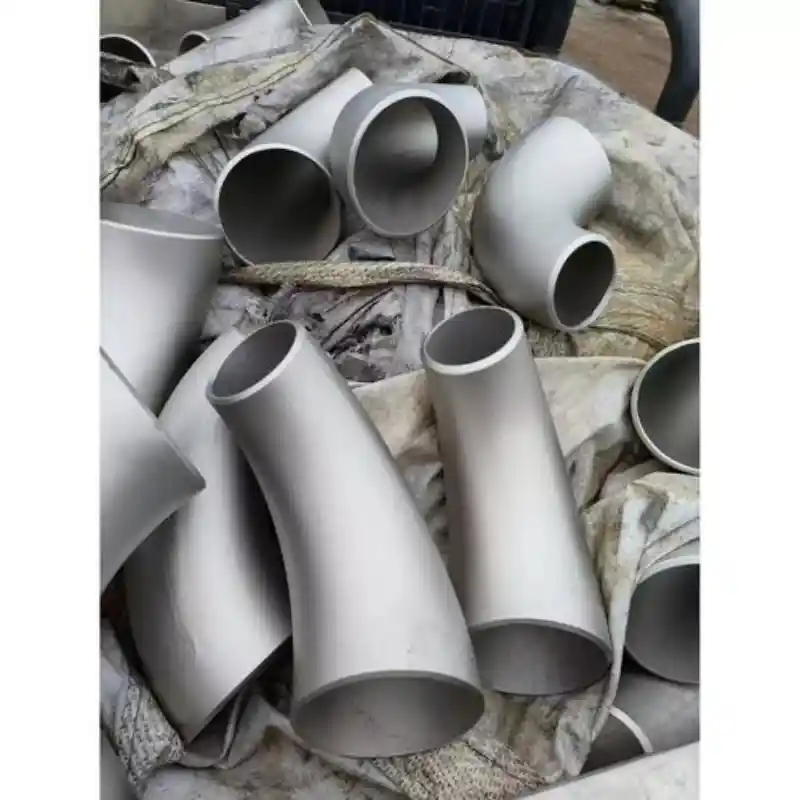
Butt weld reducing elbow dimensions – Dimensional tolerances determine installation reliability
✅The dimensional accuracy of butt-weld reducing elbows directly affects on-site fit-up efficiency. International codes explicitly require: end outside diameter tolerance of ±1.6 mm, and wall thickness reduction not exceeding 12.5% of the nominal wall thickness. Inferior products often exhibit excessive thinning at the bend’s back (extrados), leading to a sharp drop in local pressure resistance.
✅In the renovation of the purified water transmission line at the Nongfu Spring Hubei Danjiangkou plant, the project team compared multiple suppliers and ultimately selected 316L butt-weld reducing elbows (DN150×DN100, 90°) with wall thickness control tolerances within ±0.3 mm. They passed the hydrostatic test (test pressure 2.5 MPa) in one go, with a radiographic inspection acceptance rate of 100%. This confirms that precise dimensional management is the first line of defense for safe operation.
ASTM A403 WP316L reducing elbow – Material grade and heat treatment determine corrosion-resistant service life
✅Not all “stainless steels” are equally suitable. ASTM A403 classifies austenitic stainless steel elbows into WP, CR, and W grades, among which WP316L (low-carbon, molybdenum-bearing type) is the preferred choice for wet or mildly acidic media due to its excellent resistance to chloride pitting corrosion.
✅An industry journal, Stainless Steel World, reported a case where a chemical plant mistakenly used WP304 instead of WP316L, resulting in intergranular corrosion cracks within just 6 months in a salt-containing environment. Therefore, during selection, it is crucial to verify that the Material Test Report (MTR) shows Mo content ≥2.0%, and that the solution heat treatment temperature is between 1040–1120°C to ensure sufficient carbide dissolution and improved resistance to sensitization.
Concentric vs eccentric reducing elbow – Structural selection affects pumping system stability
✅Reducing elbows are classified into concentric and eccentric types based on centerline offset. Concentric reducing elbows are suitable for vertical pipelines or gas transport, while eccentric reducing elbows (flat-bottom installation) are commonly used in horizontal liquid lines to avoid cavitation and sediment accumulation. In the outlet piping of the intake pump house at the Nongfu Spring Danjiangkou plant, engineers chose an eccentric reducing elbow (DN200×DN150, bottom-flat) to mitigate water hammer impact and air accumulation. Combined with variable frequency speed control, this reduced post-pump pressure fluctuations by 18%. This detail is often overlooked but is critical for long-term energy-efficient system operation.
Schedule 40 stainless steel reducing elbow pressure rating – Pressure class and wall thickness schedule matching
✅Sch40 (standard wall) and Sch80 (extra heavy) are common wall thickness schedules. The pressure rating must be verified in accordance with ASME B31.3 Process Piping Code.
✅For example, in a water system at 120°C and design pressure 1.6 MPa, a DN150 Sch40 316L elbow has a Maximum Allowable Working Pressure (MAWP) of approximately 2.1 MPa, which meets requirements. However, if the medium temperature rises to 200°C, derating to 1.5 MPa is required, in which case upgrading to Sch80 is advisable. Our recommendation: never select wall thickness based solely on experience; instead, recalculate using the Barlow formula or dedicated software, and consider corrosion allowance.
Application case – stainless steel reducing elbow at Nongfu Spring Hubei Danjiangkou Plant
✔️In addition to the dimensional, material, and eccentric selection mentioned above, during the 2023 annual overhaul at the same plant, all stainless steel reducing elbows were inspected by endoscope. The results showed that batches manufactured with ASTM A403 WP316L and properly solution-annealed had smooth internal surfaces with no pitting, while another batch of the same specification that had not been strictly heat-treated exhibited slight oxide scale residue.
✔️Based on this, the plant revised its “Pipe Fittings Incoming Inspection Procedure,” explicitly adding “intergranular corrosion test (ASTM A262 Practice E)” as a mandatory inspection item. This case once again demonstrates that a high-quality stainless steel reducing elbow is not simply an “elbow plus reducer,” but a precise integration of materials science, manufacturing processes, and actual service conditions.
Summary
📌Selecting a high-quality stainless steel reducing elbow requires a comprehensive evaluation across four dimensions: dimensional tolerances (butt weld reducing elbow dimensions), material standard (ASTM A403 WP316L), structural type (concentric vs eccentric), and wall thickness/pressure rating (schedule 40 pressure rating).
📌Drawing on the experience of leading companies like Nongfu Spring, translating code requirements into hard indicators for incoming inspection and project acceptance ensures long-term safety and cost-effectiveness of the piping system.