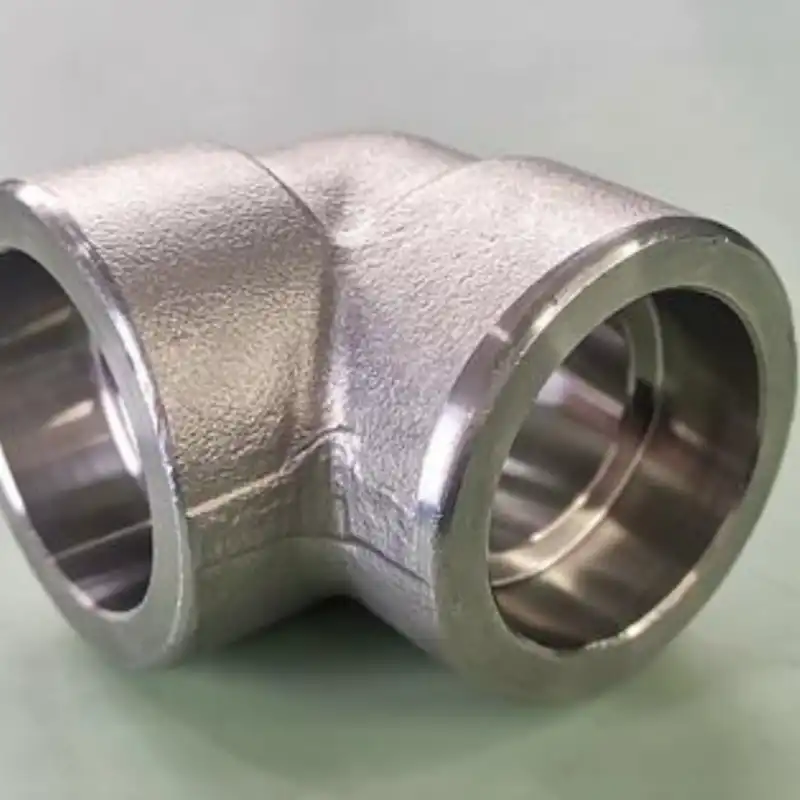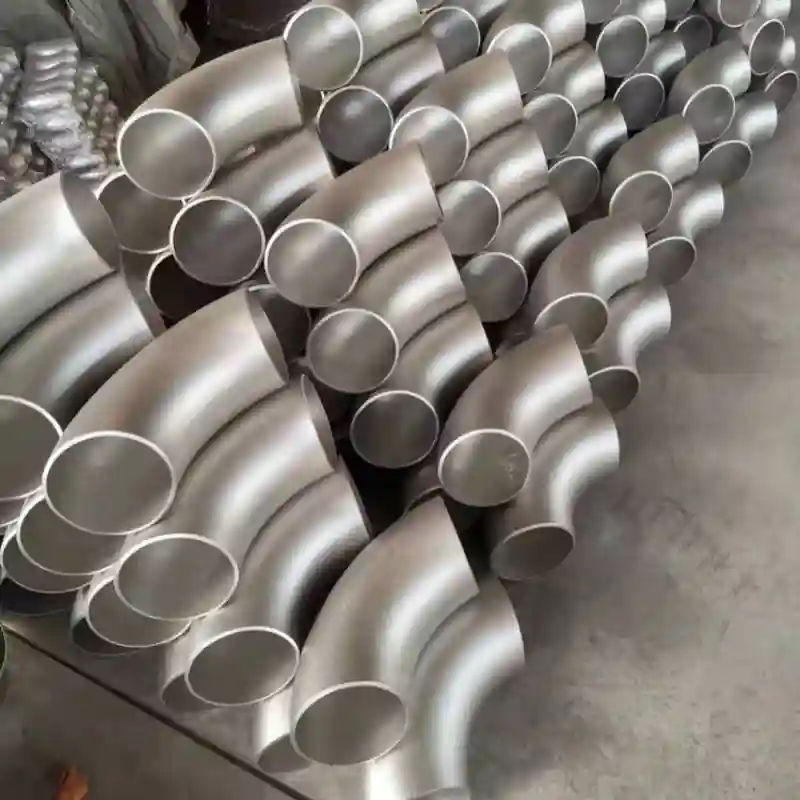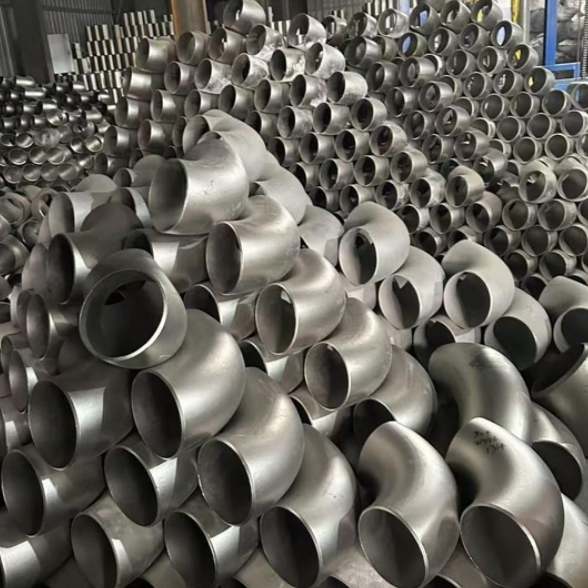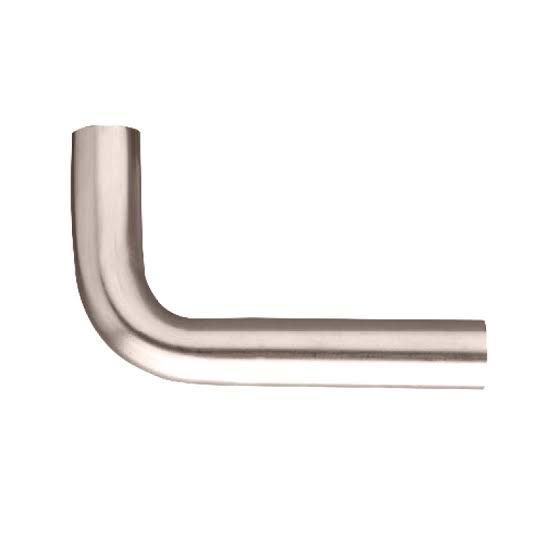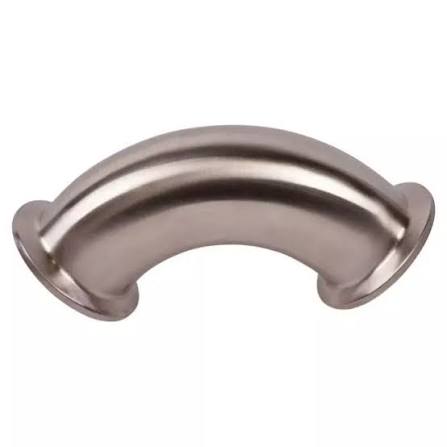
What is a Butt Welding Elbow? Why Choose It?
In industrial piping systems, a Butt Welding Elbow is a critical fitting that changes the direction of media flow through a full-penetration butt weld. Its joint strength is equivalent to that of the parent material, making it the most reliable piping turning solution under high pressure, high temperature, and corrosive conditions.
Why Choose Butt Welding Elbow?
Compared with threaded or socket-welded connections, the butt welding elbow offers three irreplaceable advantages:
-
Structural integrity: The welded joint is as strong as the pipe body, capable of withstanding extremely high internal pressure and external loads.
-
Zero leakage risk: The full-penetration weld structure has no sealing faces, making it especially suitable for flammable, toxic, or ultra-high-temperature fluids.
-
Excellent flow profile: The smooth internal wall has no gaps, resulting in minimal pressure drop and turbulence, significantly reducing pumping energy consumption.
Key Standard: ASME B16.9
✅The globally recognized standard for butt-welding fittings is ASME B16.9, which strictly specifies dimensional tolerances, wall thickness, and end bevels. When purchasing, it is mandatory to require the supplier to provide a Material Test Certificate (MTC) and verify the Heat Number. For stainless steel materials, the wall thickness schedule should also be determined in accordance with ASME B36.19.
Parameters & Dimensions
Selection requires clarification of:
-
Angle: Most commonly available in 45°, 90°, and 180°.
-
Radius: Long Radius (LR, R=1.5D) is the default choice for low flow resistance; Short Radius (SR, R=1.0D) is used where space is limited.
-
Wall thickness schedule: Must match the pipe, e.g., Sch 40, Sch 80, Sch 160.
Material Options
Common materials include:
-
Carbon Steel (ASTM A234 WPB) – suitable for general water, oil, and gas services.
-
Stainless Steel (ASTM A403 WP304/316) – excellent corrosion resistance, used in chemical and food industries.
-
Alloy Steel (ASTM A234 WP11/WP22) – specifically designed for high-temperature and high-pressure applications.
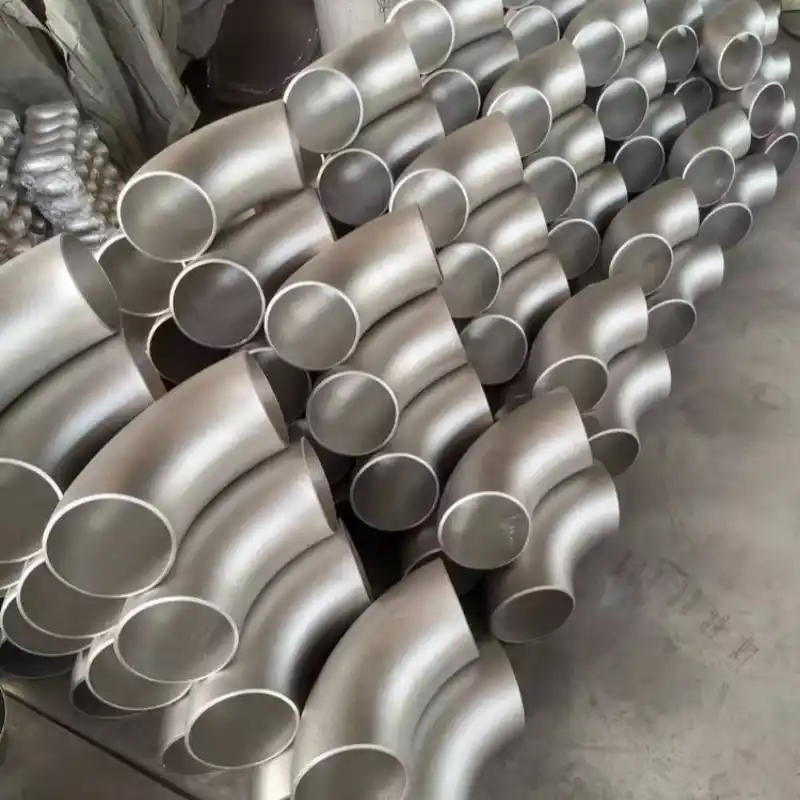
Stainless Steel Butt-Weld Pipe Elbows
✅In corrosive media or hygienic applications (e.g., pharmaceuticals, seawater cooling), stainless steel butt-weld elbows are the first choice. Their smooth surface resists rust and withstands acidic and alkaline environments. When using 304/316L grades, the low carbon content effectively avoids intergranular corrosion in the heat-affected zone of the weld, ensuring long-term safe operation.
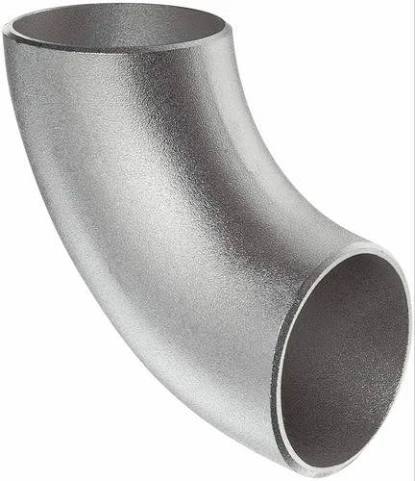
Stainless Steel Butt Weld 90 Degree Elbows
✅The 90° butt-weld elbow is the most commonly used directional change fitting in pipelines. For stainless steel, the bend radius of the 90° elbow is typically executed as Long Radius (R=1.5D) per ASME B16.9 to reduce erosion on the back arc. In steam or high-velocity fluid systems, choosing a stainless steel 90° butt-weld elbow significantly extends maintenance intervals and lowers repair costs.
Buttweld Seamless Steel Pipe Elbow
✅Seamless butt-weld elbows, having no longitudinal weld seam, offer better overall uniformity and are suitable for ultra-high-pressure or cyclic loading conditions. They are typically manufactured by hot pushing or cold forming, followed by solution annealing to eliminate residual stress. For seamless elbows in sizes DN50~DN600, ASME B16.9 strictly controls wall thickness thinning to ensure sufficient strength margin.
Duplex Stainless Steel Seamless Elbow
✅In harsh environments containing chlorides or hydrogen sulfide (e.g., offshore platforms, desulfurization units), duplex stainless steel seamless butt-weld elbows (e.g., 2205 / 2507) combine the toughness of austenite with the stress-corrosion resistance of ferrite. Their yield strength is roughly twice that of ordinary 316L, so thinner walls can be used to reduce weight, while the pitting resistance equivalent number (PRE) > 35 greatly enhances system reliability.
Typical Applications
-
Oil & Gas: Long-distance pipelines, wellheads, and gathering systems.
-
Petrochemical: Reactor and heat exchanger connecting piping.
-
Power Energy: Boiler main steam lines.
-
Marine Engineering: Ballast water, fire-fighting, and process lines.
Conclusion:
📌Selecting a butt-welding elbow in compliance with ASME B16.9 and correctly choosing stainless steel, duplex stainless steel, or alloy steel based on service conditions is an economical strategy to ensure the full-lifecycle safety of the piping system. AIFN offers a full range of butt-welding fittings – welcome to inquire about selection and technical support.