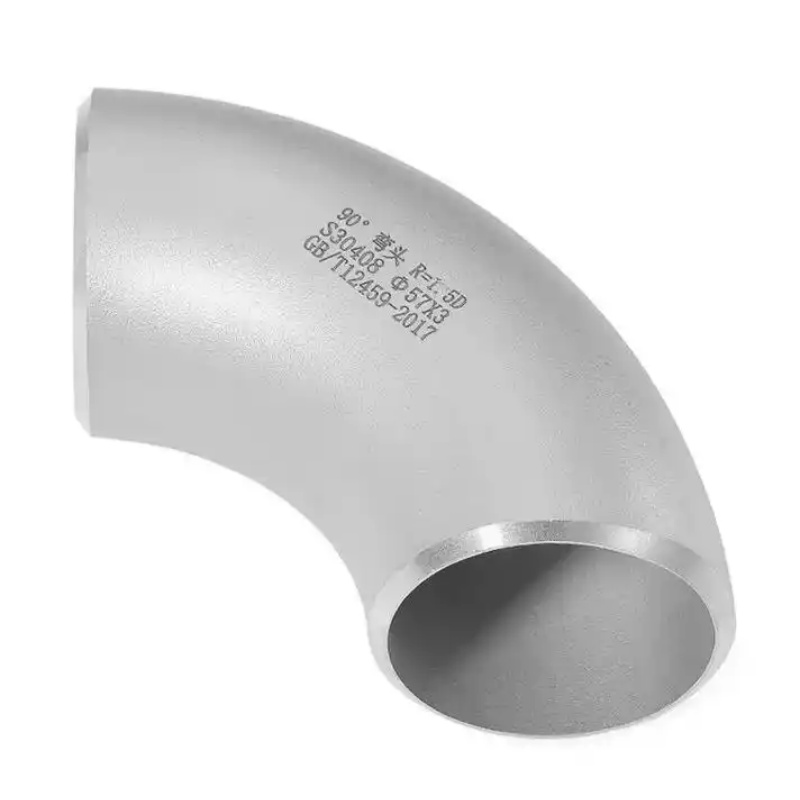
Is an elbow a 45° or 90°?
In on-site pipeline connection, technicians often encounter a fundamental question: Are there only two types of elbows, 45° and 90°? The answer is no. Elbow angles cover a wide range of specifications from 22.5° to 180°, yet 45° and 90° products indeed account for over 80% of engineering usage.
The selection of elbow angle directly determines pipeline routing, fluid transmission efficiency and weld joint quality.
1. On-site Selection Criteria: Corner Layout Demand and Pressure Drop Control
When pipelines need to bypass concrete columns or equipment foundations, 90° elbow is commonly adopted for vertical direction transition. It is worth noting that a standard 90° long radius elbow (bending radius: 1.5D, D stands for nominal diameter) has a local resistance coefficient of approximately 0.3. In contrast, two series-connected 45° elbow for the same directional change can reduce the total resistance coefficient to around 0.2.
A renovation case of the circulating water pipeline in Yangjiang Chemical Plant, Jiangsu Province, verified that replacing single 90° elbows with dual 45° elbow layout increased the pump outlet pressure by 0.12MPa and reduced vibration value by 18%.
2. Measurement Method for Installed Elbows
If no angle marking is available on on-site pipelines, a simple protractor can be used for angle measurement. Extend the straight pipe sections at both ends of the elbow to form an intersecting line, then read the supplementary angle value. For instance, if the measured supplementary angle is 135°, the actual elbow angle is 45° (180°-135°).
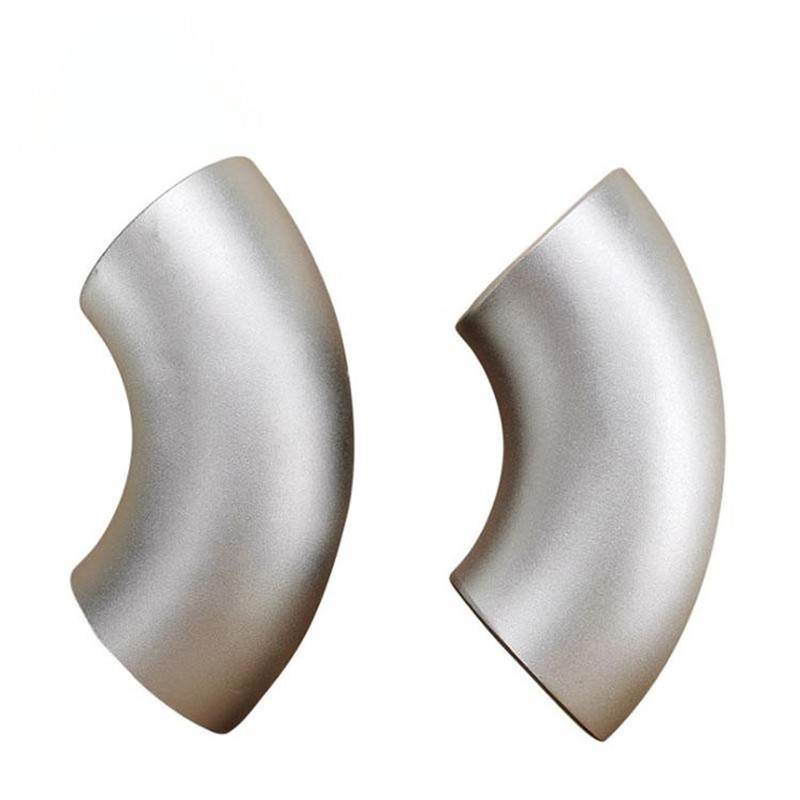
For 45 degree pipe elbow for tight spaces, the dimension from the center line to the end face is normally 0.625×D (in accordance with ASME B16.9). Meanwhile, the corresponding dimension of 90 degree long radius elbow is 1.5×D, which serves as a reliable parameter for rapid visual distinction on site.
3. Typical Problems Caused by Incorrect Elbow Selection
Stress cracks occurred on a steam tracing pipeline due to improper installation: 90° elbow was applied at a position that only required 30° deflection.
Solutions: Adopt butt weld elbow 45° with on-site angle cutting (re-grooving and wall thickness calibration are required after cutting), or adopt adjustable bending pipes as an alternative.
Summary
45° and 90° elbows are not the only options for on-site pipeline construction. Mastering the differences between the two in terms of pressure drop, space occupation and welding workload enables technicians to make accurate and reliable selection decisions efficiently. Carrying an angle comparison chart and wall thickness allowable thinning table on site is far more practical than relying solely on construction experience.