How do you determine pipe elbow capacity?
In pipeline system design, accurately determining the flow capacity of an elbow is critical for ensuring fluid transport efficiency. Engineering practice typically quantifies this parameter through the calculation of pressure loss coefficients and equivalent lengths. The standardized determination process based on the Darcy-Weisbach equation and the resistance coefficient method is outlined below.
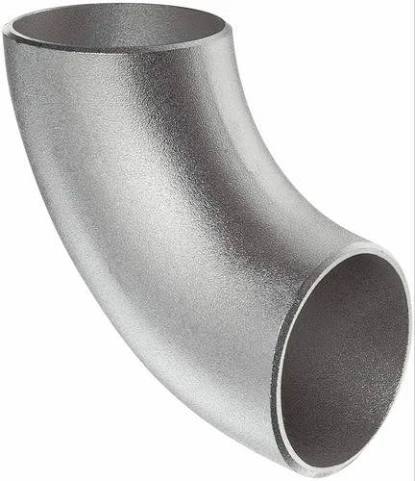
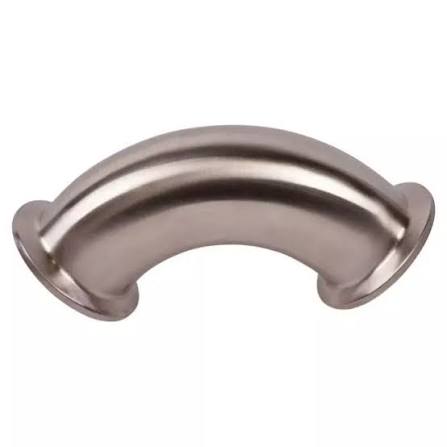
First, the geometric parameters of the elbow directly affect its local resistance. Taking a 90° long-radius elbow as an example, when the bend radius-to-pipe diameter ratio (R/D) is 1.5, the empirical resistance coefficient K is approximately 0.3; for a short-radius elbow (R/D = 1.0), the K value rises to about 0.75.
To perform a pipe elbow flow capacity calculation, it is necessary to measure the fluid velocity, density, and pressure drop across the elbow, then substitute them into the formula ΔP = K·(ρv²/2) to back-calculate the K value, and compare it with standard values.
Second, the Reynolds number (Re) changes the flow regime. When Re < 2000 (laminar flow), the elbow pressure loss coefficient may be several times higher than in turbulent flow. In such cases, correction charts from Idelchik’s Handbook of Hydraulic Resistance should be used. For common water or low-viscosity liquids (Re > 10⁴), the effect of Reynolds number can be neglected, and a fixed K value can be adopted.
Finally, the equivalent length method is more convenient for engineering estimation: the elbow is treated as a section of straight pipe with an equivalent length Le = K·(D/f), where f is the pipe friction factor (e.g., f ≈ 0.02 for steel pipes). For example, with K = 0.3 and D = 100 mm, Le = 1.5 meters. By combining this with the hydraulic resistance in piping elbows analysis throughout the whole pipeline, local bottlenecks that cause energy loss can be avoided.
In practice, it is recommended to refer to the dimensional tolerances in the ASME B16.9 standard and to verify critical points through CFD simulation. Mastering the above methods allows designers to quickly match elbow specifications with system flow requirements, improving pumping efficiency and reducing operation and maintenance costs.