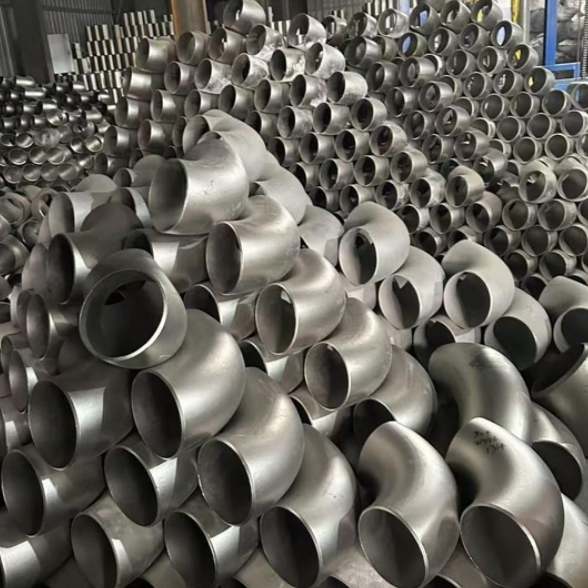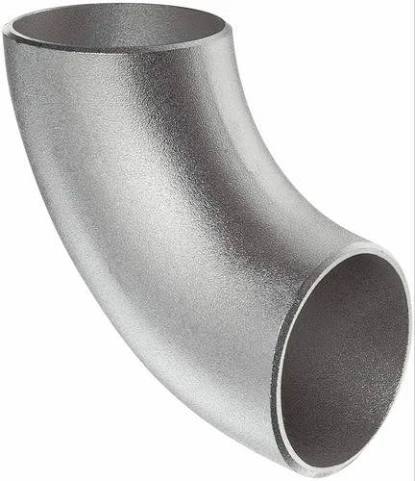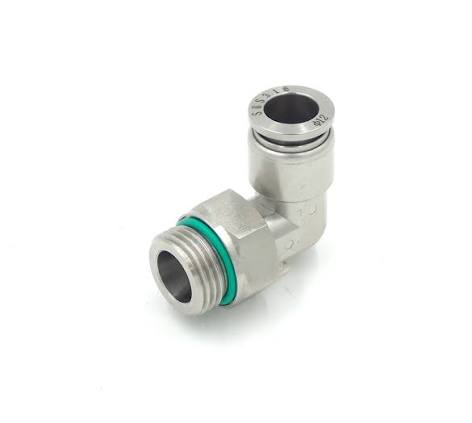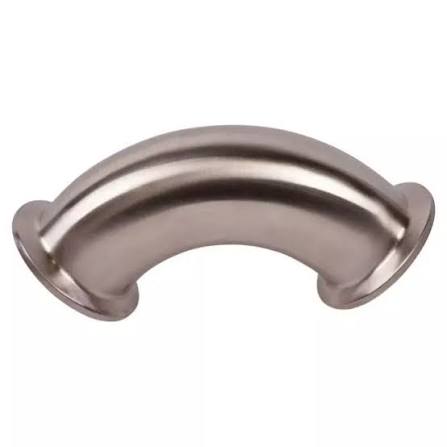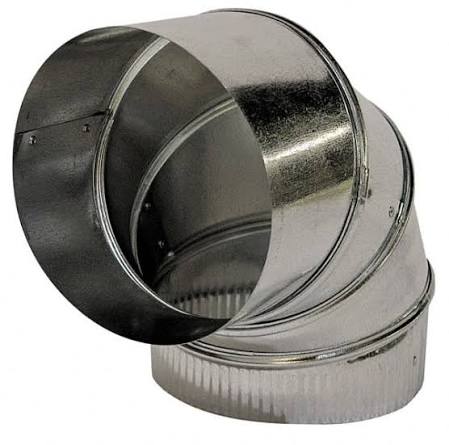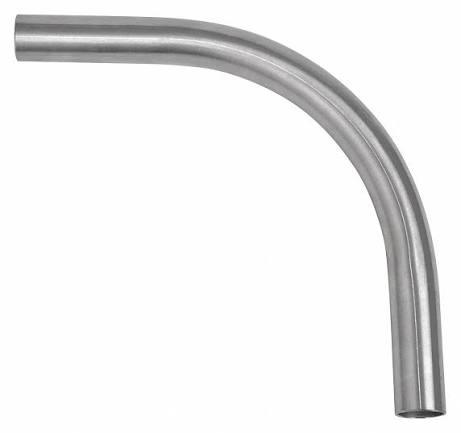
In modern industrial piping systems, the High Productivity 90 Degree Stainless Steel Elbow has become a key component for enhancing overall operational efficiency. For engineers and project procurement managers, selecting the right elbow is not merely about connecting pipes—it is an investment in the long-term stability and output ratio of the entire system.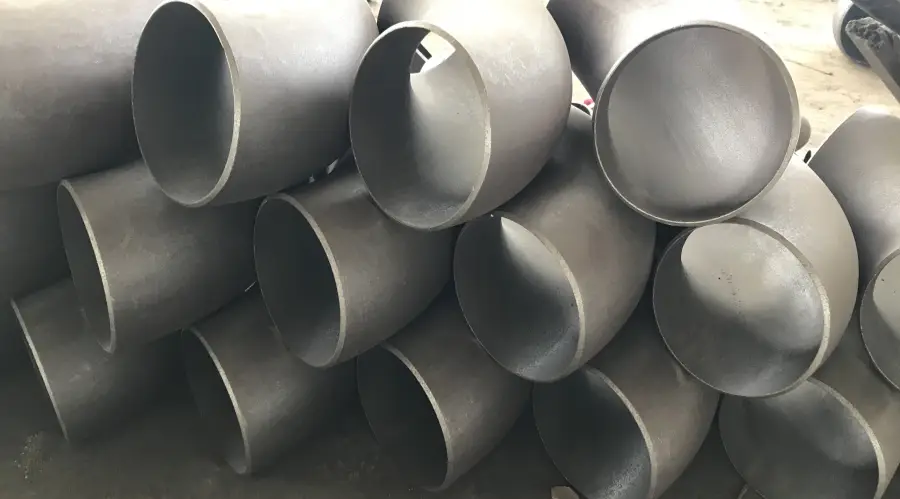
1. Precise Matching: Mastering ss elbow 90 degree dimensions
☑️First, the prerequisite for high productivity is precise dimensional matching. When evaluating elbows, we must rigorously review ss elbow 90 degree dimensions. This includes not only nominal diameter (DN/NPS) and wall thickness (Schedule), but more importantly, the center-to-end distance (dimension A) and end bevel form. For high‑productivity applications, installation speed is critical. Elbows with dimensional tolerances within the ASME B16.9 standard ensure perfect alignment with pipes, reducing on‑site grinding and adjustment time, thus significantly shortening installation schedules. A dimensionally accurate elbow is the physical foundation for welding quality and fluid transport efficiency.
2. Process Core: Preferring stainless steel seamless elbow pipe fittings
☑️In high‑pressure or high‑temperature fluid transport scenarios, the structural integrity of the fittings directly determines operational safety. Choosing stainless steel seamless elbow pipe fittings is the key process guarantee for achieving high productivity. Compared with welded elbows, seamless elbows have no weld metal heat‑affected zone, offering a more uniform grain structure and higher resistance to corrosion fatigue. Over years of continuous operation, the elbow can withstand erosion and stress corrosion cracking, significantly reducing unplanned downtime due to fitting failure, and ensuring the piping system consistently operates at high output.
3. Cost Optimization: Obtaining stainless steel long radius elbow quotation
☑️In the early project planning phase, understanding the stainless steel long radius elbow quotation is not only about cost accounting but also about forecasting future energy consumption. Although long‑radius elbows (R=1.5D) are slightly heavier and bulkier than short‑radius ones, they have lower fluid resistance coefficients and reduced pressure drops. When conveying the same medium, pumping energy consumption is lower. When requesting quotes from suppliers, it is advisable to focus on the elbow’s diameter, wall thickness, and applicable standards to obtain accurate pricing. Selecting an optimized long‑radius elbow solution can effectively reduce life‑cycle operating costs, thereby improving capital efficiency.
4. Performance Standards: Selecting based on industrial stainless steel elbow
✅High productivity relies on strict industrial standards. As an industrial stainless steel elbow, the product must comply with material standards such as ASTM A403 or EN 10253‑4. Furthermore, for more demanding chemical or marine engineering environments, priority should be given to 316L or duplex stainless steel grades with superior intergranular corrosion resistance. Mature ✅industrial‑grade elbows should also be supplied with material certificates (EN 10204 3.1 or 3.2), which are the cornerstone of traceability and quality assurance in high‑productivity project management.
5. Logistics and Installation: Calculating stainless steel 90 degree elbow weight
✅Finally, the stainless steel 90 degree elbow weight cannot be overlooked. Accurate weight data is crucial for lifting scheme design, support and hanger selection, and transport cost estimation in large‑scale projects. For large‑diameter elbows with significant unit weight, knowing the weight in advance helps plan safe lifting solutions, avoiding safety hazards during installation and ensuring that the installation work proceeds safely and efficiently.
✅In summary, achieving a High Productivity 90 Degree Stainless Steel Elbow requires comprehensive control from these five dimensions: dimensional accuracy, material and process, economic costs, industrial standards, and physical weight. Choosing a professional and reliable piping fittings supplier is a wise move to ensure that your piping system achieves high capacity and low maintenance goals.