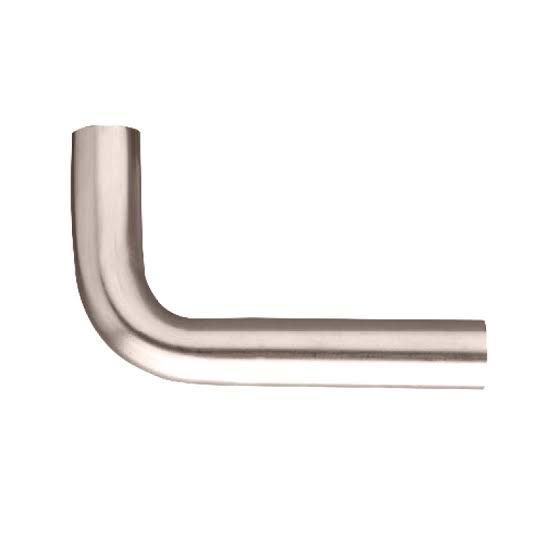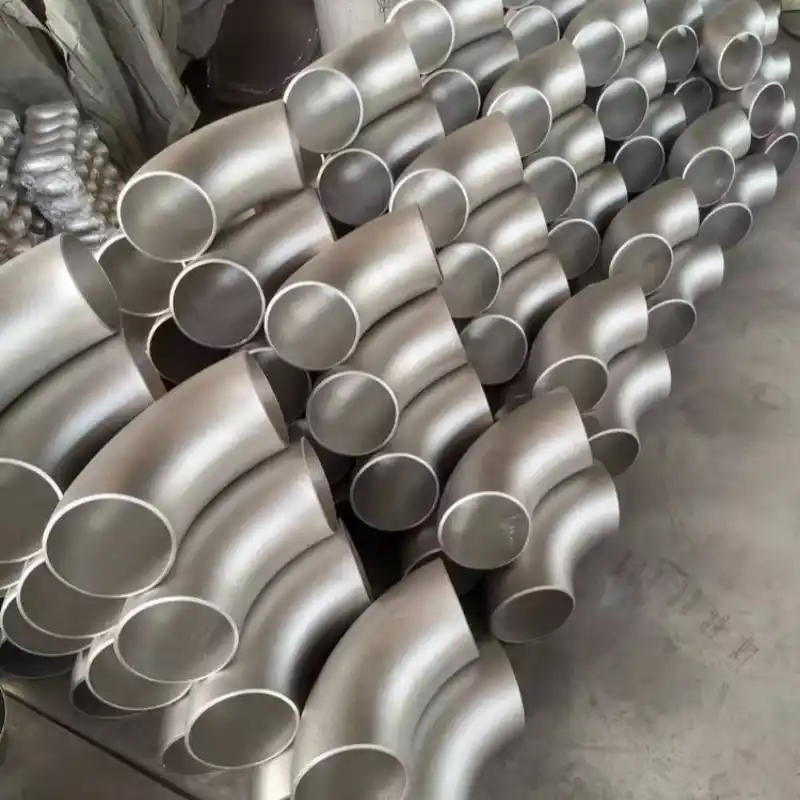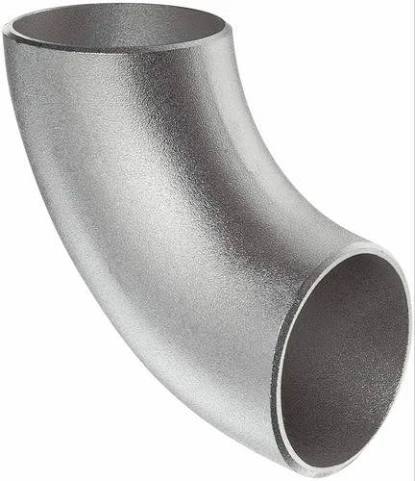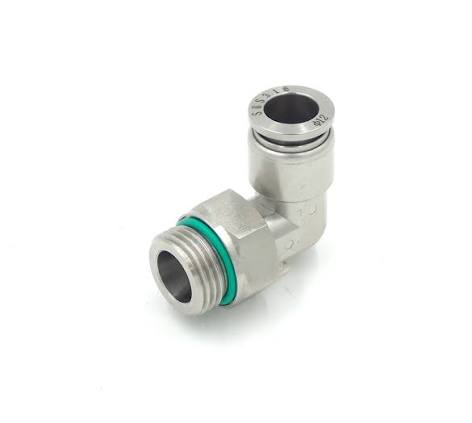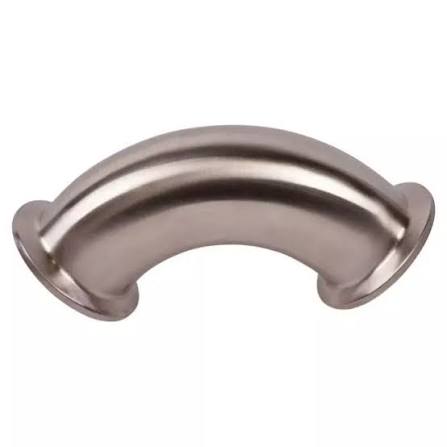
High Performance 90 Degree Stainless Steel Elbow
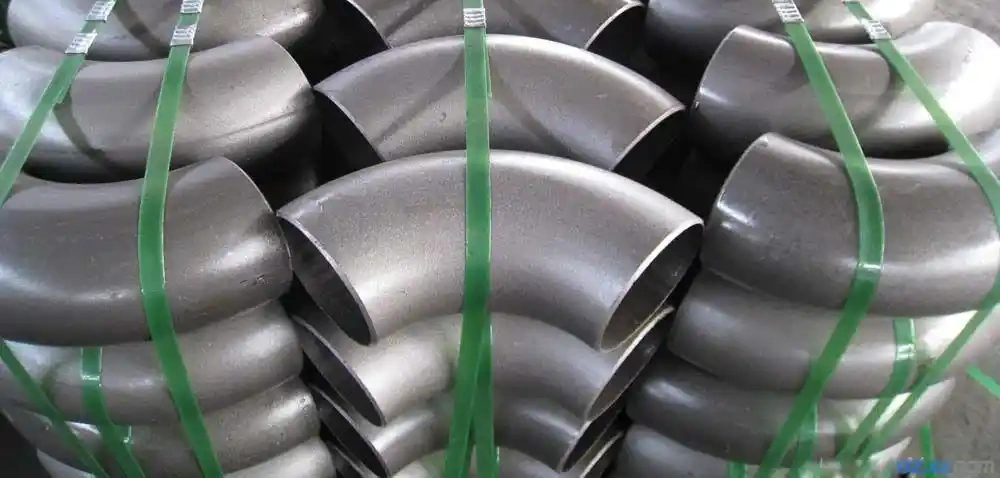
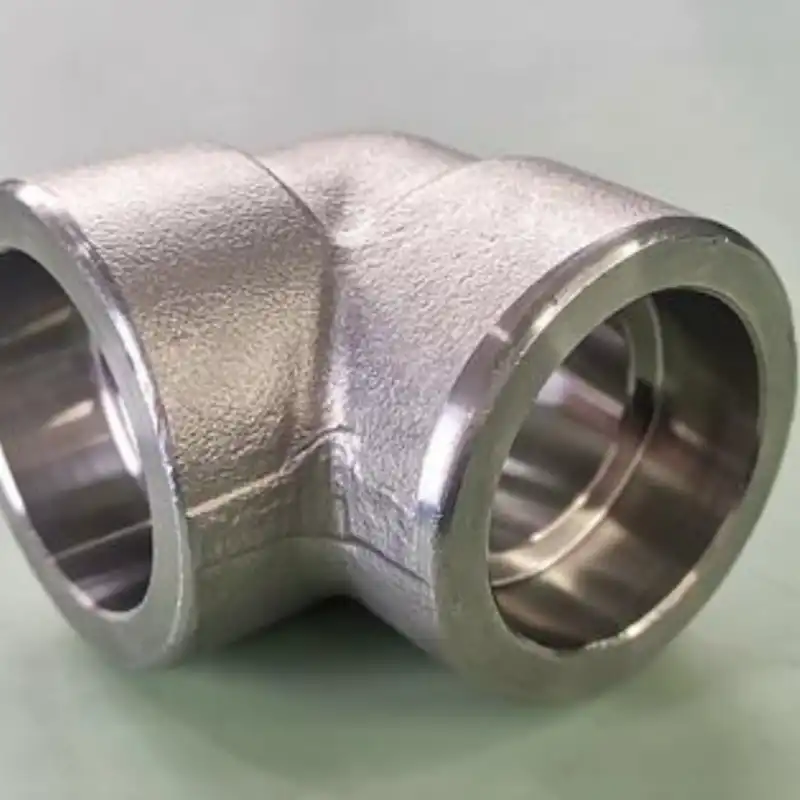
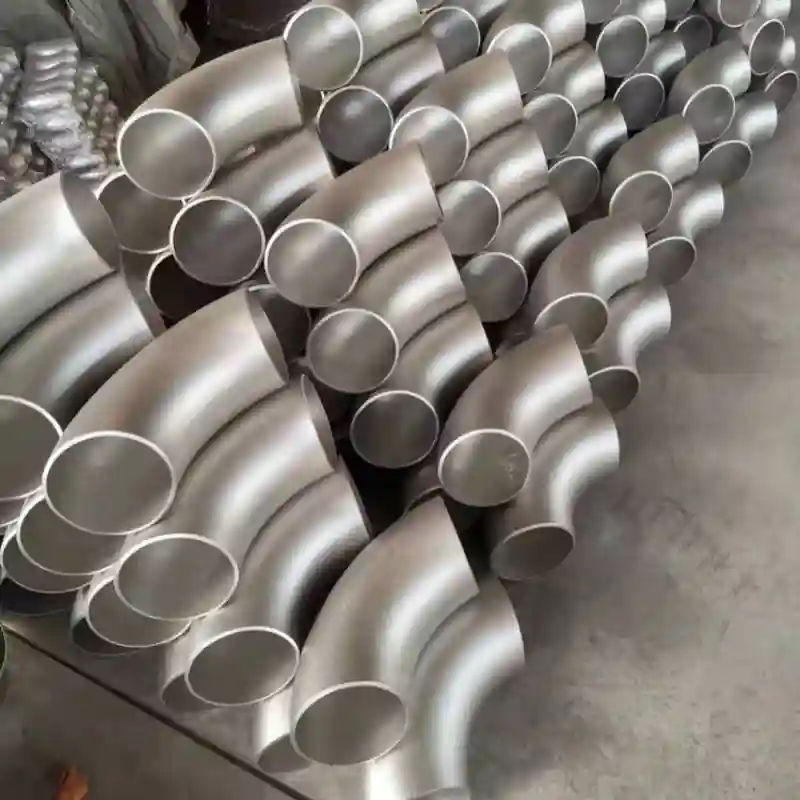
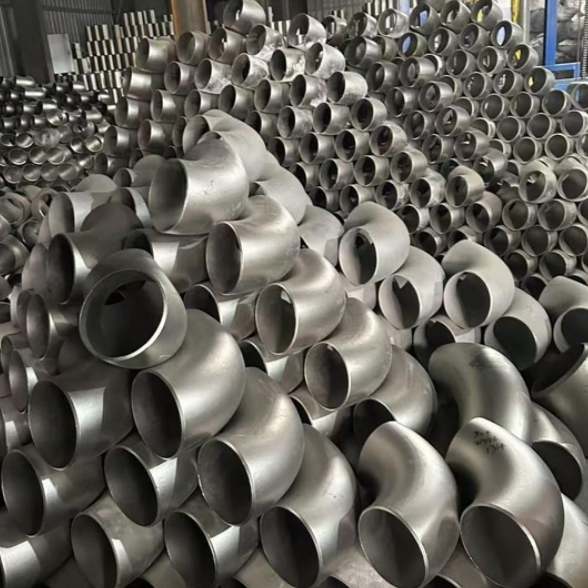
In industrial piping systems, the 90 degree stainless steel elbow serves as a core component to change fluid flow direction. When the system demands corrosion resistance, high pressure resistance and long service life, the ss 90 degree elbow stands out as the optimal choice thanks to its superior mechanical properties.
This article conducts an in-depth analysis of this high-performance product suitable for harsh working conditions, with particular focus on butt-welded type, short radius design and complete matching solutions for Schedule 40 piping systems.
Material & Manufacturing Standards: Foundation of High Performance
Strict material selection and process control are essential for high-performance products. ASTM A403 WP316/304L stainless steel is commonly adopted, featuring chromium-nickel composition (16-18% Cr, 10-14% Ni) that delivers excellent pitting resistance in acidic or chloride-containing media.
Main manufacturing methods include Cold Push Forming and Hot Pressing. The wall thickness uniformity of finished products fully complies with the ±12.5% tolerance specified by ASME B16.9. For welding applications, the bevel ends of weldable 90° elbow are precisely machined to ensure welding penetration rate over 95% during butt joint connection and eliminate stress concentration risks.
Geometric Parameters: Selection of Long Radius vs Short Radius
The centerline bend radius of standard elbows is 1.5 times the nominal diameter (DN), namely Long Radius (LR). For skid-mounted equipment and renovation projects with limited installation space, the short radius weld 90° elbow with 1D bend radius can greatly reduce space occupation at turning points.
Take DN100 (4-inch) specification as an example:
- Long Radius (LR): Bend radius 152mm, pressure drop coefficient approx. 0.22
- Short Radius (SR): Bend radius 102mm, pressure drop coefficient rises to 0.33, ideal for low-flow and low-viscosity fluid transmission
The short radius structure also lowers secondary bending stress at bends. It is worth noting that for media carrying solid particles, the erosion rate on the inner arc of short radius elbows is 20% to 30% higher than that of long radius counterparts. Therefore, system designers shall make proper selection based on actual flow velocity (recommended liquid flow rate ≤4.5m/s) and overall pressure drop budget.
Matching with Schedule 40 Pipes: Wall Thickness & Pressure Rating
The schedule 40 pipe 90 degree elbow is widely applied in North American projects and export engineering. In accordance with ASME B36.10 standard, the wall thickness of 4-inch Schedule 40 pipe is 6.02mm, while that of 6-inch pipe reaches 7.11mm.
The minimum wall thickness of finished elbows shall not be less than 87.5% of matched pipe wall thickness, conforming to the allowable thinning range stipulated in ASME B16.9. Hydraulic pressure tests prove that 304L Sch40 elbows can steadily withstand continuous working pressure up to 1300 psi at room temperature for 4-inch size, and maintain stable operation under 900 psi working pressure at 200°C. Duplex stainless steel such as 2205 can further boost pressure bearing capacity by 40%.
Welding & Non-Destructive Testing (NDT) Requirements
High-performance piping accessories require full traceability of all welding joints. All butt-weld ends of weldable 90° elbow are subject to 100% Penetrant Testing (PT) or Magnetic Particle Testing (MT) to eliminate cracks and incomplete fusion defects.
For pipelines transporting high-pressure steam or flammable fluids, elbow bodies shall undergo Radiographic Testing (RT) in line with ASME B16.34, reaching at least Grade II standard with no pores or slag inclusions allowed. In addition, the inner arc section of short radius elbows belongs to high-stress areas, so extra hardness inspection (HV≤200) is suggested before delivery to prevent hydrogen-induced cracking failure.
Typical Applications in Electric Power & Energy Industry
Endowed with high structural strength, thermal shock resistance and stress corrosion cracking resistance, such 90 degree stainless steel elbows are indispensable components in the Electric Power & Energy sector.
- Combined Cycle Gas & Steam Power Plants: Short radius butt weld elbows are adopted in high-temperature reheat steam pipelines (540°C, 6 MPa) for compact layout inside waste heat boiler transition sections
- Nuclear Power Plant Auxiliary Systems: Sch40 316L elbows are used in equipment cooling water circuits to resist long-term corrosion caused by boric acid solution
- Concentrated Solar Power Stations: High-performance long radius elbows are installed at turning points of molten salt pipelines operating within 290°C~565°C circulation range, capable of enduring frequent thermal cycling and thermal expansion displacement
All products applied in above scenarios must pass strict verification on fatigue life (minimum 5,000 full-temperature cycles) and intergranular corrosion resistance qualified by ASTM A262 Practice E standard.