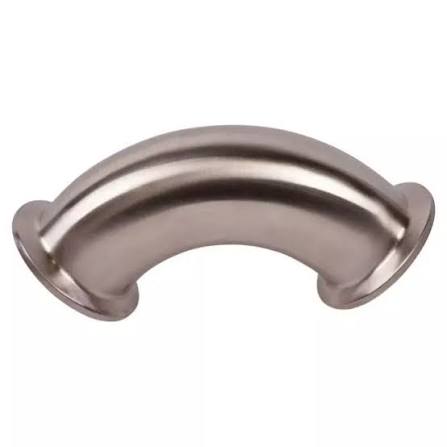
Can a 4″×9″ Pipe Fit an Elbow?
In HVAC installation, matching rectangular duct elbows is vital for smooth airflow and stable pressure loss. Contractors and procurement often ask whether a 4″×9″ rectangular duct can fit a standard elbow.
Drawing on years of pipe fitting experience, ANSI/ASHRAE 120-2022 standards and massive HVAC project cases, this article delivers concise, actionable guidance on size definition, elbow types, matching rules, on-site checks and non-standard solutions.
1. Dimensional Logic of 4″×9″ Rectangular Duct
HVAC rectangular ducts follow the rule long side first, short side second. For 4″×9″ duct, 9″ is the long side and 4″ the short side, equal to 228.6mm×101.6mm. It closely matches the common UK Kair 90° rectangular elbow size 220mm×90mm for direct compatibility.
2. Common HVAC Rectangular Elbow Types
Elbows are categorized by angle and fitted with or without guide vanes.
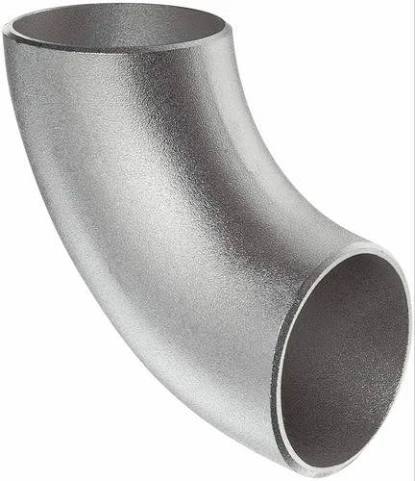
90° elbows suit right-angle turning, 45° for gradual deflection, and 135° for special layouts, all available in standard sizes.
Per JGJ/T141-2017 and DW/144, guide vanes are mandatory only when the duct long side exceeds 500mm. Since 4″×9″ duct is only 228.6mm on the long side, guide vanes are optional; vaned elbows offer better airflow for office and hospital HVAC systems.
Manufacturing tolerance (±0.05 inches) affects fitting. Choose elbows compliant with ANSI/ASHRAE 120-2022 for precise interface dimensions.
3. Two Core Criteria for Elbow Matching
Nominal size alone cannot guarantee fitting. Compatibility depends on dimension accuracy and connection method.
3.1 Dimensional Matching
- Outer diameter fit: Interface inner diameter is 0.05–0.1 inches larger than duct outer diameter, ideal for galvanized metal ducts with socket installation. Proper gap avoids air leakage or forced insertion.
- Inner diameter fit: Interface outer diameter is slightly smaller than duct inner diameter, suitable for PP plastic ducts via bonding or welding.
If duct dimension deviation exceeds ±0.1 inches, matching failure rate rises over 30%. Dimensional accuracy is the primary premise.
3.2 Connection Methods
- Socket connection: For medium/low-pressure HVAC (≤1500Pa). Control gap at 0.05–0.1 inches with over 1.5″ insertion depth, sealed with tape or silicone. Simple and widely used for 4″×9″ ducts.
- Flange connection: For high-pressure systems (>1500Pa). Use 20mm standard flanges per DW/144; flange deviation must be ≤0.03 inches for accurate bolt alignment.
- Lock seam connection: For on-site metal duct jointing, requiring dimension deviation within ≤0.02 inches to prevent air leakage and disconnection.
4. Three-Step On-Site Compatibility Check
Avoid post-purchase fitting issues with simple pre-installation checks, assisted by an elbow duct area calculator:
- Compare duct outer perimeter with elbow inner perimeter; a 0.1–0.2 inch gap means a proper fit.
- Check opposite side distance; elbow margin 0.05–0.1 inches larger with uniform tolerance is acceptable.
- Test fit with a 10–15cm duct sample; smooth insertion, over 1.5″ depth and even tiny gaps confirm compatibility.
5. Solutions for Non-Standard Ducts
If 4″×9″ duct is out of tolerance or no standard elbow is available:
- Custom elbow: Provide exact duct size, material, working pressure and connection type to manufacturers like AIFN Metal Technology for bespoke production.
- Reducer adapter: Use a rectangular transition adapter to link non-standard 4″×9″ duct with 4″×8″ or 5″×9″ standard elbows. Keep adapter material consistent, length 3–5 inches, and fully seal joints to limit airflow resistance.
Conclusion
Can a 4″×9″ pipe fit an elbow?
Standard 4″×9″ rectangular duct (deviation ≤±0.1 inches) perfectly fits matched standard elbows with correct dimension tolerance and proper connection method. Non-standard ducts can also be well fitted via custom elbows or reducer adapters.