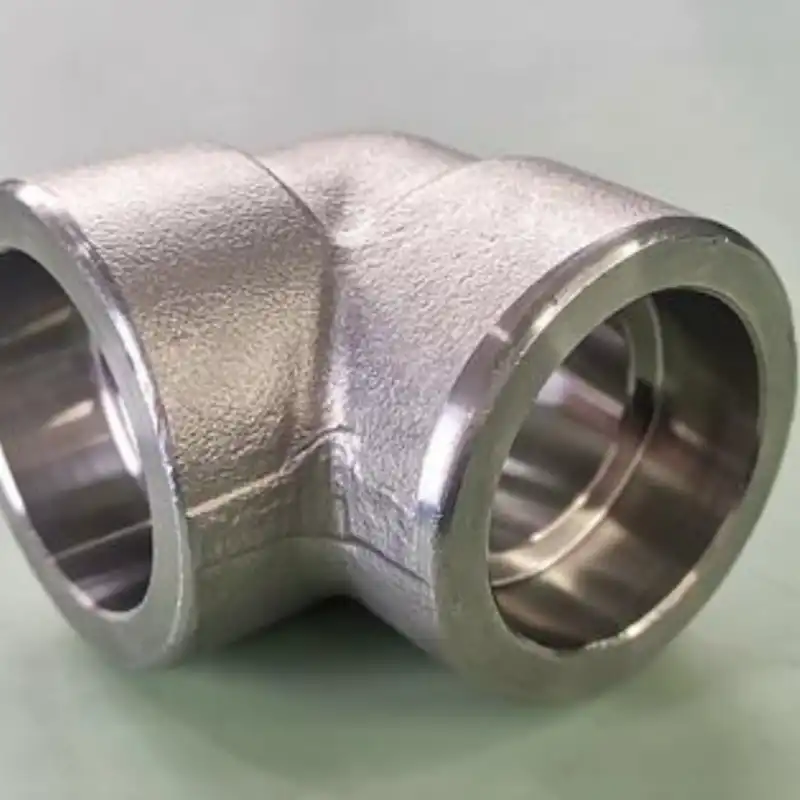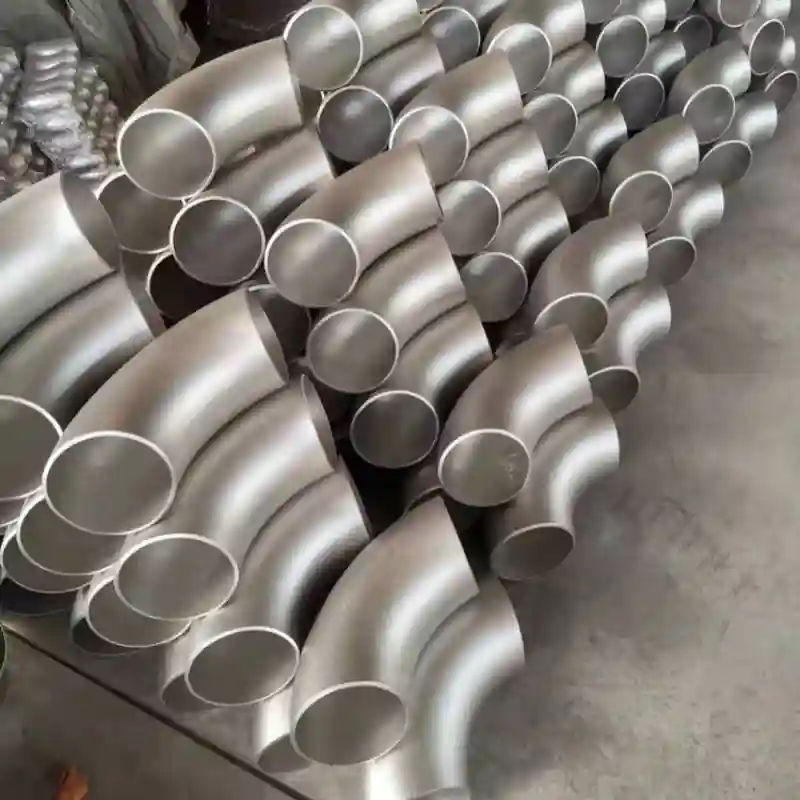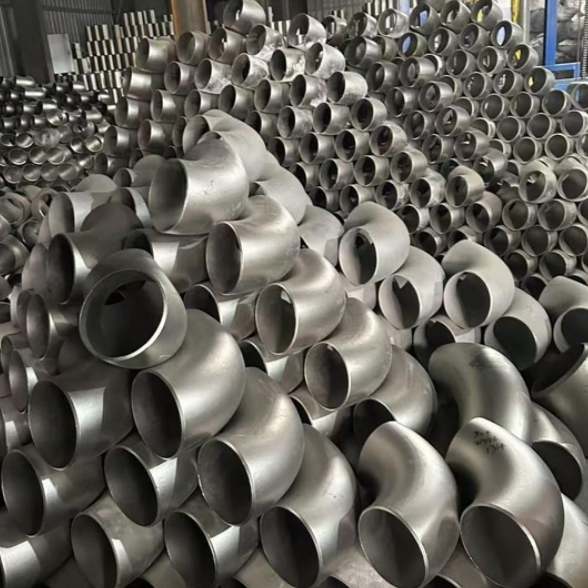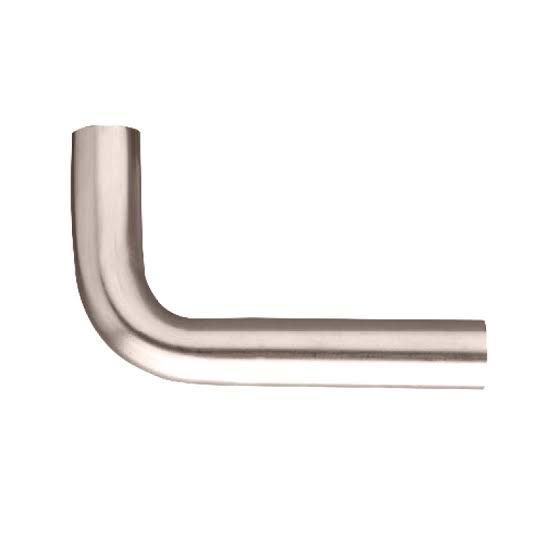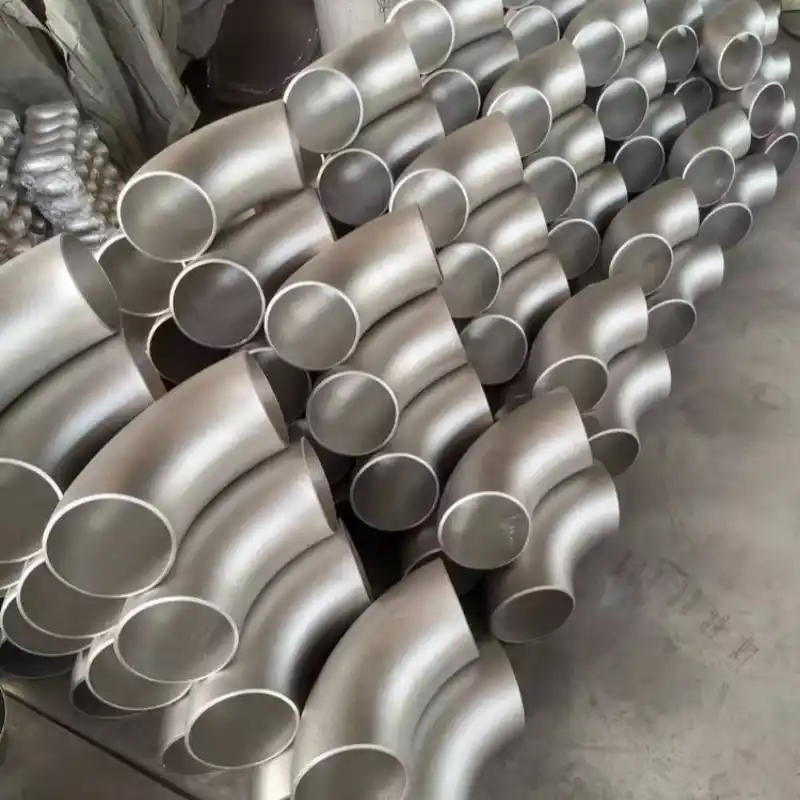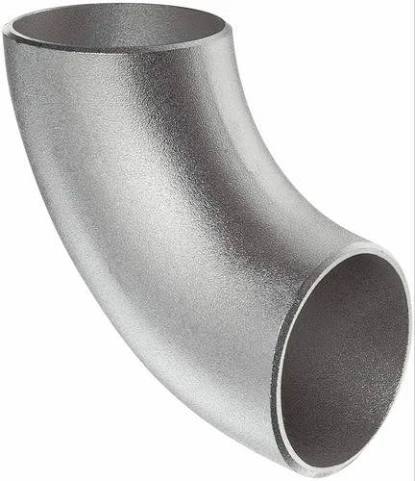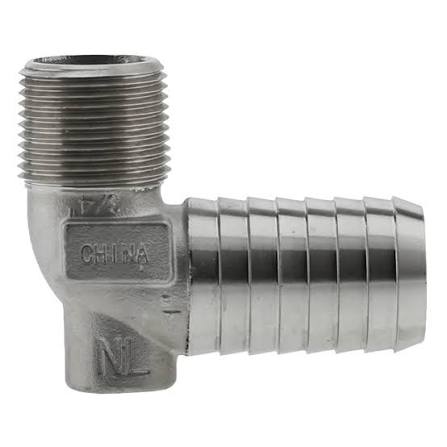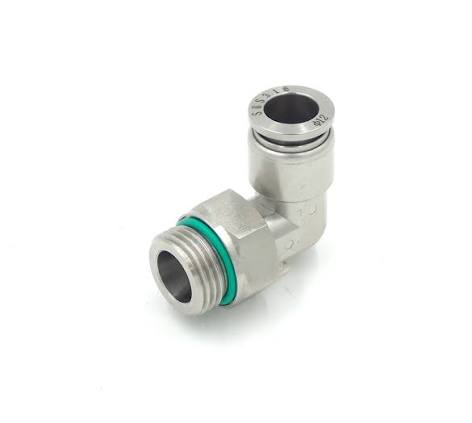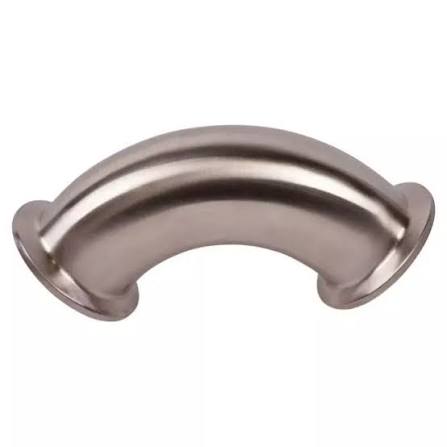
2 Inch Stainless Steel 90 Degree Elbow
Core Function: Efficient Flow Direction Change & System Integrity Assurance
Manufactured from austenitic stainless steel (such as 304/304L, 316/316L), the elbow resists oxidation and pitting corrosion in harsh environments including chemical, food and power industries.
Compared with carbon steel or galvanized fittings, its service life is extended by 3~5 times, making it especially suitable for high-temperature steam environments (up to 800°F) or media containing chloride ions.
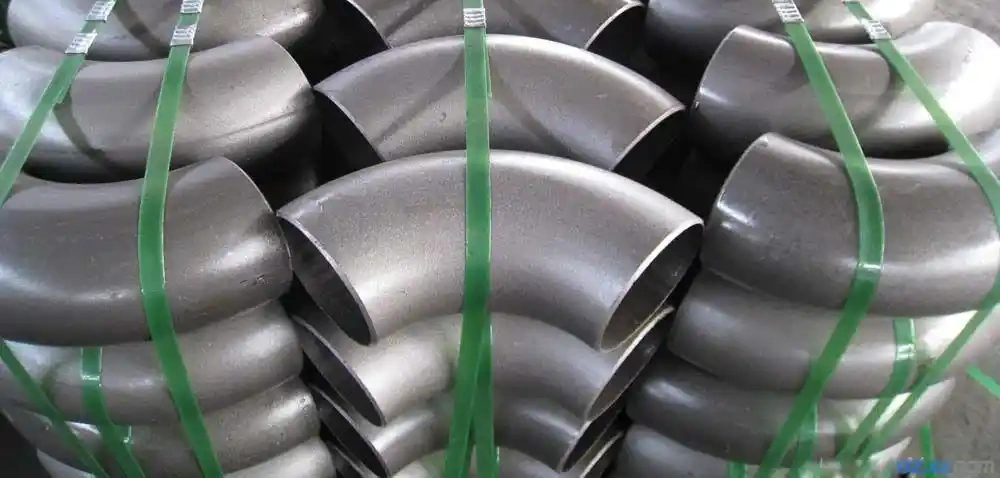
Specification Parameters (Compliant with ASME B16.9 Standard)
| Parameter | Typical Value |
|---|---|
| Nominal Diameter | DN50 (2 inch) |
| Bend Radius | Long Radius (LR): 76.2mm / Short Radius (SR): 50.8mm |
| Wall Thickness Schedule | Sch10S, Sch40S, Sch80S (in accordance with ASTM A403) |
| End Type | Butt Weld (BW) / NPT Threaded / Socket Weld (SW) |
| Weight | Approx. 0.45~0.85kg (varies by wall thickness) |
| Pressure Class | Up to 1500 psi (Sch80S, ambient temperature) |
Material Comparison: 304 vs 316
- 304/304L Stainless Steel: General-purpose grade, resistant to oxidizing media (atmosphere, fresh water, weak acid). Contains 18% Cr + 8% Ni with lower cost. Suitable for general industrial water and oil & gas pipelines.
- 316/316L Stainless Steel: Added with 2~3% Mo, it greatly improves resistance to chloride ions and pitting corrosion. It performs excellently in seawater, acidic flue gas and chloride solution (such as power plant desulfurization slurry). Recommended for offshore projects, food & pharmaceutical and power condensation systems.
For instance, 304 elbows were originally used in the cooling water branch of the conventional island at Haiyang Nuclear Power Plant in Shandong, which developed stress corrosion cracks after three years of operation. After replacement with 1/2″ stainless steel elbow in 316L material, the pipeline has operated stably for seven years.
Application Scenarios
- Petrochemical Industry: Catalyst conveying pipelines in catalytic cracking units.
- Food & Beverage Industry: CIP cleaning pipelines for dairy products, requiring internal pickling and passivation with surface roughness Ra≤0.4μm.
- Shipbuilding Industry: Ballast water treatment systems, matched with duplex stainless steel flanges.
- Power & Energy Industry: Refer to the case in Chapter 7.
Installation & Operation Precautions
Pre-welding Preparation
Welding Procedure
Support Spacing
Prohibited Operations
In-service Inspection
Application Case in Power & Energy Industry
Case: 2×660MW Supercritical Coal-fired Power Plant in Hefei — Desulfurization Slurry Circulation
Pipeline Renovation
Original carbon steel rubber-lined elbows suffered erosion and corrosion caused by gypsum slurry (pH=4.5, Cl⁻ content 20000ppm), resulting in perforation and leakage on average every 11 months and unplanned shutdowns.
Replace with ss pipe elbow series (2 inch size, Sch80S, 316L material, internal wall overlaid with Stellite6 alloy). 3D Long Radius elbows are adopted to reduce abrasive wear.
100% Radiographic Testing (Grade II qualified) for all butt welds; pickling, passivation and ferrite content measurement (average FN=4.2) carried out after welding.
After 32 months of continuous operation, the wall thinning was only 0.3mm (design margin: 1.5mm) with zero leakage to date.
Each unit reduces annual maintenance costs by approximately RMB 470,000 and avoids power generation loss of about 2.1 million kWh, equivalent to 1700 tons of CO₂ emission reduction.