NPT Thread Chart: Dimensions in mm
In pipeline engineering, mechanical design and industrial manufacturing, NPT (National Pipe Taper) thread is one of the most widely used American standard tapered pipe thread specifications. 🌈Whether designing elbow fittings, valves or selecting sealing components, an accurate and clear NPT thread chart in mm can greatly improve work efficiency. 🌈This article provides a complete NPT thread chart in mm for quick reference of key parameters including outer diameter, pitch and minor diameter.
NPT thread features a 60° thread form angle and relies on its taper (1:16) to achieve sealing performance. It is extensively applied in pressure piping systems across North America and many other regions worldwide. 🌈Thanks to the tapered structure, radial pressure is generated when the threads are tightened, forming a dependable mechanical seal. 🌈For proper part selection and machining, engineers need to refer to NPT thread chart dimensions, including threads per inch, major diameter, minor diameter and pitch.
Complete NPT Thread Dimensions (Millimeters)
The table below lists standard dimensions of common NPT threads ranging from 1/8 inch to 4 inch, with all values converted to millimeters (mm).
- Threads per inch: Fixed value for pitch calculation (Pitch = 25.4 / Threads per inch)
- Major diameter (external thread): The theoretical maximum diameter of the thread
- Minor diameter (external thread): The minimum diameter at the thread root
- Pitch: The axial distance between corresponding points of adjacent threads
| NPT Size | Threads per Inch | Pitch (mm) | Major Diameter (mm) | Minor Diameter (mm) |
|---|---|---|---|---|
| 1/8″ | 27 | 0.941 | 10.242 | 8.856 |
| 1/4″ | 18 | 1.411 | 13.616 | 11.358 |
| 3/8″ | 18 | 1.411 | 17.055 | 14.797 |
| 1/2″ | 14 | 1.814 | 21.224 | 18.321 |
| 3/4″ | 14 | 1.814 | 26.568 | 23.666 |
| 1″ | 11.5 | 2.209 | 33.228 | 29.694 |
| 1-1/4″ | 11.5 | 2.209 | 41.985 | 38.451 |
| 1-1/2″ | 11.5 | 2.209 | 48.054 | 44.520 |
| 2″ | 11.5 | 2.209 | 60.092 | 56.558 |
| 2-1/2″ | 8 | 3.175 | 72.699 | 67.619 |
| 3″ | 8 | 3.175 | 88.608 | 83.528 |
| 4″ | 8 | 3.175 | 113.973 | 108.893 |
Note: All data complies with ASME B1.20.1 standard. Minor adjustments are recommended according to actual fitting requirements during machining. The uniform taper ratio is 1:16, which means the diameter changes by 1.5875 mm per 25.4 mm of length.
How to Use This Dimension Chart
- Threaded joint design: Determine blank dimensions for internal and external threads based on major and minor diameters.
- Tap and die selection: Match cutting tools by referring to pitch and threads per inch.
- Thread quality inspection: Check thread compliance against major and minor diameter tolerances (figures above are basic dimensions; refer to relevant standards for tolerance ranges).
- Engagement length calculation: Calculate effective sealing depth combined with the thread taper.
A standard NPT thread chart in mm effectively prevents assembly failures caused by unit confusion between imperial and metric systems. It is advised to print this chart for regular use in frequent conversion scenarios.
Key Application in Pipe Elbow Manufacturing
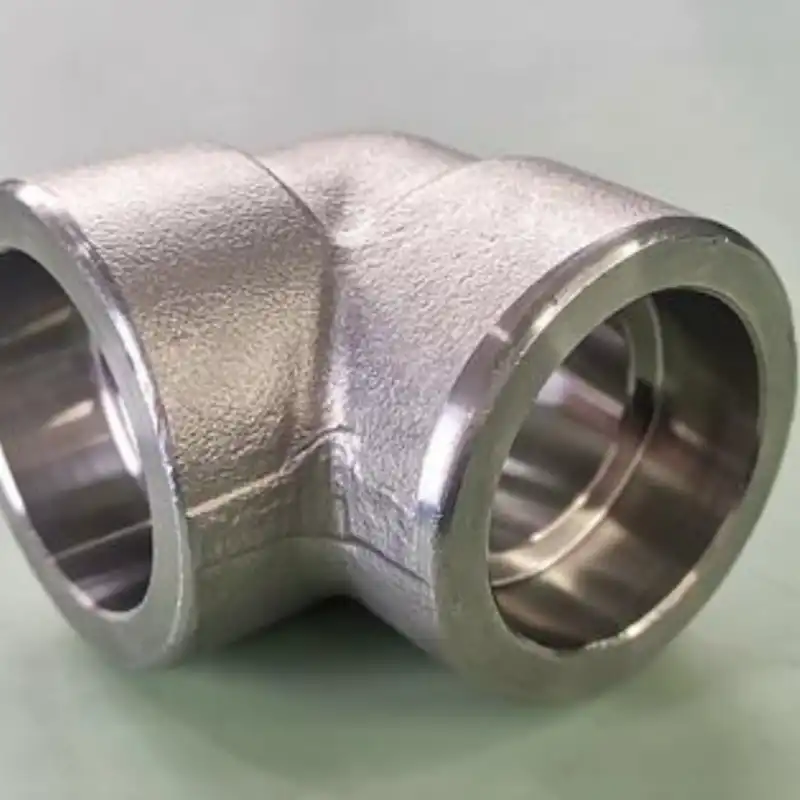
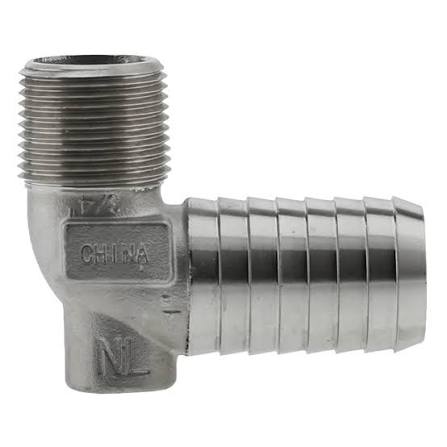
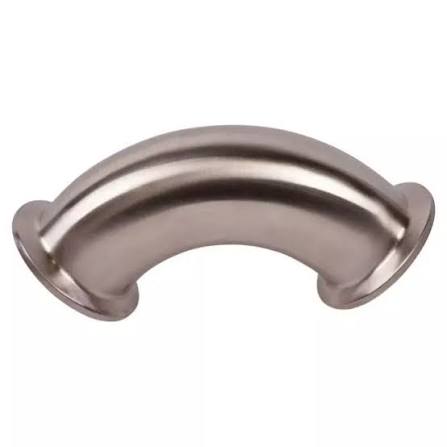
📝As essential directional components for piping systems, elbows, especially threaded elbows, mostly adopt the NPT standard for connection ends. In production, technical teams of elbow manufacturers strictly follow NPT thread chart dimensions to design the taper, thread profile and effective length of internal threads.
📝A common quality issue arises when the machined minor diameter of elbow threads is oversized, which will lead to loose connections and leakage. If the major diameter is undersized, thread assembly will become difficult and may even cause pipe cracking.
📝Therefore, for both forged elbows and precision cast elbows, workers calibrate tool compensation values and taper gauges against the NPT dimension chart repeatedly during thread machining.
📝For pipe elbow manufacturers, a reliable NPT thread chart in mm is not merely a technical document, but a fundamental tool to guarantee product tightness, interchangeability and operational safety. We hope the dimension data provided here can deliver practical support for your design, procurement and quality inspection work.