304 vs 409 Stainless Steel: Which One to Choose for Your Pipe Elbows?
✔️In piping systems, the material selection of stainless steel elbows directly determines the service life and operational safety of the entire system. 304 stainless steel and 409 stainless steel are two grades that are frequently compared. Though they appear similar, their performance differs substantially.
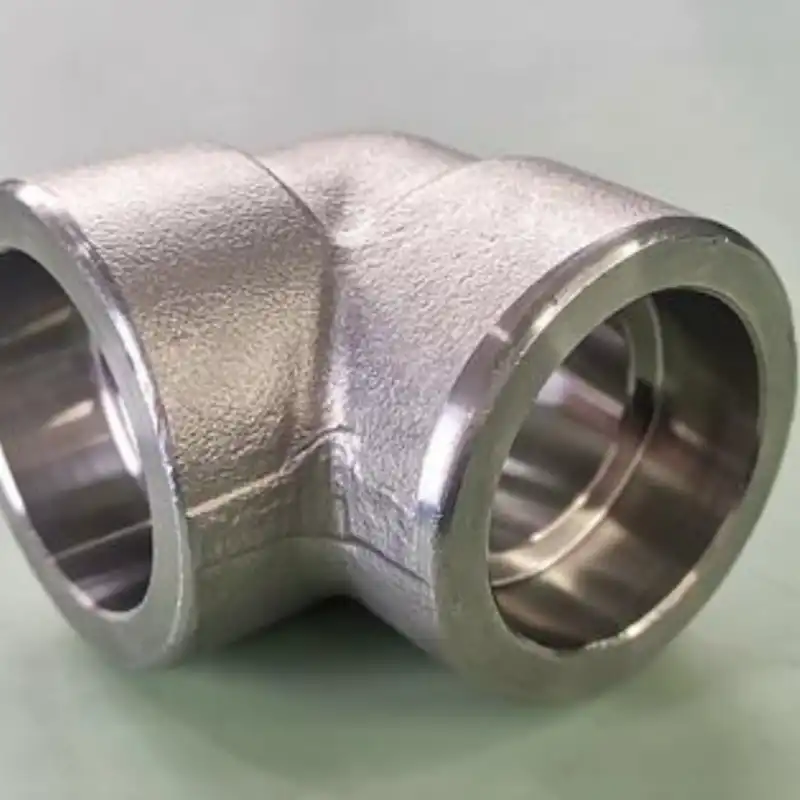
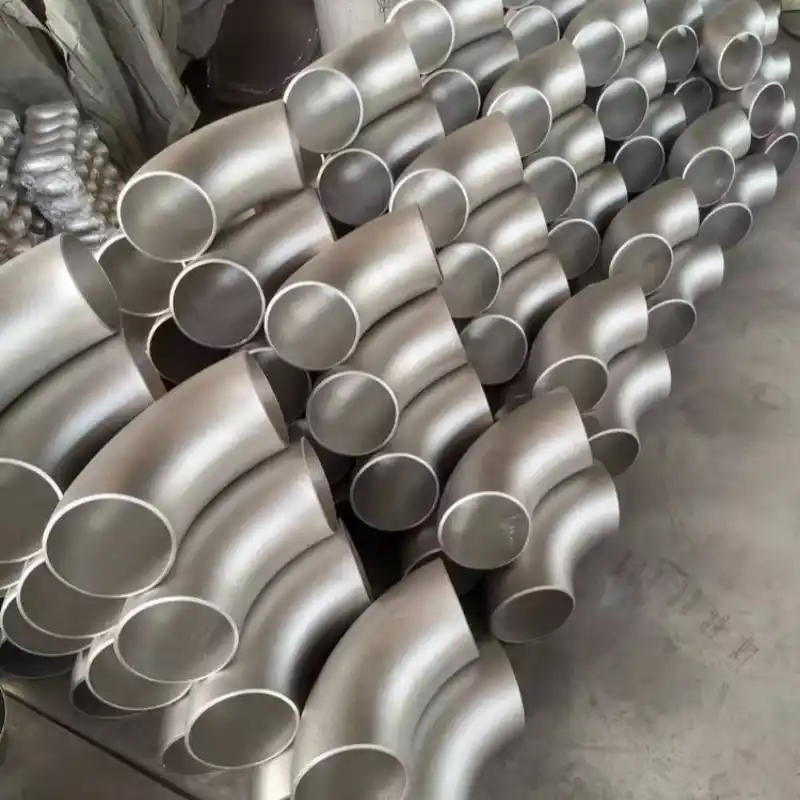
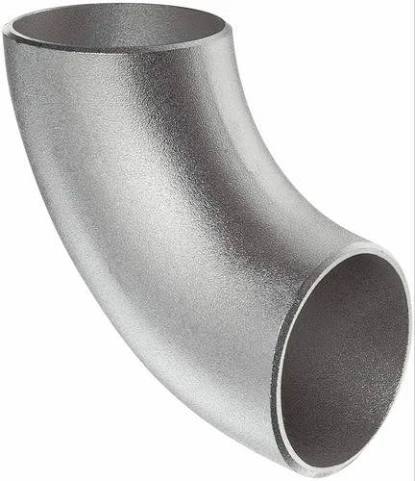
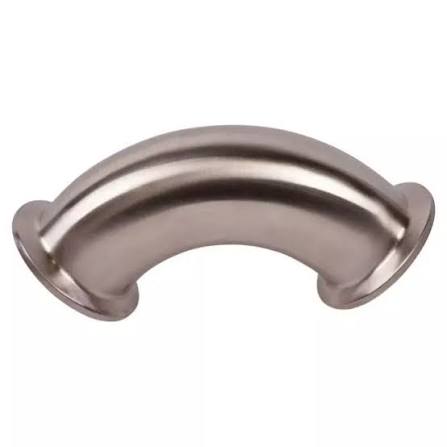
✔️This article compares the two materials from four aspects: chemical composition, corrosion resistance, temperature resistance and application scenarios. It also explains why fittings such as 4″ 90 degree 304 stainless steel elbow are widely adopted across industrial fields.
What is 304 SS?
304 stainless steel is an austenitic stainless steel, featuring a classic composition of 18% chromium (Cr) and 8% nickel (Ni), hence it is also known as 18-8 stainless steel. The addition of nickel renders the material non-magnetic at room temperature and greatly enhances its resistance to chloride ions, acidic media and oxidizing environments. In accordance with ASTM A240 standard, 304 stainless steel contains 17.5–19.5% chromium, 8.0–10.5% nickel and no more than 0.07% carbon.
➡️Corrosion Resistance: It delivers outstanding performance in most atmospheric environments, fresh water, weak acids and weak alkalis. Under ASTM B117 salt spray test, 304 stainless steel generally stays rust-free for over 500 hours.
➡️Temperature Resistance: Its continuous operating temperature can reach 870°C in oxidizing environments, and the intermittent operating temperature is up to 925°C. However, intergranular corrosion tends to occur when it is used long-term within the temperature range of 450–850°C, for which 304L is recommended as an alternative.
➡️Mechanical Properties: Tensile strength ≥ 515 MPa, yield strength ≥ 205 MPa, hardness ≤ 201 HBW.
➡️Typical Applications: Food processing equipment, medical devices, building railings, pipe elbows and flanges.
What is 409 Stainless Steel?
409 stainless steel is a ferritic stainless steel with a chromium content of 10.5–11.7% and an extremely low nickel content (≤ 0.5%). Titanium (Ti) is added as a stabilizing element, with its content about 6 to 10 times the total content of carbon and nitrogen. Titanium prevents the precipitation of chromium carbides in the weld heat-affected zone, so as to avoid intergranular corrosion.
➡️Corrosion Resistance: Its corrosion resistance is only superior to carbon steel, and it can be applied in dry or slightly humid conditions. It is prone to rusting in high-salinity, high-humidity or acidic environments, with a far shorter rust-free period compared with 304. Per ASTM B117 salt spray test, red rust generally appears on 409 stainless steel within 50 to 100 hours.
➡️Temperature Resistance: The maximum operating temperature is approximately 600°C in oxidizing environments. Severe scale will form once the temperature exceeds this limit.
➡️Mechanical Properties: Tensile strength ≥ 380 MPa, yield strength ≥ 205 MPa, hardness ≤ 179 HBW.
➡️Typical Applications: Automotive exhaust manifolds, mufflers and catalytic converter housings. These working conditions have low requirements for corrosion resistance, while thermal fatigue resistance and cost control are prioritized.
Core Comparison Table
| Performance Index | 304 Stainless Steel | 409 Stainless Steel |
|---|---|---|
| Chromium Content | 18.0–19.5% | 10.5–11.7% |
| Nickel Content | 8.0–10.5% | ≤ 0.5% |
| Magnetism | Non-magnetic (weak magnetism after cold working) | Strong magnetism |
| Salt Spray Corrosion Resistance (ASTM B117) | Over 500 hours | 50–100 hours |
| Maximum Continuous Operating Temperature | 870°C | 600°C |
| Price Index (304 as the benchmark) | 1.0 | Approximately 0.55–0.65 |
| Suitability for Pipe Elbows | Recommended for indoor, outdoor, humid and chemical service | Prone to rust, not recommended |
📝Why 304 Stainless Steel is the Preferred Choice for Pipe Elbows
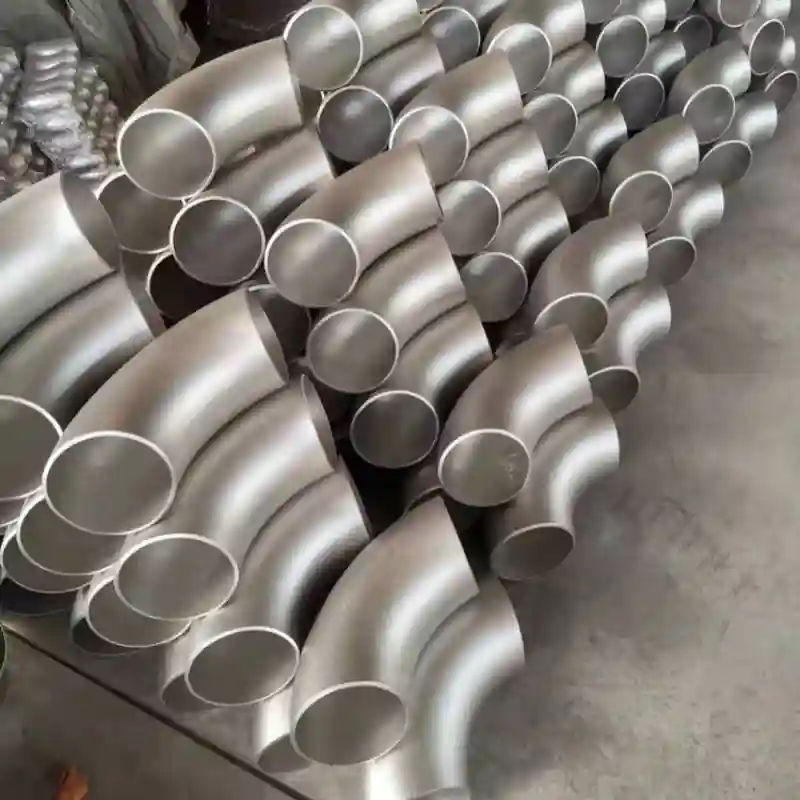
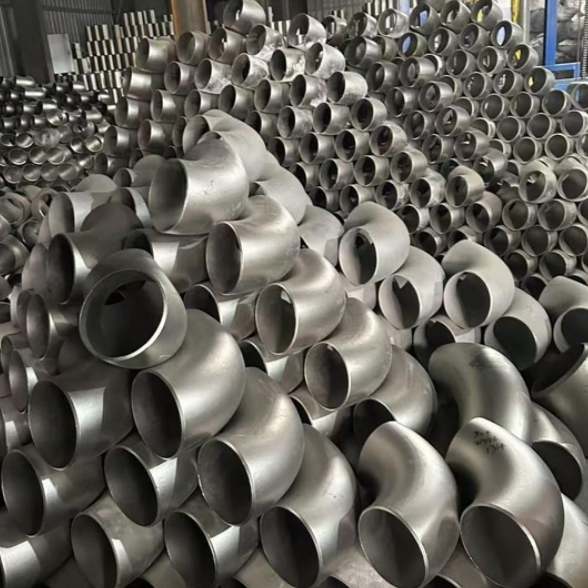
Take the widely used 4″ 90 degree 304 stainless steel elbow as an example. This 4-inch 90° long radius elbow (with bending radius R=1.5D complying with ASME B16.9 standard) is commonly used to convey water, steam, oil products and mildly corrosive media.
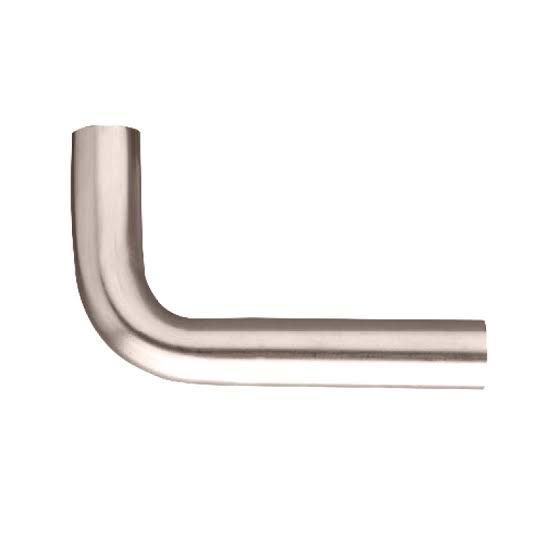
➡️Welding and Forming: 304 stainless steel elbows can be manufactured via cold bending, hot pushing or pressing processes. Its uniform austenitic structure avoids the reduction in toughness in the weld heat-affected zone, a common issue for ferritic stainless steel like 409. Although titanium stabilizes the structure of 409 after welding, its weld areas are still more susceptible to rust than the base material.
➡️Media Corrosion Resistance: If the fluid inside pipelines contains trace chloride ions (such as chlorinated tap water), pitting corrosion will occur on 409 stainless steel within several weeks, while 304 can operate safely for years. In practical engineering projects, 409 is hardly accepted for pressure-bearing pipe elbows.
➡️Appearance and Cleanliness: 304 features a bright surface and allows easy passivation treatment, meeting hygiene-grade requirements. 409 has a dull surface with coarse ferritic grains, making polishing difficult.
☑️As a professional pipe fitting supplier, we recommend selecting 304 stainless steel for all fluid transmission systems, humid working environments, and applications requiring matching with fittings including flanges, tees and reducers.