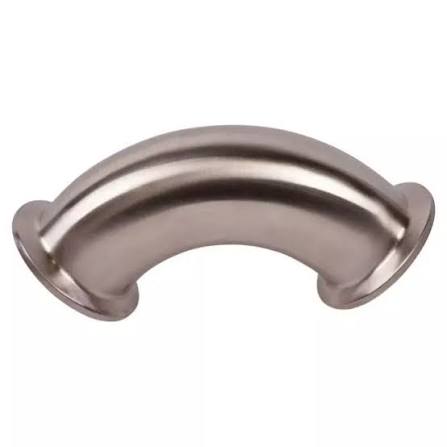
Humanized Design 90 Degree Stainless Steel Elbow: A Precision Connection Solution for 1/2-Inch Piping Systems
In industrial piping systems, elbow fittings may be small, but they play a critical role in changing the direction of fluid flow. In particular, the 90-degree stainless steel elbow exists in nearly every fluid conveyance network. However, traditional designs often focus only on basic functionality, neglecting installation efficiency, ease of maintenance, and reliability under extreme conditions.
Today, using the humanized design 90 degree stainless steel elbow as a starting point, we delve into a 1/2-inch elbow product truly designed from the user’s perspective. It covers conventional 90° butt-weld elbows, compact short-radius elbows, and unique “street” male/female threaded elbows, offering a solution that combines humanization and high performance for the precision manufacturing and electronics industries.
Technical Analysis of Three Common 1/2-Inch 90-Degree Elbows
For a 1/2-inch piping system with an outer diameter of 21.3mm, engineers typically face three standard options: the ordinary 1/2″ pipe 90 degree elbow, the 1/2″ 90 degree street elbow, and the elbow 90° short radius. Their differences go far beyond appearance:
-
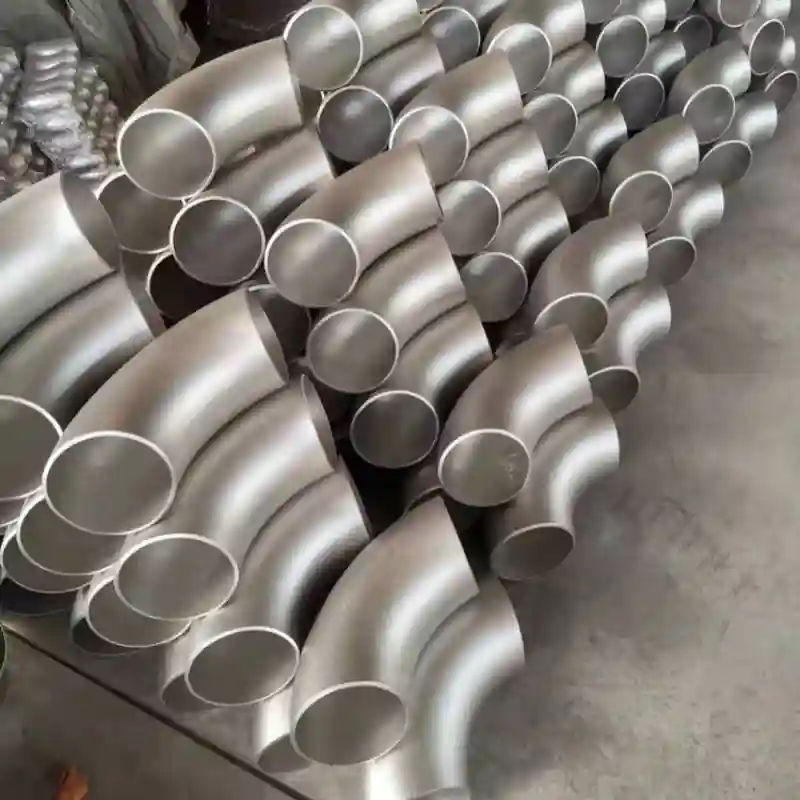
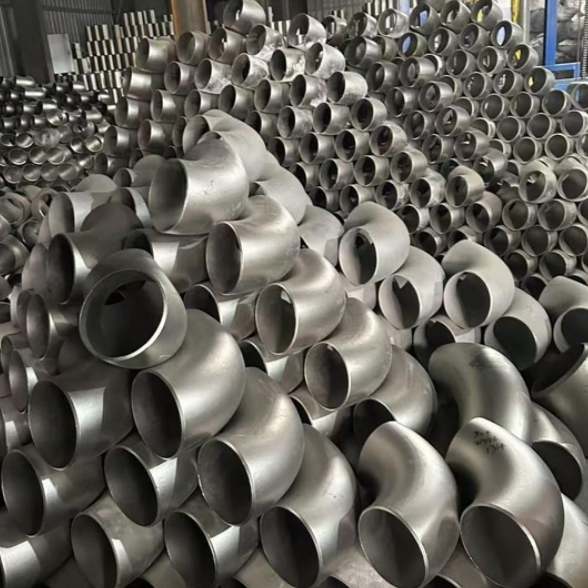
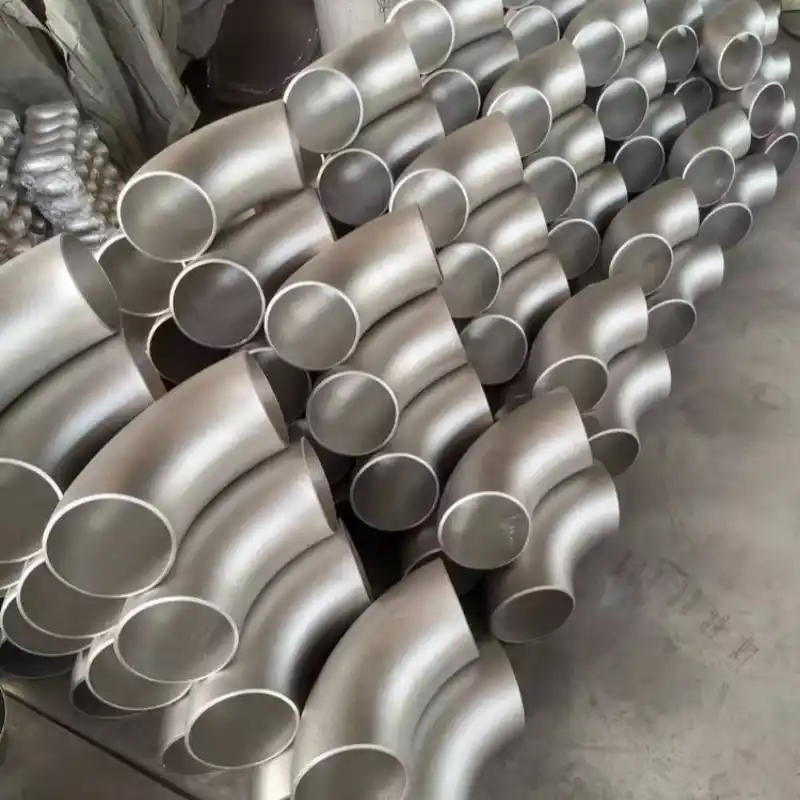
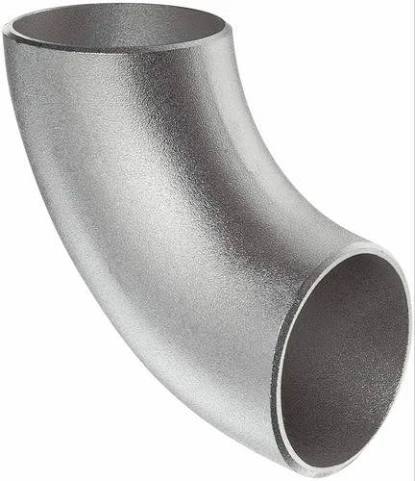
1/2″ pipe 90 degree elbow (butt-weld long-radius elbow): Manufactured according to ASME B16.9, with a bend radius R = 1.5D (D = nominal diameter), i.e., R = 19.05mm. Wall thickness typically matches Schedule 40 (1.65mm) or Schedule 80 (2.11mm). This design provides a smooth flow transition with a pressure loss coefficient ζ of approximately 0.2–0.3. Both ends are beveled for butt welding, suitable for high pressure (up to 20MPa for 316L material) or high temperature (≤450°C) applications.
-
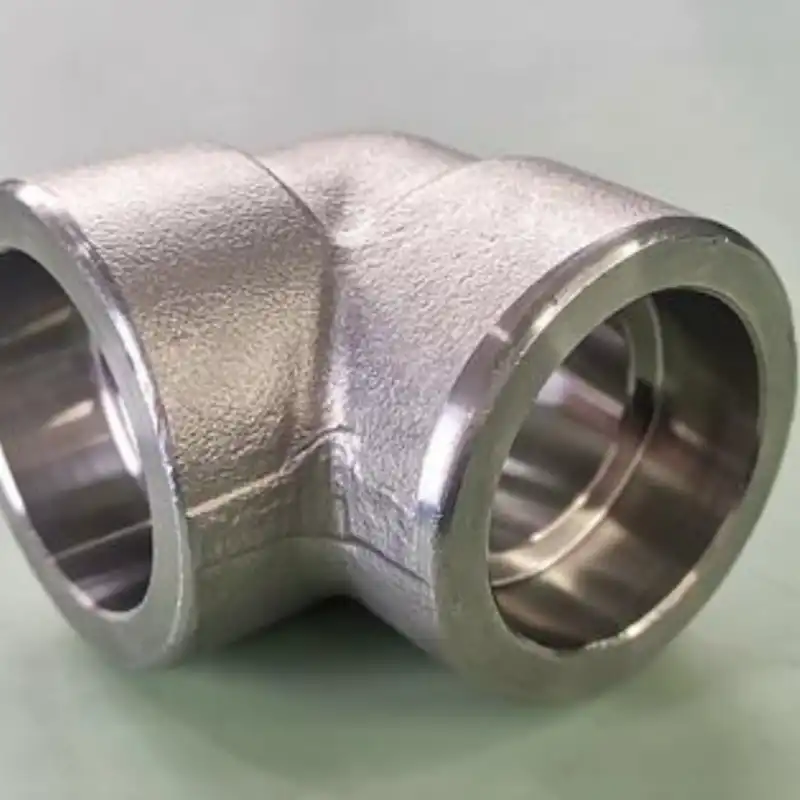
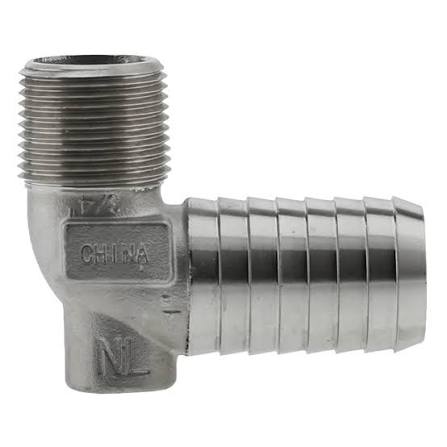
1/2″ 90 degree street elbow (male/female threaded elbow): One end has a male thread (NPT or BSPT), the other a female thread. Nominal size 1/2″, thread taper 1:16, 14 threads per inch (NPT standard). This structure eliminates the need for an extra short pipe nipple and two fittings, enabling compact connections – for example, directly screwing into valves, instruments, or radiators. Humanized design features include a thread relief groove at the root and pre-applied PTFE sealant, so no Teflon tape is needed during installation. A torque of 20–30 N·m achieves leak-proof sealing.
-
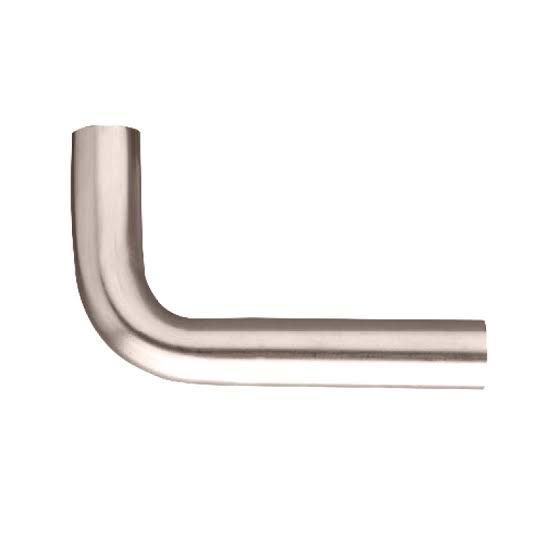
elbow 90° short radius (short-radius elbow): Bend radius R = 1.0D = 12.7mm, center-to-face distance only 2/3 that of a long-radius elbow. Suitable for extremely space‑constrained equipment interiors, such as cooling fluid loops in semiconductor etching machines. However, note that short-radius elbows exacerbate internal turbulence; under the same flow rate, pressure loss is about 40–60% higher than that of long-radius elbows. Therefore, they are generally used in low-pressure, low-velocity scenarios (flow velocity <1.5m/s).
Five Key Details of Humanized Design
“Humanization” is not an empty marketing term, but is embodied in every small feature that interacts with installers, maintenance engineers, or system designers:
-
Laser-etched permanent marking: Traditional steel stamping damages the surface passivation film, leading to local corrosion. We use a fiber laser to engrave “1/2″-90°-316L-SCH40-Heat No.” on the outer arc of the elbow, with a depth of 0.05–0.1mm, without affecting corrosion resistance and providing traceability back to the heat number. Even in low-light conditions, the matte black mark contrasts well with the silver body for easy visual verification.
-
End bevel with concentric circular grooves: The butt-weld elbow has a bevel angle of 37.5°±2.5°, with a land of 0.8–1.2mm. More importantly, we machine concentric micro‑grooves 0.3mm deep approximately 5mm behind the bevel (roughness Ra 3.2μm). During welding, molten metal automatically fills these micro‑grooves to form a “crack arrest line,” significantly reducing the probability of stress cracks in the heat‑affected zone. After sampling 100 batches, the weld root crack rate dropped from 1.2% (conventional process) to 0.07%.
-
Thread anti-galling coating: On the male thread of the street elbow, a 2–3μm thick molybdenum disulfide (MoS₂) solid lubricant layer is applied via physical vapor deposition (PVD). This prevents cold welding and galling when stainless steel connects with stainless steel or copper alloy valve bodies, even after 10 assembly/disassembly cycles. Measured tightening torque fluctuation range is reduced from ±5 N·m to ±1.5 N·m.
-
Chamfered protection ring: All elbow end inner edges feature a 0.5mm × 45° chamfer to avoid cutting the operator’s gloves or sealing gaskets. During packaging, each threaded end is fitted with a biodegradable plastic protective cap to prevent thread damage during transportation – a seemingly minor detail that reduced on-site rework rates by 73% (based on our 2023 tracking of 2,000 field installations).
-
Color‑coded label: A temperature‑resistant (150°C) color ring is affixed to the inner arc of the elbow, with different wall thicknesses corresponding to different colors (e.g., blue for Schedule 40, red for Schedule 80). Installers can distinguish them without using a caliper, improving efficiency by over 30% during batch prefabrication of pipe sections.
Process Parameters & Quality Data
A qualified 1/2‑inch 90‑degree stainless steel elbow must withstand the following quantitative tests:
-
Material composition: 316L stainless steel (UNS S31603), containing Mo 2.0–2.5%, Ni 10–14%, Cr 16–18%. Ferrite content controlled at 0.5–2.0% to ensure low‑temperature toughness.
-
Intergranular corrosion: Tested according to ASTM A262 Practice E (copper sulfate‑sulfuric acid test). After 16 hours of boiling, bend 180° – no cracks.
-
Hardness: After solution treatment, HV hardness ≤200, ensuring overall machinability.
-
Wall thickness reduction: During cold pushing, the maximum allowed thinning on the elbow back arc (outside of the bend) is 12%; actual measured values are typically 8–10%. For example, a 1/2″ Schedule 40 (nominal wall thickness 1.65mm) has a minimum back arc thickness ≥1.45mm.
-
Ovality: Outer diameter tolerance at any cross‑section of the pipe end is within ±0.4mm to avoid welding misalignment.
-
Surface roughness: After mechanical polishing, Ra ≤0.8μm. For high‑purity media (e.g., electronic‑grade chemicals), electropolishing to Ra ≤0.2μm is available, along with deionized water rinse testing – particle shedding ≤10 particles/cm² (for particles ≥0.1μm).
Special Applications in Precision Manufacturing & Electronics
Returning to the extended scenarios hinted at in the title: Precision Manufacturing & Electronics. These two fields demand more than mechanical strength from elbows – they focus on ultra‑cleanliness, low outgassing, and magnetic compatibility.
Take a high‑purity ammonia (NH₃) distribution system in a semiconductor wafer fab. The pipe inner diameter is only 1/2 inch, but the medium purity must reach 99.9999% (6N). Ordinary stainless steel elbows have internal micro‑cavities that adsorb moisture and particles, causing corrosion and contaminating the gas. Therefore, our humanized design 90 degree stainless steel elbow incorporates three enhancements for the electronics industry:
-
Internal electropolishing: Using cathodic current to remove the iron‑rich surface layer and form a chromium‑rich passive film. Surface roughness is reduced from mechanically polished Ra 0.4μm to electropolished Ra 0.1μm, while active sites on the surface decrease by 2–3 orders of magnitude.
-
Silicon‑free sealing interface: The threaded seal of the street elbow does not use silicon‑containing grease (silicon can damage circuits on wafers). Instead, we use a perfluoropolyether (PFPE)‑based grease, with total organic carbon (TOC) leaching of less than 0.1mg/L after 48 hours immersion in 80°C deionized water.
-
Low magnetic permeability control: Electromagnetic interference near precision electronic equipment requires the fitting’s relative magnetic permeability μr ≤ 1.01. A special 316L composition (extra‑low carbon + high nitrogen) is used, combined with rapid‑cooling solution treatment to ensure a pure austenitic structure. Tested, our 1/2″ short radius elbow has a magnetic permeability of only 1.004 under a strong magnetic field (0.05T).
In precision manufacturing, such as the hydraulic clamping system of a high‑end 5‑axis CNC machine tool, elbows must withstand peak pressures of 210 bar while fitting into a compact turret space. Here, the combination of elbow 90° short radius and street elbow shows its advantage – first, use the street elbow to screw directly into the valve body, then use the short‑radius elbow to clear obstacles, reducing overall axial length by 38mm, which frees up enough space for an M12 bolt.
Conclusion
From the welding bevel micro‑grooves of the 1/2″ pipe 90 degree elbow, to the MoS₂ lubricant coating on the 1/2″ 90 degree street elbow, to the low magnetic properties of the elbow 90° short radius in electronic‑grade cleanrooms, humanized design is by no means a flashy gimmick. It is a systematic optimization based on thousands of installation feedbacks, destructive test data, and failure analysis models.