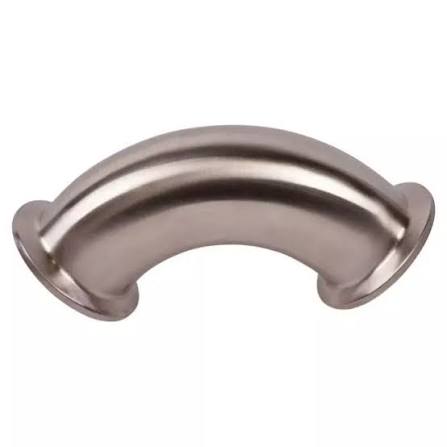
What is the radius of a 90 degree elbow
In piping systems, the 90-degree elbow is one of the most commonly used fittings. Its bend radius directly determines flow resistance, installation space, and stress distribution in the piping.
What is the radius of a 90 degree bend? It refers to the perpendicular distance from the elbow’s centerline to the pipe axis, typically expressed as a multiple of the nominal diameter (DN or inches). Understanding this parameter is crucial for engineers to select the appropriate product.
Long radius vs. short radius: core distinction standard
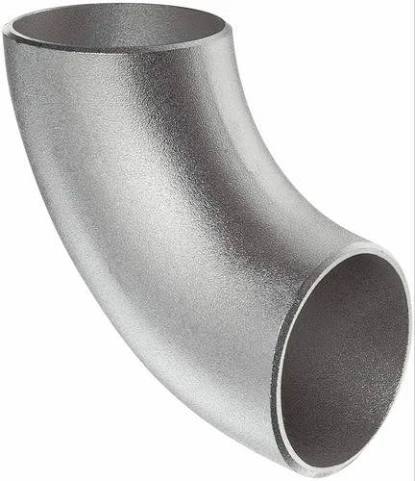
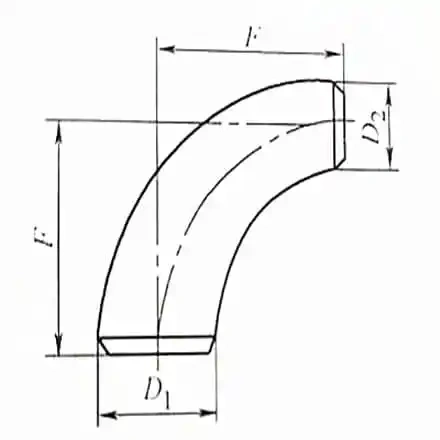
According to ASME B16.9, the radius of a 90-degree elbow is divided into two main grades: long radius (LR) and short radius (SR). For a long radius elbow, the radius equals 1.5 times the nominal pipe size; for a short radius elbow, it equals 1.0 times the nominal pipe size.
For example, when we refer to an elbow lr 90°, it means the centerline bend radius of the elbow is 1.5 × DN.
So why do most industrial applications prefer the long radius design? The reason lies in fluid dynamics: a larger 90 ° radius significantly reduces turbulence and pressure loss of the medium, while also mitigating impact wear on the pipe wall caused by solid particles.
According to a 2021 study in the Pipeline Engineering Journal, under the same flow velocity, the local resistance coefficient (K value) of an LR elbow is about 60% that of an SR elbow.
Specific dimensional parameters: example of a 2-inch pipe
Taking the most common 2-inch (DN50) carbon steel elbow as an example, the centerline radius of a standardlong radius elbow 90 degree is calculated as: 2″ × 1.5 = 3 inches (approx. 76.2 mm). The face-to-center dimension (A dimension) from end to centerline is also 3 inches. For the short radius version, the radius is only 2 inches (approx. 50.8 mm).
If you need to install or replace a 2″ long radius elbow on site, be sure to verify the pipe wall thickness schedule (e.g., Sch40 or Sch80), as this directly affects the actual inner and outer diameters of the elbow.
In addition, the expression 2″ rigid 90 radius is commonly used in rigid conduit (electrical conduit) applications, where the radius standard may refer to NEMA or UL standards rather than ASME B16.9.
For example, under the UL 6 standard for rigid metal conduit elbows, the minimum bend radius for a 2-inch size is typically 8 inches – much larger than that for fluid piping elbows, in order to protect cables passing through from excessive bending damage.
Applications in the Electric Power & Energy field
Returning to the fluid power field, the radius selection for 90-degree elbows has special significance for the power and energy industry. In boiler feed water systems of thermal power plants, cooling circuits of nuclear power stations, and pipelines of pumped-storage hydroelectric plants, long radius elbows (LR) are widely adopted because they reduce flow-induced vibration.
Take the main steam pipeline of an ultra-supercritical unit as an example: if an SR elbow is mistakenly used, the local pressure drop could increase by 30%–40%, directly causing the turbine inlet steam parameters to deviate from the design values, thereby reducing power generation efficiency.
Therefore, design codes often mandate the use of R=1.5D or larger elbow radii in critical locations. The next time you evaluate the piping layout of an energy project, remember: the radius of an elbow is not just a dimensional number – it is the balancing fulcrum between system reliability and economics.