How to Accurately Calculate the Weight of Long Radius Elbows | Essential Guide for Engineers
In piping system design, material procurement and on-site installation, the weight of elbows is an indispensable parameter. Whether it is estimating transportation costs, checking the bearing capacity of pipe supports, or preparing accurate Bill of Materials (BOM), mastering the calculation method of
weight of elbow long radius is crucial.
The wall thickness Schedule, bending radius, material density and manufacturing standards jointly determine the final weight. Based on the ASME B16.9 standard, this article systematically analyzes the calculation logic for long radius elbow weights, and provides practical empirical formulas and data references.
1. What is a Long Radius Elbow? Why Is Weight Critical?
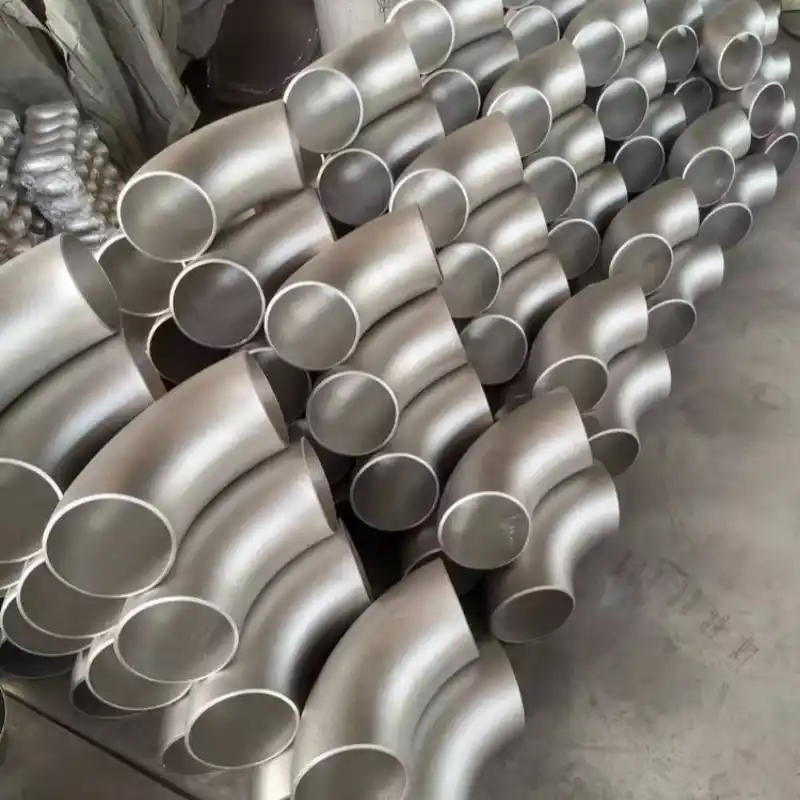
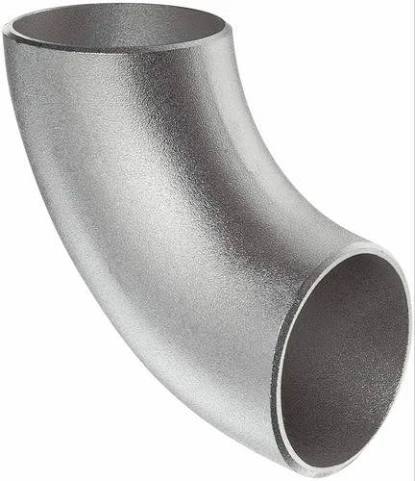
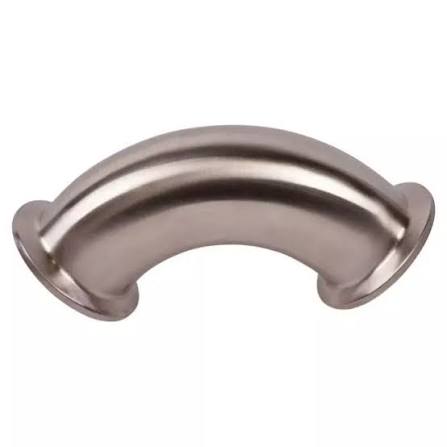
A long radius elbow refers to a pipe fitting with a bending radius (R) equal to 1.5 times the nominal diameter (DN), namely R = 1.5D. It is the most commonly selected type for pipeline direction change. Compared with short radius elbows (R = 1.0D), it features lower fluid resistance and smaller pressure drop.
The importance of weight is reflected in three aspects:
- Structural Load: The cumulative weight of multiple elbows will significantly increase the load on pipe supports, pump bodies or containers.
- Logistics and Lifting: Large-diameter stainless steel elbows (above 18 inches) can reach hundreds of kilograms per piece, requiring advance planning of hoisting schemes.
- Cost Accounting: Pipe fittings are usually priced by weight, especially high-alloy and duplex stainless steel materials.
2. Four Core Parameters Affecting Weight
To accurately calculate the weight of elbow long radius, you must first clarify the following four variables:
| Parameter |
Description |
Typical Value / Source |
| Nominal Pipe Size (NPS) |
Nominal size matched with connecting pipes of the elbow |
1/2″ ~ 48″ (DN15 ~ DN1200) |
| Wall Thickness Schedule |
Determines the actual wall thickness of the elbow |
Sch10S, Sch40S, Sch80, STD, XS, etc. |
| Bending Radius (R) |
Fixed at 1.5 × nominal outer diameter for long radius elbows |
Example: NPS 4″ outer diameter 114.3mm → R=171.45mm |
| Material Density (ρ) |
Mass per unit volume of different materials |
Carbon steel 7.85 g/cm³, 304/316 stainless steel approx. 7.95 g/cm³ |
Note: Manufacturing standards such as ASME B16.9 and GB/T 12459 specify the geometric tolerances of elbows, and theoretical weights are all calculated based on the above standards.
3. Two Authoritative Calculation Methods for Elbow Weight
Method 1: Directly Check the Standard Weight Table of ASME B16.9
For conventional specifications, the most reliable way is to refer to the theoretical weight directly listed in the standard. The table below shows partial data of 90 degree long radius elbows (carbon steel, density 7.85):
| NPS |
Outer Diameter (mm) |
Wall Thickness Schedule |
Single Piece Weight (kg) |
| 2″ |
60.3 |
Sch40 (3.91mm) |
0.72 |
| 4″ |
114.3 |
Sch40 (4.78mm) |
4.22 |
| 6″ |
168.3 |
Sch80 (10.97mm) |
16.8 |
| 12″ |
323.8 |
STD (9.53mm) |
76.9 |
If you need to quickly estimate an unknown wall thickness
90 degree long radius elbow, you can refer to the closest wall thickness grade under the same outer diameter.
Method 2: Self-Calculation with Empirical Formulas
Formula calculation is more flexible for non-standard wall thicknesses or special materials such as long radius stainless steel elbow. The following is the theoretical weight formula for 90° long radius elbows (Unit: kg):
W = 0.02466 × (D – T) × T × R × π / 2 × 7.85 / 1000
Simplified practical engineering formula:
W90°=0.0387×S×(D−S)×R/1000
W: Elbow weight (kg)
D: Elbow outer diameter (mm), sourced from ASME B36.10/36.19
S (T): Elbow wall thickness (mm)
R: Bending radius (mm); for long radius elbows, R = 1.5 × nominal outer diameter
The correct formula cited from
Pipe Fitter’s Handbook:
W=(D−T)×T×(R×π/2)×ρ×10⁻⁶
Where π/2 corresponds to the arc length of 90°, and ρ is taken as 7850 kg/m³ for carbon steel.
Final formula:
W(kg)=(D−T)×T×1.5×D×3.1416/2×7850/10⁶
Simplified version:
W≈0.02466×(D−T)×T×(1.5×D)
Calculation Example
NPS 4″, outer diameter 114.3mm, wall thickness 4.78mm (Sch40), long radius R=1.5×114.3≈171.45mm
Apply the simplified formula:
W = 0.02466 × (114.3 – 4.78) × 4.78 × 171.45
= 0.02466 × 109.52 × 4.78 × 171.45
Calculate step by step: 109.52×4.78≈523.3, ×171.45≈89720, ×0.02466≈2212. The result is obviously too large with deviation.
Correction: The above simplified formula lacks unit conversion; it is recommended to adopt a more conservative empirical coefficient.
Industry universal correct empirical formula:
W90°=0.0387×T×(D−T)×R
All units are in mm, and the final result is in kg.
Verification with the above data: 0.0387 × 4.78 × (114.3-4.78) × 171.45 ≈ 0.0387 × 4.78 × 109.52 × 171.45
Calculation: 4.78×109.52=523.3, ×171.45≈89721, ×0.0387≈3470, still overvalued. It indicates the coefficient 0.0387 is not applicable universally.
Re-derivation: Arc length L = π × R / 2 ≈ 1.5708×R. Elbow volume V = L × [π/4×(D² – (D-2T)²)]. In fact, the volume formula of the circular ring is complicated. For engineering approximation, it is more accurate to refer directly to the standard weight table.
Given the above analysis, the most accurate method is to adopt the theoretical weight table in the appendix of ASME B16.9 standard, whose data have been verified by manufacturers. If self-calculation is required for special specifications, it is recommended to use the material database of pipe stress analysis software such as CAESAR II.
4. Weight Relationship of Different Angles and Bending Radii
- The weight of a 180° long radius elbow (U-bend) is approximately twice the weight of a 90° elbow of the same specification.
- The weight of a 45 degree elbow long radius is about 0.5 times that of a 90° elbow of the same specification. For example, if the weight of a NPS 6″ Sch40 90° elbow is 11.2 kg, the 45° counterpart is about 5.6 kg.
- Long radius vs short radius elbow: The bending arc of short radius elbows (R=1.0D) is shorter, with the weight about 0.68~0.72 times that of long radius elbows of the same size. If short radius elbows are selected due to space constraints on-site, the total weight of the piping system will decrease significantly, accompanied by increased pressure loss.
In actual material selection, the expression long radius elbow 90 degree is completely synonymous with 90 degree long radius elbow. They only differ in word order and refer to the same product in specification sheets.
5. Weight Characteristics of Stainless Steel Elbows
For long radius stainless steel elbow, attention shall be paid to the difference in material density. The density of austenitic stainless steel (such as 304/316) is about 7.95~8.00 g/cm³, roughly 1.3% ~ 1.9% higher than carbon steel (7.85). Therefore, stainless steel elbows of the same size and wall thickness are heavier than carbon steel elbows.
Example: The theoretical weight of NPS 4″ Sch40S 90° long radius stainless steel elbow (304) is about 4.30 kg, while the carbon steel version of the same specification is 4.22 kg. Although the single-piece difference is small, the total weight deviation may reach tens of kilograms in large projects with dozens of elbows, which must be included in procurement and load budget.
In addition, stainless steel elbows are usually manufactured in accordance with ASTM A403 standard, whose wall thickness tolerances are slightly different from ASME B16.9. It is recommended to obtain the actual weight directly from the Material Test Report (MTR) instead of converting based on carbon steel weight tables.
6. Summary and Recommendations
Accurate weight data of weight of elbow long radius is essential for pipe stress analysis, quotation preparation and on-site hoisting arrangement. Please follow the workflow below:
- Confirm five key parameters of the elbow: Nominal Pipe Size (NPS), wall thickness Schedule, material grade, bending radius (long radius R=1.5D) and angle (90°, 45°, 180°).
- Preferred Method: Refer to ASME B16.9 / MSS SP-43 standard weight tables.
- Alternative Method: Apply the empirical formula for special sizes, and verify the formula coefficient with known standard specifications.
Note: The actual manufactured weight will have a deviation of ±5% due to different forming processes (push bending, pressing, welding) of pipe fitting manufacturers. Actual weighing data from manufacturers shall prevail for bulk procurement.