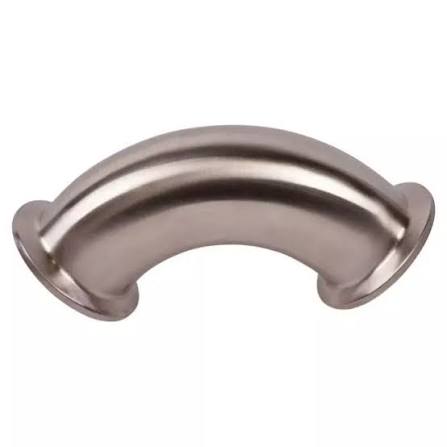
what is the radius of a long radius elbow
In the design and installation of piping systems, the radius selection of elbows directly affects fluid flow efficiency, pressure loss, and the overall stress distribution of the pipeline. For engineers regularly engaged in the Petroleum & Chemical industry, understanding what the radius of a long radius elbow is is a fundamental yet critical issue. This article elaborates on this concept in detail, combining specific parameters and practical applications to help you establish professional and accurate cognition.
1. Standard Radius Definition of Long Radius Elbow
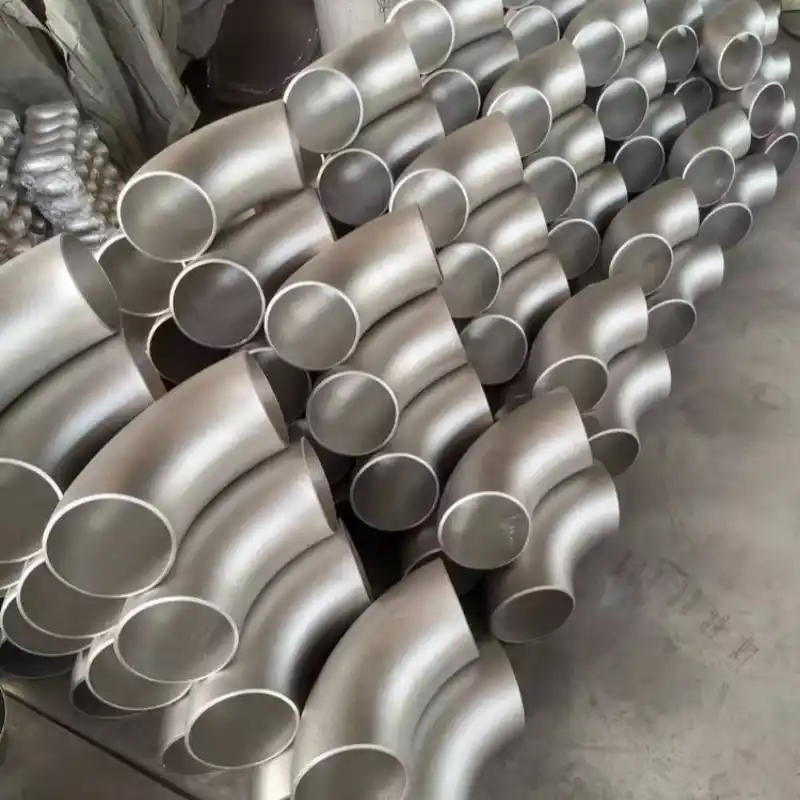
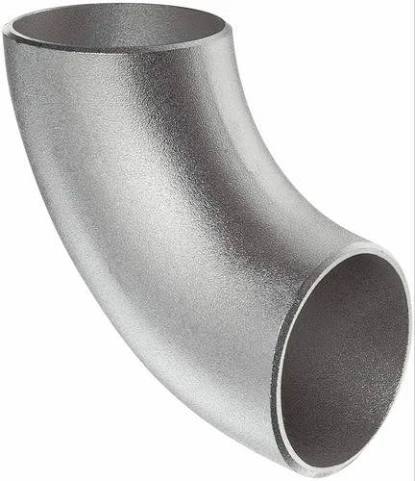
In accordance with ASME B16.9, the centerline radius of a typical
long radius elbow is defined as 1.5 times the nominal diameter (DN or NPS). Expressed by the formula:
R=1.5×D
where R stands for bending radius, and D refers to the nominal size corresponding to the nominal outer diameter or inner diameter of the pipe.
- For a carbon steel elbow of NPS 2 inch (DN 50), the centerline radius of the long radius elbow = 2×1.5= 3 inches (approximately 76.2 mm).
- For NPS 4 inch (DN 100), the radius = 4×1.5= 6 inches (approximately 152.4 mm).
The “radius” mentioned here does not refer to the physical profile arc radius of the elbow, but the distance from the pipe centerline to the curvature center of the elbow. This standard is widely adopted in global petroleum, chemical, power and other industries, ensuring interchangeability and predictability of pipe fittings in various projects.
2. Key Differences from Short Radius Elbow
To better understand the advantages of long radius elbows, it is necessary to compare long radius elbow and short radius elbow. The bending radius of a short radius elbow is equal to 1 time the nominal diameter (R=1.0D). For instance, the radius of an NPS 2 inch short radius elbow is 2 inches (50.8 mm).
The core differences between the two are reflected in:
- Fluid Resistance: With a gentler curvature, long radius elbows generate significantly lower local turbulence and pressure drop than short radius elbows. Calculations show that under the same flow rate, the equivalent length (L/D) of a 90 degree long radius elbow is about 16, while that of a short radius elbow reaches as high as 24 (data per Crane TP-410 manual).
- Wear Resistance and Erosion Control: Media in petroleum and chemical industries often contain solid particles or corrosive components. The long radius design reduces the impact of high-speed flow on the back arc of the elbow, extending the actual service life by 30%~50%.
- Installation Space: Short radius elbows feature a more compact structure and are suitable for space-limited areas. However, long radius elbows are usually mandatory for high-temperature, high-pressure or critical process pipelines.
3. Specific Parameters of 90 Degree Long Radius Elbow
The
90 degree long radius elbow is the most commonly used component for pipeline direction change. Its centerline radius is also 1.5D, and the control of angular accuracy is directly related to system alignment and flange connection. Per ASME B16.9 standard, the angular tolerance of finished 90° elbows shall not exceed ±1.0°, and the end flatness deviation shall not be greater than 0.05 inches (1.27 mm) per inch of caliber.
In actual procurement, you may come across another expression long radius elbow 90 degree, which refers to exactly the same product. Regardless of the word order, key acceptance parameters include:
- Wall Thickness: Not less than 87.5% of the nominal wall thickness of the straight pipe (corresponding values for Sch 40, Sch 80 series).
- Ovality: The difference between the maximum and minimum outer diameter of the elbow cross-section shall be ≤ 3% of the nominal outer diameter or 5 mm (whichever is smaller).
- Material: For petroleum and chemical service environments, commonly used materials include A234 WPB (carbon steel), A403 WP316L (stainless steel) and low alloy steel such as A420 WPL6.
4. Extra Long Radius Elbow and Its Application Scenarios
When the standard 1.5D long radius still cannot meet the requirements of ultra-low resistance or high-viscosity media, designers will select extra long radius elbow. The bending radius of such elbows is usually 3D, 4D, 5D or even 6D (e.g. R=3×D, three times the nominal diameter). Though there is no unified mandatory standard, common manufacturing specifications can refer to MSS SP-43 or customized engineering drawings.
Data indicates that a 3D extra long radius elbow can further reduce the pressure drop by about 40%~55% at the same flow rate compared with a 1.5D long radius elbow. The trade-off is significantly larger occupied space and higher manufacturing cost (an increase of approximately 1.5~2.5 times). Therefore, it is mainly applied to:
- Slurry or polymer melt conveying pipelines (to prevent medium retention and degradation).
- High-purity medium systems (to reduce eddy current areas and avoid microbial adhesion).
- Vibration-sensitive environments (such as reciprocating pipelines at compressor inlet and outlet to reduce excitation force).
5. Small Caliber Example: 22mm Long Radius Elbow
Small-size pipe fittings cannot be ignored for instrument tubes, hydraulic tubes and fine chemical sampling lines. Take the 22mm long radius elbow as an example — the “22mm” here usually refers to the outer diameter (OD) of the pipe. For a stainless steel pipe with 22mm outer diameter and 2mm wall thickness, its nominal size is close to DN15 (the European and American standard outer diameter is 21.3mm, while 22mm is commonly seen in Asian or imperial derived specifications).
Calculation of its long radius value:
If calculated by 1.5D with D taken as 22mm outer diameter, R≈33 mm. In rigorous engineering practice, however, the calculation shall be based on the pipe inner diameter or the standard centerline radius table of elbows. In accordance with ISO 3419 standard, the centerline radius of a long radius elbow corresponding to 22mm outer diameter is usually 33±0.5 mm.
Such small-caliber pipe fittings are widely used in petrochemical analysis shelters, lubricating oil pipelines and fuel gas sampling systems. Due to compact installation space, it is necessary to verify the minimum wall thickness at the elbow back via ultrasonic thickness measurement during installation, to meet the pipeline design pressure requirement (e.g. above 10 MPa).
6. Practical Value in Petroleum & Chemical Industry
Returning to the core question of the title — why do professional engineers attach great importance to what is the radius of a long radius elbow? Under typical working conditions of the Petroleum & Chemical industry, a slight deviation in radius may trigger a chain of problems:
- Cavitation and Flashing: On the low-pressure side behind pressure reducing valves, improper use of short radius elbows will lead to local flow acceleration and subsequent cavitation damage, while long radius design enables smoother flow velocity recovery.
- Pipeline Stress Analysis: Stress calculation software (such as CAESAR II) requires accurate input of bending radius (including R/D ratio). Experienced pipeline stress engineers insist on adopting the 1.5D long radius elbow model; otherwise, the calculation results of thermal displacement and nozzle load may deviate by more than 20%.
- Cleanability and Inspection: Crude oil or polymerization reaction products tend to accumulate at dead corners on the inner arc of elbows. The inner arc depression of long radius elbows is shallower, facilitating the passage of Pipeline Inspection Gauge (PIG) — the minimum bending radius recommended for PIG operation is exactly 1.5D.
7. Summary & Professional Recommendations
To sum up, the radius of a long radius elbow is
1.5 times the nominal diameter (R=1.5D), a value concluded from decades of fluid mechanics verification and industrial practice. When handling high-temperature, high-pressure, corrosive or high-purity media, priority shall be given to
long radius elbow 90 degree or
extra long radius elbow (such as 3D or 5D) instead of short radius alternatives. Precision small-caliber systems like 22mm follow the same proportional principle, while attention shall be paid to conversion under specific standard systems.
AIFN Metal Technology manufactures elbows, tees, reducers and other pipe fittings in strict accordance with ASME, EN and ISO standards. We recommend designers clearly specify the “long radius” requirement at the early project stage (e.g. Elbow, 90°, LR, R=1.5D, Sch 40, A234 WPB) to avoid misjudgment in procurement, manufacturing and construction.