What is a 90 degree elbow?
——Solutions for Food and Pharmaceutical Industries
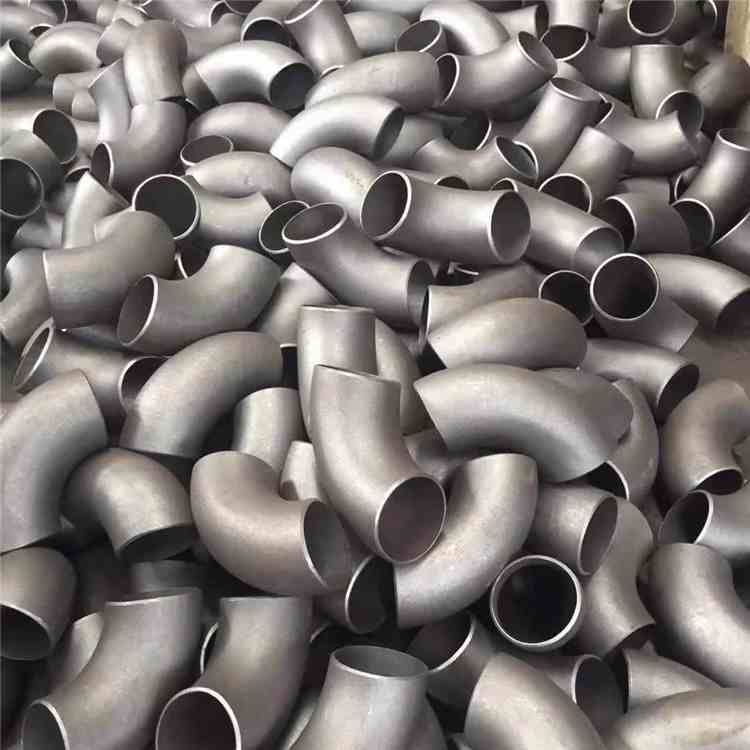
A 90 degree elbow is a standard pipe fitting used to change the flow direction of pipelines. In the food and pharmaceutical sectors, however, its function goes far beyond simple directional change. Any dead corners or surface imperfections can become breeding grounds for microbial growth.
For this reason, hygienic 90 degree elbows must balance fluid efficiency, easy cleanability and corrosion resistance.
Selecting premium stainless steel materials is the fundamental requirement. For instance, high-quality ss pipe elbow is commonly manufactured from 316L stainless steel. Its low carbon content (≤0.03%) and 2-3% molybdenum content deliver reliable resistance against acidic media and chloride corrosion.
A qualified 90 degree stainless elbow compliant with ASME BPE 2019 requires the inner surface roughness to be controlled below Ra≤0.4μm with electropolishing treatment. According to research published in the Journal of Food Process Engineering, reducing surface roughness from Ra 0.8μm to Ra 0.4μm cuts bacterial adhesion rates by approximately 70%.
In comparison, 316 stainless steel elbows pass stringent intergranular corrosion tests per ASTM A262, ensuring extended service life under repeated CIP/SIP cycles.
In pipeline layout design, all connections of
pipe with elbow shall adopt orbital welding to guarantee flush inner walls without depressions. Standard specifications such as
3″ stainless steel 90 degree elbow are widely applied in pharmaceutical purified water distribution systems and chocolate conveying pipelines. Its 1.5D long-radius design effectively reduces pressure drop and particle accumulation.
Common Challenges and Corresponding Solutions
Challenge 1: Residual liquid remains inside the elbow cavity after CIP cleaning, causing recurring biofilm formation.
Adopt long-radius elbows (R≥1.5D) with inner wall electropolished to Ra≤0.375μm. In line with EHEDG guidelines, dead-leg free hygienic elbows are highly recommended. Argon shielding for inner walls is required during welding to form smooth weld seams. Regular surface roughness inspection with professional measuring instruments can reduce residual contamination risks by over 97%.
Challenge 2: Weld pitting corrosion on elbows caused by high-salt or acidic food media, such as tomato sauce and pickling solutions.
Opt for passivated 316L elbows and control surface iron contamination in accordance with ISO 1127. For working conditions with chloride concentration exceeding 500ppm, manufacturers shall provide ASTM G48 pitting potential test reports. Meanwhile, limit welding heat input to ≤1.5 kJ/cm to prevent sensitization in the heat-affected zone.
With standardized parameter selection and strict process control, 90 degree elbows can fully meet the ultra-high purity requirements of food and pharmaceutical production environments with zero tolerance for contamination.
AIFN provides a full range of hygienic 316 stainless steel elbows and professional ASME BPE certified solutions.