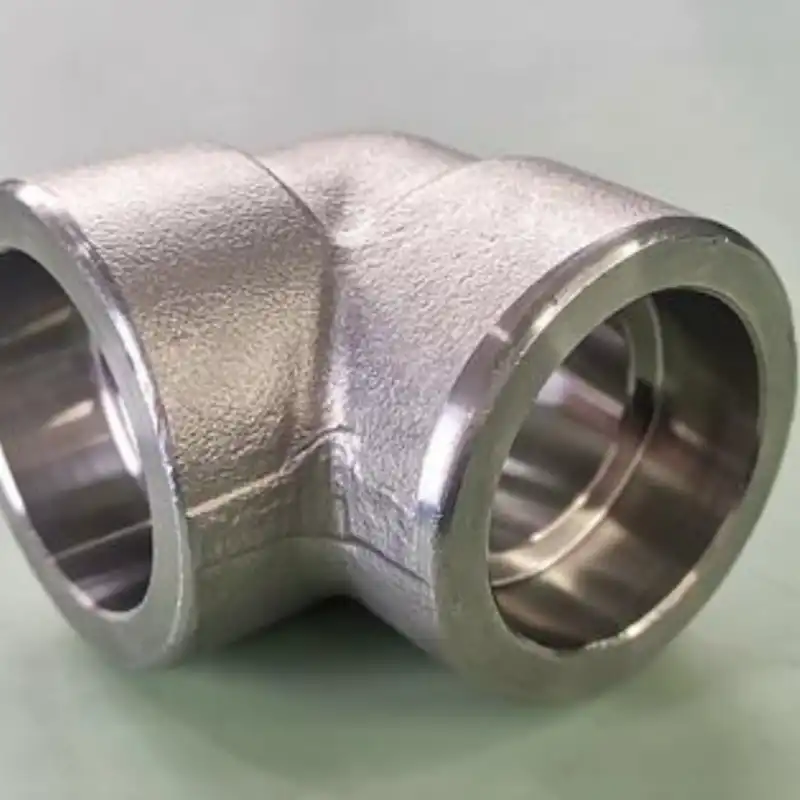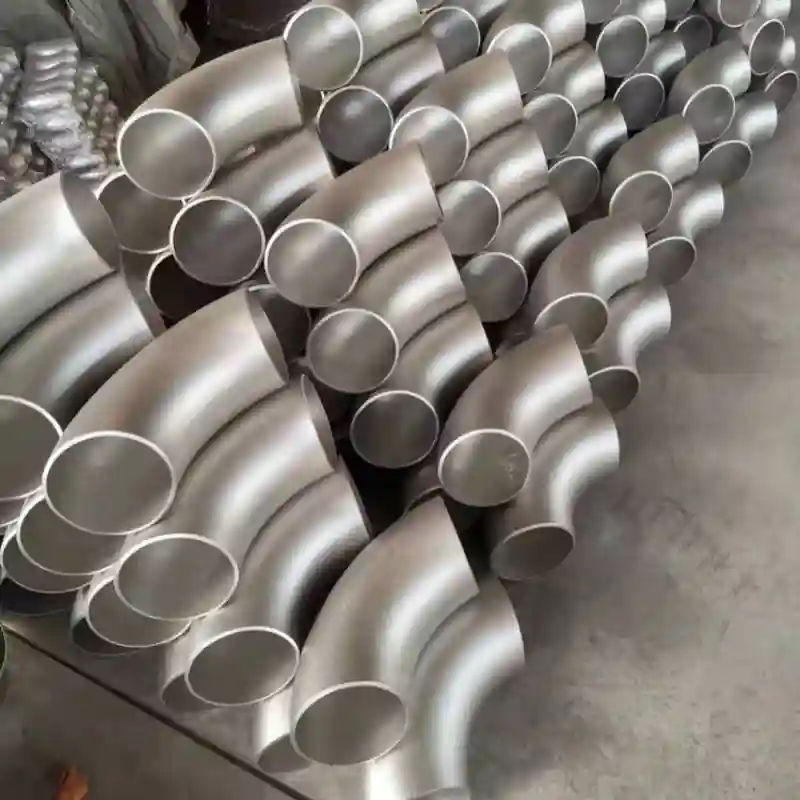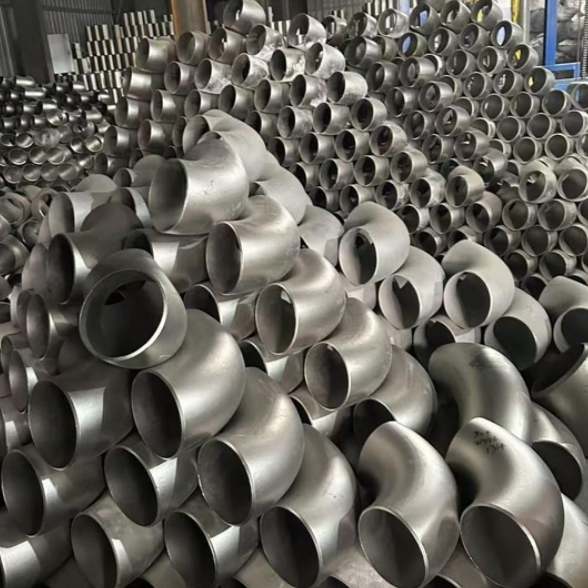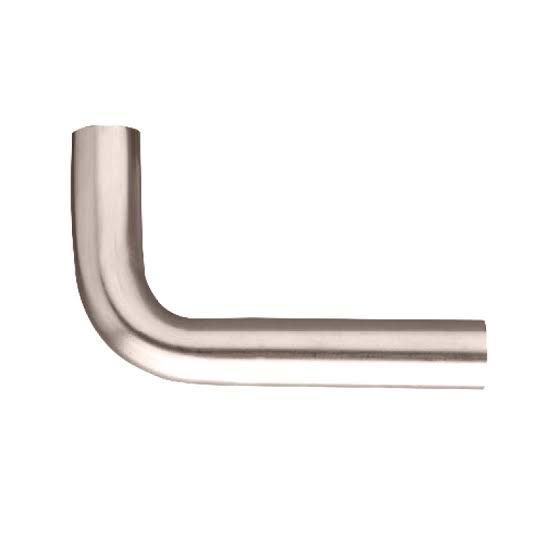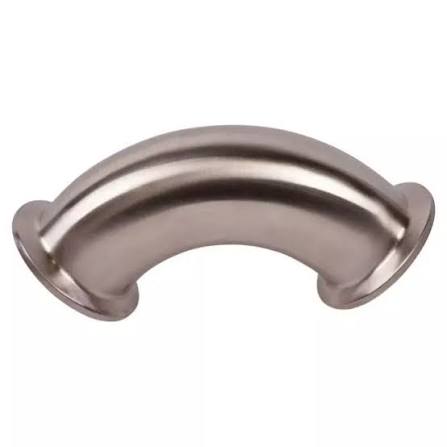
What is the difference between Type A and Type B elbow?
In the shipbuilding industry, piping systems are continuously subjected to vibration, seawater corrosion and high cyclic pressure loads. The proper selection of butt weld elbows directly determines the overall vessel safety and maintenance cycle.
In accordance with EN 10253-2 standard, the essential difference between Type A and Type B elbows lies in wall thickness design and pressure rating, and such disparity becomes more prominent in marine engineering applications.
Type A elbows adopt a reduced load factor with a thinner wall thickness. Taking the DN150 specification as an example, its nominal wall thickness is approximately 4.5 mm, making it suitable for low-pressure auxiliary systems such as bilge water and ventilation systems. However, for fuel oil transportation, main ballast water pipelines or fire water ring mains where the design pressure often exceeds PN40, Type B elbows are mandatory.
Type B elbows are designed based on a full load factor. Under the same nominal diameter, their wall thickness can reach 7.1 mm, with the external pressure instability resistance improved by around 35%. Furthermore, classification societies (such as DNV, ABS) normally mandate that critical circuits adopt marine grade elbow pressure rating pipe fittings with no less than PN25, a threshold that Type A elbows frequently fail to meet.
From the perspective of precision manufacturing, marine elbows are highly sensitive to geometric tolerances.
For instance, a deviation exceeding ±1.5° in the weld bevel angle will greatly increase on-site assembly difficulty at the shipyard. Qualified shipyard butt weld fitting tolerances require ovality ≤ 2.5% and the thickness reduction rate of the extrados not to exceed 8%. Thanks to the thicker wall thickness, Type B elbows enable easier control of the above indicators during cold bending forming. Meanwhile, they are better compatible with corrosion-resistant pipe bend solutions. Materials such as 316L or duplex stainless steel 2205 can be adopted to maintain a low uniform corrosion rate (<0.1 mm/year) in seawater service environments.
Conclusion: For shipbuilding projects, Type B elbows are strongly recommended for main seawater, fuel oil and high-temperature steam systems; Type A elbows may be cautiously applied only to non-essential low-pressure piping systems. Wall thickness calculation documents approved by classification societies must be verified during model selection.
Common Problems and Solutions in Shipbuilding
Problem 1: How to prevent fatigue cracks occurring at the weld root of marine elbows under continuous vibration conditions?
Solution: Replace conventional V-type bevels with full penetration J-type bevels, and control the weld throat thickness to no less than 1.1 times the base material wall thickness. Low-hydrogen welding electrodes (E7018-1) are recommended, with the welding heat input limited to ≤ 1.5 kJ/mm. 100% radiographic testing (RT) shall be conducted after welding in accordance with ISO 17636, with an acceptance level of Grade B or above. Practical application results prove that this measure can reduce the crack occurrence rate of welds after 5×10⁶ vibration cycles to below 0.3%.
Problem 2: Frequent pitting perforation on the inner wall of Type A elbows in seawater pipelines, what improvement measures can be adopted?
Solution: For seawater systems, even if permitted by design pressure requirements, a direct upgrade to Type B combined with super duplex stainless steel (UNS S32750) is highly advised. The material shall meet PREN ≥ 40, with ferrite content controlled within 40–60 vol%. Meanwhile, the inner surface roughness Ra of elbows shall be ≤ 0.8 µm, and an epoxy ceramic lining with a dry film thickness of 300–500 µm shall be added. This solution has passed the ASTM G48 pitting corrosion test (6% FeCl₃, 60°C, 72 hours) with no pitting detected.