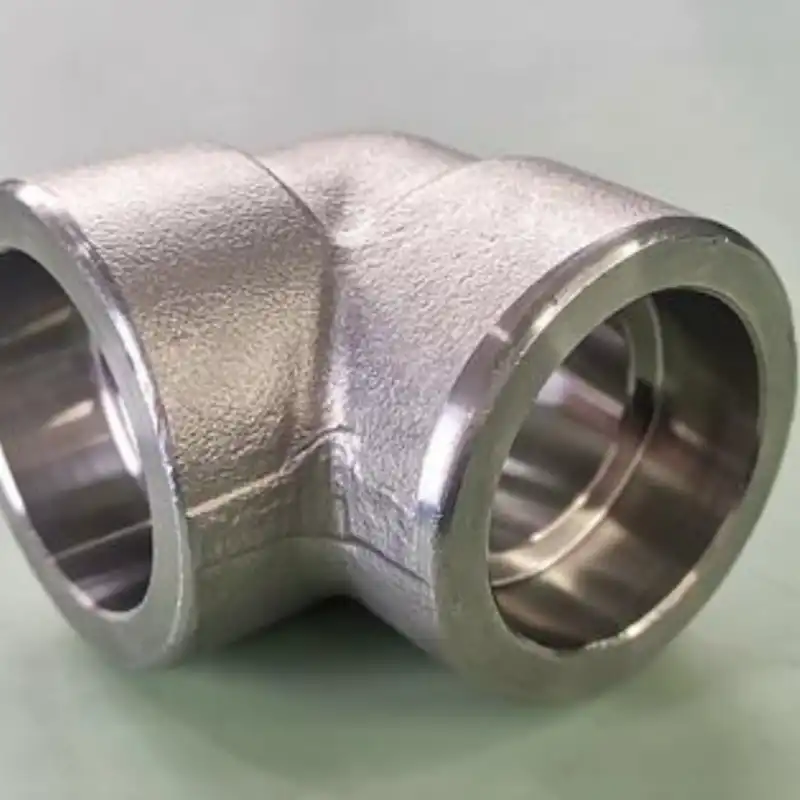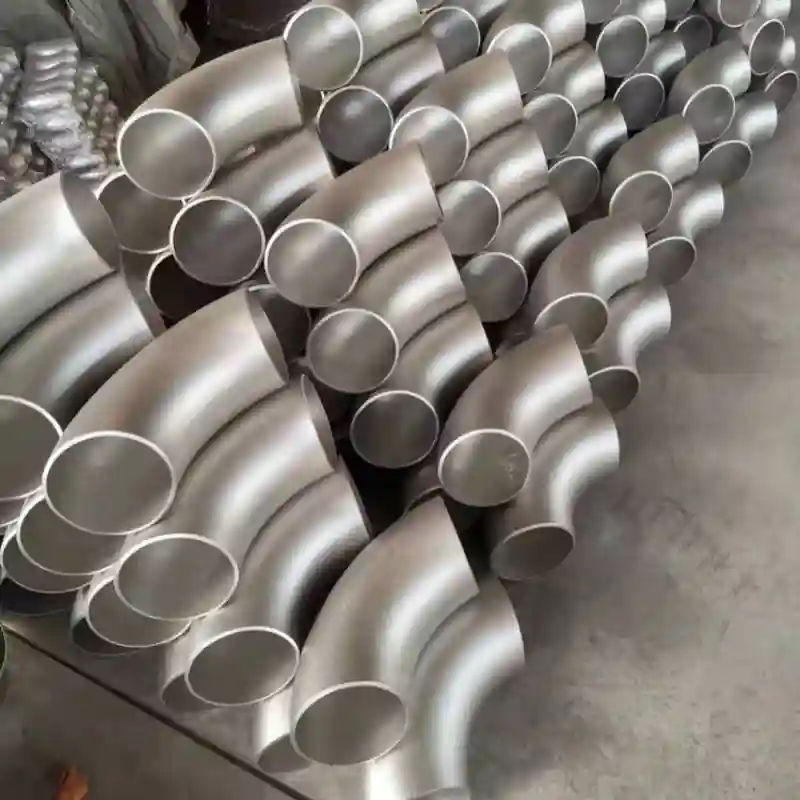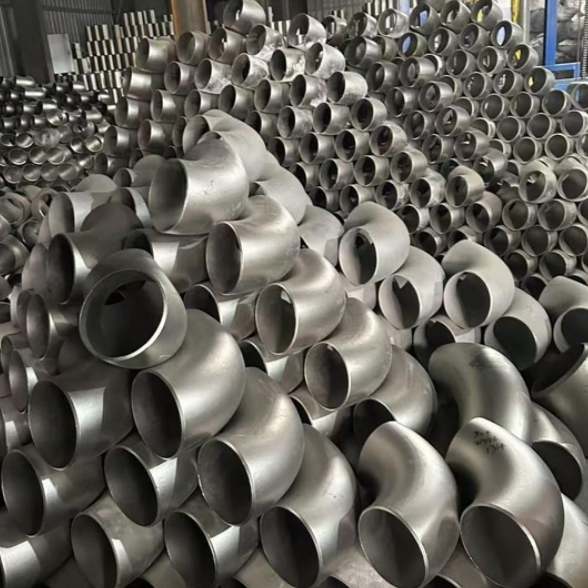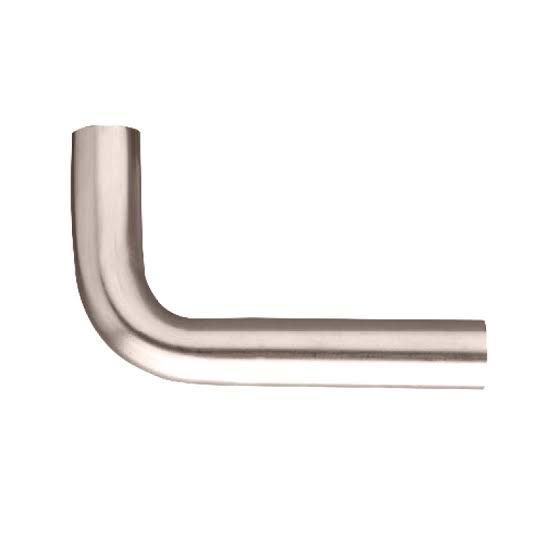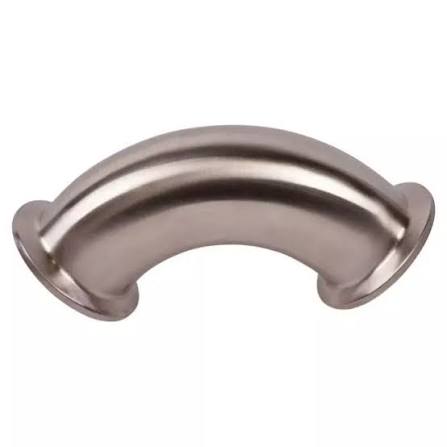
What Does an Elbow Pipe Look Like?
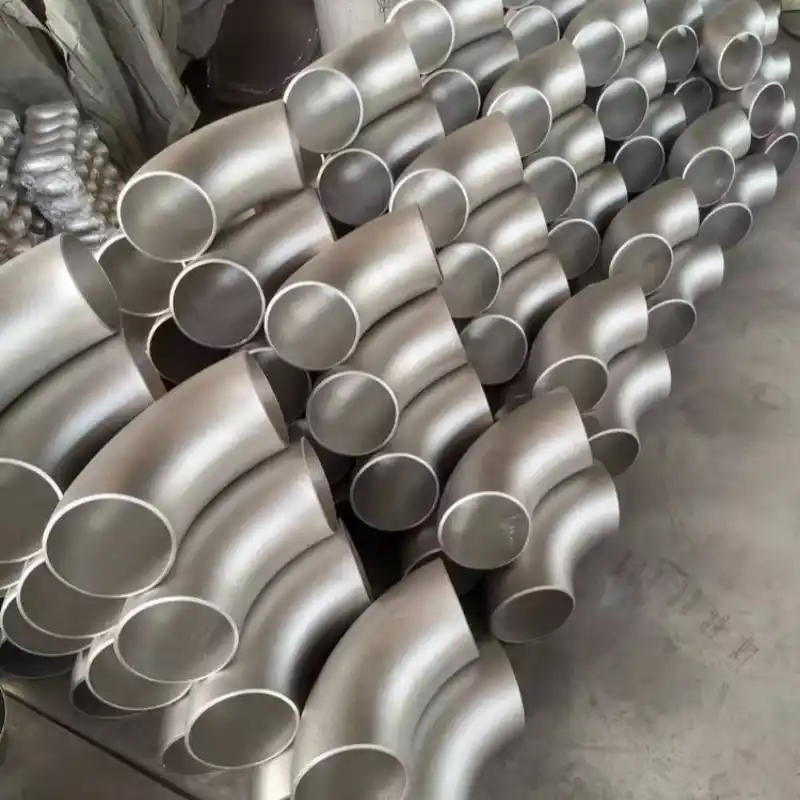
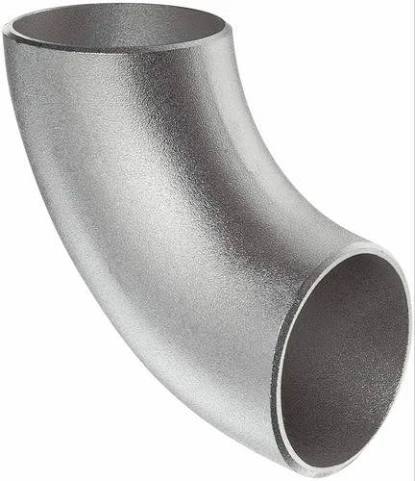
In water treatment applications, an elbow pipe features a distinct curved bend by appearance — the most common angles are 45° or 90°, while 180° return bends can be found in a small number of water distribution systems.
Its overall profile is determined by the bend radius. For long radius elbows, the distance from the center to the end face is 1.5 times the nominal diameter. This smooth transition design is widely adopted in water treatment to reduce impact and fragmentation of flocs or suspended particles. Taking a DN100 (4-inch) 316L stainless steel elbow as an example, the straight section length of the long radius type is 152 mm, while that of the short radius type is only 102 mm.
Different from ordinary industrial pipes, sanitary elbow pipe water treatment for water service scenarios has additional visual features. The pipe ends are generally designed for butt welding or press fit connection, and the inner wall is mechanically polished to Ra ≤ 0.4 μm, presenting an even metallic luster without obvious tool marks.
Material grade markings (such as ASTM A403 WP316L) are laser engraved on the outer arc side. For pipelines in chlorination or ozone contact tanks, corrosion resistant elbow fitting undergoes pickling and passivation treatment, with a matte grey surface finish.
A standard stainless steel elbow for filtration systems is marked with pressure ratings (Class 150 or PN16) on the flange face. During routine inspection, an endoscope can be used to examine the inner arc of the elbow. In line with ASME B16.9, the wall thickness at this position of qualified water treatment elbows shall not be less than 87.5% of the nominal wall thickness.
Common FAQs
How to visually judge whether a stainless steel elbow is suitable for chlorine-containing media (such as sodium hypochlorite dosing) in water treatment systems?
Check the surface treatment. Non-passivated elbows show a bright silver finish and are prone to pitting corrosion, whereas qualified products have a uniform matte or light grey pickled and passivated layer. Brown rings or pitting spots near the pipe ends indicate poor chlorine resistance.
After years of operation, white scale and biofilm form on the elbow inner wall, causing increased system pressure drop. How to resolve this issue?
Step 1: Remove the elbow and use an endoscope to confirm the location and thickness of scaling, which usually accumulates heavily on the top of the inner arc.
Step 2: For calcium carbonate scale, circulate and clean with citric acid solution at pH 2~3; for biofilm contamination, soak the elbow in 0.5% peracetic acid solution for 90 minutes.
Step 3: Before reinstallation, replace it with an electrolytically polished elbow with inner surface roughness of Ra ≤ 0.2 μm. This specification is clearly specified in AWWA C521 and can extend the cleaning cycle by more than three times.