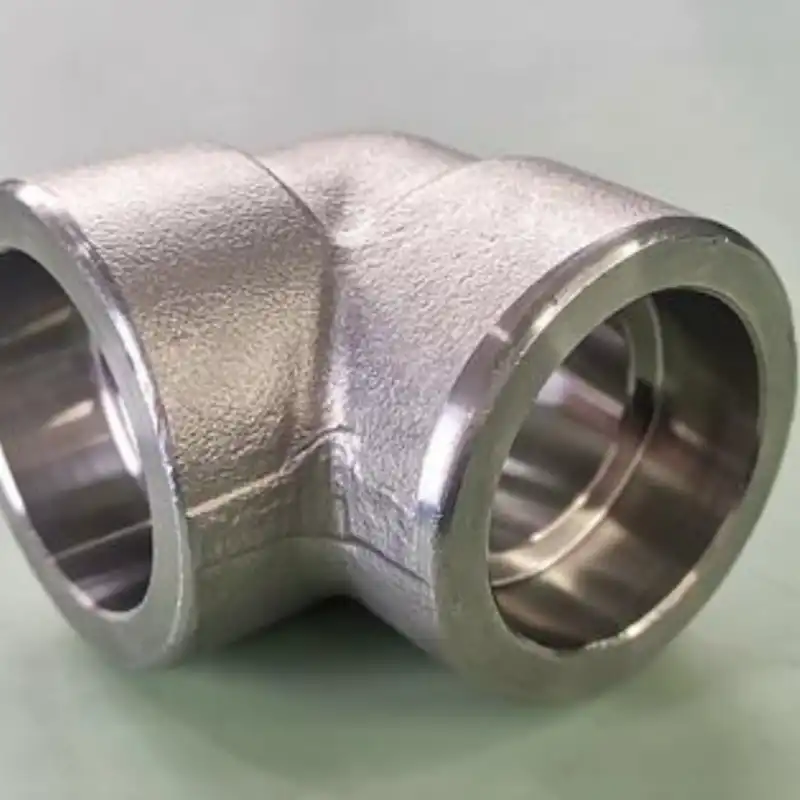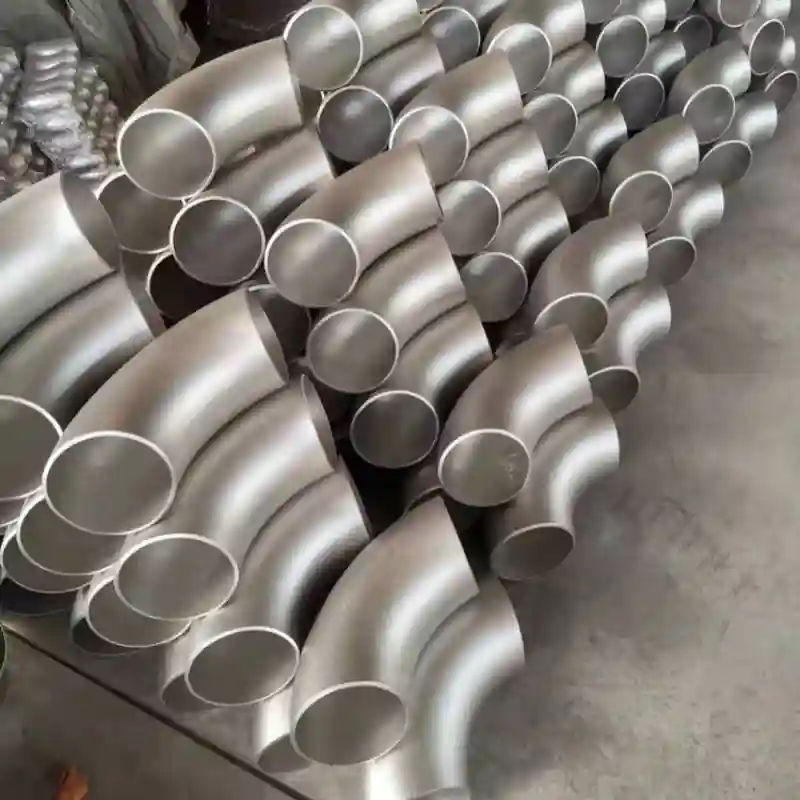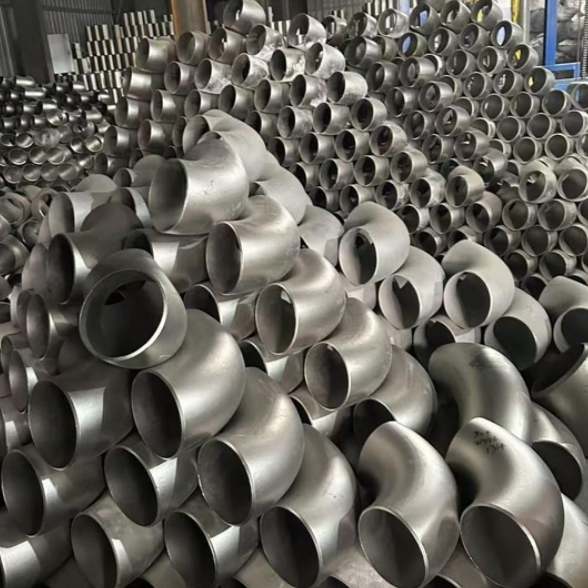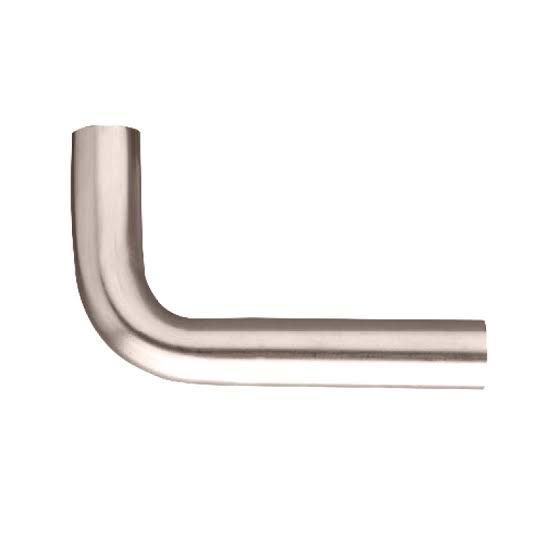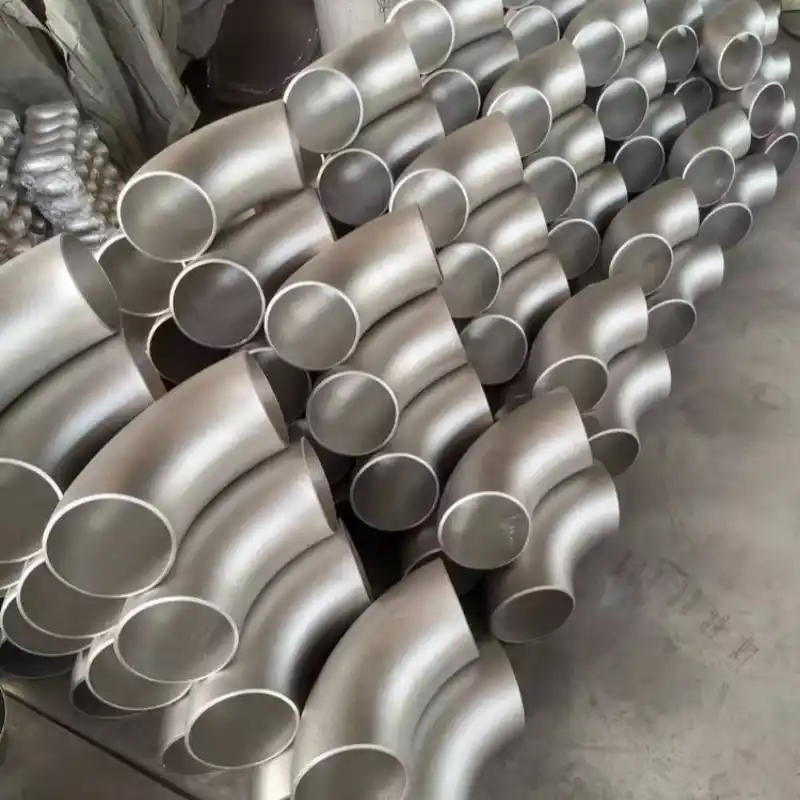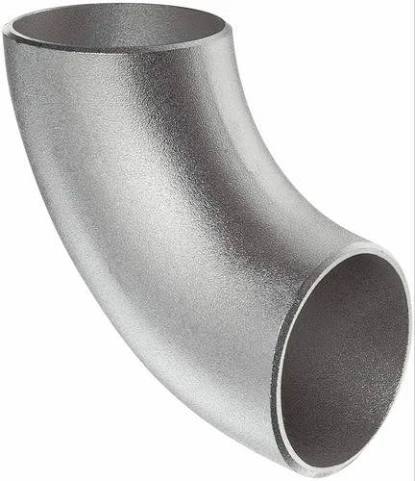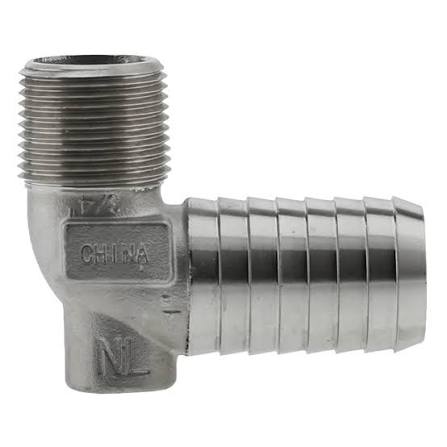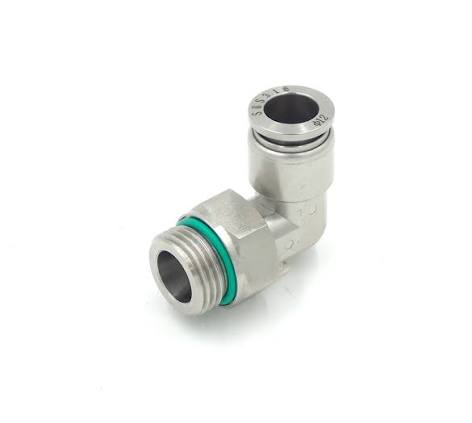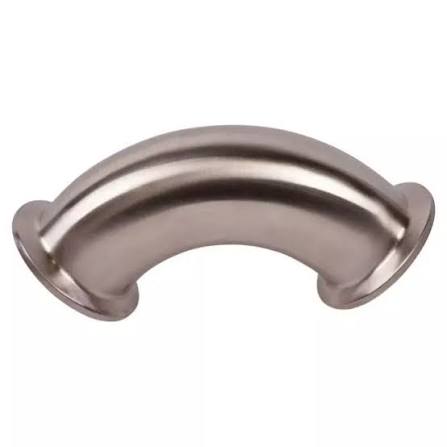
In stainless steel piping systems, the weight of 90-degree elbows not only affects transportation costs but also directly relates to support load design and overall project budgets. For procurement and design personnel, mastering the precise calculation method for stainless steel 90 degree elbow weight is a critical step in ensuring project economy and safety. Based on the ASME B16.9 standard, this article systematically reviews the core variables and calculation formulas affecting weight, and provides an estimation logic suitable for field engineering applications.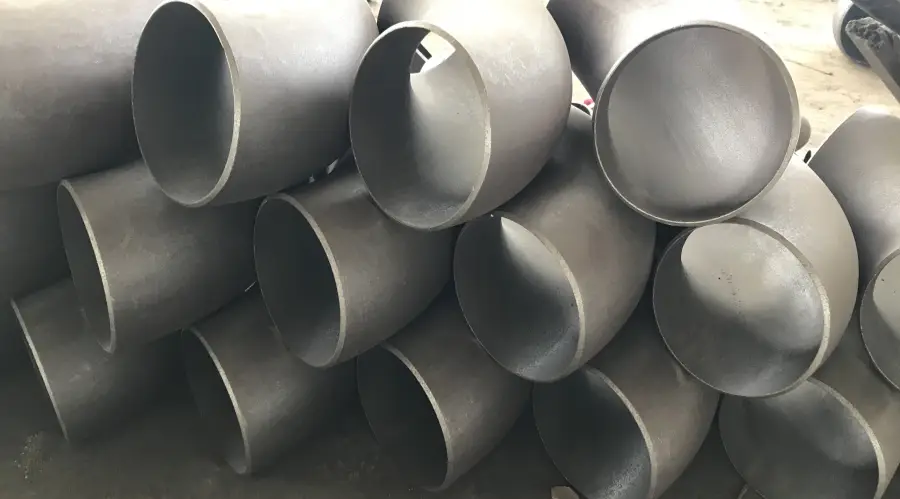
1. Three decisive parameters affecting weight
✅The theoretical weight of an elbow is determined by the outside diameter (OD), wall thickness (WT), and bending radius (R). Among these, long-radius elbows (LR, R=1.5D) have a larger developed area and are typically 15%~20% heavier than short-radius elbows (SR, R=1.0D) of the same nominal size.
✅In addition, material density cannot be ignored – 304 stainless steel has a density of 7.93 g/cm³, while 316L is 7.95 g/cm³. Although the difference is small, it becomes significant in large-diameter, thick-wall fittings. For applications requiring higher corrosion resistance, when selecting 316L material, corrections must be made in the calculation. This is also why many professional pipe fitting weight calculator tools include material selection options.
2. Core calculation formula and practical example
The following general formula based on outside diameter and bending radius is recommended for engineering use (applicable to 304/316L):
Formula:
W = 0.02466 × S × (OD – S) × R / 1000
(where W = weight per piece (kg), S = wall thickness (mm), OD = outside diameter (mm), R = bending radius (mm))
Example calculation:
✅For a 90-degree elbow with OD 219.1 mm, wall thickness Sch40 (S=8.18 mm), and long radius (R=1.5×219.1=328.65 mm):
W = 0.02466 × 8.18 × (219.1 – 8.18) × 328.65 / 1000
= 0.02466 × 8.18 × 210.92 × 328.65 / 1000 ≈ 13.98 kg
✅This result is the theoretical net weight. For quick reference of batch data under different pressure ratings (e.g., Sch10S, Sch80, 3000#), it is advisable to consult the manufacturer’s stainless steel elbow weight chart, but note that wall thickness tolerances (typically ±12.5%) from different manufacturers will cause reasonable deviations in actual weighed values.
3. Density correction and wall thickness schedule effects
✅When calculating for 316L material, multiply the above result by the density correction factor (7.95/7.93 ≈ 1.0025). For large sizes, this can be ignored, but for high-precision budgeting it should be considered. A more exact derivation can be based on volume integration, but for field engineers, the simplified formula above is sufficient for selection purposes.
✅It is worth noting that the wall thickness schedule has a nearly linear effect on weight – a 10% increase in wall thickness results in approximately a 9.5% increase in weight. Therefore, when calculating elbows for high-pressure conditions, be sure to confirm whether the design wall thickness includes corrosion allowance.
4. Practical recommendations
-
Theoretical weight is for budget and design reference only; final settlement should be based on actual weighing.
-
To estimate the shipping tonnage of an entire batch, combine the LR 90 degree elbow mass with quantity for a quick calculation.
-
Different manufacturing processes (push vs. welded) may cause metal build‑up at the centerline, producing a positive deviation of 2%~5%. It is recommended to specify weight tolerance ranges in the contract.
By mastering the above methods, you can precisely control the factors affecting stainless steel 90 degree elbow weight, thereby optimizing piping layout costs and effectively avoiding support failure risks caused by weight estimation errors.