Interpreting Stainless Pipe Sizes: How to Precisely Match Fittings
☑️In the design and installation of piping systems, stainless pipe dimensions are the foundation for system sealing, pressure resistance, and long-term reliability.
☑️Whether for petrochemical pipelines, food-grade conveying systems, or high-pressure steam networks, engineers and installers must accurately grasp the pipe’s outer diameter, wall thickness, and corresponding nominal size to ensure perfect fit with fittings such as elbows and tees.
☑️This article, based on the ASME B36.19M standard and industry measurement data, analyzes key dimensional specifications and demonstrates how to measure fittings to ensure assembly accuracy.
Standard System and Key Data for Stainless Pipe Sizes
☑️Internationally accepted stainless pipe sizes follow the ASME B36.19M specification, which clearly defines the actual outer diameter (OD) and wall thickness series (Schedule) for different nominal pipe sizes (NPS). Common wall thickness grades include 5S, 10S, 40S, and 80S, where the suffix “S” specifically designates stainless steel materials.
☑️For example, an NPS 2 stainless steel pipe has a standard OD of 60.3 mm (2.375 inches). If Schedule 10S wall thickness is selected, the wall thickness is 2.77 mm and the inner diameter is 54.76 mm. If Schedule 40S is selected, the wall thickness increases to 3.91 mm, and the inner diameter decreases to 52.48 mm.
☑️Different stainless pipe sizes directly determine the pipe’s pressure-bearing capacity and the choice of welding process. According to a technical review in Stainless Steel World journal, correctly selecting the wall thickness series can prevent more than 30% of early corrosion failure cases.
How to Measure Fittings (Elbows) for Fit Dimensions
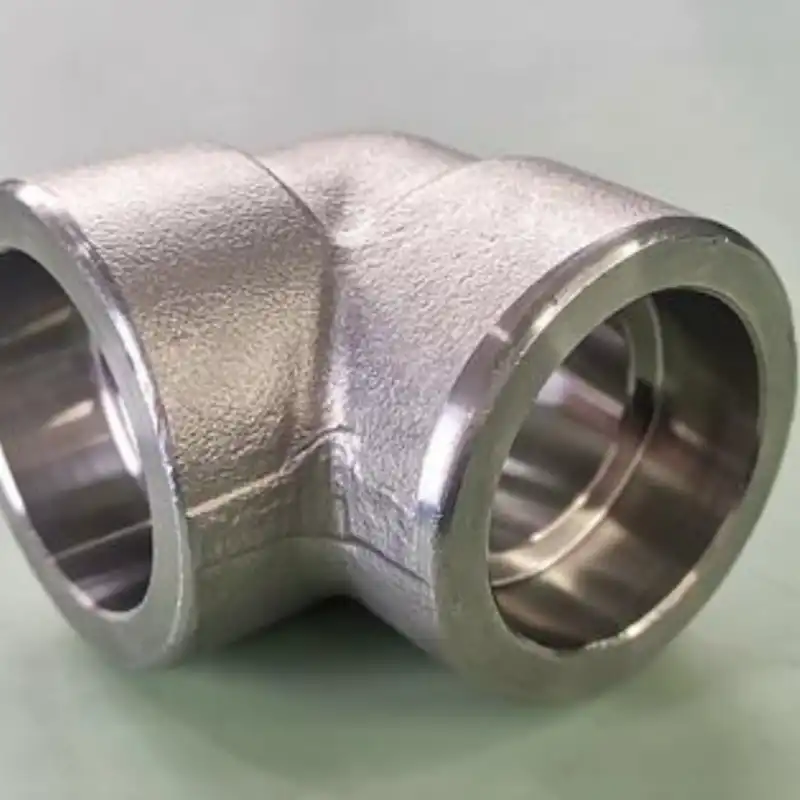
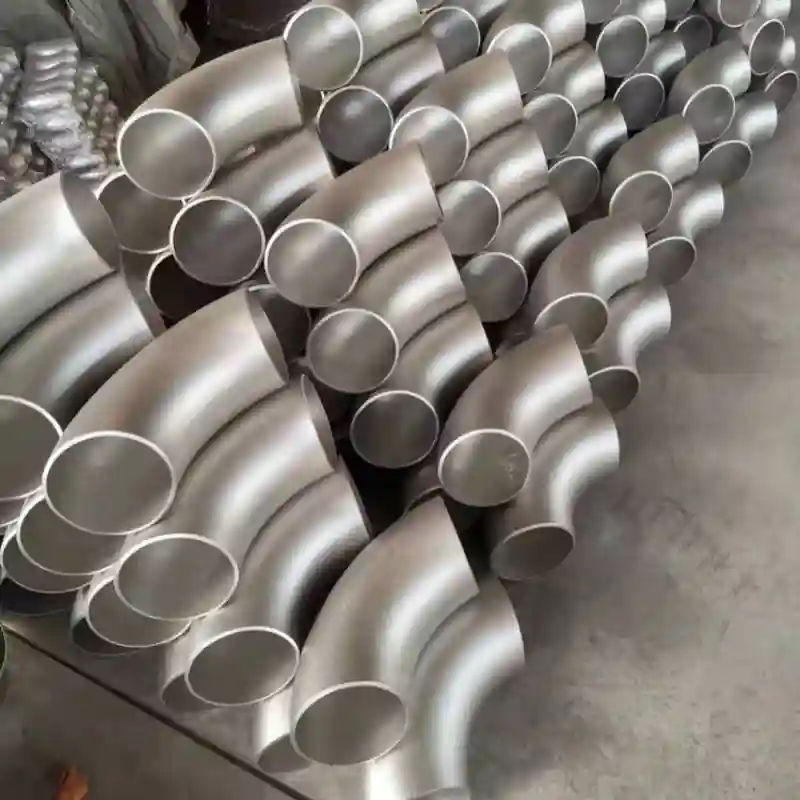
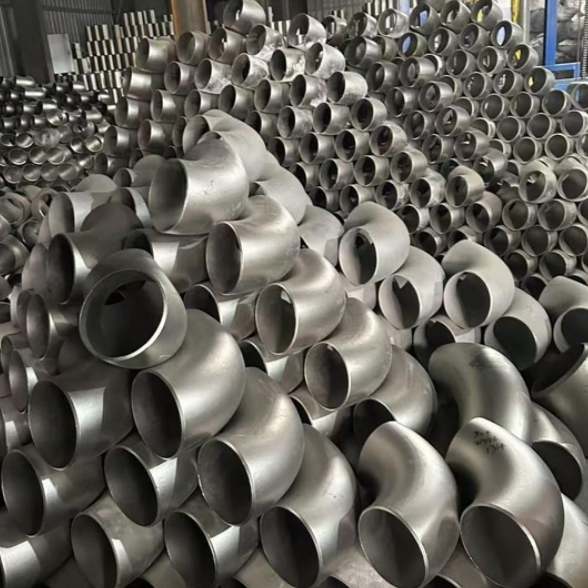
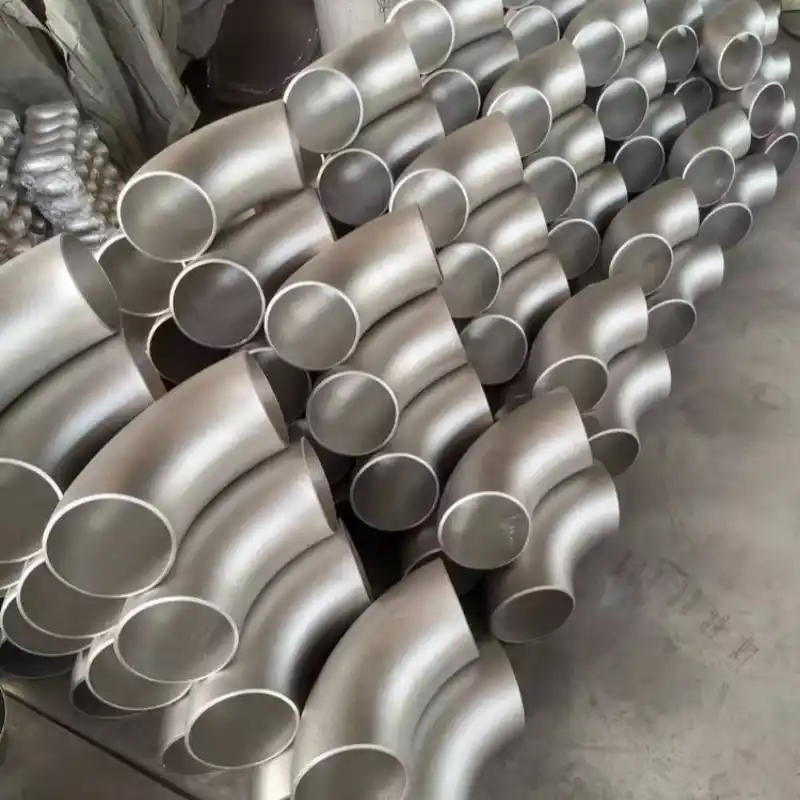
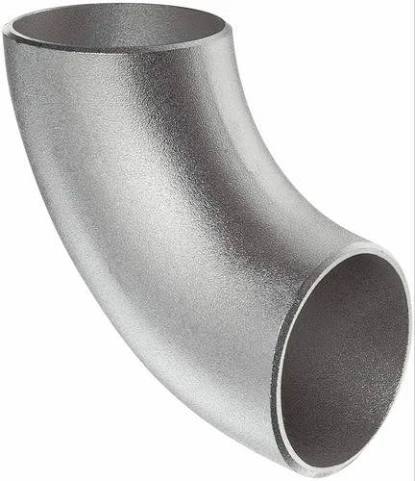
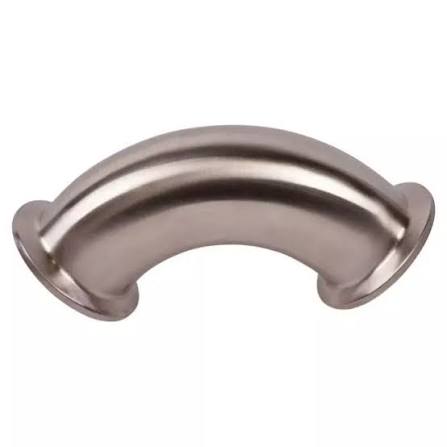
In actual assembly, knowing the pipe dimensions alone is not enough; you must also learn how to measure pipe fittings – especially elbows, which are key components that change flow direction. When measuring an elbow, focus on the following four core parameters:
-
Gap between port inner diameter and pipe outer diameter: Use a digital caliper to measure the inner diameter of the elbow’s socket or butt-weld end, and simultaneously measure the outer diameter of the stainless steel pipe. For socket weld elbows, the fit clearance should be controlled between 0.2 and 0.5 mm. Too large a gap may cause cracks after welding; too small a gap prevents smooth insertion.
-
Elbow center-to-end dimension: According to ASME B16.9, the center-to-end distance for a long radius elbow is 1.5 times the nominal diameter (DN). For example, for an NPS 3 (DN80) 90° long radius elbow, the standard center-to-end dimension is 114.3 mm (i.e., 1.5 × 3 × 25.4). You can directly measure the actual part using a square and depth gauge; the deviation should not exceed ±1.6 mm.
-
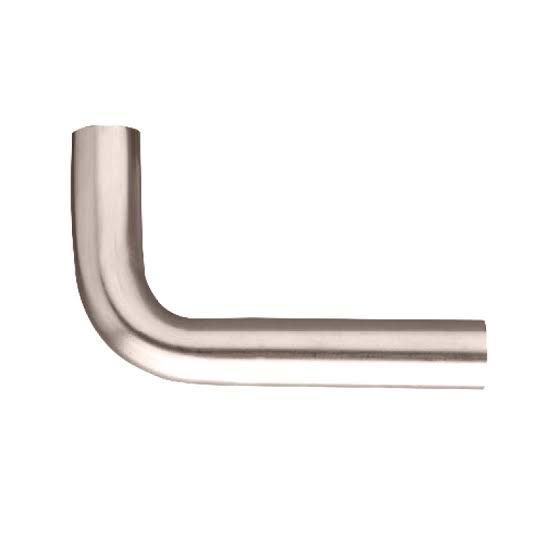
Bend radius consistency: Use a flexible tape measure along the inner arc of the elbow to measure the arc length, then convert it to the bend radius to confirm whether it meets the 1.5D (long radius) or 1.0D (short radius) requirement.
-
Wall thickness uniformity: Use an ultrasonic thickness gauge to take multiple measurements at the elbow’s back, side, and port ends, ensuring that the minimum wall thickness is not less than 87.5% of the nominal pipe wall thickness (in accordance with ASME B31.3).
For example, when you need to connect an NPS 3 stainless steel pipe with an outer diameter of 88.9 mm and a wall thickness of 3.05 mm to a 90° long radius elbow, you should select an elbow with a port inner diameter of 88.9–89.4 mm , a center-to-end dimension of 114.3 mm, and a wall thickness not less than 2.67 mm. During measurement, clean the pipe end and elbow inner surface first, then take readings at three different angles with the caliper and average them – this effectively eliminates ovality errors.
Ensuring System Compatibility of Pipe and Fittings
➡️Correctly interpreting stainless steel pipe dimensions and mastering fitting measurement methods are prerequisites for selecting high-quality pipe fittings. 🌈In actual projects, even with the same nominal diameter, pipes of different wall thickness series must be matched with elbows of the corresponding inner diameter series – for example, a Schedule 40S pipe can only be butt-welded to a Schedule 40S elbow or one with the same inner diameter grade; otherwise, misalignment will occur, greatly reducing fatigue life. 🌈Therefore, it is recommended to request a dimensional inspection report from the supplier when purchasing elbows, verifying measured data such as wall thickness, port inner diameter, and center-to-end distance.
➡️As a professional fitting manufacturer, AIFN Pipe Fittings Company offers a full range of stainless steel elbows, covering standard sizes from NPS 1/2 to NPS 48. Each product is inspected using CMM and wall thickness scanning to ensure precise matching with pipe dimensions listed in ASME B36.19M. Whether you need long radius elbows, short radius elbows, or reducing elbows, we can provide you with traceable dimensional certificates, keeping your piping system free from leakage risks at the source.