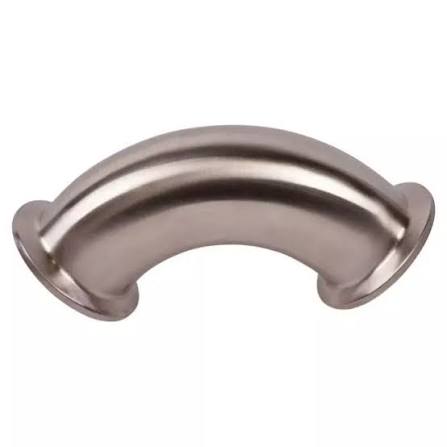
Understanding NPS Pipe Size: The Core Parameter for Pipe Elbow Selection
✔️In North American and international pipeline engineering, NPS pipe size (Nominal Pipe Size) is the most fundamental design basis. Many beginners tend to confuse “NPS” with the actual outside diameter of the pipe — in fact, for the range of NPS 1/8 to 12 inches, the NPS value is neither equal to the outside diameter nor the inside diameter, but rather a standardized designation.
✔️For example, an NPS 4-inch steel pipe has an actual outside diameter of 4.5 inches (114.3 mm). This system is defined by the ASME B36.10 standard (Welded and Seamless Wrought Steel Pipe), ensuring universal interchangeability between fittings and pipes.
Key Difference Between Nominal Pipe Size and Nominal Tube Size
✔️Two terms are frequently used in the industry: nominal pipe sizes and nominal tube size. The former (NPS) is dedicated to piping systems, where wall thickness is further specified by Schedule (wall thickness grade), such as Sch 40, Sch 80.
✔️For an NPS 6-inch pipe, Sch 40 has a wall thickness of 0.280 inches (7.11 mm), while Sch 80 reaches 0.432 inches (10.97 mm) — the inside diameter therefore differs significantly, but the outside diameter remains constant at 6.625 inches (168.3 mm).
✔️nominal tube size, on the other hand, is commonly used in heat exchangers or instrument tubing. Tubes are identified by their outside diameter (OD) as the reference — for example, a 1/2-inch nominal tube actually has an outside diameter of 0.500 inches (12.7 mm), completely different from the NPS rule. Understanding this distinction avoids mismatched connection sizes when purchasing elbows, tees, and other fittings.
Direct Impact of NPS on Pipe Elbow Fittings
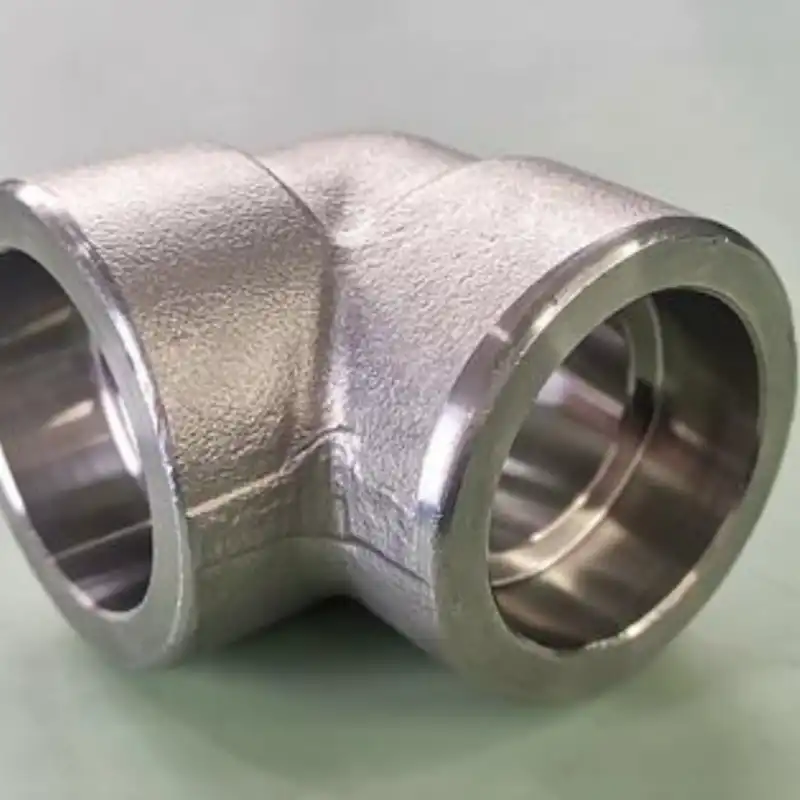
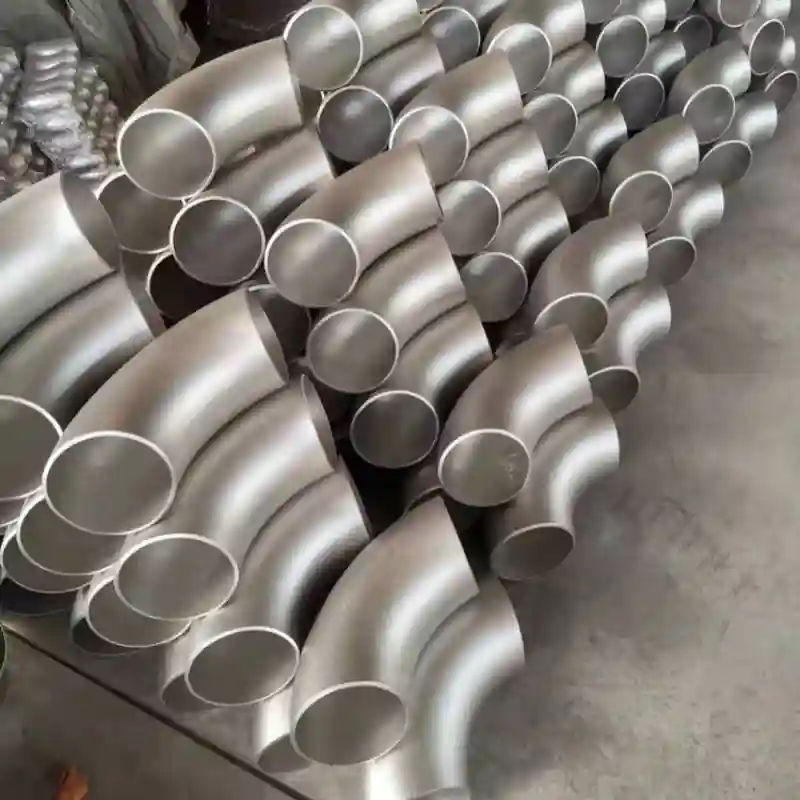
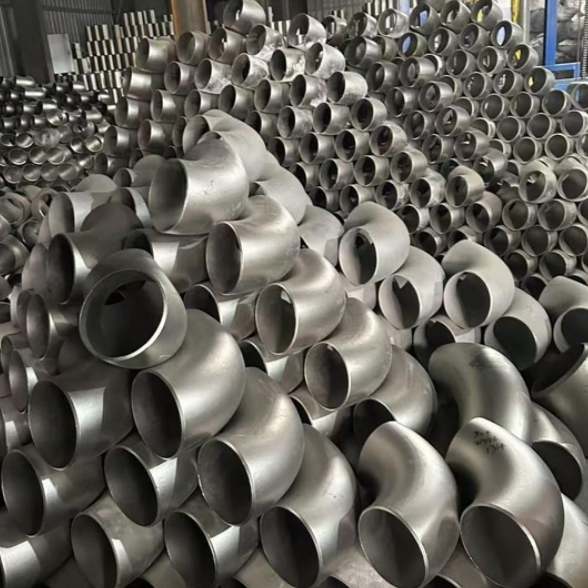
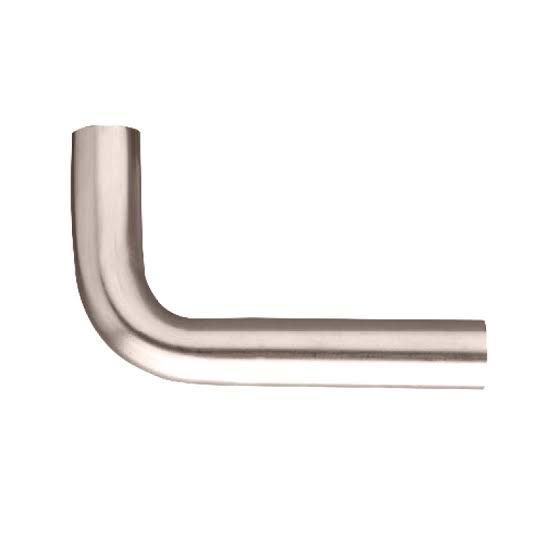
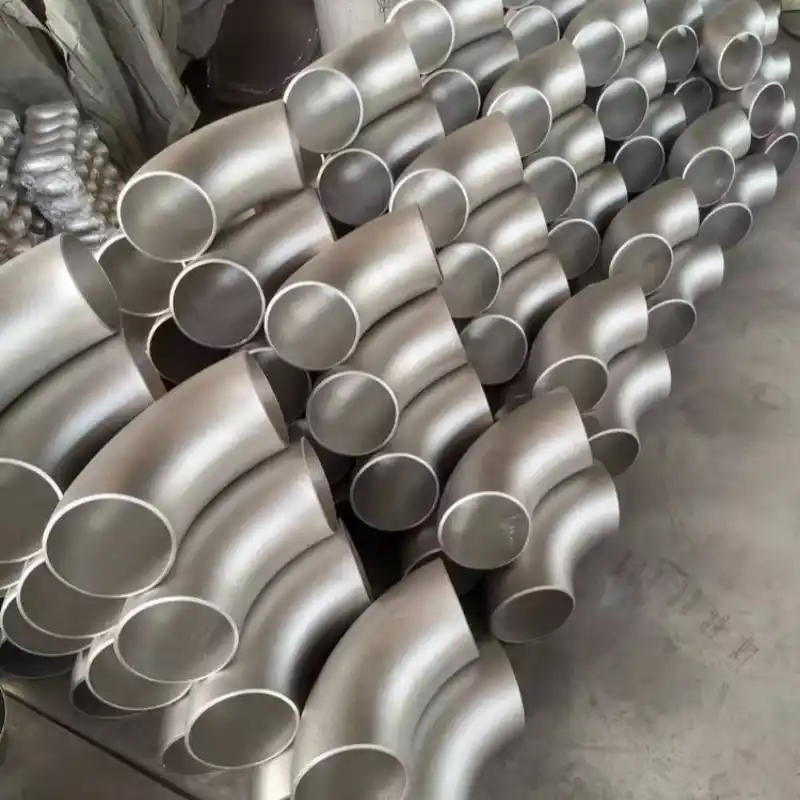
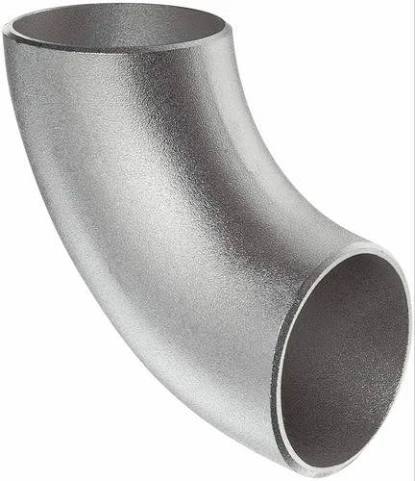
✔️When selecting a 90° elbow or 45° elbow for a pipeline, NPS determines two core geometric parameters: the bend radius and the center-to-face distance. According to the ASME B16.9 standard, a long radius elbow (LR Elbow) has a bend radius of 1.5 times the nominal pipe size (1.5D), while a short radius elbow (SR Elbow) has 1.0D.
✔️Example: For an NPS 10-inch (DN250) pipe, the center-to-face length of a long radius 90° elbow should be 15 inches (381 mm). This dimension directly depends on the NPS value, not the actual measured outside diameter.
✔️At the same time, the wall thickness at the elbow ends must be at least equal to the nominal wall thickness of the connecting pipe — for example, a Sch 40 elbow must meet the allowable tolerance in ASME B16.9 Table 3 (typically 87.5% of the nominal wall thickness).
Common Reference Parameters in Engineering Selection
-
Small-bore range (NPS 1/2 – 4): The actual outside diameter increases by approximately 1/8 to 1/4 inch per size step; elbows are marked with the matching NPS and Schedule upon factory delivery.
-
Large-bore range (NPS 14 – 24): The outside diameter is essentially equal to the NPS value (e.g., NPS 20-inch pipe has an outside diameter of 20 inches), but the elbow’s center-to-face distance is still calculated as NPS × 1.5D.
-
Pressure rating matching: The Class rating (e.g., Class 150, 300) used in conjunction with NPS determines the elbow wall thickness and bolt hole circle diameter; different classes must not be mixed.
Why Is Precise Understanding of NPS So Important?
✔️In oil & gas, chemical, or water treatment pipelines, misunderstanding NPS pipe size can lead to misalignment between the elbow and the pipe, causing welding stress concentration or leakage risks.
✔️For example, forcibly butt-welding an NPS 8-inch 90° elbow onto a metric DN200 pipe (outside diameter 219.1 mm vs. actual 219.1 mm — though similar, but with different wall thickness schedules) may result in a 15% to 20% increase in local stress due to mismatched arc radii. According to statistics from the Pipe Fittings Engineering Handbook (McGraw-Hill), about 32% of pipeline maintenance incidents are directly related to misjudgment of fitting dimensions.
📝Choose the Right Fitting Partner
✏️For your piping system, whether you need carbon steel, stainless steel, or alloy elbows, the first step is to confirm the NPS designation and wall thickness schedule for each section of pipe in your project.
✏️AIFN Pipe Fittings Company provides a full range of ASME/ANSI standard elbows — from NPS 1/2 to 48 inches, covering long radius, short radius, 180° return bends, and more. Only by precisely and consistently integrating NPS pipe size, material, and pressure rating can you build a safe and long-lasting pipeline network.