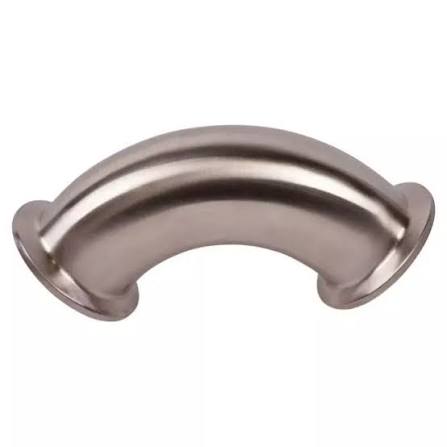
How to Fabricate Elbows On-Site with Corrugated Pipe: Process Essentials and Engineering Practice
✔️In piping systems, corrugated pipes are widely used for compensating displacement or connecting irregular components due to their flexibility and pressure resistance. However, when facing non‑standard directional changes on site, directly purchasing ready‑made elbows may involve long delivery times or mismatched specifications. At this point, mastering the standardized method of corrugated pipe elbow fabrication becomes a key skill for engineers to reduce costs and improve efficiency.
✔️Not all corrugated pipes are suitable for bending modification. First, verify the pipe parameters: nominal diameter (DN), corrugation pitch (typically 10–30 mm), wall thickness (0.3–1.5 mm stainless steel or galvanized steel), and maximum working pressure (commonly 0.6–2.5 MPa). If the wall thickness is less than 0.5 mm, corrugation collapse is highly likely after bending, and an internal filling support process must be adopted.
The core fabrication process consists of four steps:
Step 1: Precise measurement and elbow design
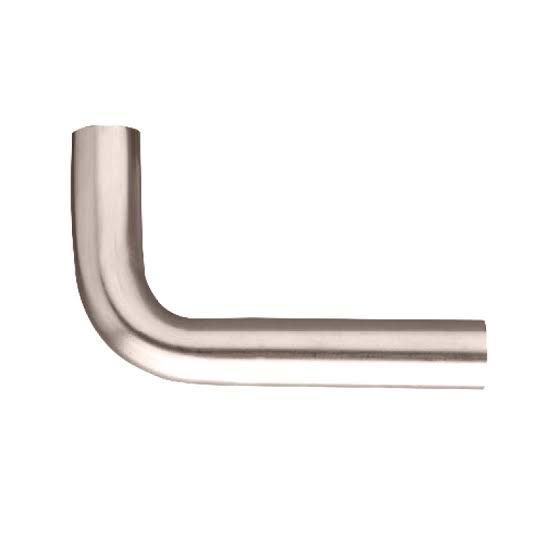
✅Clearly define the required turning angle (commonly 45°, 90°) and bending radius (R). According to ASME B31.3, the cold‑bending radius of corrugated pipes should not be less than 5 times the pipe’s outer diameter (e.g., for DN50 pipe, R ≥ 250 mm); otherwise, the corrugation pleats will be over‑stretched, leading to stress cracking. Mark the starting line, bending apex, and ending line on the pipe body with a marker, and reserve straight sections of 100–150 mm at both ends for subsequent connections.
Step 2: Internal support and bending tooling
✅To prevent instability of the corrugations during bending, fill the pipe with dry fine sand or low‑melting‑point alloy, and compact it with end plugs. Secure the corrugated pipe on a pipe bender with roller guide grooves, or use a segmented hydraulic pushing tool. For large diameters (DN ≥ 100), hot bending is recommended: use an oxy‑acetylene flame to evenly heat the bending zone to 250–350°C (not exceeding the material’s sensitization temperature) to reduce yield strength.
Step 3: Forming and angle verification
✅Apply pressure incrementally in steps of 5°–10° per pass, and check the angle with a protractor after each bend. Do not over‑bend in a single pass, as the springback rate of corrugated pipes is approximately 3%–8%. When the target angle is reached, hold the pressure for 2 minutes, then over‑bend by 2°–3° in the reverse direction to compensate for springback. After forming, inspect the wall thickness reduction on the outer arc side—according to industry experience, the reduction rate must not exceed 15% of the original wall thickness (verifiable by ultrasonic thickness gauge).
Step 4: Reinforcement and sealing test
✅The inner arc side of the bent area usually develops compression wrinkles; these should be reinforced with annular stiffening rings or tack‑welded ribs to prevent fatigue from vibration during operation. After completing the forming corrugated tube bends, a pneumatic tightness test is mandatory: apply compressed air at 1.5 times the working pressure for 5 minutes, and brush soapy water over all corrugation valleys and weld seams. If micro‑leakage is found, it can be sealed by anaerobic adhesive penetration or repaired by TIG welding.
✔️In actual projects, the change in axial stiffness of the corrugated pipe after bending is often overlooked. It is recommended to add a limit support bracket at each end of the elbow to prevent the internal pressure thrust from straightening the elbow. For high‑temperature steam service, Inconel 625 or 316L material should be selected, and the bending speed should be controlled within 30–50 mm/min to avoid intergranular corrosion.
✔️Mastering the process discipline for these field‑fabricated pipe elbows can increase material utilization to over 92% (compared to cut‑and‑welded elbows) and reduce emergency repair response time by 60%. However, it should be noted: for pipelines involving pressure vessels or flammable media, the final elbow must pass non‑destructive testing (PT or MT) before being put into service.