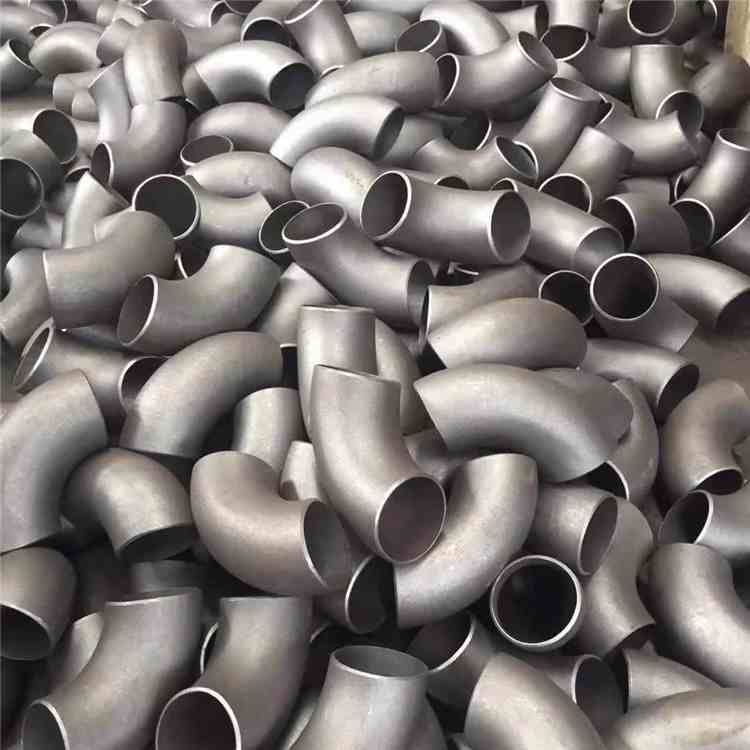
In industrial fluid transmission systems, elbows are core pipe fittings for changing pipeline directions, among which 90 degree elbows account for over 80% of all direction-changing fittings used in piping systems. Featuring one-piece forming technology and stable structural performance, one shot 90 degree stainless steel elbow has become the preferred pipe fitting across industries including petrochemical, water treatment, food and pharmaceutical sectors.
This article comprehensively analyzes the core technologies and application essentials of 90 degree stainless steel elbows from multiple dimensions including material properties, structural parameters, installation specifications and selection criteria, providing professional references for overseas engineering procurement and technical selection.
I. Core Materials and Performance Advantages of 90 Degree Stainless Steel Elbows
Under harsh working conditions of industrial piping systems, material stability directly determines the service life and operational safety of pipe fittings. The wide application of stainless steel elbow in various industries mainly stems from its superior comprehensive material properties.
Currently, mainstream industrial 90 degree stainless steel elbows are mainly made of two austenitic stainless steel grades: 304 and 316L. 304 stainless steel delivers excellent general corrosion resistance and adapts to most weak acid and weak alkali medium environments. It features tensile strength ≥485MPa, yield strength ≥170MPa and elongation ≥40%, capable of long-term stable operation within the temperature range of -20℃ to 425℃. By reducing carbon content and adding molybdenum elements, 316L stainless steel achieves greatly enhanced resistance to chloride ion corrosion. In seawater desalination and high-salt chemical medium working conditions, its service life is more than 3 times that of 304 stainless steel, with a maximum applicable working temperature up to 450℃.
Apart from core corrosion resistance and mechanical properties, stainless steel elbow also possesses outstanding weldability and machinability, compatible with various welding processes such as argon arc welding and manual electric arc welding. It forms stable welding seams with a non-destructive testing pass rate above 99%, fully meeting the high-pressure and high-tightness operation requirements of industrial pipelines.
II. Core Structural Types and Technical Parameters of 90 Degree Elbows
The structural design of 90 degree elbow directly affects fluid transmission efficiency, operational stability and installation compatibility of piping systems. Classified by curvature radius, caliber variation and forming technology, it is divided into multiple types with corresponding applicable working conditions and technical standards.
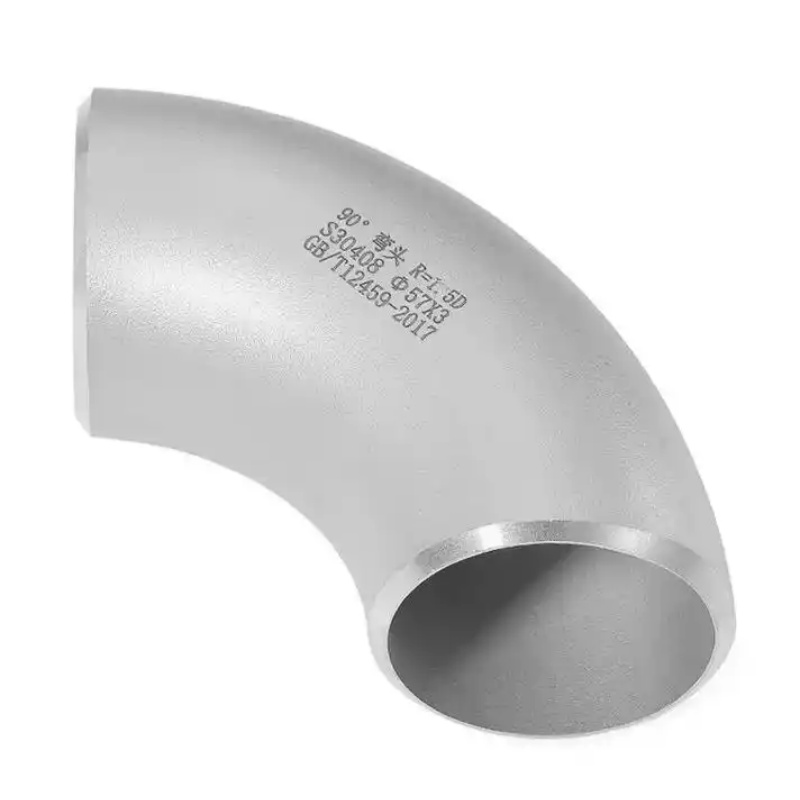
Long radius elbow is the most widely used type of 90 degree elbow in industrial pipelines, defined by a curvature radius R=1.5D (D refers to nominal diameter). Compared with short radius elbow (R=1D), long radius elbows feature smoother fluid passages, lowering fluid resistance coefficient by over 30%. In high-flow-rate and high-pressure-drop medium transmission scenarios, it effectively reduces energy consumption of piping systems and mitigates erosion and wear on inner elbow walls caused by flowing media.
Available nominal diameters of mainstream long radius elbows range from DN15 to DN600, with wall thickness grades covering Sch5s to Sch160. They fully comply with international and domestic standards including ASME B16.9, GB/T 12459 and EN 10253, conforming to design specifications of most industrial pipelines worldwide.
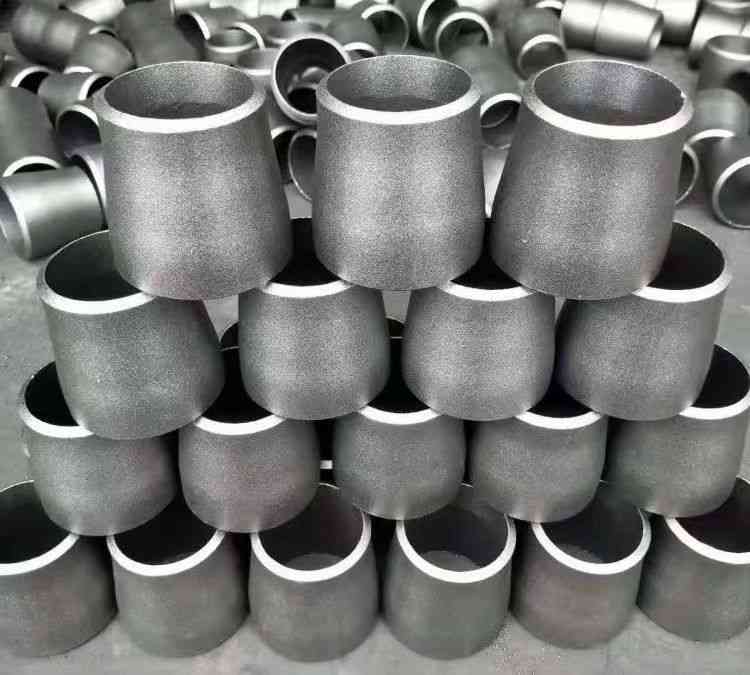
For special working conditions requiring direction change with diameter reduction in piping systems, reducing elbow serves as the optimal solution. This integrated fitting combines 90-degree direction change and diameter transition functions, enabling direct 90-degree connection of pipelines with different calibers without additional reducers and standard elbows. It effectively simplifies pipeline structure and cuts down welding joints as well as leakage risks.
Mainstream reducing elbows support full-range diameter transition from DN15×DN10 to DN600×DN500, with wall thickness grades flexibly matched according to pressure levels of connected pipelines. Its maximum allowable nominal pressure reaches 10MPa, satisfying diameter-changing direction demands of high-pressure piping systems.
III. Installation and Application Specifications of 90 Degree Elbows in Piping Systems
As key direction-changing components, the installation quality of pipe elbow exerts a decisive influence on the operational safety and service life of the entire piping system. Strict compliance with relevant installation codes and technical standards is mandatory during industrial pipeline construction.
In welding construction, argon arc welding shall be adopted for root pass welding of 90 degree stainless steel elbows to guarantee full penetration and tightness of weld roots and avoid welding defects such as incomplete penetration and slag inclusion. Full visual inspection is required after welding, and RT radiographic inspection up to Level II or above shall be conducted for critical working conditions.
In terms of positioning installation, the central displacement deviation of elbows shall be controlled within 3mm and angular deviation within 0.5° to ensure pipeline coaxiality and prevent stress concentration caused by installation errors. Under high-temperature and high-pressure working conditions, excessive stress concentration will sharply increase pipeline leakage and cracking risks.
In practical application scenarios, pipe elbow selection must fully match actual working parameters. 304 grade long radius 90 degree elbows are suitable for conventional medium delivery including clean water and compressed air; 316L grade elbows are recommended for heavy corrosion environments such as high-salt chemical medium transportation and seawater desalination; short radius 90 degree elbows are ideal for space-limited areas like equipment rooms and ship pipelines, balancing fluid transmission efficiency and space-saving demands.
IV. Selection Principles and Quality Control Essentials for 90 Degree Stainless Steel Elbows
Full-process quality control must be implemented covering raw material inspection, production process supervision and finished product testing. For raw materials, only stainless steel plates and pipes conforming to national and American standards are allowed, with complete material certificates provided to verify qualified chemical composition and mechanical properties.
During production, heating temperature and forming pressure of one shot 90 degree stainless steel elbow shall be precisely controlled to avoid insufficient forming and excessive wall thickness reduction. The wall thickness reduction shall be limited within 12.5% of the nominal wall thickness in line with ASME B16.9 regulations. For finished products, apart from routine appearance inspection, dimensional measurement and hydrostatic testing, chemical composition analysis, mechanical property testing and non-destructive inspection shall be carried out on products used in critical working conditions to ensure all performance indicators meet design requirements.
As indispensable core fittings for industrial piping systems, the performance and installation quality of 90 degree stainless steel elbows are vital to the safe and stable operation of entire fluid transmission pipelines.
This paper elaborates systematically on material performance, structural parameters, installation norms and selection criteria of one shot 90 degree stainless steel elbow, delivering comprehensive professional guidelines for overseas engineering procurement, technical selection and on-site construction.
In actual piping system design and field application, selecting proper elbow products based on specific working conditions and abiding strictly by installation codes and quality control standards can maximize the performance advantages of 90 degree stainless steel elbows and ensure long-term stable operation of fluid transmission pipelines.