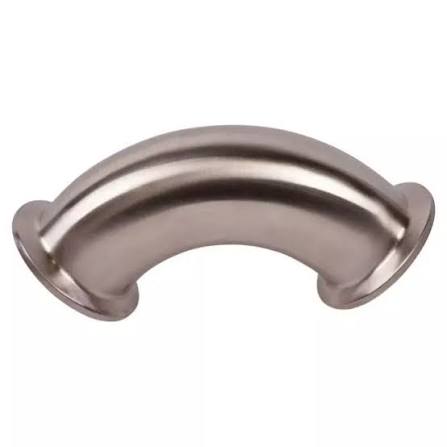
Technical Deep Dive into Schedule 40 90 Degree Elbow Steel: 2 Inch 90 Degree Elbow Steel Factory
In industrial piping systems, elbow fittings play a critical role in changing the direction of medium flow. For a nominal diameter of 2 inches (DN50), the design, manufacturing, and selection of a 90‑degree steel elbow directly affect the safety and economy of the entire pipeline. Based on actual production experience from Chinese elbow factories, this article provides a professional technical reference for engineers and procurement personnel, focusing on rigid structural characteristics, wall thickness rating (Schedule 40), and a strict quality control system.
I. Structural Features and Standards of Rigid 90 Degree Elbows
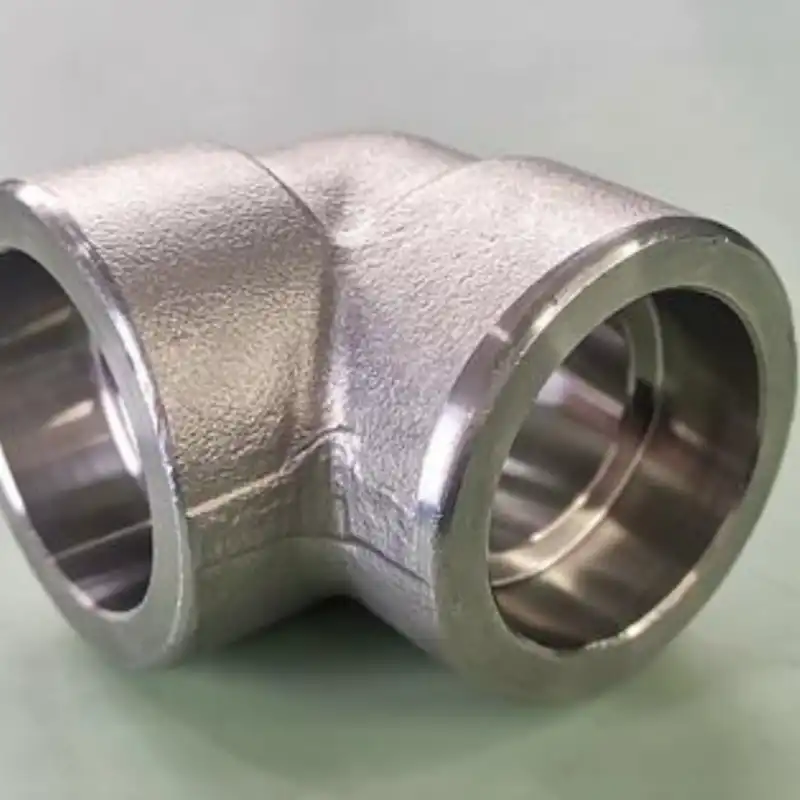
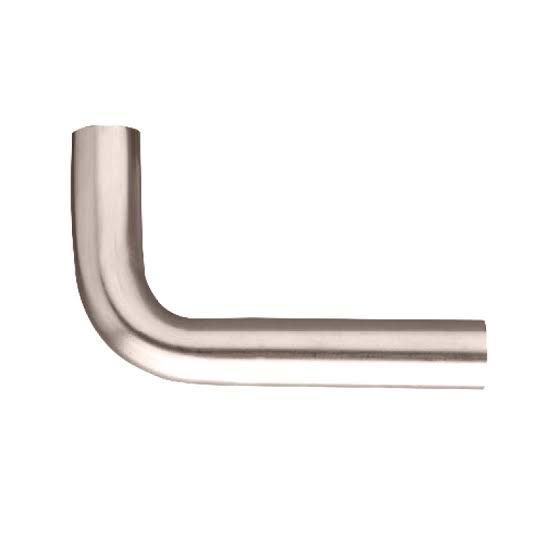
The term “rigid” elbow generally refers to a fitting that exhibits no obvious plastic deformation at room temperature and maintains a fixed bending angle and radius. This is in contrast to flexible or adjustable elbows. In high‑pressure or high‑temperature steam and oil/gas pipelines, rigid 90 degree elbows are the absolute mainstream.
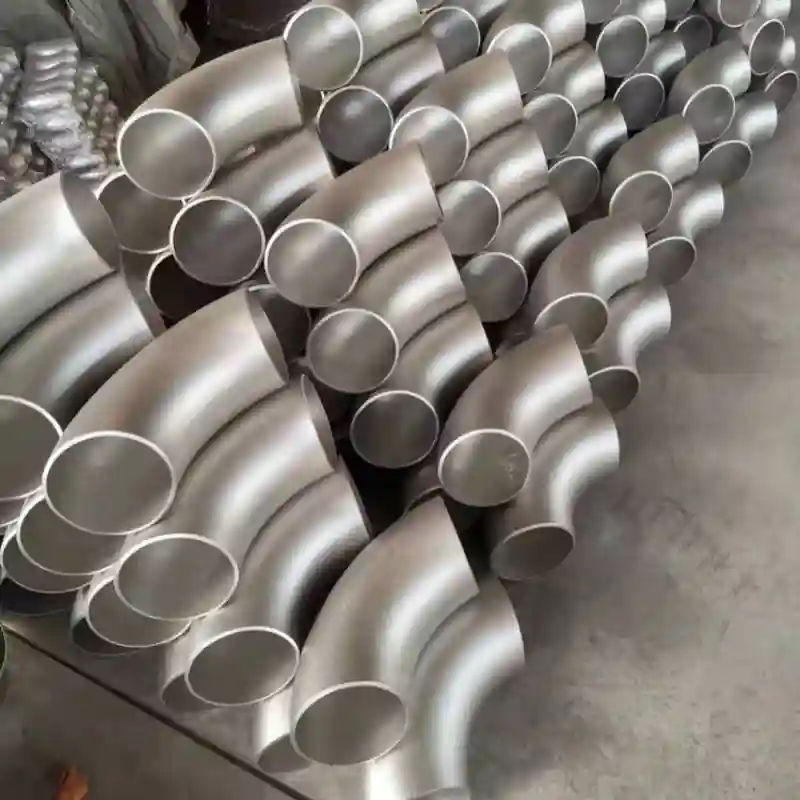
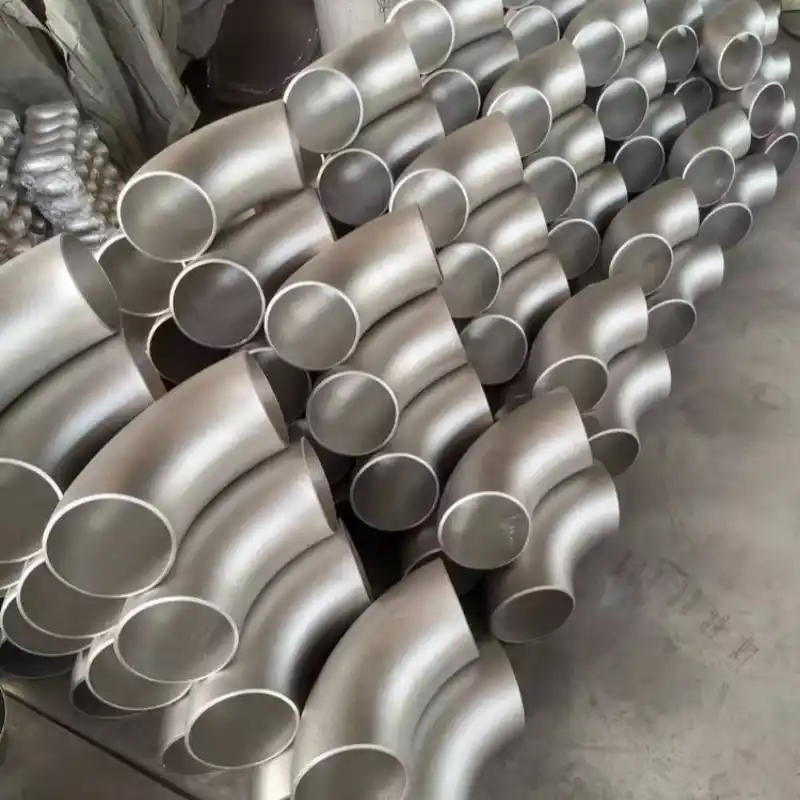
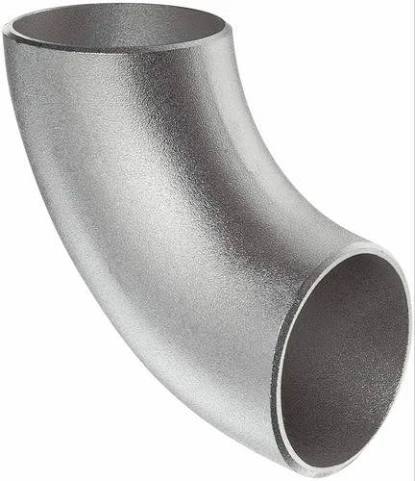
According to ASME B16.9 Factory‑Made Wrought Fittings, the two main structural types for a 2‑inch 90 degree elbow are Long Radius (LR) and Short Radius (SR). The center‑to‑face dimension of a long radius elbow is 1.5 times the nominal diameter (i.e., 1.5 × 2 in = 3 in, approx. 76.2 mm), while for a short radius it is 1 times the nominal diameter (approx. 50.8 mm). Long radius elbows have lower fluid resistance and are the first choice for the vast majority of pipeline designs.
Taking a seamless elbow commonly produced in Chinese factories as an example, its rigidity comes from an integral hot bending or cold pushing process, resulting in a dense material structure with no weak weld seam. For the 2‑inch size, factories typically use pipe blanks with an outer diameter of 60.3 mm (matching the American standard wall thickness series), ensuring a precise fit with straight pipes.
II. Detailed Parameter Analysis of Schedule 40 90 Degree Elbow Steel
The wall thickness rating is the core indicator of an elbow’s pressure‑bearing capacity. Schedule 40 (SCH40) corresponds to a medium wall thickness, suitable for conventional service conditions with pressure ranges of 4.0–8.0 MPa, depending on the material grade and temperature.
For a 2‑inch SCH40 90 degree steel elbow, the key manufacturing parameters (based on ASTM A234 WPB material for carbon steel pipelines) are as follows:
| Parameter | Value / Requirement |
|---|---|
| Nominal Pipe Size (NPS) | 2 inch (DN50) |
| Outside Diameter (OD) | 60.3 mm (±1.6 mm) |
| Minimum Wall Thickness (t) | 3.91 mm (per ASME B36.10M) |
| Long Radius Center‑to‑Face Dimension | 76.2 mm (±1.5 mm) |
| Short Radius Center‑to‑Face Dimension | 50.8 mm (±1.5 mm) |
| End Bevel Angle | 37.5° (±2.5°) |
| Root Face (Land) Height | 1.6 mm (±0.8 mm) |
| Material Yield Strength (≥) | 240 MPa (35 ksi) |
| Tensile Strength (≥) | 415 MPa (60 ksi) |
| Maximum Operating Temperature (carbon steel) | 425°C (oxidation limited) |
The above minimum wall thickness of 3.91 mm is verified by hydrostatic burst testing. In mass production, Chinese elbow factories typically control the actual wall thickness at 4.0–4.2 mm to compensate for thinning on the extrados during the bending process (thinning rate is normally kept within 12.5%).
III. Process Control and Inspection in Chinese 2‑Inch 90 Degree Steel Elbow Factories
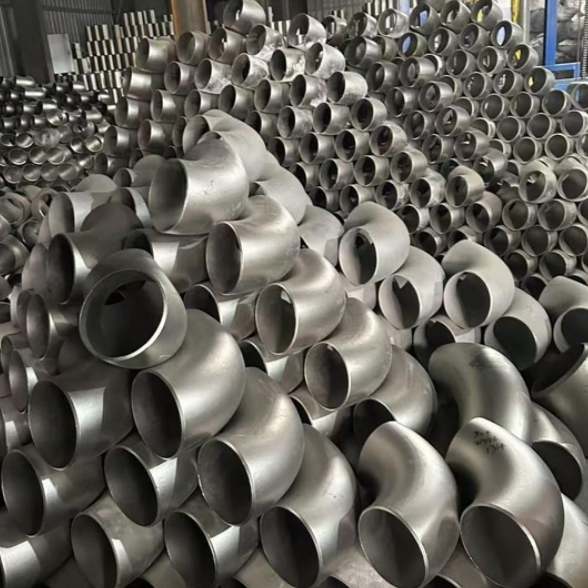
When mentioning “2 inch 90 degree elbow steel china“, some overseas users may worry about quality consistency. In fact, Chinese factories that comply with ISO 9001 and API Q1 systems have manufacturing processes that are far more rigorous than commonly assumed.
Push‑Forming Process Details:
A medium‑frequency induction heating pusher is used to heat the pipe blank to 950–1050°C (below the material’s burning temperature). The mandrel and pusher plate advance at a constant speed, allowing the pipe blank to simultaneously expand, bend, and optimize wall thickness distribution under the constraints of the die. After push‑forming, the elbow is either air‑cooled (normalized) or subjected to subsequent heat treatment to eliminate residual stress. For SCH40 and thicker products, Chinese factories typically perform normalizing at 900°C followed by tempering at 600°C, resulting in a fully pearlitic + ferritic microstructure.
Non‑Destructive Testing (NDT) Regime:
Every 2‑inch elbow is subject to:
-
Magnetic Particle Testing (MT) – inspects inner/outer surface cracks and folds, with sensitivity level A30/100.
-
Ultrasonic Thickness Measurement – 10% of each batch (or 100% by customer request); measurements are taken at six points including the extrados center, both straight ends, and the intrados side.
-
Hardness Testing – HBW values controlled between 126 and 197 (for WPB material) to prevent excessive softness or cold work hardening.
Hydrostatic Test Reference:
Factories perform tests in accordance with ASME B16.9 appendix. For a 2‑inch SCH40 elbow at 20°C, the minimum test pressure is 8.5 MPa, held for at least 30 seconds without leakage. In practice, factories often conduct spot tests at 1.5 times the design pressure.
IV. Application Scenarios and Selection Recommendations
The combination of a rigid 90 degree elbow and SCH40 wall thickness is common in the following industrial fields:
-
Chemical plant process water lines (medium temperature ≤200°C)
-
Secondary steam tracing systems in heating networks
-
Fire sprinkler branch lines (with galvanized treatment)
-
Compressed air mains (pressure ≤1.6 MPa)
A critical note for selection: Even with the same nominal diameter and wall thickness rating, corrosion resistance varies significantly among different material grades. For media containing hydrogen sulfide, materials resistant to sulfide stress cracking (e.g., ASTM A234 WPHY 52) should be chosen instead of ordinary WPB. Furthermore, if a 2‑inch elbow is used in severe vibration conditions (e.g., reciprocating compressor piping), a long radius elbow with added reinforcement ribs is recommended – although not mandatory by standards, this is a value‑added solution often offered by experienced Chinese factories.
V. Quality Traceability and Global Certifications
The elbow factories cooperating with AIFN all hold and annually renew:
-
PED 2014/68/EU (European Pressure Equipment Directive) Module H certification
-
ABS (American Bureau of Shipping) factory approval
-
ISO 14723 (Petroleum and natural gas industries – pipeline fittings)
Every 2‑inch 90 degree steel elbow is laser‑marked with: nominal pipe size, wall thickness rating (SCH40), material grade, heat/lot number, and factory identification. Using the batch number, users can trace back to the raw material mill certificate, heat treatment record curves, and even the operator team code at the time of production – this is the foundation of global engineering trust.
Conclusion
Whether a design institute needs to evaluate the installation space of a rigid 90 degree elbow, a field engineer checks the measured wall thickness of a SCH40 elbow, or a procurement professional seeks a reliable source of 2‑inch steel elbows from China, technical parameters and process control are the cornerstones of decision‑making.
AIFN Pipe Fittings is committed to providing full dimensional inspection reports and material certificates for every batch, letting precise data support the long‑term safety of each weld. For custom radii or non‑standard materials, please feel free to contact our technical team.