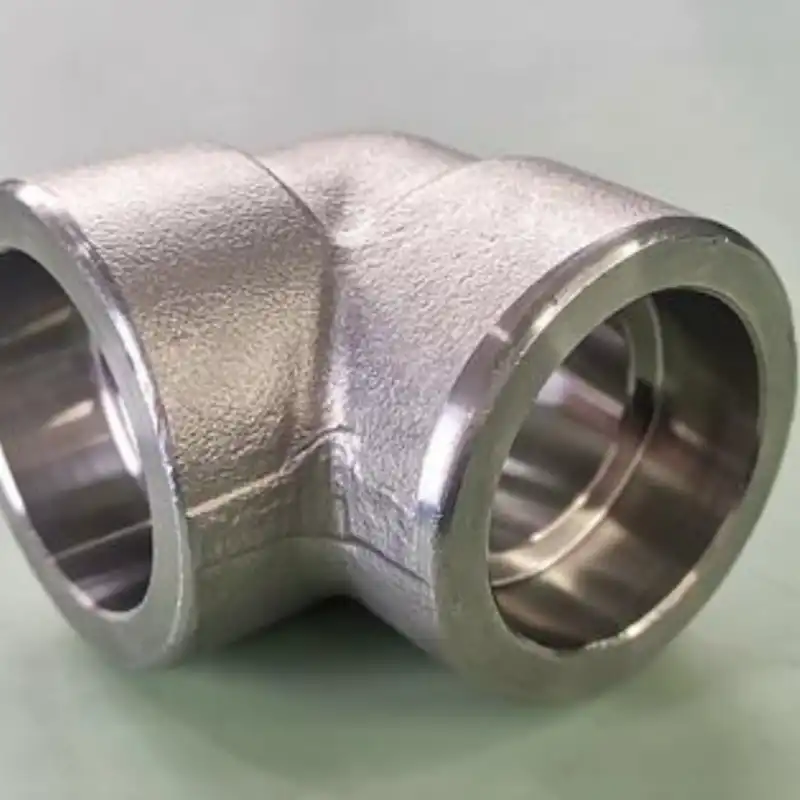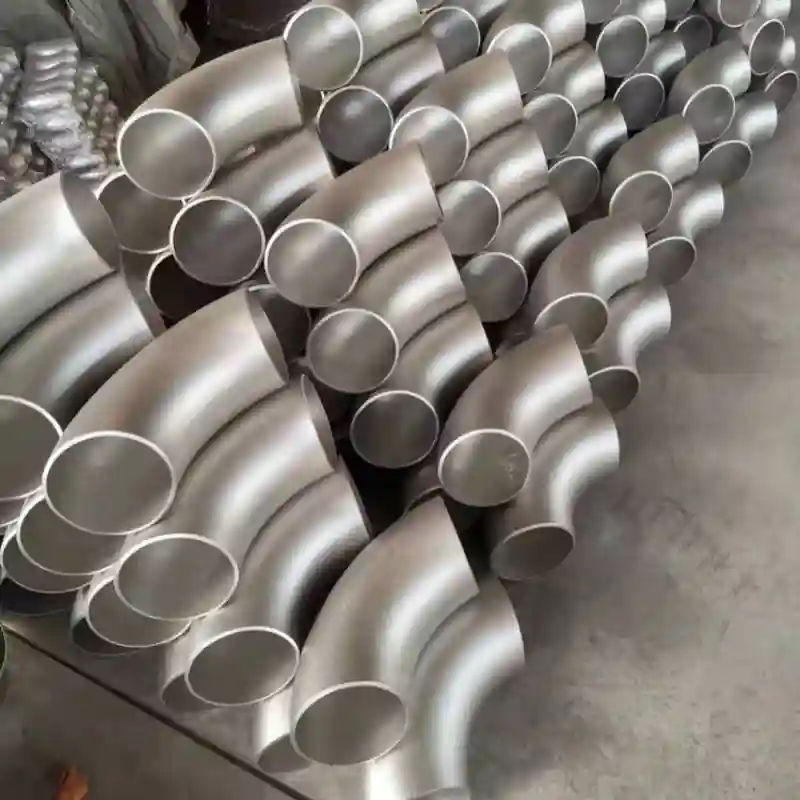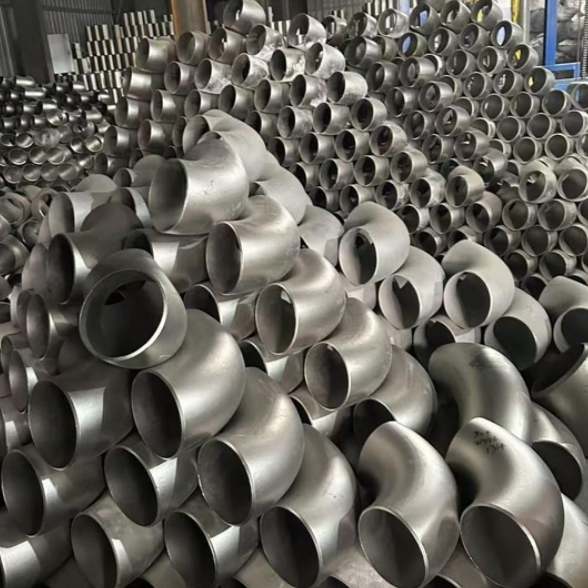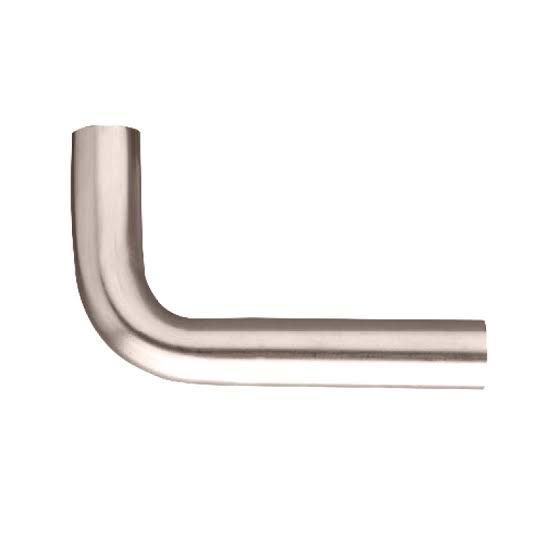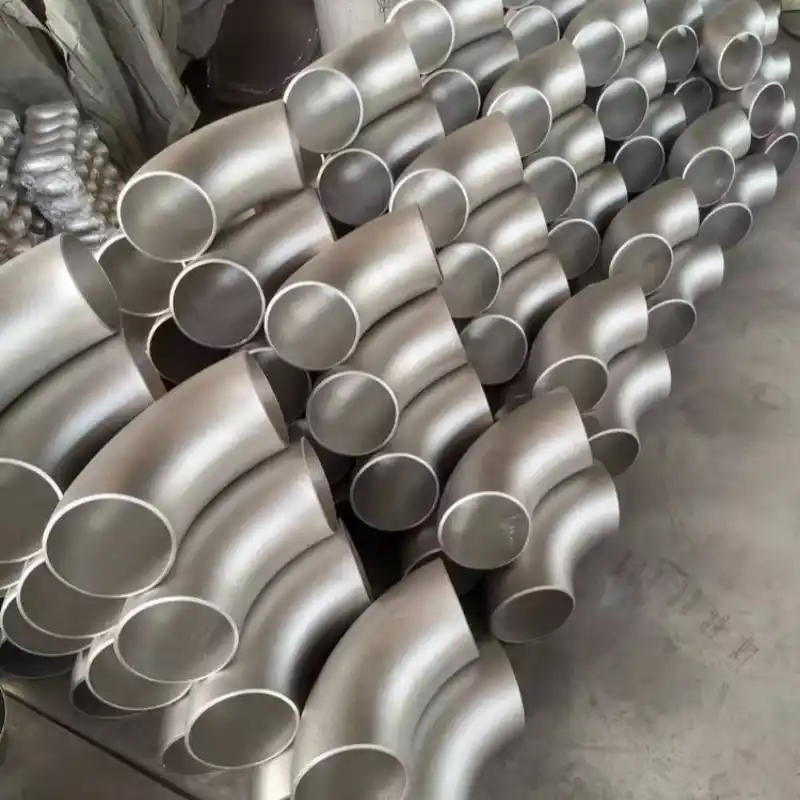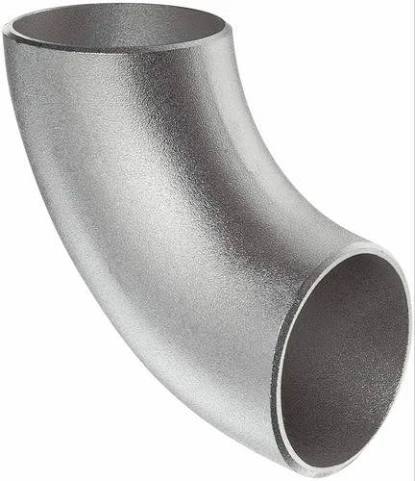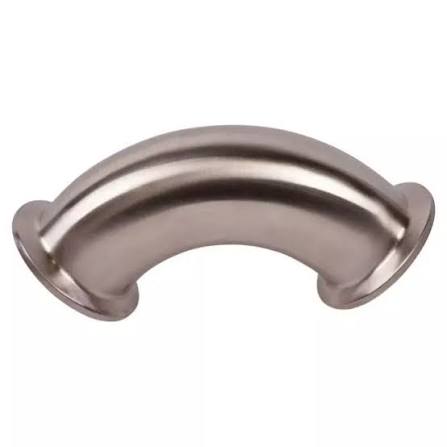
Why has the China 90 degree stainless elbow become the first choice for global piping systems?
In industries such as petrochemicals, food and pharmaceutical, shipbuilding, and high-pressure steam systems, the 90-degree stainless steel elbow is one of the most critical components for changing fluid direction. In recent years, the “china 90 degree stainless elbow” has been increasingly specified by international purchasers and engineers due to its stable metallurgical processes, strict dimensional tolerance control, and outstanding cost advantages.
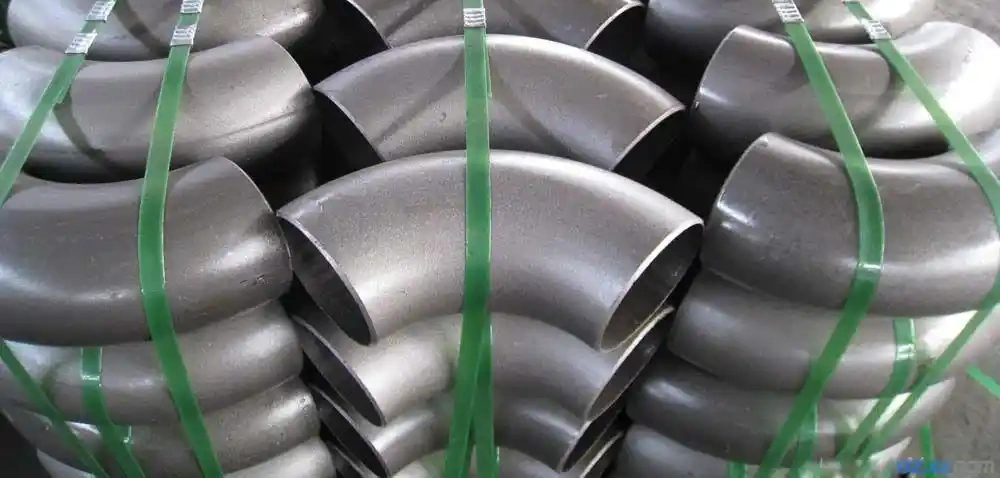
Material & Standards: More than just “stainless steel”
A reliable stainless steel 90° elbow starts with its “ID card” – the material grade and applicable standards. Chinese mainstream factories typically produce according to ASTM A403 or ASME B16.9, with common materials including TP304, TP304L, and TP316L. Taking 316L as an example, its molybdenum (Mo) content reaches 2.5%~3.2%, which directly enhances the elbow’s pitting resistance in chloride-containing environments.
Wall thickness schedules range from Sch10S to Sch80S. For instance, a 2″ stainless 90° elbow with Sch40S wall thickness typically has an actual wall thickness controlled at 3.91mm ±0.5mm – far exceeding the standards of ordinary decorative tubes.
Size Coverage: From small bore to main line diameters
What engineers care about most in actual projects is often “do you have the size I need?” Chinese factories offer a very complete product range:
-
3/4″ stainless elbow: Commonly used in instrument air lines or small-bore chemical injection points. The center-to-end dimension (A dimension) is standard at 28.6mm, and the elbow radius is typically 1.5D (1.5 times nominal diameter), ensuring low pressure drop.
-
1.5″ stainless elbow: A very common size in process control systems, corresponding to an outer diameter of 48.3mm. Wall thickness can match Sch40 (3.68mm) or Sch80 (5.08mm). After solution heat treatment, the hardness value HB typically does not exceed 187.
-
2″ stainless 90°: Widely used in pharmaceutical-grade pure water systems and light industrial fluid piping. High-quality products feature internal mechanical polishing to achieve Ra roughness ≤0.6μm, preventing microbial growth.
-
2.5″ stainless 90°: This size is common in compressed air main lines or low-pressure steam return piping. The back extrados wall thickness of a 2.5″ elbow is often 12%~15% thicker than the intrados, naturally formed by the cold push process, effectively compensating for erosion wear on the outer side of the elbow.
Manufacturing Process: Cold Push vs. Cold Bend – a Big Difference
Not all 90-degree elbows use the same process. For a factory price 90 degree stainless elbow, many Chinese factories adopt the mandrel cold push method: a straight pipe is placed over a tapered mandrel, locally heated (to 1050°C~1100°C) via medium frequency induction, then pushed to form in one stroke.
The benefits of this method are clear – uniform wall thickness between extrados and intrados, and no wrinkling. Taking a 2.5″ stainless 90° as an example, the ovality after pushing can be controlled to ≤5%, well below the ≤8% allowed by standards.
Another process, cold bending, is mostly used for thin-wall pipes (e.g., Sch10), with lower cost, but there is a higher risk of wrinkles on the intrados. Professional buyers will request an “intergranular corrosion test report on the elbow cross-section” – a key piece of evidence to distinguish formal factories from small workshops.
Why Choose Chinese Factories? Three Reasons Beyond Price
Many people focus only on the “low price” of a china 90 degree stainless elbow for sale, but mature international buyers know:
-
Lead time: The stainless steel fittings industrial clusters in the Yangtze River Delta and Bohai Bay region can deliver from raw material to finished product in just 7–15 days. The chemical composition (C, Si, Mn, P, S, Cr, Ni) of the same batch is locked to a single heat number.
-
Third-party testing: Capable of providing PMI (Positive Material Identification), RT (radiography), and hydrostatic test reports. For example, a 1.5″ stainless elbow in RT inspection must have no cracks or lack of fusion defects.
-
Traceability system: Each elbow is laser-marked on the outer wall with the standard, material, schedule, and heat number. Tracing from the finished product back to the raw pipe material requires only one code.
Application Suggestions: Choose the Right Size, Avoid Two Common Mistakes
-
For high-temperature, high-pressure steam (exceeding 200°C, pressure >1.6MPa), be sure to select a 2″ stainless 90° or 2.5″ stainless 90° with Sch80 or thicker wall, and confirm the material is 304H or 316H (carbon content 0.04%~0.10%) to ensure high-temperature creep strength.
-
For sanitary food-grade pipelines, the 1.5″ stainless elbow and 3/4″ stainless elbow should ideally have automatic internal weld polishing achieving Ra ≤0.4μm, and the blue dot test in the passivation report must be negative.
Summary
A truly field-proven china 90 degree stainless elbow is not about the lowest price – it is about a complete closed loop of standards, dimensions, processes, and verification methods. From 3/4″ to 2.5″, from Sch10S to Sch80S, China’s leading pipe fitting factories have achieved process control capabilities as stringent as their European and Japanese counterparts.
When searching for a factory price 90 degree stainless elbow, price is negotiable, but the material certificate, wall thickness tolerance, and heat treatment records – these three items – are indispensable.
Next Step Recommendations
If you need selection advice for specific pressure ratings (e.g., 6000 psi) or special angles (45°/180°), please contact our technical engineers through this website. We can provide stress analysis references based on ASME B31.3.