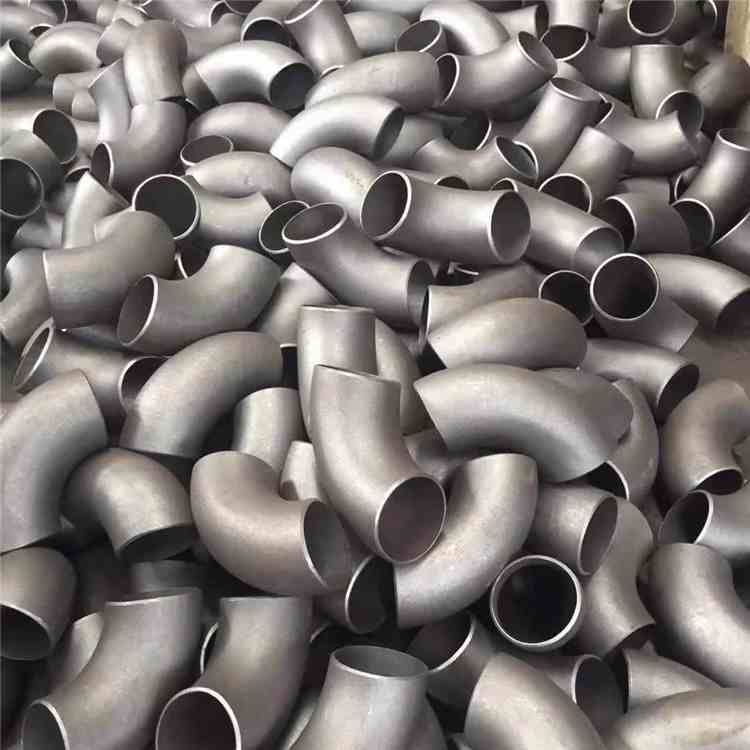
What is an R elbow?
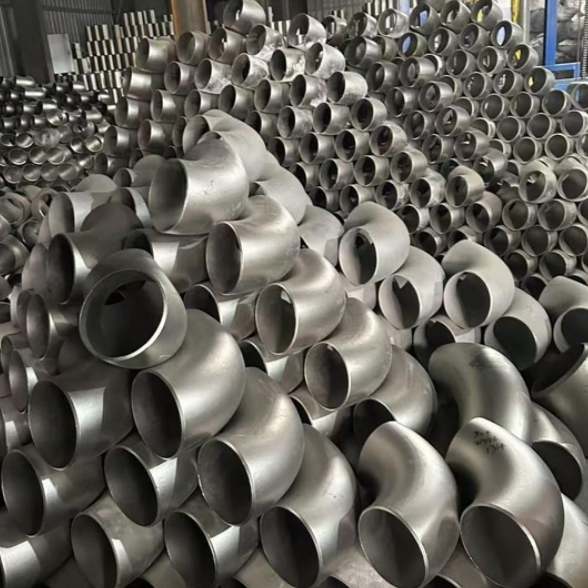
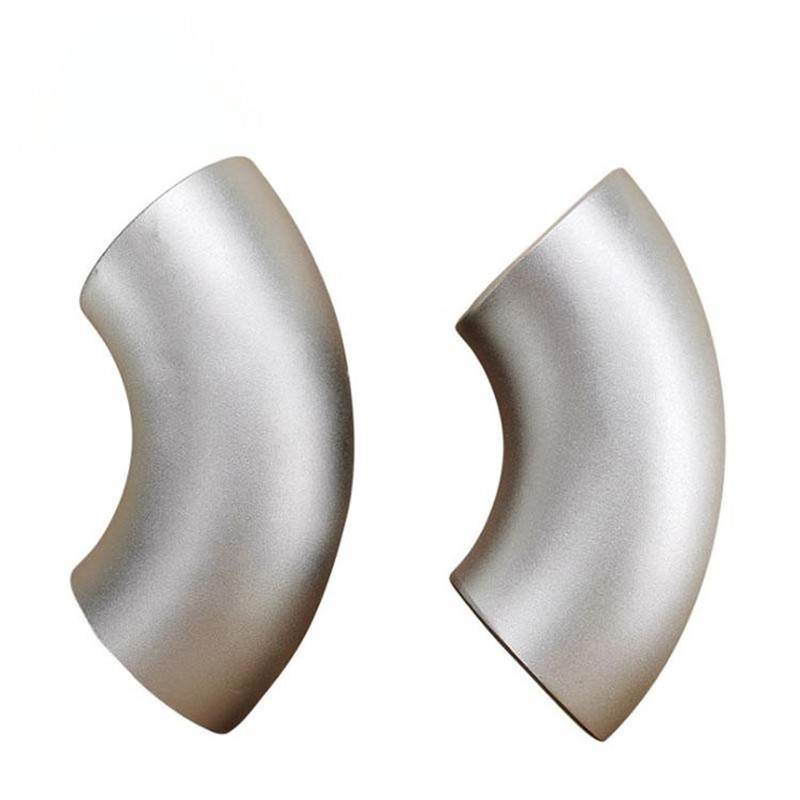
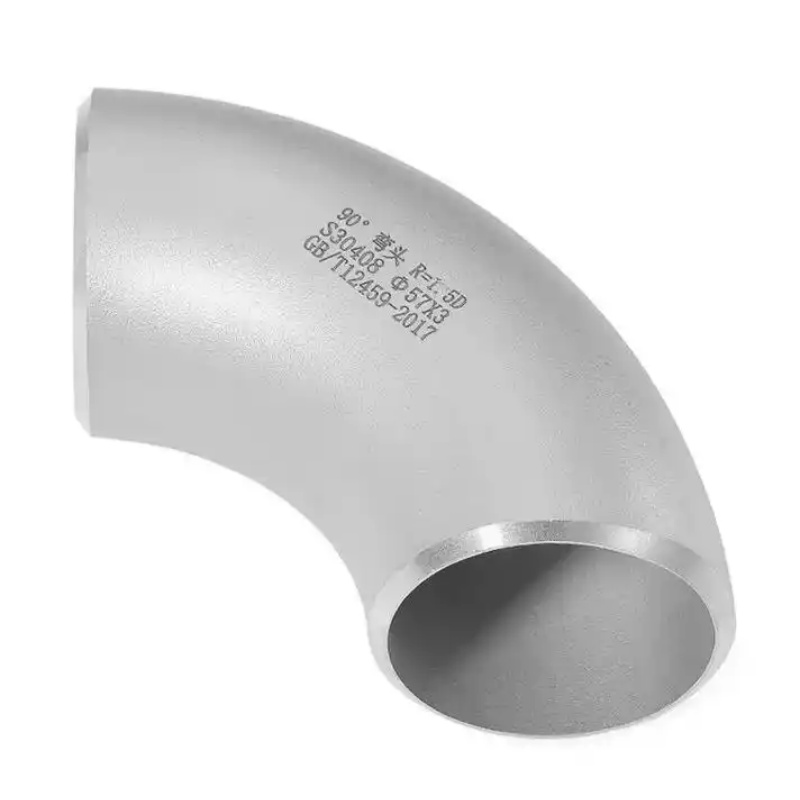
A stainless steel elbow is a critical component for changing the flow direction of media in industrial piping systems. The letter R in “R elbow” specifically refers to the Bending Radius — the distance from the elbow centerline to the pipe axis, usually expressed as a multiple of the nominal diameter (DN or NPS). Understanding the R value directly affects fluid efficiency, pressure drop control and structural safety in piping design.
1. Definition and Common Specifications of R Value
In accordance with ASME B16.9 standard, the bending radius of stainless steel butt-weld elbows is divided into three categories:
- Long Radius (LR, R=1.5D): The most commonly used specification. For a DN100 (4-inch) elbow, R = 152.4mm. It is suitable for scenarios requiring low pressure drop and low erosion, with pressure loss about 28%~32% lower than short radius elbows.
- Short Radius (SR, R=1.0D): Adopted when installation space is limited, yet it intensifies turbulence. Experimental data shows that under the same flow rate, the local resistance coefficient (ζ) of SR elbows is approximately 1.7 times that of LR elbows.
- 3D, 5D and larger radius elbows: Applied in long-distance oil transmission or high-viscosity fluid transportation. For instance, 3D elbows (R=3×DN) can reduce eddy current loss by up to 55% and are widely adopted in API 5L pipeline systems.
2. Key Parameters of Stainless Steel Materials
Common grades include 304/304L and 316/316L. 304L has a maximum carbon content of 0.03%, requiring no heat treatment after welding. 316L contains 2-3% molybdenum, with its resistance to chloride pitting corrosion improved by about 3 times (Critical Pitting Temperature CPT = 60℃, compared with 25℃ for 304L).
Wall thickness ranges from Sch10S to Sch160S. Taking DN50 elbow under Sch40S as an example, the wall thickness is 3.91mm, with a maximum working pressure up to 6.4MPa (calculated per Barlow formula).
3. Engineering Selection Recommendations
For steam or high-speed gas medium, prioritize R=1.5D long radius elbows with inner surface polishing (Ra≤0.8μm) to reduce friction loss.
In the case of pulsating flow or fluid containing solid particles, R≥3D is recommended, along with a 12.5% increase in wall thickness (e.g., upgrading from Sch40 to Sch80).
Actual measurement data indicates that in a 100-meter pipeline system, replacing all SR elbows with LR elbows can reduce pump energy consumption by 18~22%.
Authoritative references: PFI Standard ES-26 and Pipe Friction Handbook point out that proper selection of R value can extend the service life of elbows by 2-3 times.
As AIFN Metal Technology, we supply a full range of stainless steel R elbows, complete with material certificates and PMI test reports. All products fully comply with ISO 9001 and PED 2014/68/EU.
Choosing the right R elbow is not merely a matter of dimension selection, but a profound commitment to fluid performance, economic efficiency and operational safety.