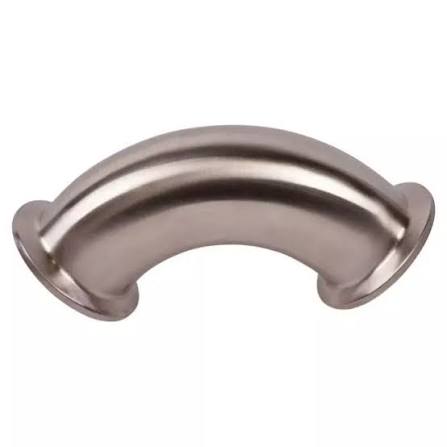
How to Select Stainless Steel Elbows in the Petrochemical Industry
In petrochemical piping systems, elbows may seem insignificant, but the wrong selection can cause failures across the entire production line. Clients often ask, “Can 304 be used for this medium?” or “What’s the real difference between a 45° elbow and a 90° elbow?”
Why Do Stainless Steel Elbows Dominate the Petrochemical Industry?
Petrochemical pipelines carry anything but ordinary water—they often transport high-temperature, high-pressure, and corrosive media such as hydrogen sulfide, chloride ions, and acidic crude oil. Ordinary carbon steel elbows may suffer pitting corrosion or even cracking within months under such conditions. The advantage of stainless steel elbows lies in a chromium content of at least 10.5%, which forms a dense chromium oxide film on the surface, isolating the medium from the base metal.
Take the most common 316L stainless steel as an example. With a molybdenum content of 2%–3%, it offers significantly better chloride corrosion resistance than 304. Laboratory data shows that in a 5% sodium chloride solution, the critical pitting temperature of 304 is approximately 25°C, while 316L can withstand over 50°C.
Many petrochemical applications require elbows to comply with the ASTM A403 WP316L standard, which specifies a minimum yield strength of 170 MPa, a minimum tensile strength of 485 MPa, and a hardness controlled at around HB 90.
45° Elbow vs 90° Elbow — How Much Do Pressure Drops Differ by Angle?
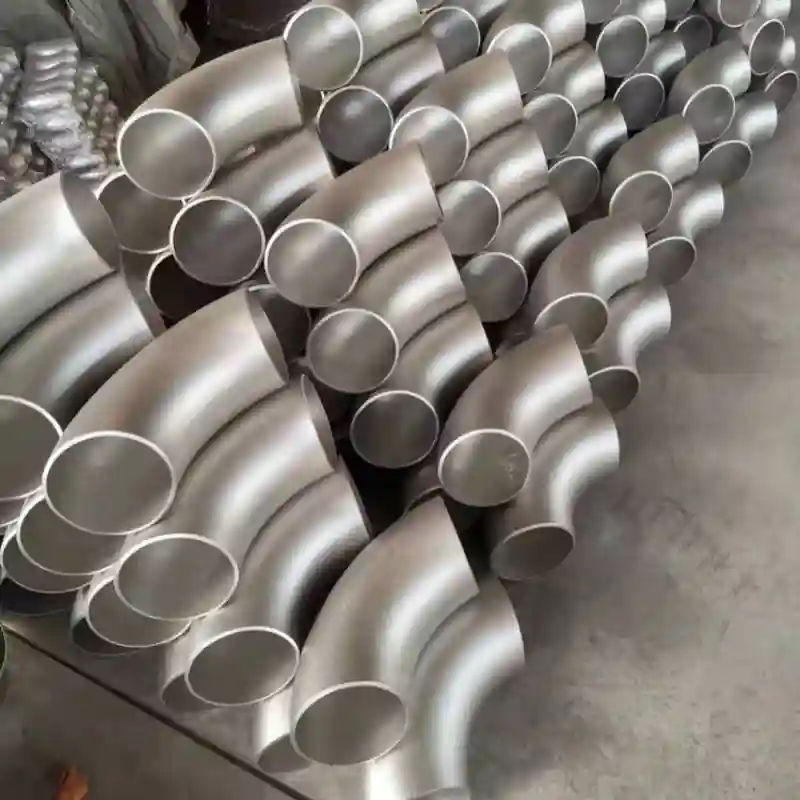
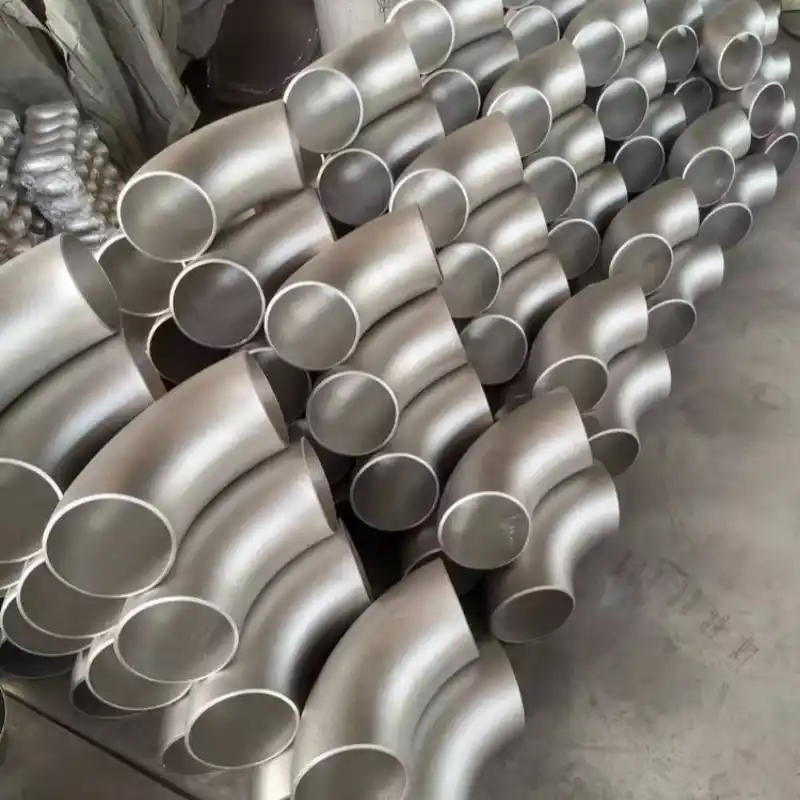
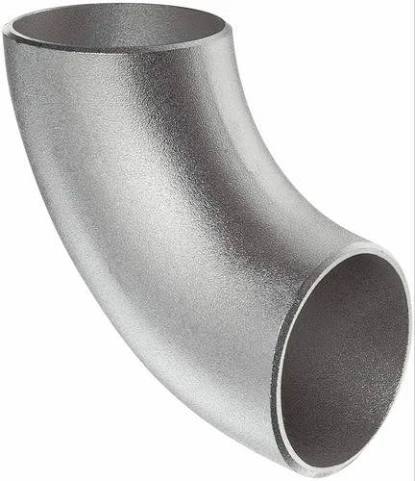
Many assume “elbow angles are similar, so any will do,” but reality tells a different story. 45 degree stainless steel pipe elbow is often used for gentle turns in petrochemical pipelines, specifically to reduce fluid resistance.
Let’s do the math: the equivalent length of a long-radius 90° elbow is roughly 30 times the pipe diameter, while a 45° elbow is only about 16 times the pipe diameter. In other words, for the same DN100 pipeline, switching to a 45° elbow cuts the local pressure drop nearly in half.
On pump discharge lines, if space permits, is a 45 degree stainless steel pipe elbow preferred over two 45° elbows assembled to form 90°? Both methods are acceptable, but installing a straight pipe section between two 45° elbows results in a more stable flow field and less vibration.
In practical projects, such as slurry pipelines in catalytic cracking units operating at temperatures above 350°C, engineers favor 45° elbows to mitigate erosion corrosion.
Stainless Steel Selection for High Temperatures — Stove Pipes and Engine Exhaust Pipes
The petrochemical industry includes not only reactors and towers but also furnaces and boilers. Flue gas discharge lines for these equipment often operate at 500°C to 800°C. Ordinary stainless steel undergoes sensitization at these temperatures, with chromium carbide precipitating along grain boundaries and toughness dropping sharply. Heat-resistant grades are required in such cases.
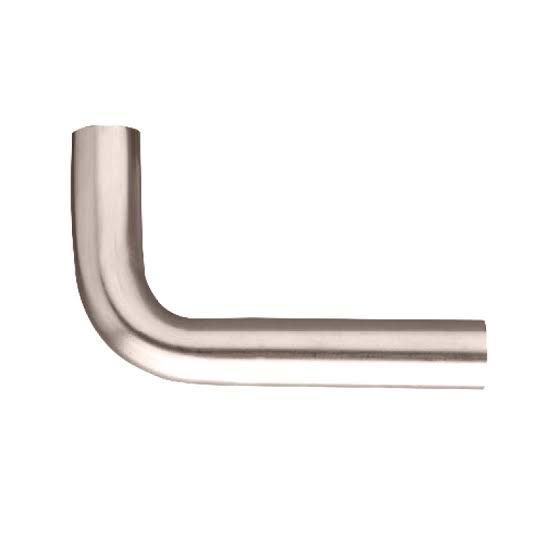
stainless steel stove pipe elbow typically refers to elbows used in flue gas pipes for stoves or small industrial furnaces. These applications involve moderate temperatures (300–500°C) and demand oxidation and thermal fatigue resistance. Grade 309S or 310S stainless steel is recommended. 309S contains 12–15% nickel and 22–24% chromium, resisting oxidation during repeated heating below 980°C.
stainless steel exhaust pipe elbow is more commonly used in engine or gas turbine exhaust systems, where temperatures can spike to 750°C, often accompanied by condensed acid.
Grade 321 stainless steel is required here, with titanium added (content not less than 5×C%) to prevent intergranular corrosion after welding. For instance, a 45° elbow made of 321 stainless steel was installed in the pyrolysis furnace exhaust pipe of a petrochemical plant. After two years of continuous operation, inspection revealed no obvious cracks in the welds or base metal.
Standards and Wall Thickness of Stainless Steel Pipe Fittings Elbows — Data Speaks
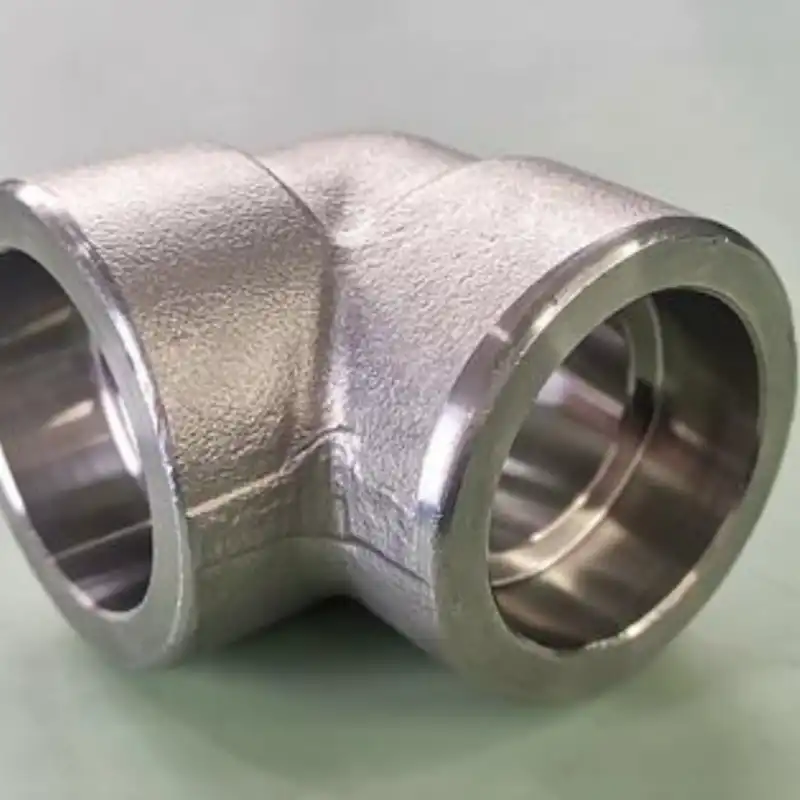
The entire stainless steel pipe fittings elbow family, whether 45° or 90°, must adhere to unified manufacturing standards. The most widely used international standard is ASME B16.9, which specifies dimensional tolerances, wall thickness, and end bevels for elbows. Per this standard, for elbows above DN100, the outer diameter tolerance is ±1.6 mm, and wall thickness reduction must not be less than 87.5% of the nominal wall thickness.
Wall thickness schedules are also critical. Common schedules in petrochemical pipelines include Sch40, Sch80, and even Sch160. Sch40 has a wall thickness of 4.5 mm (for DN100), suitable for normal-temperature applications with pressure not exceeding 2.5 MPa. For hydroprocessing units where pressure can reach 20 MPa, Sch160 with a wall thickness of 11 mm must be used.
We tested a batch of 316L 45 degree stainless steel pipe elbow in Sch80 specification under 25 MPa hydrostatic pressure for 5 minutes, with no leakage observed on the elbow back.
Three Most Overlooked Details When Selecting Elbows
1. Heat Treatment Condition: After cold forming, austenitic stainless steel elbows must undergo solution treatment—heating to approximately 1050°C followed by rapid water cooling—to restore corrosion resistance. Some small manufacturers skip this step, leading to intergranular cracking within six months of service.
2. Identification & Traceability: Qualified elbows are laser-marked on the outer surface with material grade, standard, wall thickness schedule, and heat number. Without a heat number, batch tracing is impossible in the event of failure.
3. End Bevel: Petrochemical welding has strict requirements. Elbows must have a bevel angle of 37.5°±2.5° and a root face of around 1.6 mm. Improper bevels require on-site welders to spend extra time grinding, increasing the risk of lack of fusion.
Conclusion
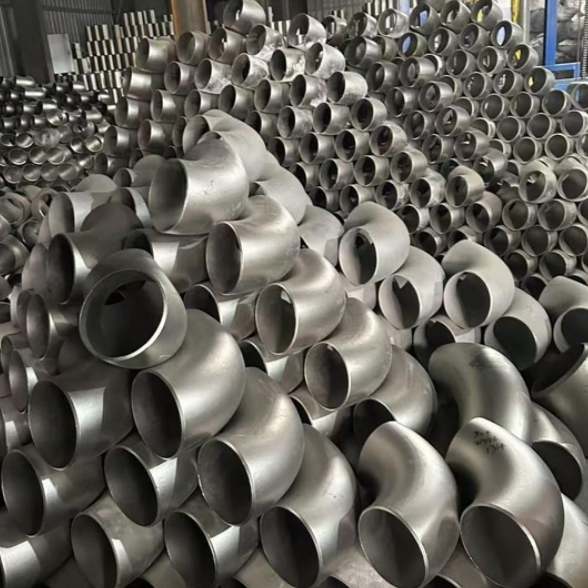
In the petrochemical industry, stainless steel elbows are not simple “connectors”—they are critical nodes controlling pipeline stress, corrosion, and fluid resistance. From the pressure drop advantage of the 45 degree stainless steel pipe elbow, to high-temperature material selection for stainless steel stove pipe elbow and stainless steel exhaust pipe elbow, to the manufacturing standards governing the entire stainless steel pipe fittings elbow family, every step deserves careful attention.
Next time you review a piping specification, remember to verify the elbow’s material, angle, wall thickness, and heat treatment condition—these small details often hold the key to long-term, stable plant operation.