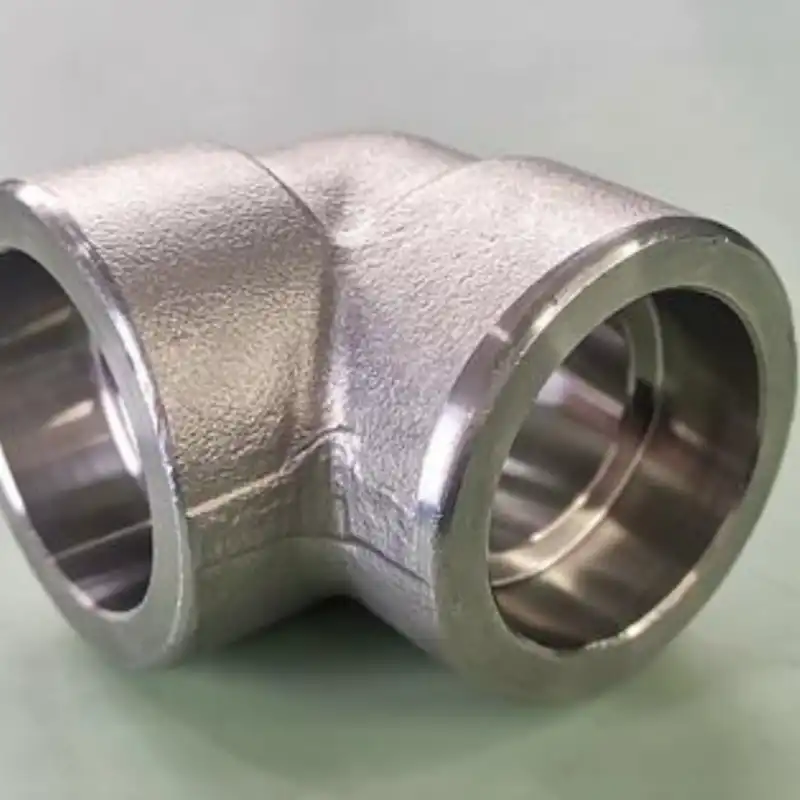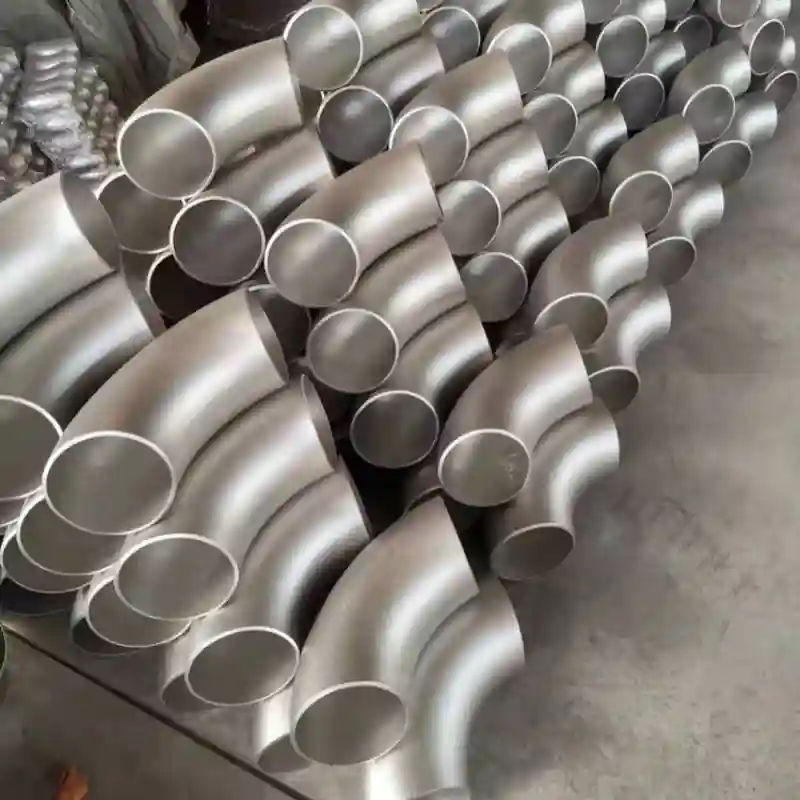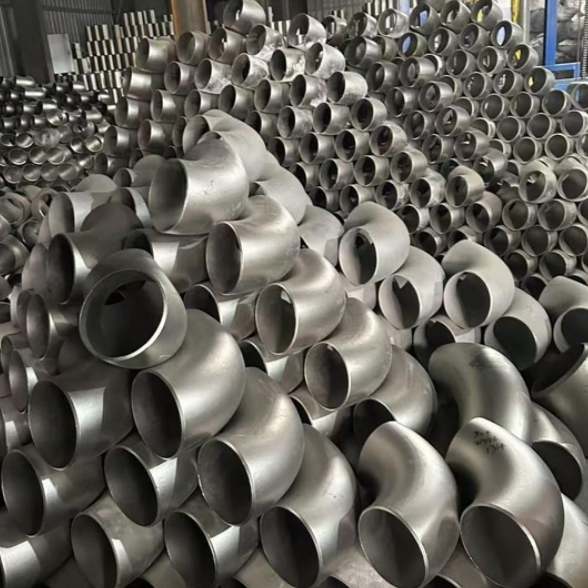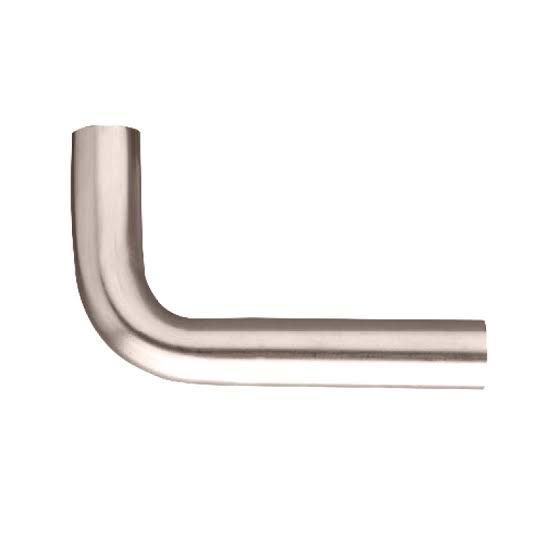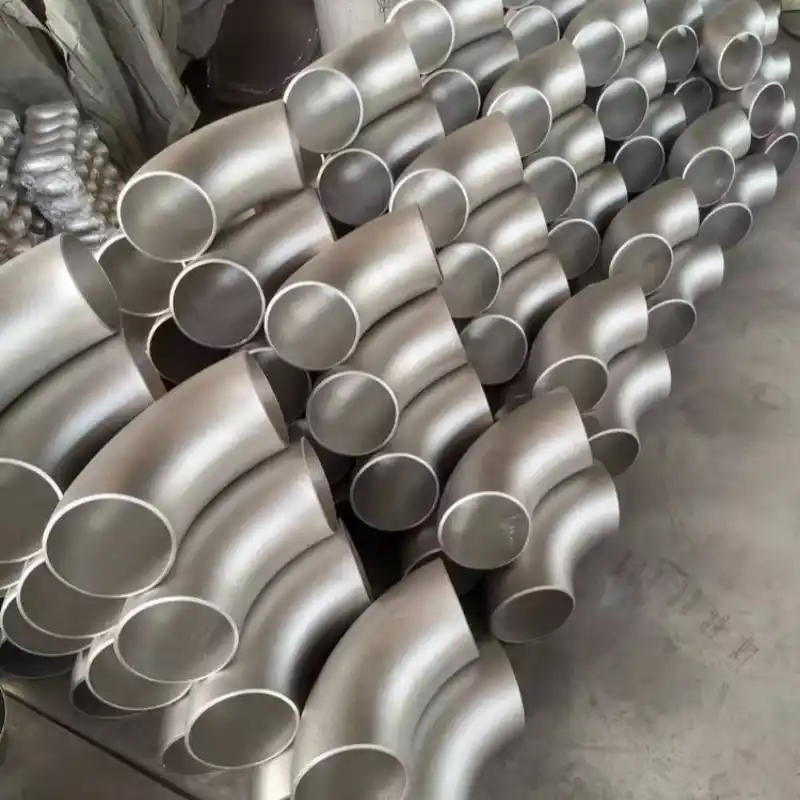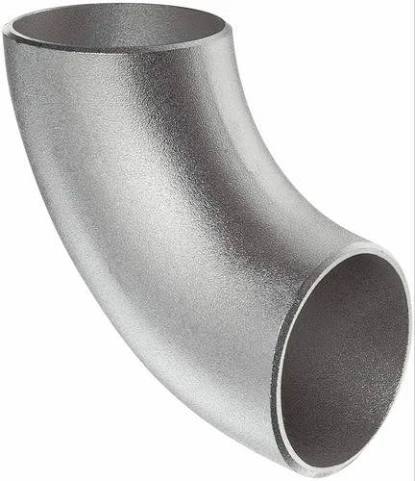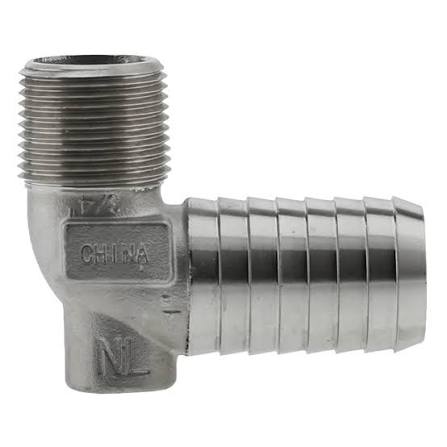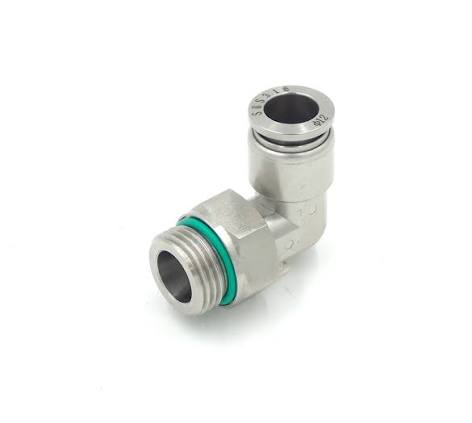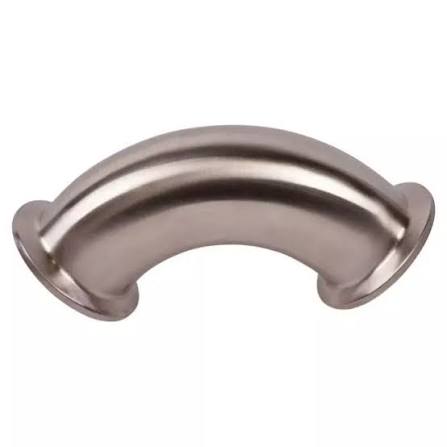
In industrial piping systems, the 90-degree stainless steel elbow is the most fundamental directional fitting. The first question often encountered by designers is: What are the standard sizes of such elbows? The answer covers sizes from 1/2 inch to 6 inches, with each size corresponding to multiple wall thickness schedules and material grades.
I. Common Nominal Diameters and Corresponding Wall Thickness Schedules
✔️According to ASME B16.9 and MSS SP-43, the nominal pipe size (NPS) of stainless steel 90-degree elbows starts at 1/2″. The table below summarizes the complete specifications from 1/2″ to 6″, along with the center-to-face distance for long radius (1.5D) and typical wall thicknesses for each size.
| Nominal Size | Long Radius Center-to-Face (mm) | Common Wall Thickness Schedules (Sch) | Typical Product Example |
|---|---|---|---|
| 1/2″ | 19.05 | Sch10S, Sch40 | 1/2″ stainless steel 90 degree elbow |
| 3/4″ | 28.58 | Sch40, Sch80 | 3/4″ stainless steel 90 degree elbow |
| 1″ | 38.10 | Sch40, Sch80 | 1 inch stainless steel 90 degree elbow |
| 1 1/2″ | 57.15 | Sch40, Sch80 | 1 1/2″ stainless steel 90 degree elbow |
| 2.5″ | 95.25 | Sch40, Sch80 | 2.5″ stainless steel 90 degree elbow |
| 3″ | 114.30 | Sch10S, Sch40, Sch80 | 3″ 90 degree elbow stainless / 3 inch 90 degree elbow stainless steel / 3 inch stainless 90 degree elbow / 3 inch stainless steel 90 degree elbow / 3″ stainless steel 90 degree elbow |
| 4″ | 152.40 | Sch10S, Sch40 | 4 inch 90 degree elbow stainless / 4 inch stainless steel 90 degree elbow / 4 inch stainless steel 90 degree exhaust elbow |
| 5″ | 190.50 | Sch40, Sch80 | 5 inch stainless steel 90 degree elbow |
| 6″ | 228.60 | Sch40, Sch80 | 6 inch stainless steel 90 degree elbow |
✔️Note: For the 3-inch size, industry practice uses various expressions – such as “3″ 90 degree elbow stainless”, “3 inch stainless steel 90 degree elbow”, etc., all referring to the same product series, with center-to-face distances and wall thickness tolerances conforming to ASTM A403.
II. Material Selection: Key Differences Between 304 and 316
✔️For corrosive media (e.g., seawater, acidic gases, or chlorine-containing process fluids), a 316 stainless steel 90 degree elbow is recommended. The 316 grade contains 2-3% molybdenum, giving it a pitting resistance equivalent number (PREN) of over 25, which is about 40% higher than that of 304 stainless steel.
✔️For example, in the exhaust system of an offshore platform, if a 4 inch stainless steel 90 degree exhaust elbow is made of 316L material, it can operate continuously for more than 10 years in a 280°C exhaust gas environment, whereas a 304 elbow may show intergranular corrosion within 2 years.
III. Technical Basis for Size Selection
✔️In addition to nominal diameter, engineers must consider the bend radius and connection method. Conventional butt-weld elbows default to long radius (LR), where the center-to-face distance is 1.5 times the nominal diameter. If space is limited, short radius (SR, 1.0D) may be selected, but this increases turbulent pressure drop by approximately 15%. For a 2.5″ stainless steel 90 degree elbow in water service at a flow rate of 50 m³/h, the local resistance coefficient of an LR elbow is 0.22, while that of an SR elbow rises to 0.33.
✔️Wall thickness schedule is equally important. For the same 3 inch stainless steel 90 degree elbow, Sch10S has a wall thickness of 3.05 mm (suitable for low-pressure gas), whereas Sch80 can reach 5.49 mm (suitable for saturated steam at pressures ≤1.6 MPa). For high-temperature conditions, flexibility analysis per ASME B31.3 should be performed.
IV. Non‑Standard and Special Applications
✔️Some applications require non‑standard configurations. For example, pipelines with insulation may require a 3 inch stainless 90 degree elbow with an extended center-to-face distance. Additionally, the 4 inch stainless steel 90 degree exhaust elbow commonly used in exhaust systems typically requires internal mirror polishing (Ra ≤ 0.4 μm) to reduce exhaust back pressure.
V. Summary
✔️Standard sizes of 90-degree stainless steel elbows cover 1/2″, 3/4″, 1″, 1 1/2″, 2.5″, 3″, 4″, 5″, and 6″. Each can be paired with 304 or 316 material and wall thickness schedules ranging from Sch10S to Sch80. When selecting, in addition to checking the nominal diameter, be sure to confirm the bend radius, wall thickness schedule, and material grade to ensure long-term safe operation of the piping system.
📝For detailed load charts or 3D models, please consult the AIFN technical database.