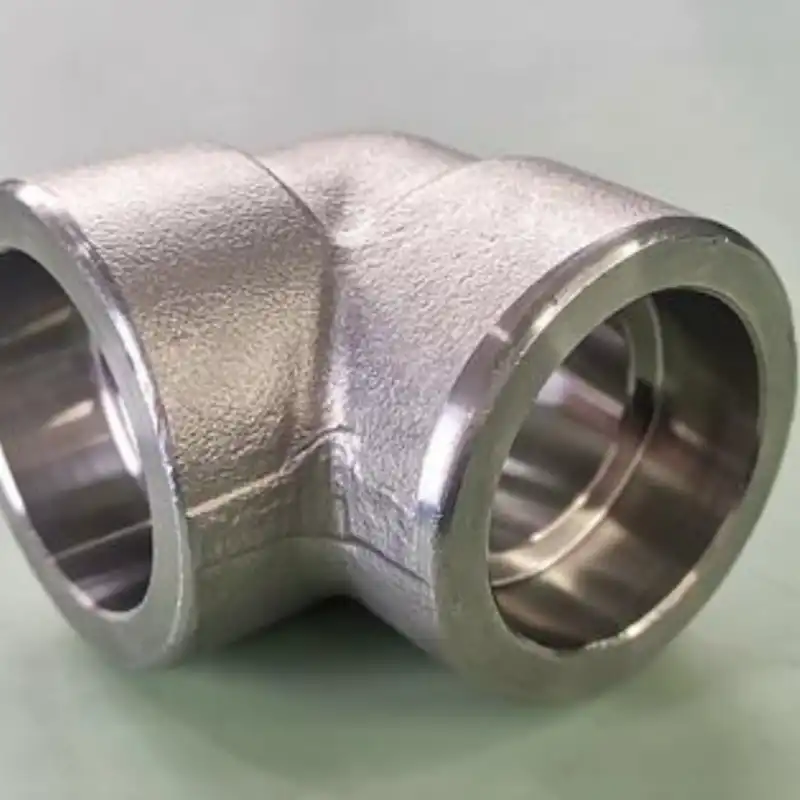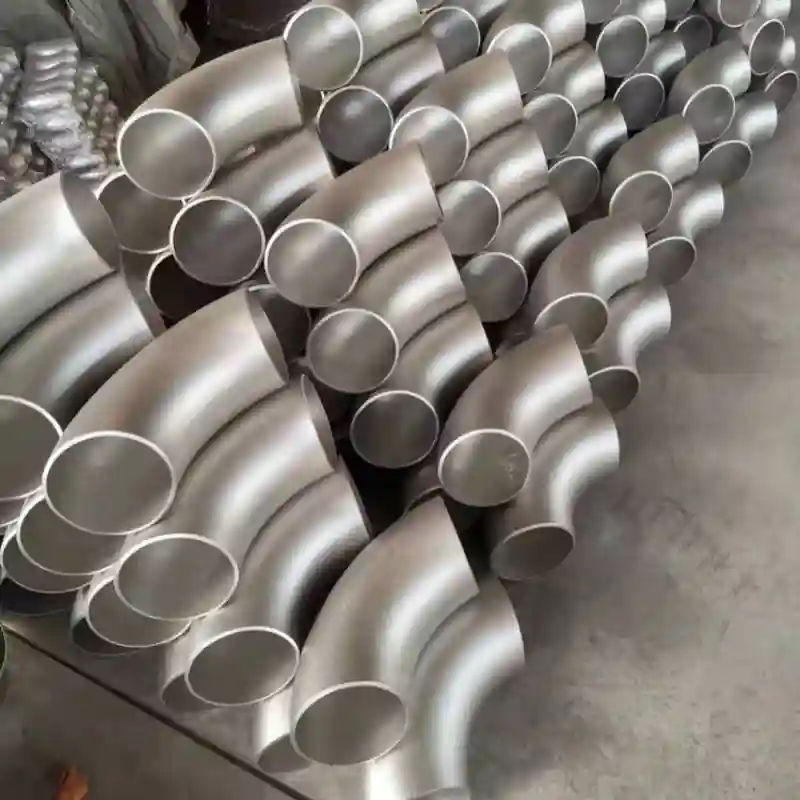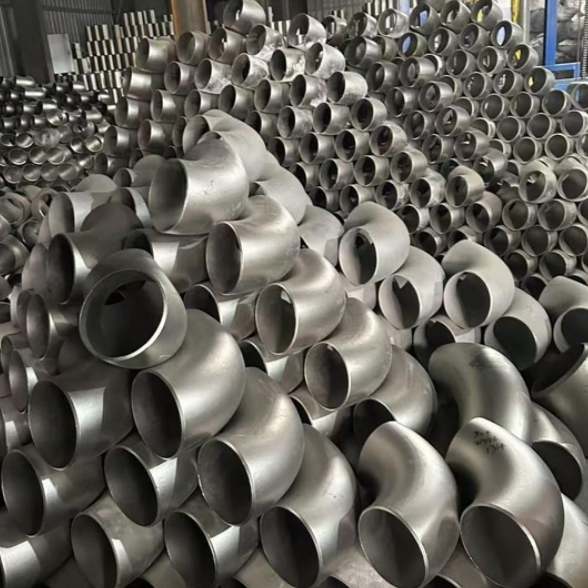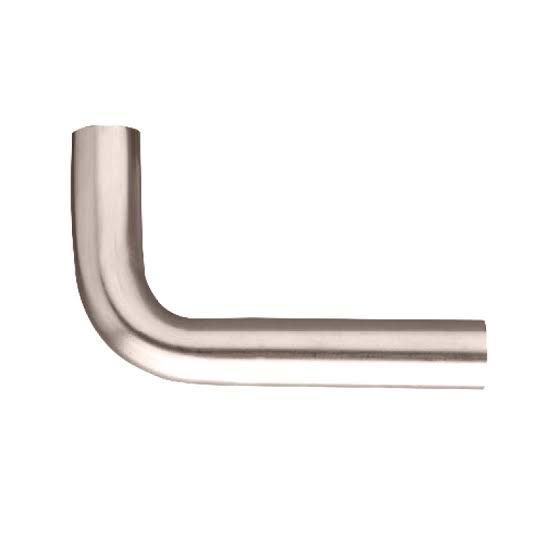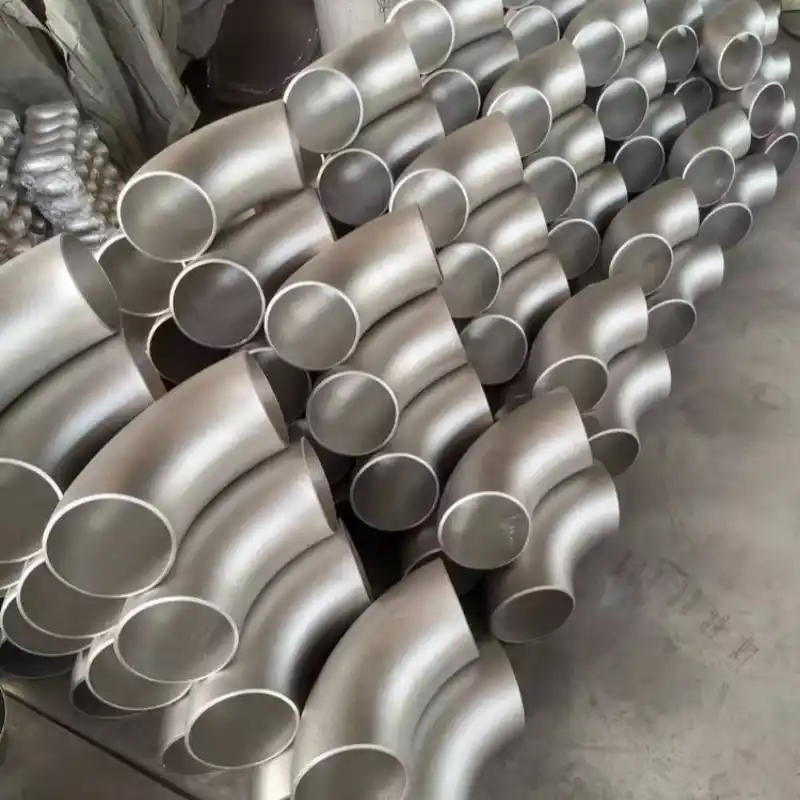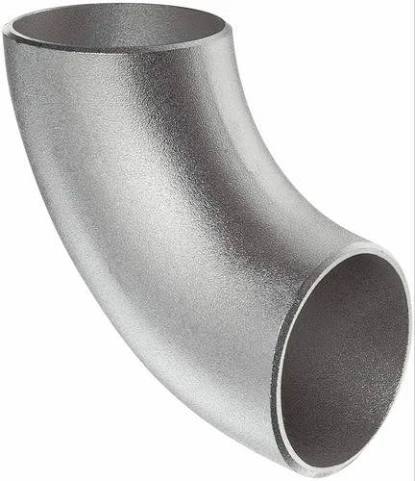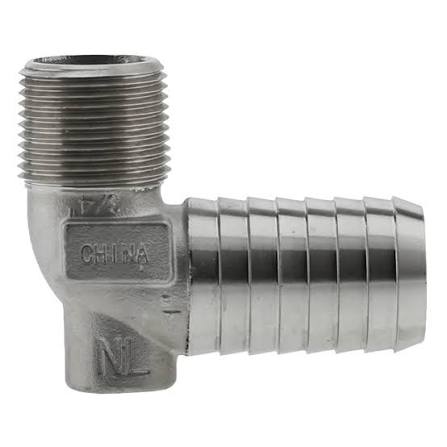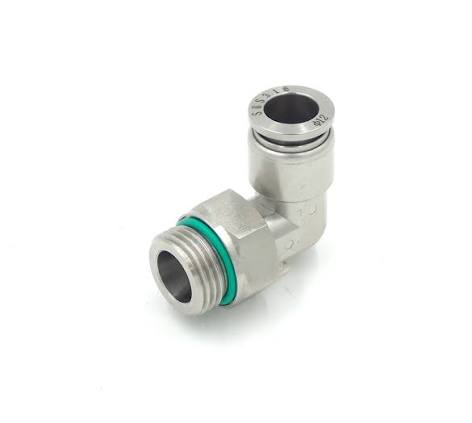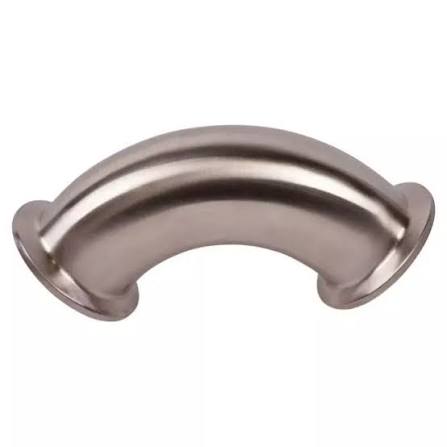
In industrial pipeline systems, elbows are key components for changing the direction of the medium. This article focuses on the 2 inch 90 degree elbow steel, i.e., a 2-inch (DN50) carbon steel 90-degree elbow, widely used in oil, natural gas, chemical, and municipal water supply networks.
Core Parameters and Manufacturing Standards
✅The geometric dimensions of high-quality elbows strictly comply with ASME B16.9 standards. For the 2-inch size, the outside diameter at the ends is 60.3 mm (for SCH40 series), with a wall thickness typically of 3.91 mm; wall thickness grades can also be selected as SCH80 (5.54 mm wall thickness) or SCH160 (8.74 mm wall thickness) according to pressure requirements. 🌈The bend radius is available in long radius (LR, R = 3D = 152.4 mm) and short radius (SR, R = 2D = 101.6 mm). Long radius elbows have lower flow resistance and more uniform wear, making them the first choice for most applications.
How Material and Process Reflect “High Quality”
✅A truly high quality 2 inch 90 degree elbow steel never compromises on material selection. The base material is typically ASTM A234 WPB carbon steel, with carbon content ≤0.30%, manganese content 0.89%–1.30%, and impurities of phosphorus and sulfur each limited to below 0.035%. 🌈This material maintains excellent tensile strength (415–585 MPa) and yield strength (≥240 MPa) over a temperature range of -29°C to 427°C.
✅In terms of manufacturing process, seamless elbows are formed by medium-frequency induction pushing, with wall thickness reduction controlled within 12%; welded elbows require 100% radiographic testing (RT), and according to ASME B31.3 standards, the weld quality must not be lower than Grade II. 🌈Surface treatment includes blast cleaning to Sa2.5 level, followed by application of an epoxy zinc-rich primer (dry film thickness 80–100 μm), achieving 500 hours of salt spray testing without red rust – this is the key production data that distinguishes ordinary products from the best 2 inch 90 degree elbow steel.
Engineering Trade-offs in Selection
✅Engineering procurement personnel often overlook the relationship between wall thickness allowance and bend radius. If the system is subject to frequent water hammer effects, it is recommended to select SCH80 or even SCH160 wall thickness, although this increases the fitting weight by approximately 30%. 🌈Additionally, for butt weld gap control: when assembling the 2-inch elbow with the pipe, the root gap should be maintained at 1.6–2.4 mm, and the land height at 0.8–1.5 mm, to ensure single-sided welding with double-sided formation during GTAW (gas tungsten arc welding) backing.
✅According to statistics from the Pipe Fittings Engineering Handbook (5th edition, McGraw-Hill, 2021), under 300 psi steam conditions, pipelines using high quality long radius elbows experience turbulent flow losses 18%–22% lower than those using short radius elbows, and the service life of the elbow itself is extended by approximately 40 months.
Installation and Maintenance Key Points
♂️Before installation, the ovality of the elbow should be checked – the difference between the maximum and minimum outside diameters must not exceed 3% of the nominal outside diameter (i.e., ≤1.8 mm).🌈 For flange-connected elbows, ensure that the sealing surfaces are intact and the bolt holes are straddle-mounted; for welded connections, preheating to 150°C (for fittings with wall thickness >12 mm) is recommended, followed immediately by post-weld stress relief heat treatment at 600–650°C.
♂️During routine inspections, focus on measuring the remaining wall thickness at the extrados (outer arc side) of the elbow, because solid particles in high-velocity fluids cause the most severe erosion there. Data indicate that when the wall thickness is reduced to 50% of the original value, the burst pressure of the elbow drops by about 75%, requiring immediate replacement.
Why Choose Our Products
📝 The 2 inch 90 degree elbow steel we supply comes with a mill test certificate for each batch, including chemical composition, mechanical properties, hydrostatic test (test pressure at 1.5 times the design pressure, hold time ≥30 seconds), and hardness value (HB ≤200).🌈 Our products are certified to ISO 9001:2015 and TUV, and we guarantee that seamless elbows are free from cracks, folds, scars, and other defects. For batch orders, third-party inspection services (e.g., SGS or BV) are available.