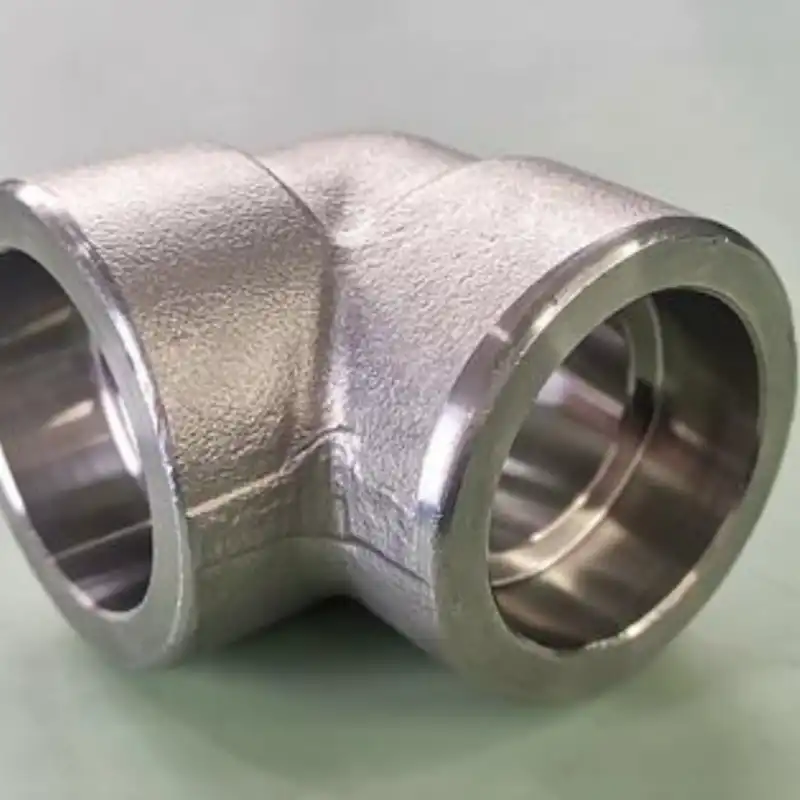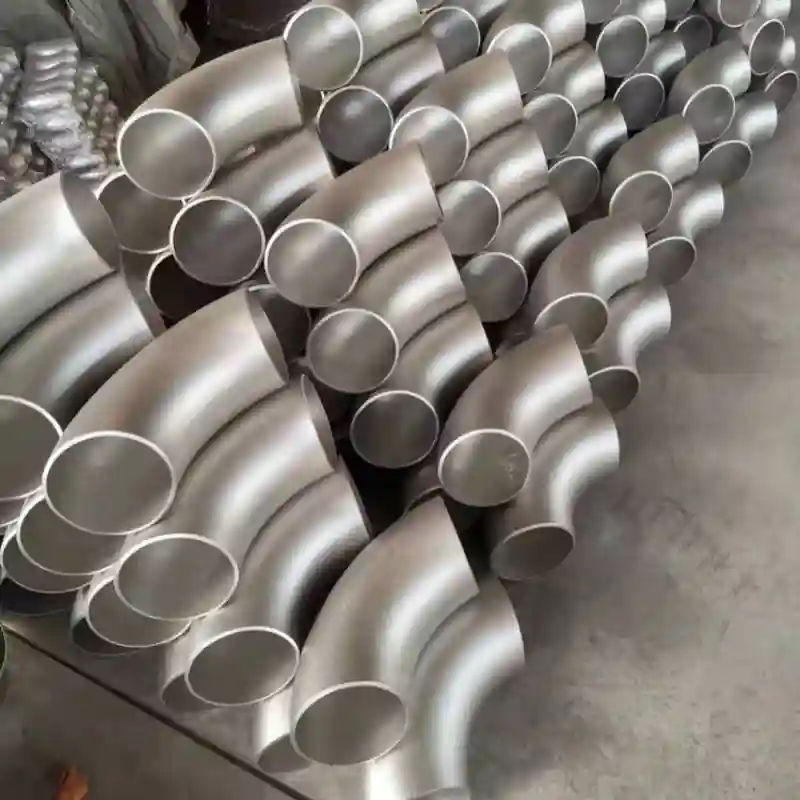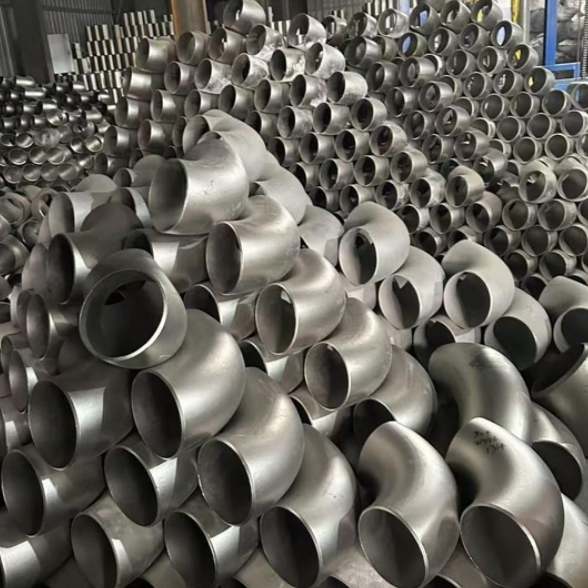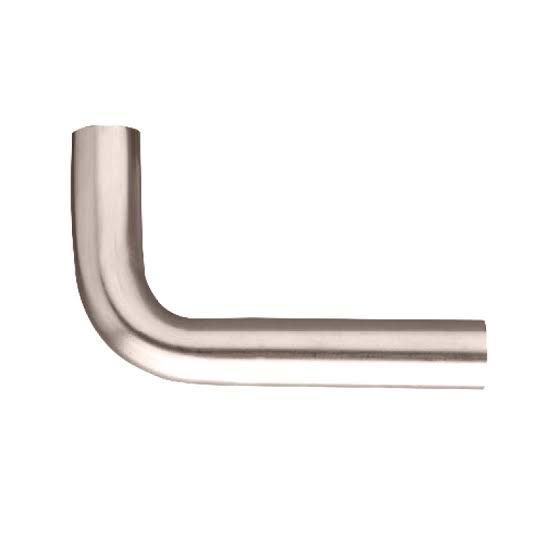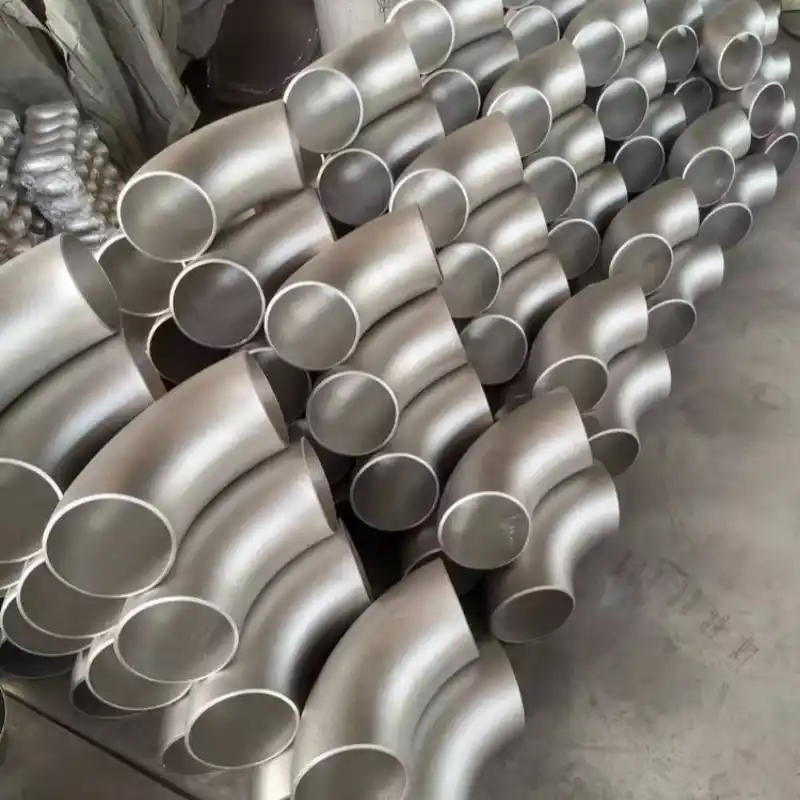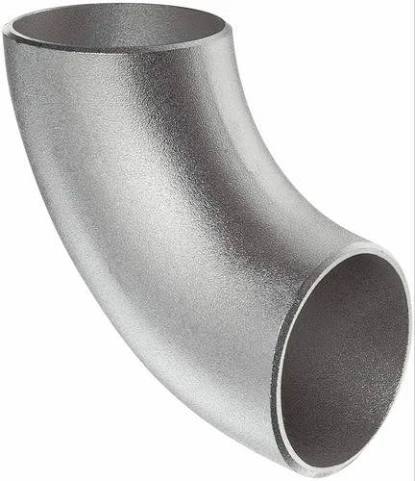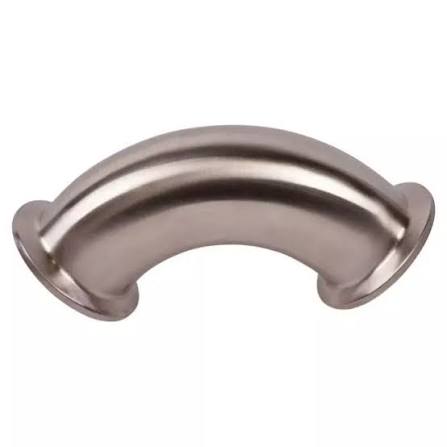
For engineering projects involving high-temperature and high-pressure fluids—such as petrochemical, power generation, and marine applications—the reliability of pipe connections directly impacts the safety and operational maintenance costs of the entire production line. Butt weld elbows, with their smooth transition geometry and leak-free welded joints, have always been core components in industrial piping systems.
However, faced with the uneven quality of supply resources in the international market, purchasers often encounter a thorny issue: how to screen out truly reliable suppliers while ensuring quality?
Core technical standards and industrial applications of stainless steel buttweld elbow
✅Before evaluating whether a fitting product is qualified, we must first understand the harshness of its application scenarios. Butt weld elbows are widely used in refinery catalytic cracking units, power plant main steam lines, and high-pressure chemical material conveying systems. These operating conditions often involve temperatures exceeding 400°C or pressures above 10 MPa.
✅Authoritative industry reference standards generally follow ASME B16.9 (Factory-Made Wrought Steel Butt-welding Fittings) and ASTM A403 (Standard Specification for Wrought Austenitic Stainless Steel Piping Fittings).
✅A compliant stainless steel buttweld elbow has strict tolerance control over wall thickness capacity, ovality, and center-to-end deviation. During the initial inquiry phase, purchasers must request suppliers to provide material test certificates (MTC) that comply with the standards—this is the first threshold for ensuring basic quality.
Accurately matching engineering requirements based on welding elbow 304 stainless steel 4″ dimensions
✅Why do many project sites experience stress corrosion cracking or weld tearing? A large part of the reason lies in dimensional mismatches. Taking the commonly used 304 stainless steel as an example, many purchasers only focus on the “4-inch” nominal size but overlook critical dimensions such as bevel angle, schedule (Sch), and bending radius (long radius LR or short radius SR).
✅According to technical papers in the international pipeline journal Pipe Line & Gas Journal, when fluid velocity is high or the fluid contains solid particles, long-radius (R=1.5D) butt-welding elbows should be prioritized to reduce erosion.
✅Therefore, when your design drawing clearly specifies welding elbow 304 stainless steel 4″ dimensions, be sure to verify the outside diameter (e.g., 114.3mm), wall thickness (e.g., Sch40S), and center-to-end distance.
Case study: How Jiujiang Petrochemical Plant No. 2 achieved safe, stable, and long-term operation using stainless steel butt welded elbow
✔️To more intuitively illustrate the importance of rigorous selection, here is a typical case we encountered during our technical review. During an old pipeline renovation project, Jiujiang Petrochemical Plant No. 2 in Jiangxi Province experienced leakage hazards during the pressure test phase due to excessive negative wall thickness deviation in a batch of non-standard butt-welding elbows.
✔️In the subsequent rectification process, the plant’s technical team adopted a strict supplier access mechanism, requiring that the supplied stainless steel butt welded elbow not only meet ASME standards but also pass 100% radiographic testing (RT) and undergo spectral verification of Ni and Cr element content for each batch.
✔️After replacing with qualified fittings, the steam pipeline of the plant’s catalytic cracking unit has operated smoothly for more than two years without any unplanned shutdowns caused by fittings.
✔️This case fully demonstrates that in the procurement of butt-welding elbows, price is certainly important, but a traceable quality assurance system and non-destructive testing capabilities are the core variables that determine the long-term profitability of the project.
How to identify high-quality stainless steel butt weld elbow suppliers and manufacturers
Returning to our original question—how to screen? Based on industry experience, we recommend that purchasers evaluate from the following three dimensions:
-
Raw material traceability capability: High-quality stainless steel butt weld elbow suppliers typically have stable cooperation channels with steel mills and can provide original heat/lot numbers with anti-counterfeit traceability codes.
-
Processing equipment and production capacity: Genuine manufacturers have large hydraulic push-forming machines or cold-forming equipment, rather than relying solely on outsourced processing. During on-site or virtual factory inspections, special attention should be paid to the temperature control accuracy of their heat-treatment furnaces.
-
Delivery and after-sales logic: International projects often face pressure from shipping lead times. Professional suppliers will maintain inventories of commonly used material blanks (e.g., 316L, 310H) to shorten delivery cycles and can provide anti-rust solutions for export packaging.