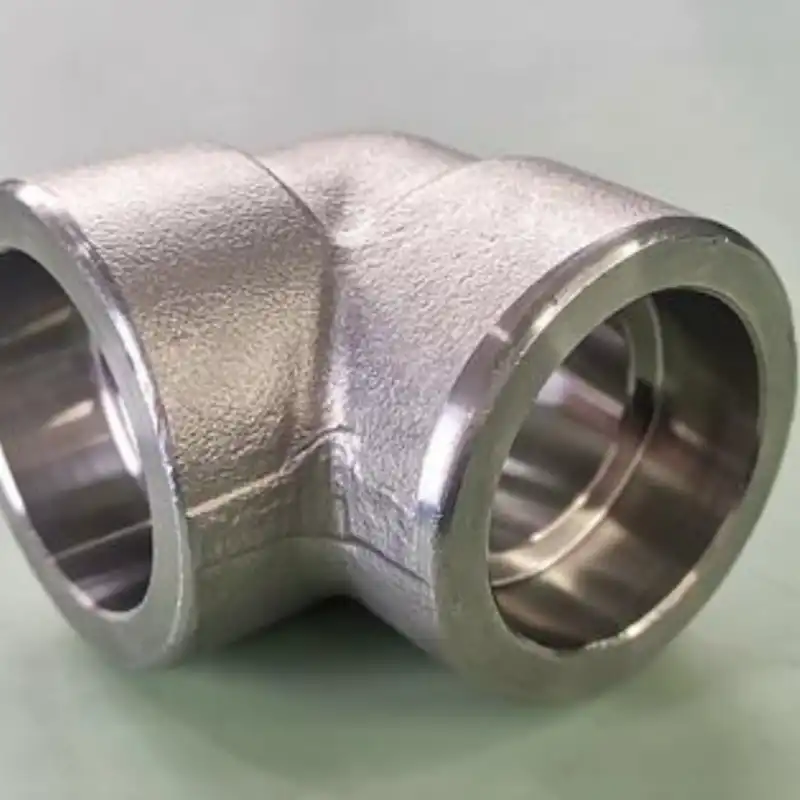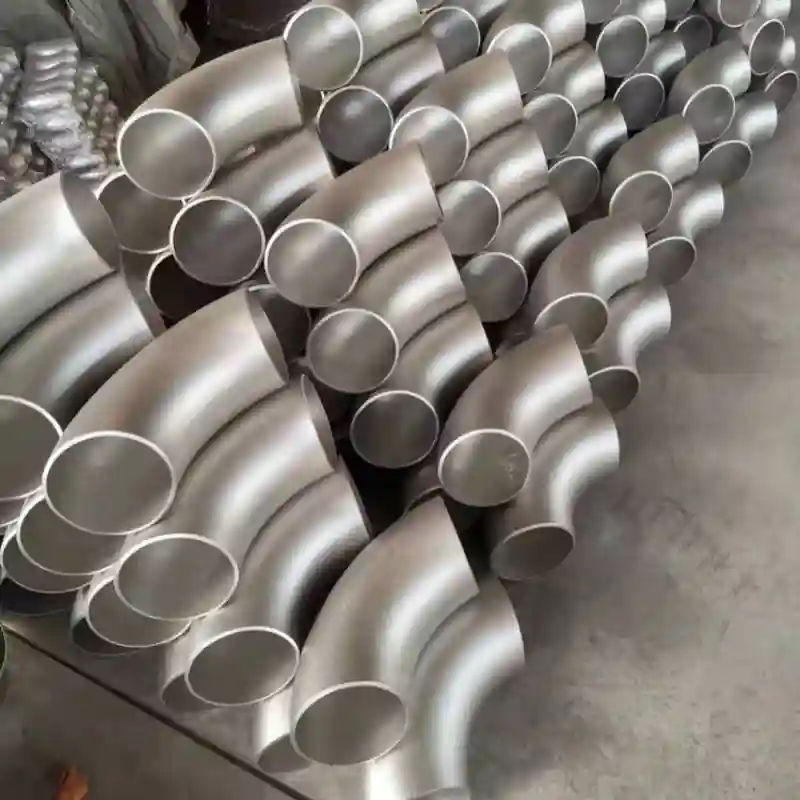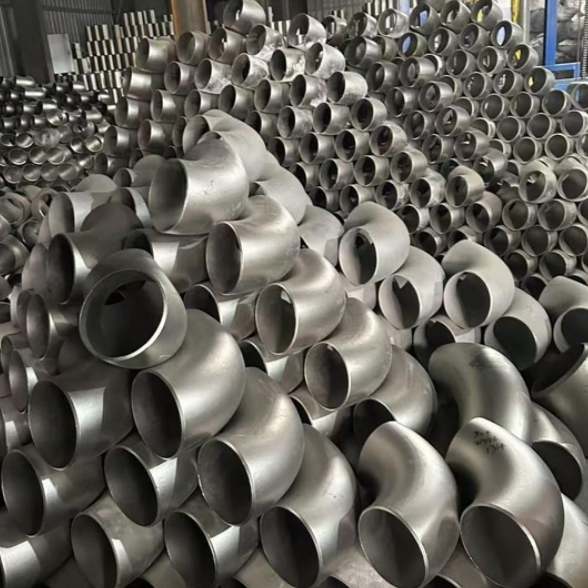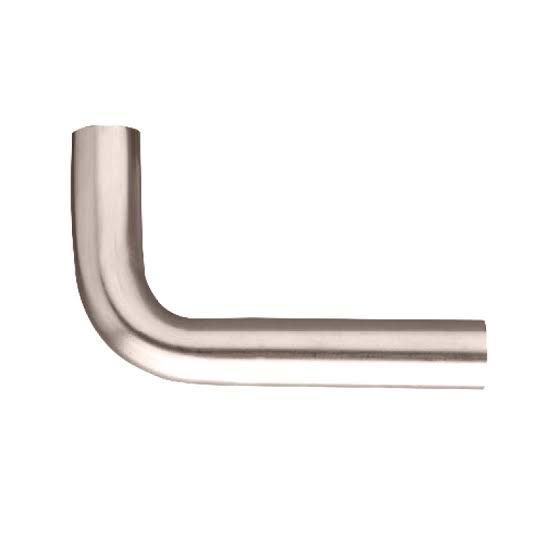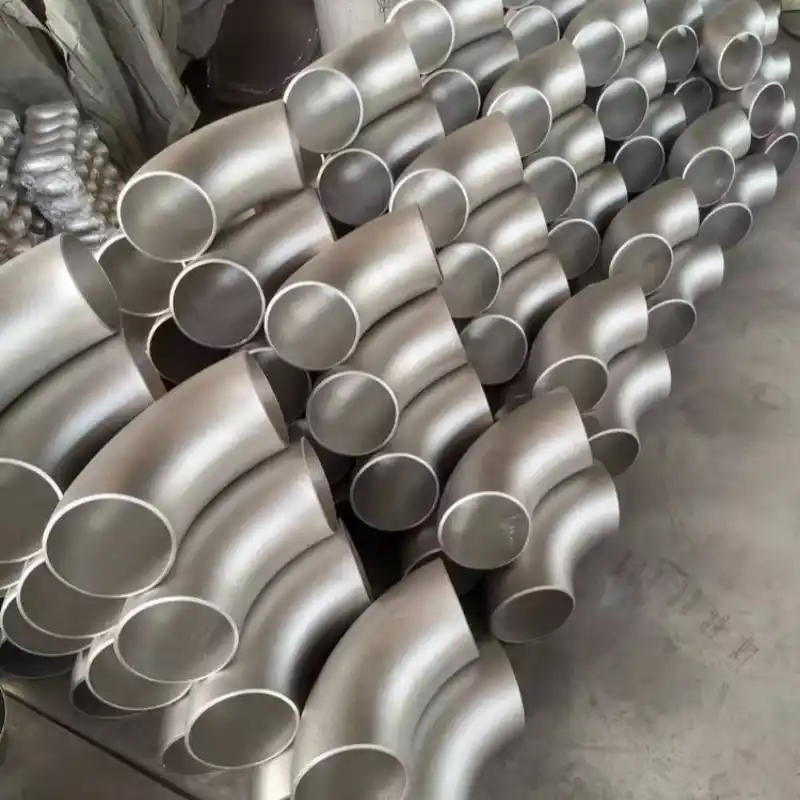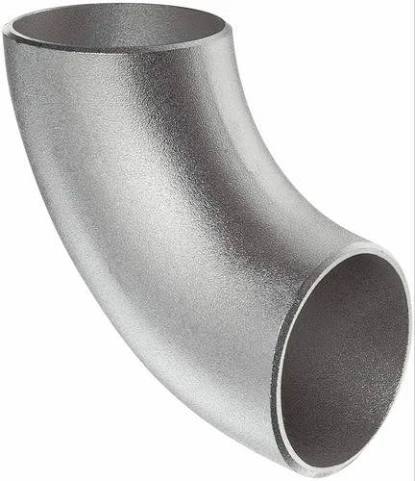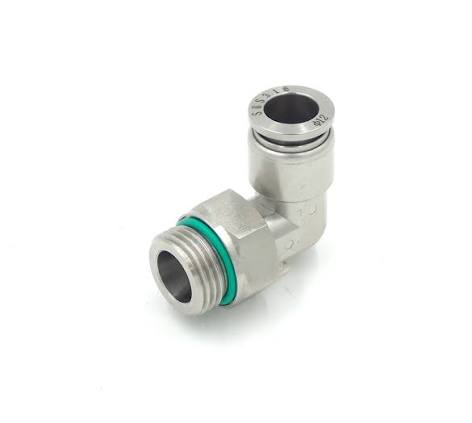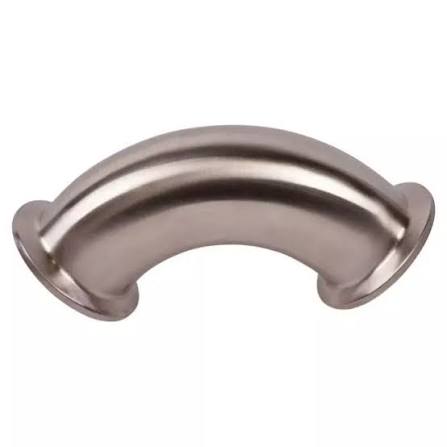
Elbow connectors are key components in piping systems used to change the direction of the medium flow. Common pipe elbow types include 45°, 90°, and 180° elbows, among which the 90° elbow is the most widely used.
✅ Based on the bending radius, elbows can be classified into long radius elbows (LR, with a bending radius of 1.5 times the nominal diameter) and short radius elbows (SR, with a bending radius of 1.0 times the nominal diameter).
✅ Taking ASME B16.9 as an example, the size range of butt weld elbows covers DN15 to DN1200 (NPS 1/2″ to 48″), with wall thickness matching Sch 10 through Sch 160 and XXS.
✅ For engineering designers, mastering 45-degree and 90-degree elbow dimensions is essential. For example, for a 90° long radius elbow of NPS 4″, Sch 40, the center-to-face dimension is 152 mm, the outside diameter is 114.3 mm, the wall thickness is 6.02 mm, and the angular tolerance is ±0.5°. For the same specification, the center-to-face dimension of a 45° elbow is typically 95 mm.
✅ In terms of pressure ratings, elbows are available from Class 150 to Class 2500. Stainless steel elbows (ASTM A403 WP304/316) are commonly used in corrosive environments, while carbon steel elbows (ASTM A234 WPB) are suitable for high-temperature and high-pressure pipelines.
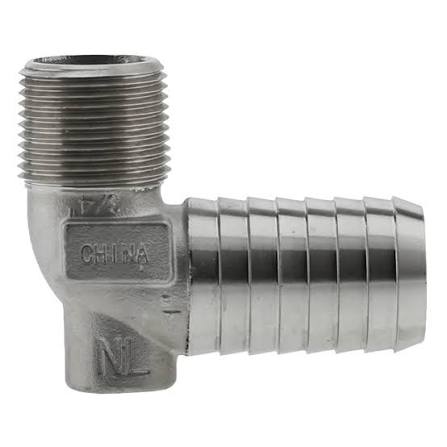
♂️When selecting elbows, the connection method must be considered: the butt weld elbow standard ASME B16.9 provides seamless connections for high-integrity systems; threaded elbows (NPT) are used for small diameters (below NPS 2″).
♂️Based on AIFN company’s years of manufacturing and testing experience, we recommend that customers verify the material grade, schedule number, and required angle of the piping before purchase to ensure system sealing and flow efficiency.
📝Proper selection of elbows can reduce local pressure loss by more than 30% and avoid turbulence-induced accelerated corrosion. For custom non-standard angles (e.g., 60°, 120°) or special radii, please consult our technical team for a selection parameter sheet.