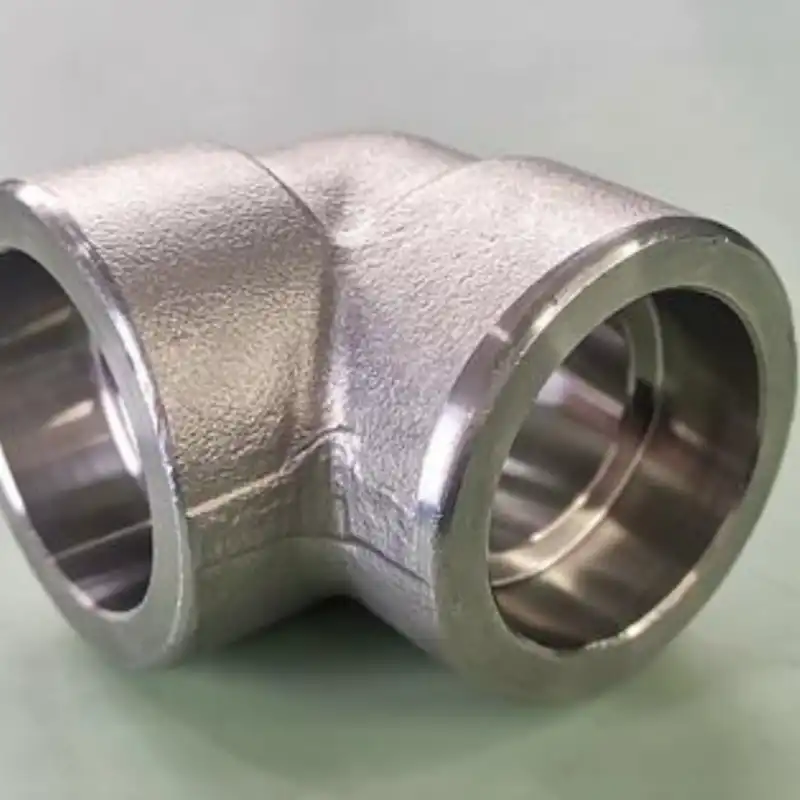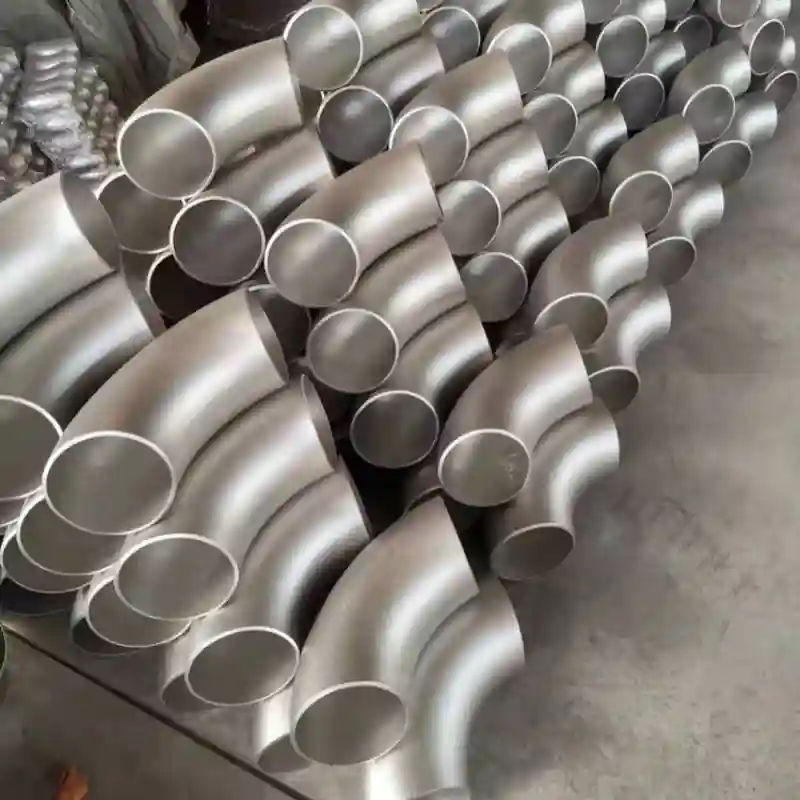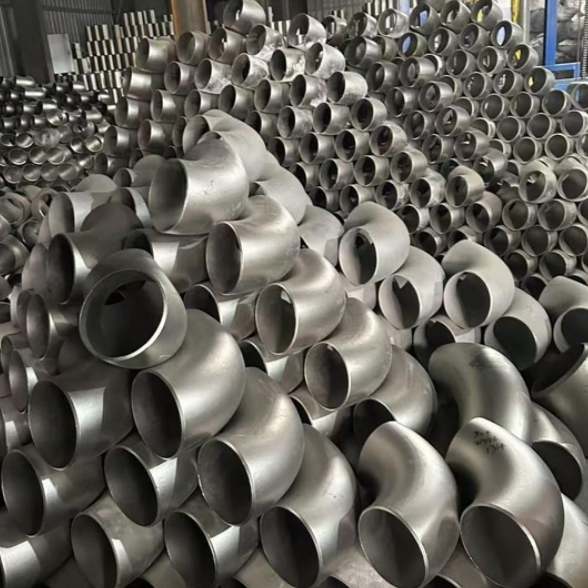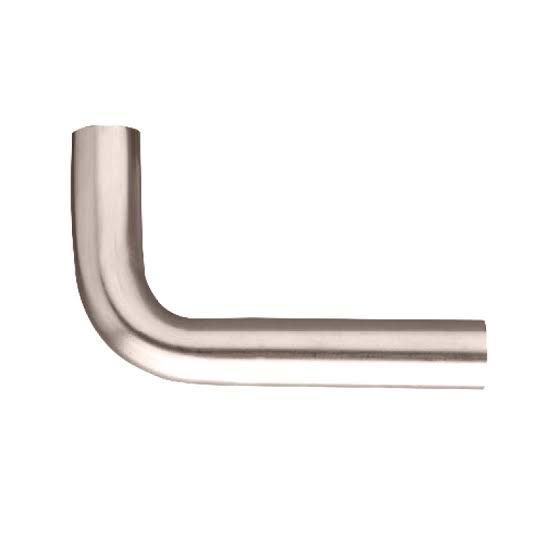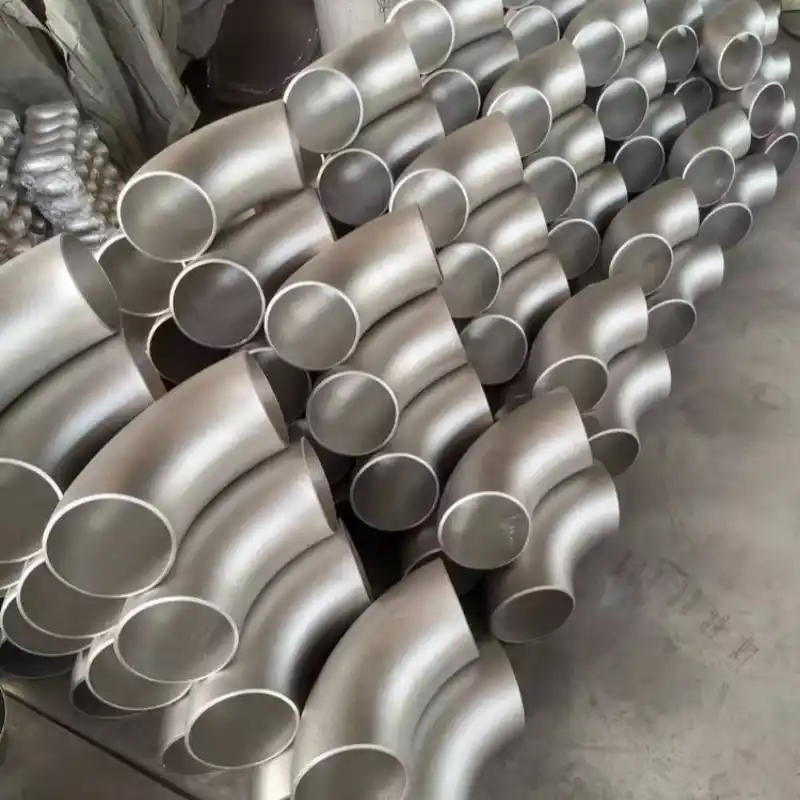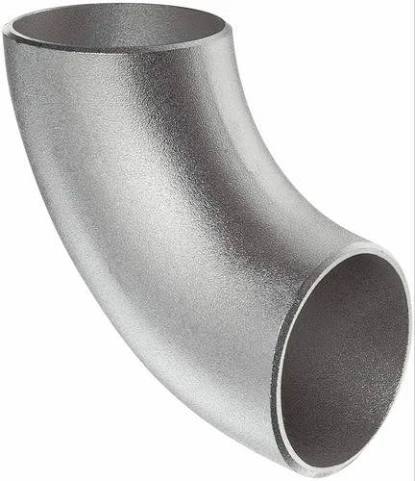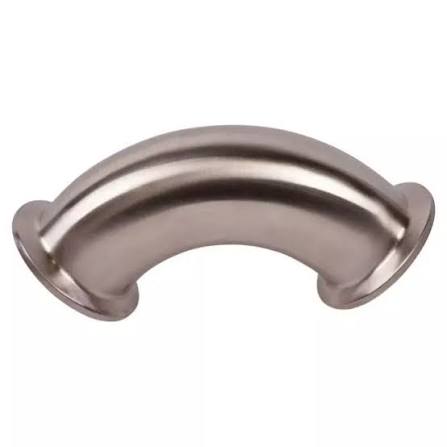
Is there any head friction for elbow pipe? The answer is yes.
✅In pipeline systems, “Does an elbow pipe really produce head friction loss?”
✅According to the basic principles of fluid mechanics, the answer is clear.
➡️Any pipe fitting that changes the flow direction (including elbows) will cause local head loss. This loss is different from frictional loss along the pipe—it is not dominated by continuous friction against the pipe wall, but rather by energy dissipation due to vortices and secondary flows caused by abrupt changes in flow direction.
Nature of the loss: from Bernoulli’s equation to the K coefficient
✅When fluid flows through an elbow, the velocity distribution differs dramatically between the inner and outer sides. The pressure rises on the outer side and drops on the inner side, forming a pair of counter-rotating Dean vortices. This phenomenon results in the actual total head being lower than the ideal lossless case. In engineering, the local loss form of the Darcy-Weisbach equation is typically used:
hf=K⋅v22ghf=K⋅2gv2
📌where KK is the pressure drop coefficient for elbow. This coefficient depends on the elbow’s bend radius to pipe inner diameter ratio (R/DR/D), the bend angle, and the internal wall roughness.
✅For example, for a standard 90° welded elbow (R/D=1.0R/D=1.0), the K value is approximately 0.9; while for a long-radius elbow (R/D=1.5R/D=1.5), the K value can drop to 0.2–0.3. These data are sourced from ASME B16.9 and Crane Technical Paper No. 410 (an industry-recognized fluid resistance handbook).
Equivalent length method: an intuitive head loss calculation method
✅In addition to directly using the K coefficient, engineers often use the concept of “equivalent length”—converting the local loss of an elbow into the frictional loss along a straight pipe of the same diameter.
✅For example, a standard 90° elbow with a nominal diameter of 100 mm (4 inches) has an equivalent length of about 3.5 meters. The conversion formula is:
Leq=K⋅DfLeq=K⋅fD
📌where ff is the Darcy friction coefficient. This equivalent length of elbow pipe method is widely used in HVAC, petrochemical, and pipeline design to facilitate rapid estimation of pressure drops across entire pipe networks.
Professional advice: how to reduce head loss in elbows
Based on years of experience serving global customers at AIFN Piping Solutions, we recommend:
-
Prioritize the use of long-radius elbows (R/D≥1.5R/D≥1.5), which can reduce local losses by 60% to 70%.
-
Avoid placing two 90° elbows closely in succession; otherwise, vortex superposition can increase total loss several times over.
-
For high-pressure or high-velocity systems, consider using 45° elbows or elbows with flow guide vanes, and evaluate pressure loss according to ISO 5167 standards.
📝Every elbow creates head friction loss, but through scientific selection and calculation, energy consumption can be kept within a reasonable range. If you need a pressure drop calculation sheet for a specific operating condition, please contact the AIFN technical team.