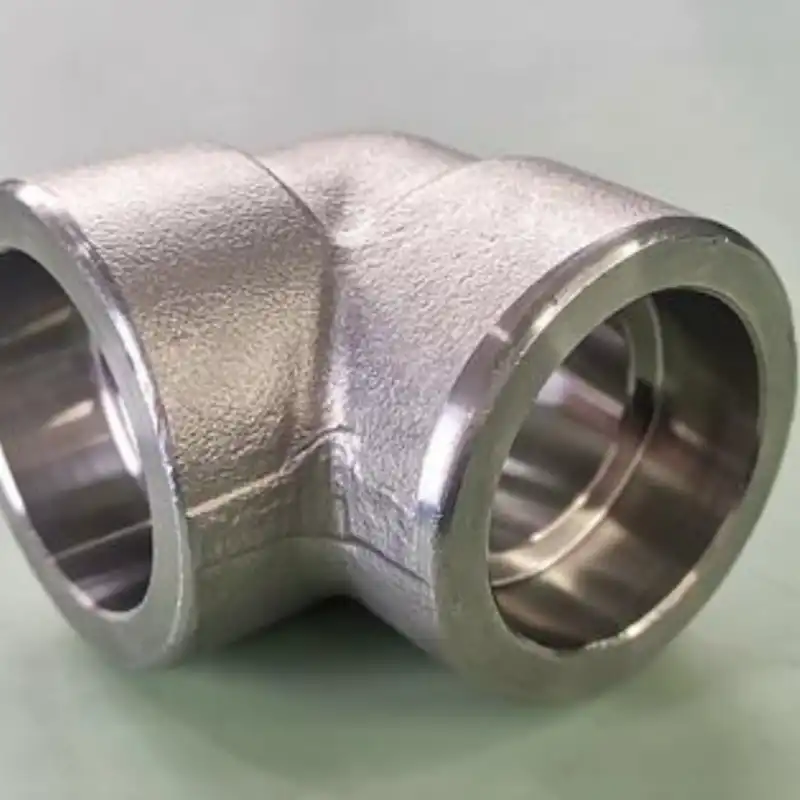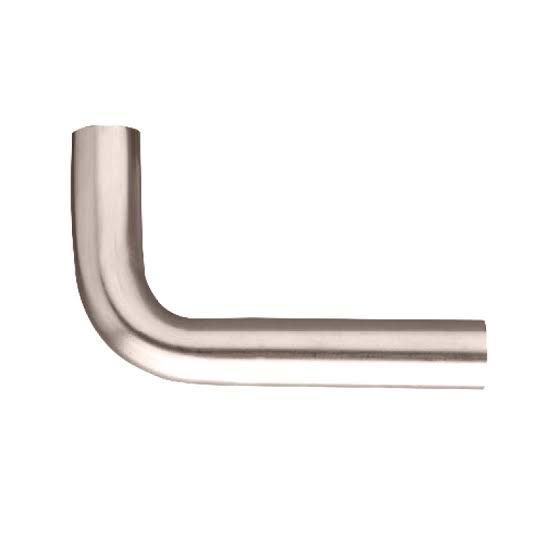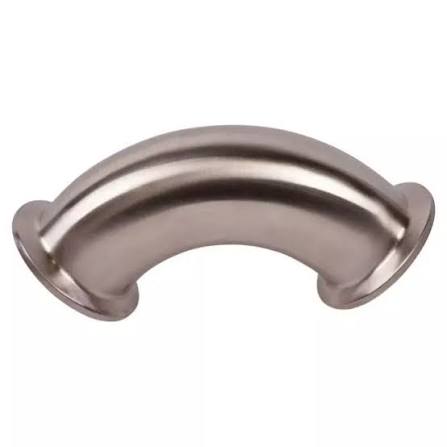
For a bathroom shower system, the connection method of the elbow fitting directly determines the sealing performance and long-term reliability of the installation. So, what does the connection of a shower elbow pipe actually look like?
I. Thread Types and Appearance Characteristics
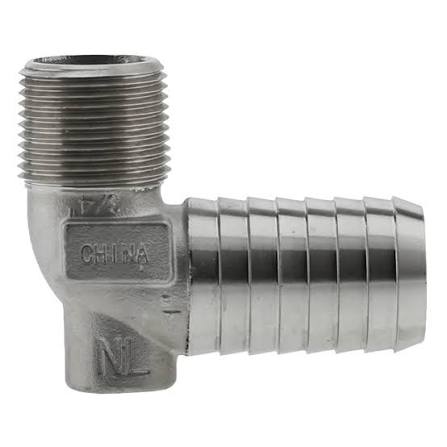
✅A typical threaded shower elbow fitting uses tapered pipe threads. Household shower products commonly use 1/2-inch (approx. DN15) threads, but this varies by region: North America often uses NPT (60° thread angle), while Europe and Asia mostly use BSP (55° thread angle).
✅When observing an uninstalled elbow, you will see clear, continuous, and slightly tapered spiral ridges on one or both ends — this is the intuitive visual feature of a threaded connection. Understanding the difference between NPT vs BSP pipe connection is critical for cross-border procurement: NPT relies on interference fit of the threads themselves for sealing, whereas BSP typically requires a sealing washer or PTFE tape.
II. Sealing Process and Operational Parameters
✅To achieve a reliable leak-proof shower arm joint, correct sealing procedures are essential. It is recommended to wrap 3 to 5 turns of high-quality PTFE tape (thickness approx. 0.1 mm, density ≥0.5 g/cm³) around the threads, with the wrapping direction the same as the tightening direction.
III. Material and Pressure Resistance
✅High-end shower elbows are mostly made of one-piece forged brass (e.g., CW617N or CZ132), with a tensile strength ≥300 MPa, capable of withstanding a maximum water pressure of 10 bar (equivalent to a water column of approx. 100 meters).
📝With the details above, both professional plumbers and homeowners can accurately identify and safely complete the connection of a shower elbow pipe.