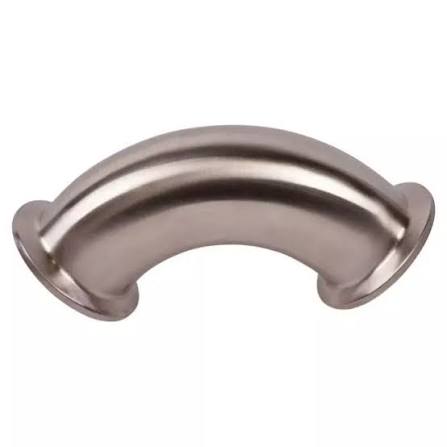
Complete Guide to Stainless Steel 90-Degree Elbow Dimensions: Standards, Parameters, and Selection Key Points
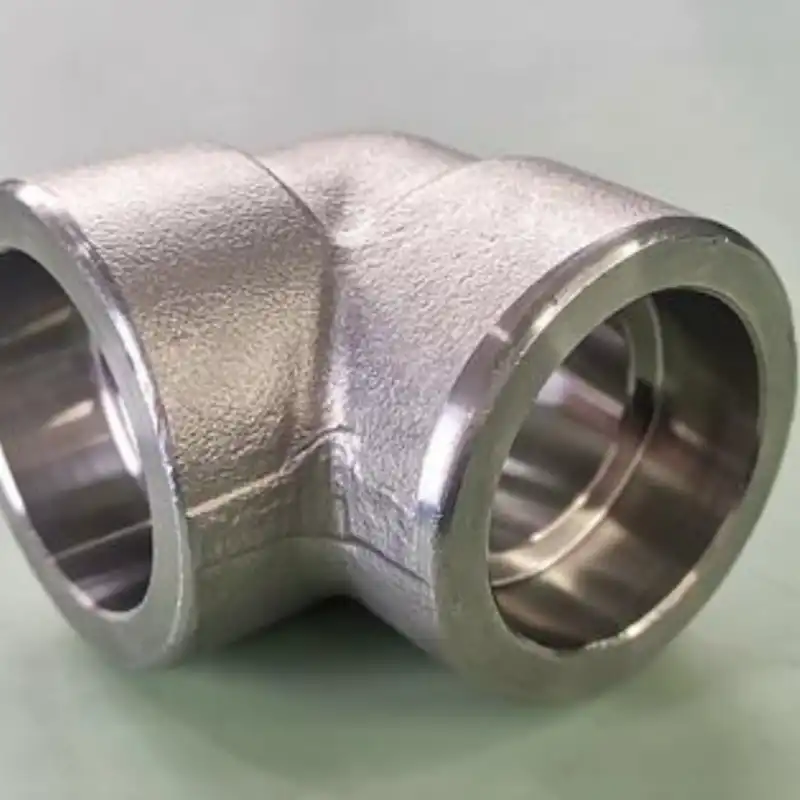
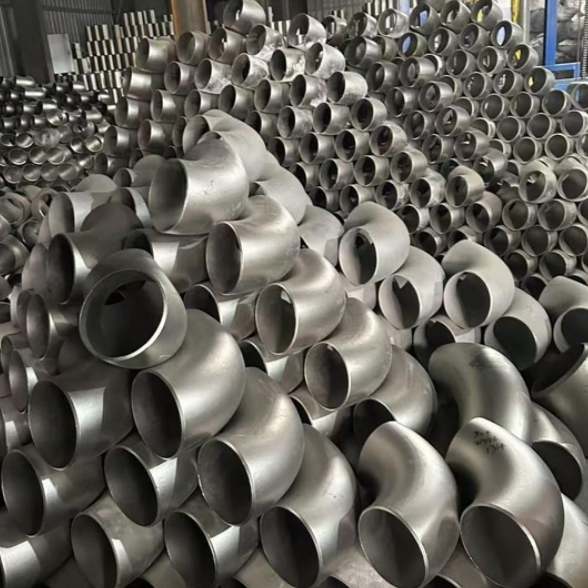
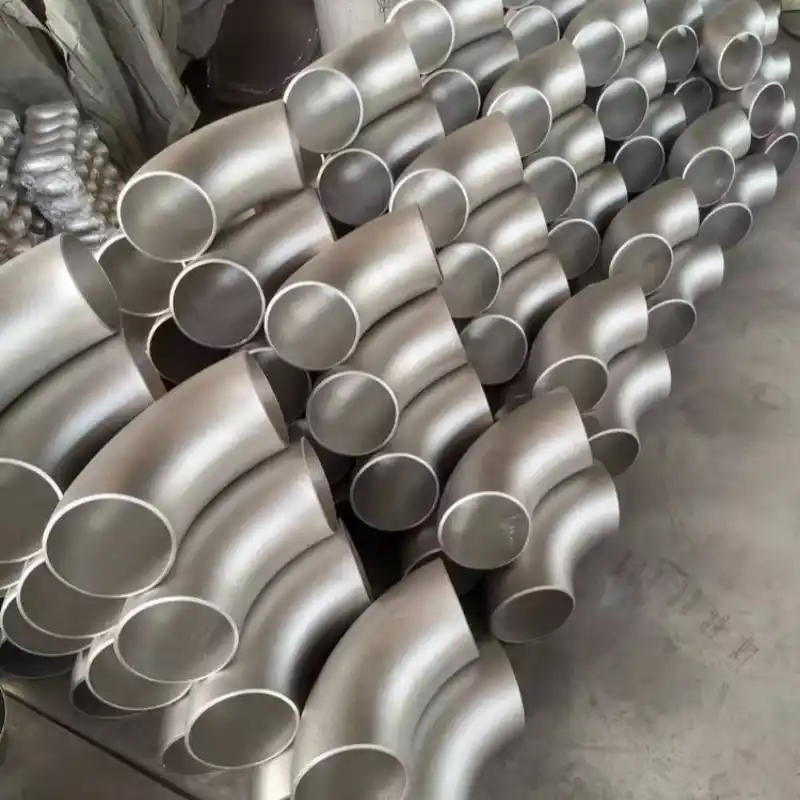
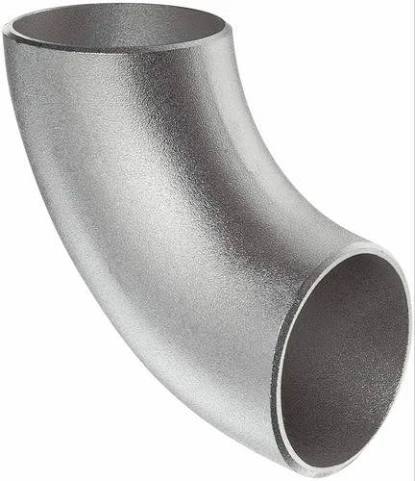
In piping systems, the stainless steel 90-degree elbow is one of the most common pipe fittings. Whether in petrochemical, food and pharmaceutical, or building water supply and drainage, correctly selecting the elbow’s dimensions and specifications directly impacts system safety, fluid efficiency, and long-term operating costs.
This guide, based on international standards such as ASME B16.9 and ASTM A403, provides an in-depth analysis of key dimensional parameters, wall thickness schedules, radius types, and selection tips for stainless steel 90-degree elbows, helping engineers and procurement professionals make accurate decisions.
I. Standard Size Range: From 1/2 inch to 24 inches
The nominal pipe size (NPS) of stainless steel 90-degree elbows typically covers 1/2″ to 24″. Larger sizes (e.g., 36″, 48″) can be manufactured to order. Below are the center-to-face dimensions for common sizes (long radius LR, i.e., 1.5 × nominal diameter):
| NPS (inch) | Outside Diameter (mm) | Center-to-Face (mm) – LR |
|---|---|---|
| 1/2 | 21.3 | 38.1 |
| 1 | 33.4 | 76.2 |
| 2 | 60.3 | 152.4 |
| 4 | 114.3 | 152.4 |
| 6 | 168.3 | 228.6 |
| 8 | 219.1 | 304.8 |
| 10 | 273.0 | 381.0 |
| 12 | 323.8 | 457.2 |
For example, a 4 inch stainless steel 90 degree elbow has an outside diameter of 114.3 mm and a center-to-face dimension of 152.4 mm for long radius. In high-flow pipelines, the 6 inch stainless steel 90 degree elbow is more common, with an outside diameter of 168.3 mm and center-to-face dimension of 228.6 mm.
II. Radius Types: Long Radius (LR) vs. Short Radius (SR)
The bend radius of an elbow determines pressure loss during flow redirection and installation space.
-
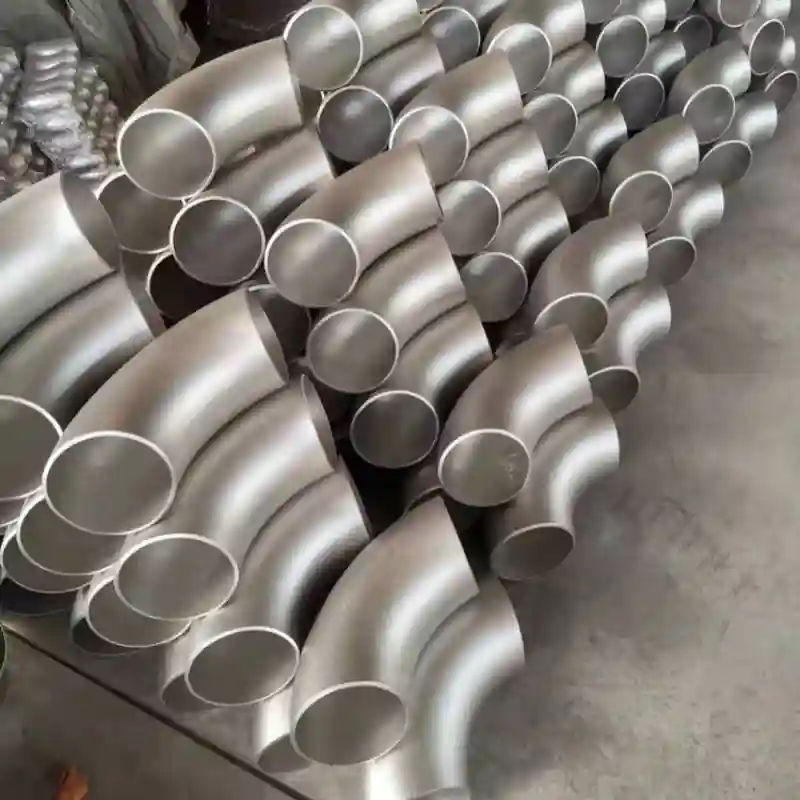
Long radius elbow (LR): Bend radius = 1.5 × nominal diameter. This is the most commonly used type, offering low fluid resistance and suitable for most industrial pipelines. For example, a long radius elbow can reduce turbulence losses by approximately 15–20% compared to a short radius elbow.
-
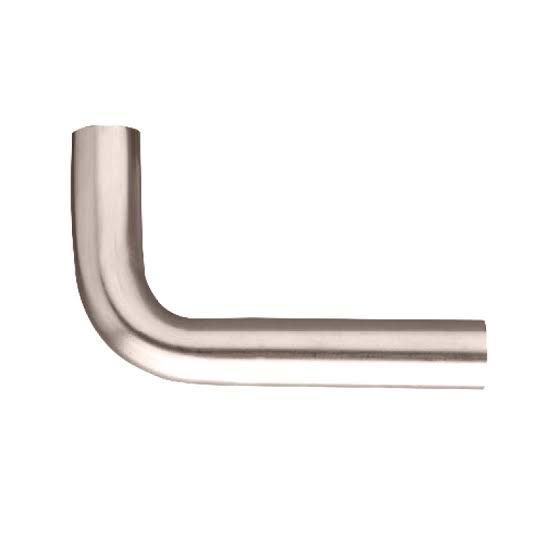
Short radius elbow (SR): Bend radius = 1.0 × nominal diameter. Used in space‑limited applications, but with higher pressure loss and greater risk of medium impact.
ASME B16.9 specifies that the center-to-face dimensional tolerance for long radius elbows is ±1.6 mm for NPS 4–8, and ±2.4 mm for NPS 10–18. LR elbows should be the first choice unless layout constraints force the use of SR.
III. Wall Thickness Schedules: Schedule 10 / 40 / 80
The pressure‑bearing capacity of a stainless steel elbow depends on its wall thickness, typically denoted by “Schedule”. Common schedules include Sch 10S (thin wall), Sch 40S (standard wall), and Sch 80S (thick wall). Taking a schedule 40 90 degree elbow as an example, for NPS 4 the minimum wall thickness is 6.02 mm (according to ASME B36.19). For the same size, Sch 80S has a wall thickness of 7.14 mm, suitable for higher pressures (up to approximately 20 MPa, depending on temperature).
When selecting, match the same Schedule as the pipe to avoid welding stress concentration caused by mismatched wall thicknesses.
IV. Material Grades: 304 vs. 316 Stainless Steel
The corrosion resistance of stainless steel elbows depends on the alloy composition. A 304 stainless steel elbow is the most economical choice, containing 18% Cr and 8% Ni. It is suitable for general water, oil, gas, and mildly corrosive environments, with a maximum operating temperature of about 800°C. If the medium contains chloride ions (e.g., seawater, acidic liquids), 316 stainless steel (containing 2–3% Mo) should be selected, as its pitting resistance is improved by approximately 30%.
V. Manufacturing Standards and Tolerances
The globally recognized standard for stainless steel butt‑weld elbows is ASME B16.9. This standard specifies requirements for dimensions, wall thickness, ovality, etc.:
-
Allowable wall thickness reduction: maximum 12.5% of nominal wall thickness
-
End inside diameter deviation: ±0.8 mm for NPS ≤ 10; ±1.6 mm for NPS ≥ 12
-
Bend angle deviation: ±1.5°
In addition, ASTM A403 specifies material requirements, including chemical composition, mechanical properties (tensile strength ≥ 515 MPa, yield strength ≥ 205 MPa), and heat treatment condition (solution annealing). Elbows conforming to these standards offer high reliability and long service life.
VI. How to Correctly Select a Stainless Steel 90-Degree Elbow?
-
Determine size: Choose NPS and Schedule matching the pipe’s outside diameter and wall thickness.
-
Select radius: Prefer long radius (LR) unless space is strictly limited.
-
Match material: Use 304 for general water, oil, gas; use 316 for chloride‑containing or acidic media; for high‑temperature applications, consider 304H or 321.
-
Check standards and certification: Request ASME B16.9 and ASTM A403 conformance certificates from the supplier, and review Material Test Reports (MTR).
-
Surface finish: Industrial pipelines typically use mechanical polishing (Ra ≤ 1.6 μm); clean (e.g., pharmaceutical) pipelines require electropolishing (Ra ≤ 0.4 μm).
In real projects, for example, a chemical plant processing 1000 tons per day uses pipelines composed of 4 inch stainless steel 90 degree elbow and 6 inch stainless steel 90 degree elbow. Choosing long radius elbows can reduce pump energy consumption by about 8–12% per year while extending elbow replacement intervals to more than 10 years.
Conclusion
Selecting the right dimensions for a stainless steel 90-degree elbow is not a simple “match the size” task; it is a comprehensive decision involving radius type, wall thickness schedule, material grade, and manufacturing standards. Keep in mind the fluid economy of a long radius elbow, match the correct schedule 40 90 degree elbow or higher Schedule, and choose 304 stainless steel elbow or 316 material according to the medium environment. Only then can you build a safe, efficient, and durable piping system.