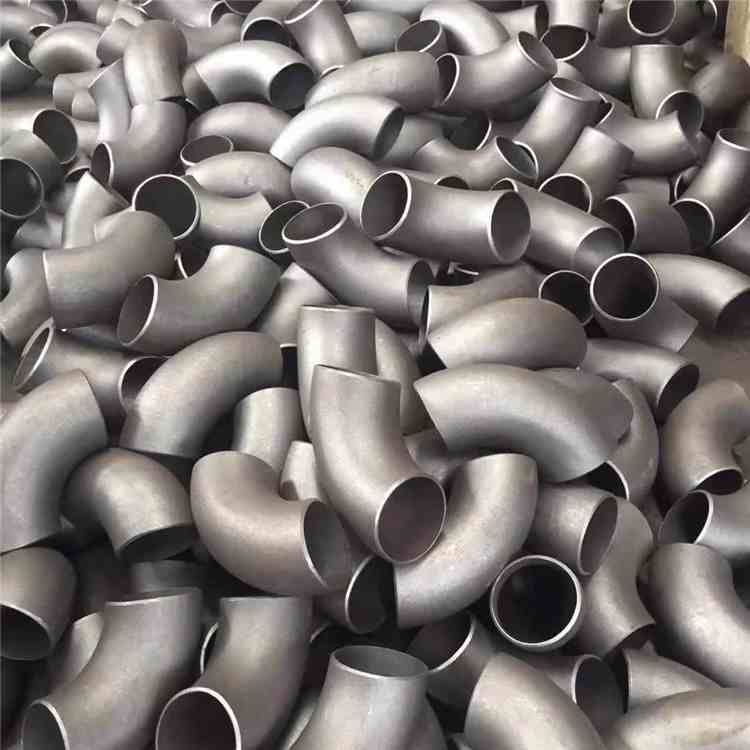
CE Stainless Steel 90 Degree Elbow: Core Guide from Technical Certification to Bulk Procurement
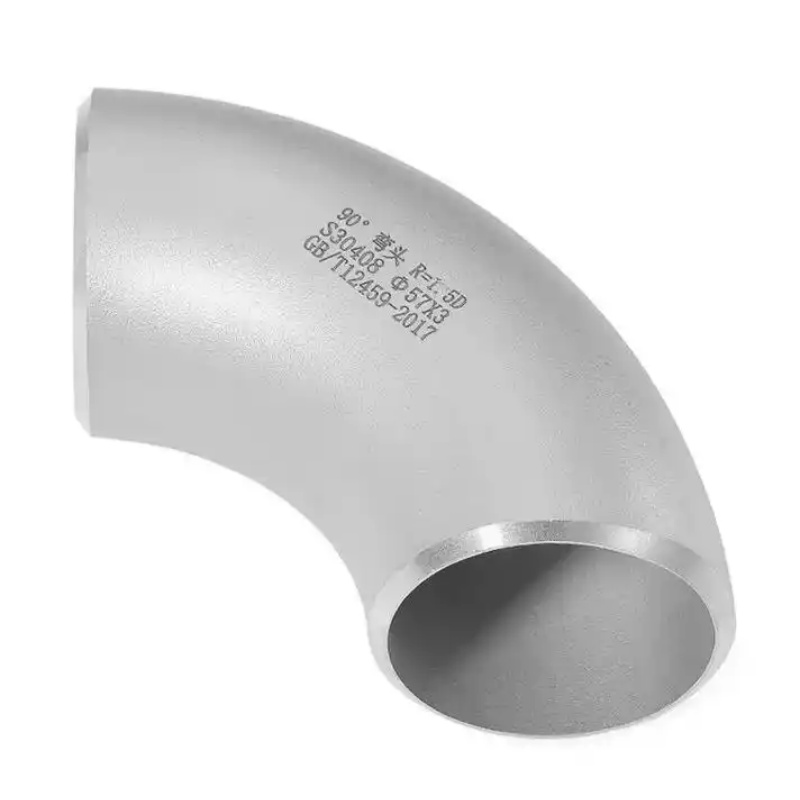
In piping systems, the 90 degree elbow is the most common component for changing the direction of medium flow. But when this component must comply with the European Pressure Equipment Directive (PED 2014/68/EU), a CE stainless steel 90 degree elbow is no longer a simple “corner connector”—it involves material traceability, wall thickness calculation, non-destructive testing, and full process control of manufacturing.
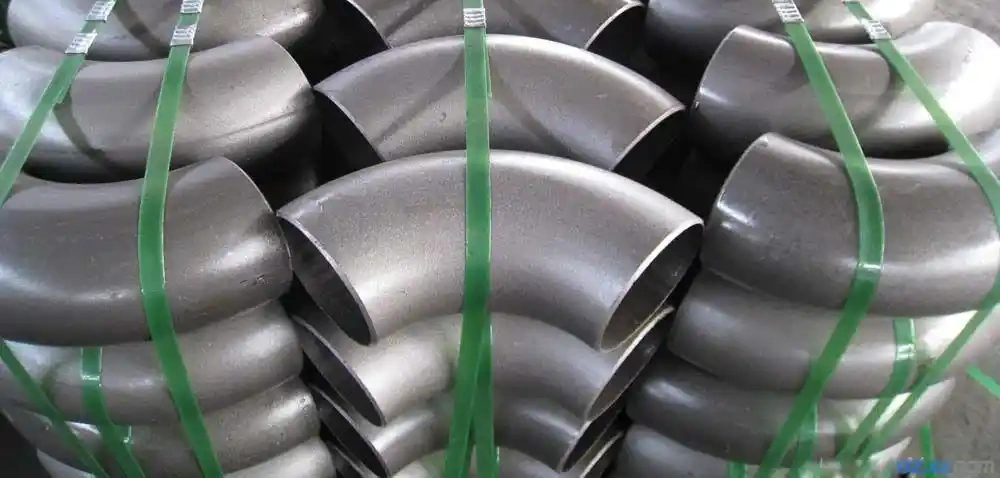
1. Why is the CE mark so critical for stainless steel 90 degree elbows?
CE certification is not just a label. For projects exported to the EU or built according to EU standards, the purchaser must ensure that the elbow meets the four basic safety requirements of PED 2014/68/EU: design safety, manufacturing quality, material suitability, and conformity assessment of the final product.
Taking the common ASTM A403 WP316L material as an example, a ce stainless steel 90 degree elbow must at least provide during the certification process:
-
A 3.1 material certificate (according to EN 10204), specifying chemical composition (C ≤ 0.03%, Mo content 2.5-3.0%) and mechanical properties (tensile strength ≥ 485 MPa, yield strength ≥ 170 MPa);
-
Wall thickness tolerance conforming to ASME B16.9, e.g., for a DN100 (4-inch) elbow, the allowable deviation of wall thickness is ±12.5% of the nominal wall thickness;
-
Non-destructive testing reports: For systems with high design factors, 100% penetrant testing or radiographic testing is required, with acceptance level not lower than Level 2 of EN 12680-1.
A qualified ce stainless steel 90 degree elbow manufacturer will permanently mark on each elbow: nominal size (DN or NPS), wall thickness schedule (Sch10S to Sch80S), material grade, batch number, and the CE mark along with the Notified Body number.
2. Technical parameters: Digging into the “hidden details” of a qualified elbow
Many users only focus on “90 degree” and “stainless steel” when inquiring, but ignore the following parameters that affect long-term reliability:
-
Forming process: Cold bending or hot pushing? For elbows with an outer diameter greater than 114.3mm or wall thickness schedule Sch40S and above, the hot push forming process (heated to about 1050°C then pushed) avoids excessive thinning of the intrados wall thickness. The industry journal Pipe Fabrication Journal noted that the minimum wall thickness of hot-pushed elbows can remain above 87.5% of the straight pipe section, while cold bending may drop below 80%.
-
Solution treatment: Austenitic stainless steel (e.g., 304/316) must undergo solution annealing after forming (typically heated to 1040~1080°C then rapidly water quenched). Lack of this step leads to susceptibility to intergranular corrosion—especially in chloride-containing service conditions (e.g., seawater cooling or chemical brine lines). A compliant ce stainless steel 90 degree elbow supplier will provide heat treatment curve records.
-
Surface roughness: For food, pharmaceutical or ultrapure water industries, internal surface Ra needs to be ≤ 0.6μm. Conventional industrial-grade elbows typically have an internal surface Ra of 3.2~6.3μm. The price difference between the two is significant, and their applications are different.
3. Quality control checkpoints during wholesale procurement (wholesale stainless steel 90 degree elbow ce)
When you plan to carry out wholesale stainless steel 90 degree elbow ce procurement, you should not look only at the unit price. It is recommended to specify the following lot-by-lot inspection items in the contract:
-
Dimensional sampling: According to ISO 5251 or ASME B16.9, sample 5% of each lot. Focus on measuring end outside diameter, wall thickness, bending angle (tolerance ±0.5°), and the straight length between the two end faces.
-
Hardness test: For 316L material, HRB (Rockwell B scale) is generally not more than 95. Excessive hardness may indicate insufficient solution treatment.
-
PMI (Positive Material Identification): Perform at least one test per heat number, using an XRF spectrometer to verify Mo, Ni, and Cr content. There have been unscrupulous merchants substituting 304 for 316L, and PMI can directly identify this.
A reliable ce stainless steel 90 degree elbow manufacturer will also provide:
-
Process records (e.g., bending machine thrust curves)
-
Welding procedure qualification (if the elbow is formed from welded plates)
-
EN 10204 Type 3.2 third-party witnessed certificates (available for an additional fee)
4. How to avoid common procurement pitfalls?
-
Pitfall 1: Claiming “equivalent CE” but without a Notified Body number. A genuine CE mark must be accompanied by four digits (e.g., CE 0123), which is the code of the Notified Body.
-
Pitfall 2: Using “minimum value” instead of “nominal value” for wall thickness. Some ce stainless steel 90 degree elbow supplier may quote “wall thickness 2.77mm” in the quotation, but according to the standard, the nominal wall thickness for DN15 Sch40S should be 2.87mm, with an allowable negative deviation of only 0.36mm. Be sure to require verification with an ultrasonic thickness gauge upon delivery.
-
Pitfall 3: Ferrite contamination in stainless steel. If the elbow is processed using tooling shared with carbon steel, iron ions remain on the surface, leading to subsequent rusting. High-quality manufacturers will perform pickling and passivation after forming and provide a blue spot test report (no blue spot within 30 seconds indicates pass).
5. Summary recommendations
When selecting a partner for ce stainless steel 90 degree elbow, it is recommended to prioritize three documents: the factory’s ISO 9001:2015 certificate (covering the scope of pipe fittings), the PED Module 4.3 certificate (or a higher module such as H1), and batch records of similar products from the past six months.
For long-term projects, directly cooperating with a wholesale stainless steel 90 degree elbow ce manufacturer that has a hot push production line and its own heat treatment furnace makes it easier to control quality consistency and delivery lead times than purchasing from a trader. Remember to request a First Article Inspection (FAI) report—it verifies at once whether the drawing, tooling, material, and process are all correct.
In the face of pipeline safety, the elbow is not a supporting role; and a stainless steel 90 degree elbow with complete CE technical documentation is the trustworthy starting point for your entire system.