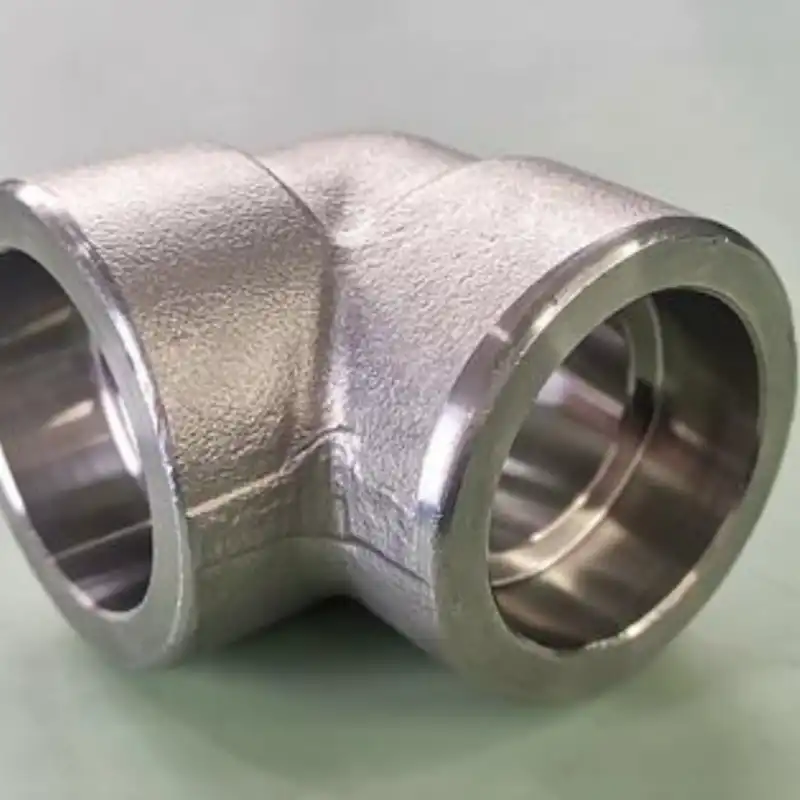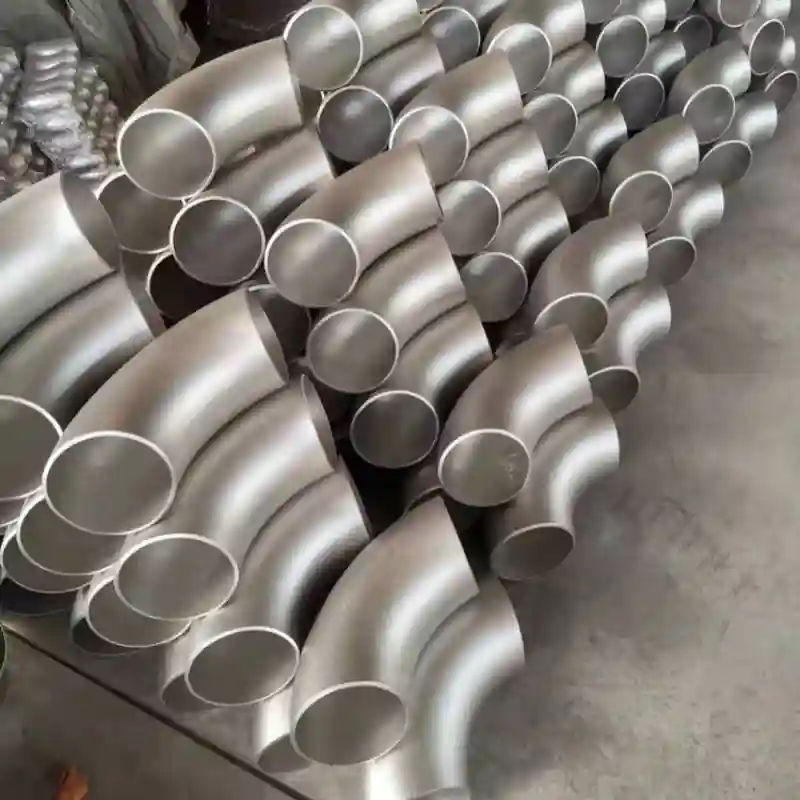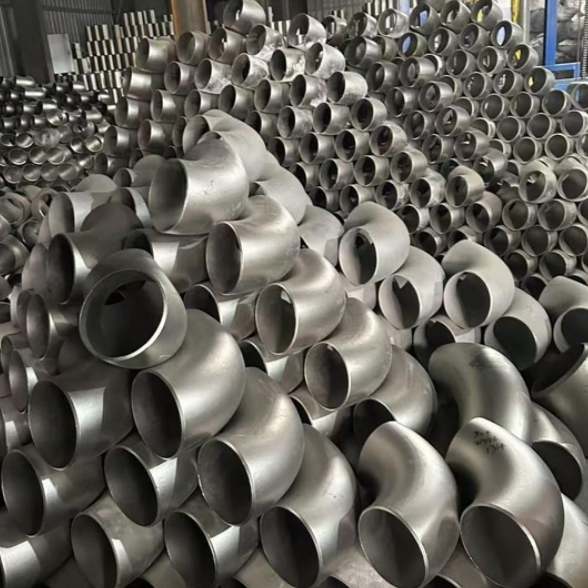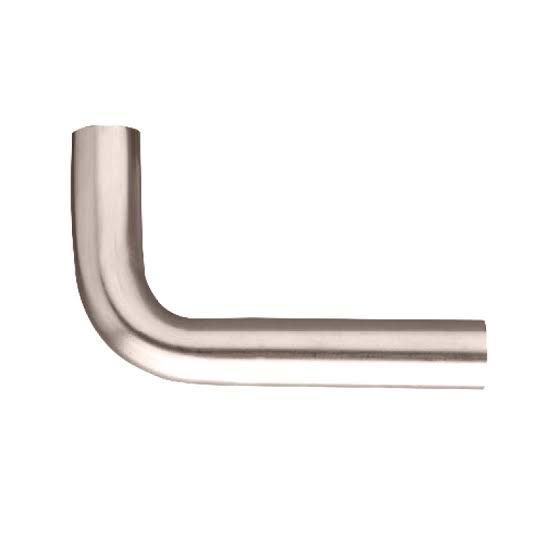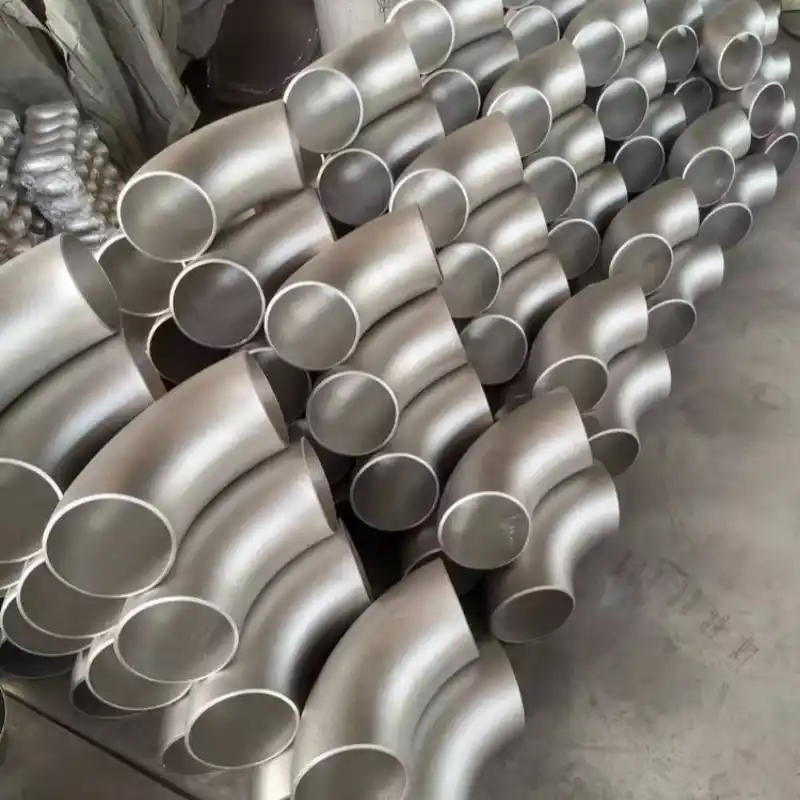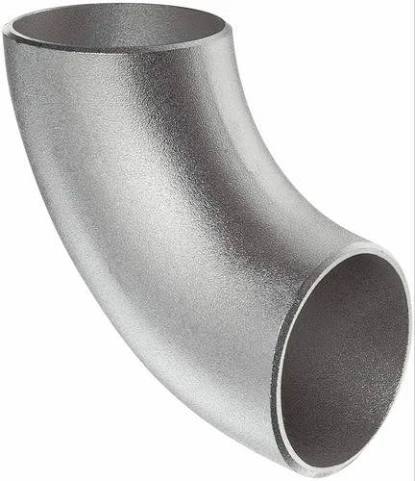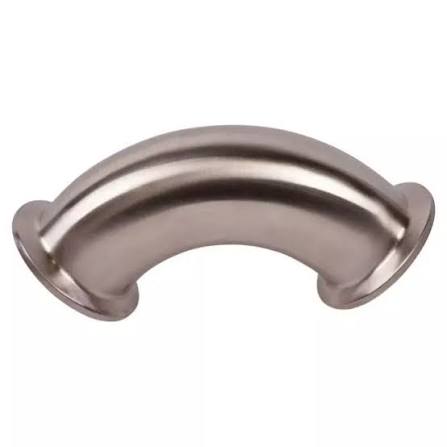
In piping systems, 45-degree elbows and 90-degree elbows are the two most common directional fittings. They differ only in bending angle—can they be used interchangeably?
▶️Although both fall under the category of “elbows,” they have fundamental differences in fluid dynamic performance, installation space requirements, and long-term operation and maintenance costs.
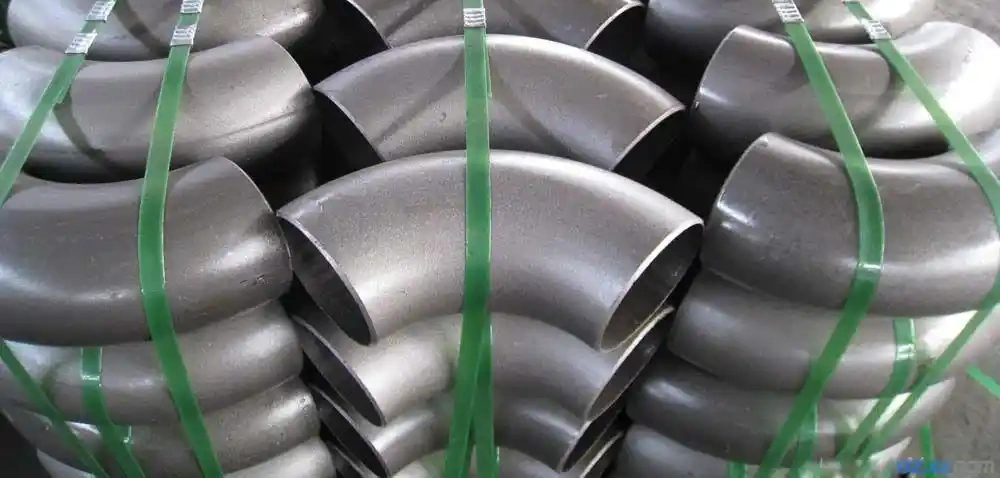
I. Geometric Parameters and Flow Resistance
▶️From a geometric perspective, the centerline bend radius of a 45-degree elbow (typically 1.5 times the nominal diameter, i.e., R=1.5D) is the same as that of a 90-degree elbow of the same specification; however, the reduced turning angle directly affects the local resistance coefficient (K-value).
▶️According to empirical data in Crane’s Flow of Fluids Technical Manual, under the same pipe diameter (e.g., DN100) and same Reynolds number (Re≈10⁵), the equivalent length of a standard long-radius 90-degree elbow is approximately 30 pipe diameters, while that of a 45-degree elbow is only about 15 pipe diameters.
▶️This means that replacing a 90-degree elbow with a 45-degree elbow can reduce the single-point pressure drop by about 40%–50%. For high-pressure steam or high-viscosity media systems, this difference can significantly affect pump selection and energy consumption budgeting.
II. Installation Space and Piping Layout
✔️A 90-degree elbow achieves a right-angle turn and is suitable for compact layouts within mechanical equipment enclosures, but it generates considerable turbulence and secondary flows. A 45-degree elbow provides a smoother directional change, reducing impact erosion on the pipe wall from the medium.
✔️In actual engineering practice, if site space permits, using two 45-degree elbows in combination (i.e., a “spatial turning” scheme) to replace one 90-degree elbow not only lowers the overall pressure loss but also reduces vibration and noise. However, it should be noted that the combined solution occupies additional axial length; therefore, designers must strike a balance between pipe fitting angles and layout constraints.
III. Application Scenarios and Selection Recommendations
📌Prefer 90-degree elbows when the piping needs to run close to walls, equipment edges, or enter valve connections—90° is the standard choice; moreover, their molds are mature, and procurement costs are generally lower than for non-standard angles.
📌Prefer 45-degree elbows when conveying slurries containing solid particles or crystallizing fluids—the gentler turn reduces deposition and wear. Also, near pump discharges, using 45-degree elbows effectively reduces velocity profile distortion and improves flow efficiency.
IV. Materials and Manufacturing Standards
✅Whether 45-degree or 90-degree elbows, their wall thickness schedules (e.g., Sch 40, Sch 80) and materials (carbon steel A234 WPB, stainless steel 316L, etc.) comply with ASME B16.9, so their pressure‑bearing capacities are identical.
✅However, it is worth noting that the actual internal diameter at the bend exhibits slight ovality; the ovality change in a 90-degree elbow is typically greater than in a 45-degree elbow (up to 3%–5% of the pipe diameter), which can marginally affect subsequent welding or flange alignment.