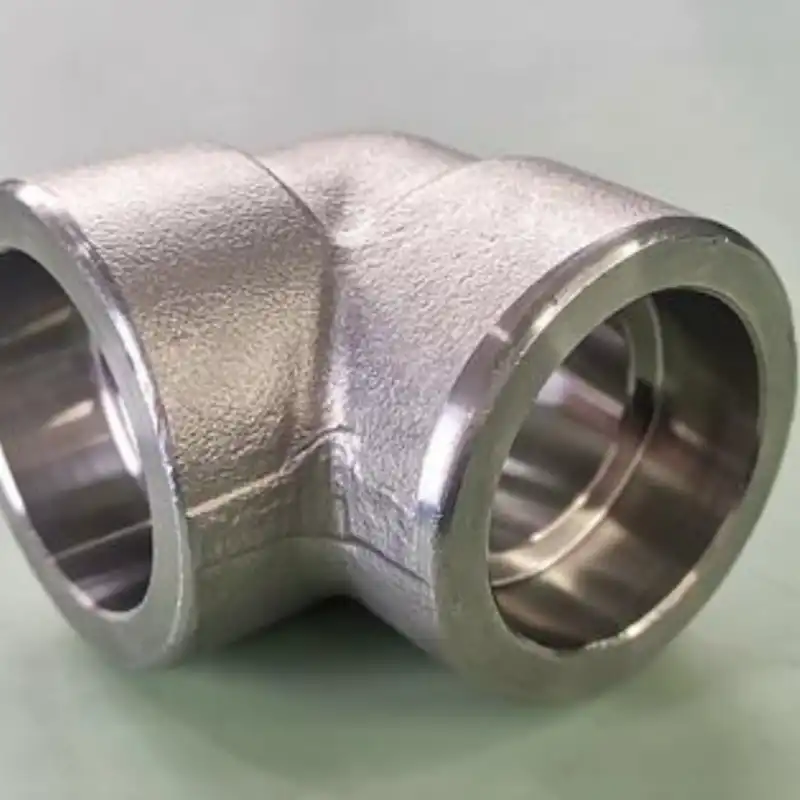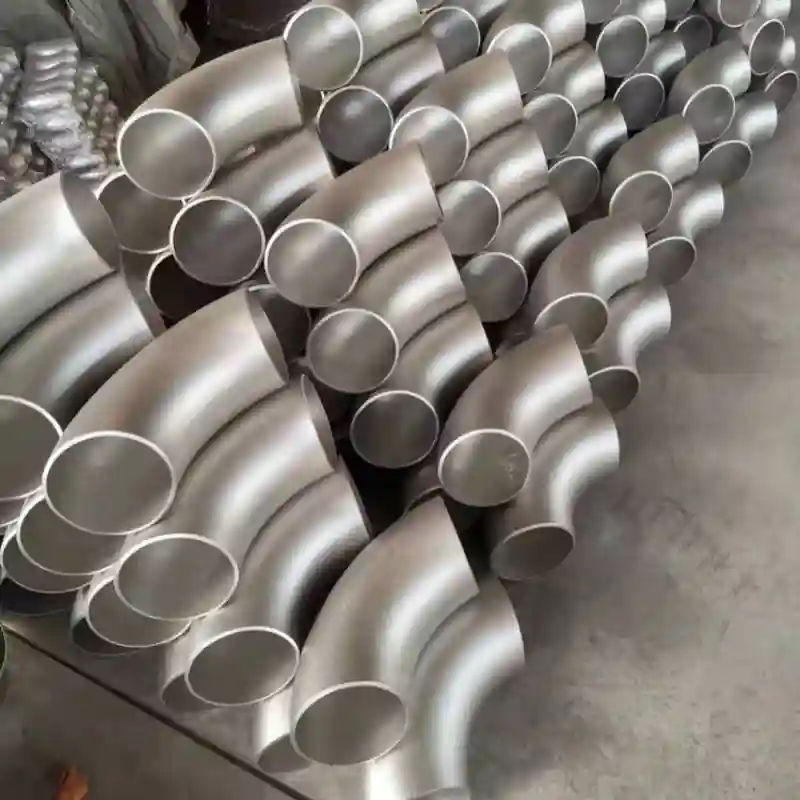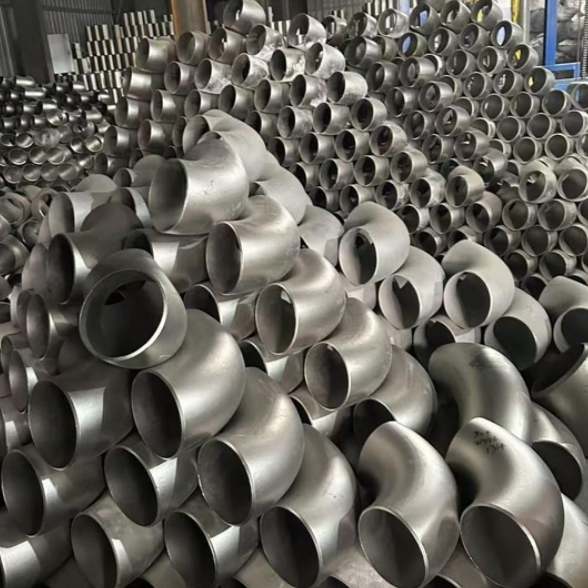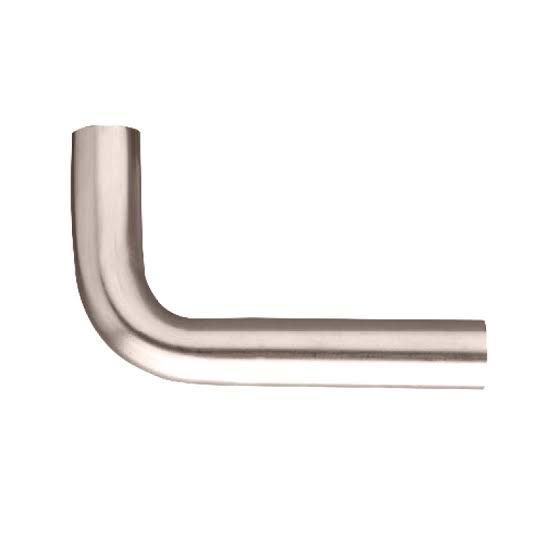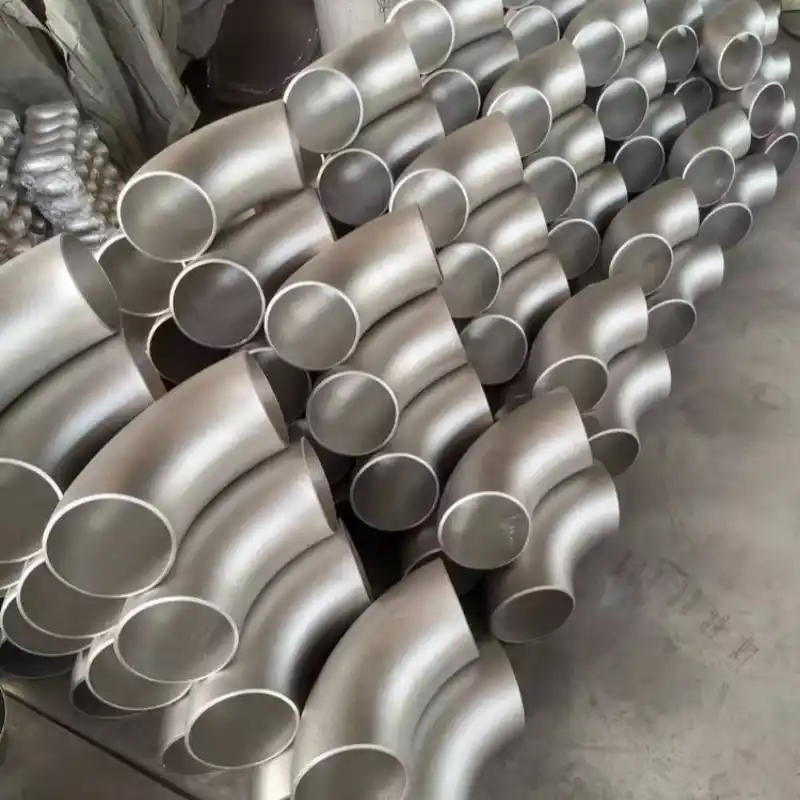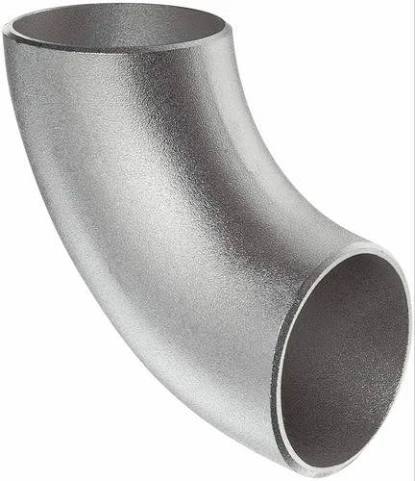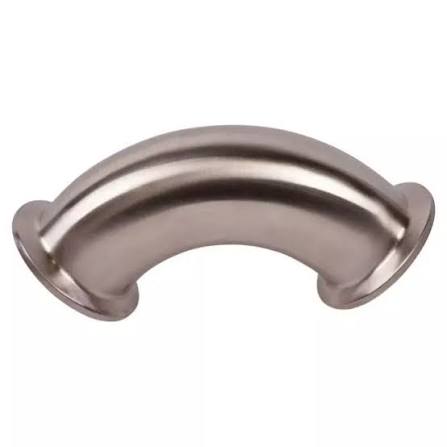
Stainless Steel Sanitary Weld 90 Degree Sweep Elbows – Technical Deep Dive for Hygienic Piping Systems
In piping systems for pharmaceuticals, biotechnology, and high-end food & beverage, the inner surface smoothness, material purity, and weld consistency of any single elbow can directly affect the purity and safety of the final product.
As a technical editor at AIFN Fittings, this article provides a technical analysis of stainless steel sanitary welded 90-degree long radius elbows, covering material science, geometric parameters, welding processes, and industry applications, in compliance with Google’s high-quality content standards.
I. Core Material Selection: 316 Stainless Steel vs. SUS304
The long-term corrosion resistance of an elbow depends on the chemical composition of the base material. For applications requiring frequent contact with acidic media, chloride environments (such as hypochlorous acid in CIP cleaning), or high-temperature steam, 90-degree elbows made of 316 stainless steel are the industry-recognized first choice. According to ASTM A240, 316 stainless steel contains 2.0–3.0% molybdenum, giving it a pitting resistance equivalent number (PRE) greater than 25, far higher than SUS304 (PRE approx. 18). In accelerated corrosion tests (ASTM G48), the critical pitting temperature (CPT) of a 316 elbow in 6% ferric chloride solution is approximately 50°C, while a 304 elbow of the same specification only reaches about 25°C.
For cost-sensitive applications with low corrosivity (e.g., ambient-temperature pure water or neutral food transport), SUS304 90° elbows remain widely applicable. For our common 3-inch 90 degree elbow stainless (3″ 90 degree elbow stainless), wall thickness options include 1.65mm (SCH 10S) or 2.11mm (SCH 40S). According to ASME BPE-2022, the dimensional tolerances for DT (inside diameter) and CL (centerline length) must be controlled within ±0.5mm.
II. Geometric Design: Why Choose “Long Radius” (Sweep) Elbows?
The term “sweep elbows” in the title specifically refers to long radius elbows, where the centerline bend radius (R) equals 1.5 times the nominal diameter (DN), i.e., R=1.5D. Compared to short radius (R=1.0D), the long radius design offers two core advantages:
-
Pressure drop reduction: According to fluid dynamics calculations (modified Hagen–Poiseuille model), under turbulent flow with Reynolds number Re=1×10^5, the equivalent resistance coefficient (K value) for a 90° long radius elbow is approximately 0.2–0.25, while that of a short radius elbow can reach 0.4–0.45. For a 3-inch pipe (DN80) with water flowing at 2 m/s, the pressure loss per long radius elbow is about 35% lower than that of a short radius elbow.
-
Reduced particle retention and erosion: For media containing suspended particles (e.g., fruit juice concentrate, cell culture fluid), the smoother curved inner wall reduces the probability of particles impacting the wall due to centrifugal force, while also minimizing vortex formation. The ASME BPE standard explicitly requires that the inner surface contour transition of sanitary elbows be smooth, without wrinkles or depressions.
III. Key Parameters for Sanitary Welding Process
“Sanitary weld” means that both ends of the elbow are precision-beveled and flat-faced, suitable for automatic orbital welding or manual TIG welding. The following three quantifiable indicators determine weld quality:
-
End wall thickness deviation: Maximum not exceeding ±10% of nominal wall thickness. For example, for an elbow with 2.0mm wall thickness, the minimum thickness at any cross-section must not be less than 1.8mm.
-
Inner surface roughness: After mechanical polishing, Ra (arithmetic mean roughness) should be ≤0.6μm; after electropolishing, Ra ≤0.3μm. This is consistent with the common 3-A standard and EHEDG Doc 8 requirements for food/pharmaceutical industries. Roughness measurement uses a stylus profilometer with a sampling length of 0.8mm and an evaluation length of 4mm.
-
Ferrite content: The δ-ferrite content in the weld heat-affected zone should be controlled within 3–8 FN (ferrite number). Excessively high ferrite reduces resistance to intergranular corrosion. According to ISO 17655, this can be tested by magnetic or metallographic methods.
IV. Dimensions and Tolerance Example: 3-Inch Elbow
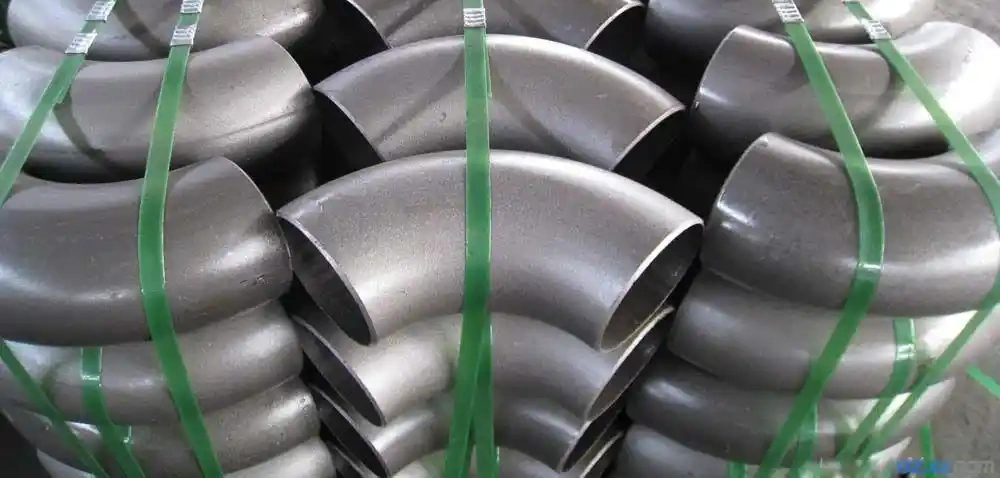
For a 3″ 90 degree elbow stainless conforming to ISO 2037 (hygienic stainless steel pipe standard), the key dimensions are as follows:
-
Nominal diameter (DN): 80 mm
-
Outside diameter (OD): 88.9 mm
-
Center-to-end distance (A): R=1.5D = 133.4 mm (long radius)
-
Theoretical weight (SCH 10S, 316 material): approx. 2.7 kg each
-
Ovality tolerance: Within twice the wall thickness from the end face, the difference between maximum and minimum OD ≤ 0.5% of OD
For a 90° SUS304 elbow (elbow 90° sus304) with the same nominal diameter, the mechanical dimensions are fully interchangeable, with only a slight difference in material density (7.93 vs. 8.00 g/cm³).
V. Industry Journal Citations and Standard Compliance
According to a study in the Journal of Food Engineering, Volume 245 (2019), in a dairy plant CIP cleaning circuit, using a sanitary long radius elbow with R=1.5D reduced the turbulent kinetic energy dissipation rate of the cleaning fluid at the elbow by about 28% compared to an R=1.0D elbow, thereby reducing the deposition rate of protein fouling on the leeward surface. All elbows supplied by AIFN meet:
-
3-A Sanitary Standards (74-07)
-
ASME BPE-2022 (Bioprocessing Equipment section)
-
Pressure Equipment Directive (PED) 2014/68/EU
Each batch comes with a material certificate (EN 10204 3.1) and an inner surface finish inspection record.
VI. Typical Applications in Food & Pharmaceutical Industries
To conclude, it is worth emphasizing the irreplaceable role of such elbows in food & pharmaceutical scenarios:
-
Water for Injection (WFI) loops: 316L material (molybdenum content controlled at 2.5–3.0%) combined with electropolished inner surface (Ra≤0.4μm) meets the biofilm inhibition requirements of USP <1231>.
-
High-purity beer fermenter banks: SUS304 90° long radius elbows with sanitary welding avoid microbial growth risks associated with threaded connections.
-
Bioreactor harvest lines: 3-inch design (flow velocity 1.5–3 m/s) ensures that cell shear stress remains below the critical value (typically ≤150 Pa).
Choosing AIFN Fittings means you get more than just an elbow – you receive calibrated pressure drop data, traceable material lots, and clean piping components that comply with major global regulations.