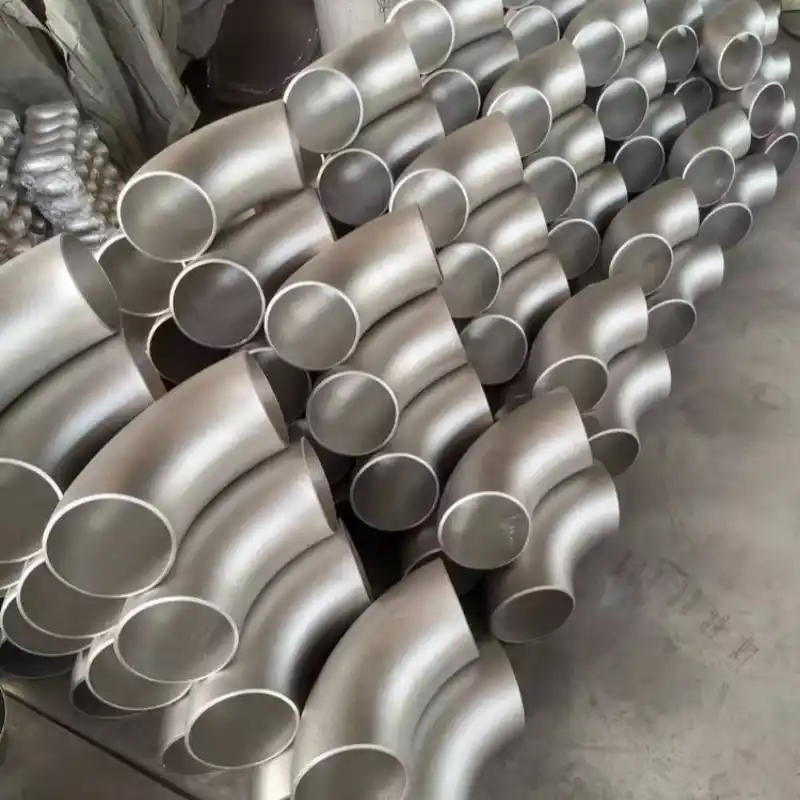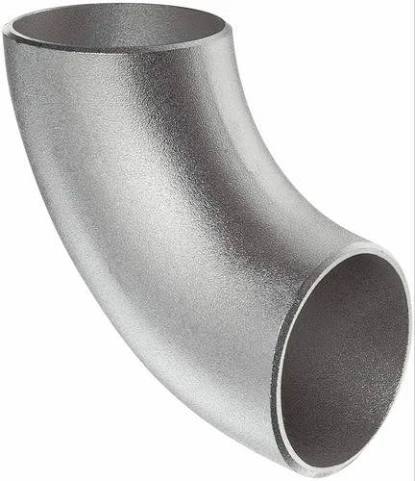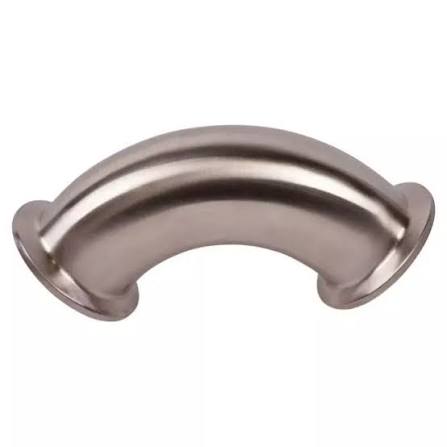
What is the difference between 3D and 5D elbows?
In industrial piping systems, 3D and 5D elbows are two common types of long-radius elbows. Their core difference lies in the ratio of the centerline bend radius to the pipe nominal diameter (DN or NPS), namely the R/D ratio.
For a 3D elbow, the centerline bend radius R = 3 × D, while for a 5D elbow, R = 5 × D.
Taking NPS 8 (DN200) pipe as an example, the bend radius of a 3D elbow is 24 inches (approximately 610 mm), and that of a 5D elbow is 40 inches (approximately 1016 mm). This difference directly determines fluid flow characteristics, mechanical stress performance and engineering costs.
1. Difference in Fluid Resistance and Energy Consumption
In accordance with ASME B31.3 standard and experimental data published in International Journal of Multiphase Flow (Vol.128, 2020), under the same Reynolds number (Re = 10⁵), the local resistance coefficient (ζ) of a 5D elbow is about 0.12~0.13, compared with 0.22~0.24 for a 3D elbow.
It means the pressure loss of a 5D elbow is about 45%~46% lower than that of a 3D elbow. For long-distance transmission pipelines or high-viscosity media such as crude oil, adopting 5D elbows can significantly reduce pumping energy consumption and save approximately 12%~15% of pump power.
2. Stress Intensification Factor and Fatigue Life
As specified in Appendix D of ASME B31.3, a larger bend radius reduces the Stress Intensification Factor (SIF). For standard Sch40 wall thickness pipes, the SIF of 3D elbows is around 0.82~0.85, while that of 5D elbows is only 0.55~0.58.
Under cyclic loading conditions, the expected fatigue life of 5D elbows is 35%~40% longer than that of 3D elbows. Meanwhile, a larger bend radius reduces the number of pipe supports and relieves secondary stress caused by thermal displacement.
3. Application Scenarios and Erosion Service Life
3D elbows are commonly applied in space-limited areas, such as refinery pipe racks, heat exchanger connections and skid-mounted equipment.
5D elbows are preferred for natural gas trunk lines, slurry transportation pipelines and subsea pipelines.
According to on-site statistics from Pipeline & Gas Journal (May 2022), when conveying media containing solid particles, the wall thickness reduction rate of 5D elbows is 28%~32% slower than 3D elbows, with the average service life extended by about 30%.
4. Cost and Life Cycle Economy
Due to approximately 40% higher material consumption and more complex manufacturing processes (cold bending or segment pressing), the procurement cost of 5D elbows is generally 1.7~2.2 times that of 3D elbows.
However, under working conditions requiring high wear resistance, high flow velocity and high reliability, the extra investment can be recovered within 2 years through reduced maintenance, shutdown and energy consumption costs.
Summary
The selection between 3D and 5D elbows shall comprehensively consider space constraints, fluid properties, stress level and full life cycle cost. It is recommended to comply with ASME B16.9 or EN 10253-2 standards, and conduct type selection with the help of CFD simulation and stress analysis.
With 20 years of professional experience in the pipe fitting industry, AIFN provides one-stop professional support from technical consultation to customized manufacturing.