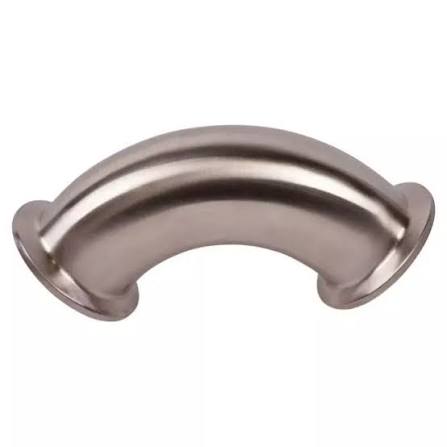
36 Inch Steel Pipe Elbow Fittings: Dimensional Specifications, Technical Parameters, and Selection Key Points
In large-scale industrial pipeline systems, 36-inch (DN900) steel elbow fittings are core components for changing the direction of the medium. 🌈Whether in long-distance heating supply networks, circulating water main lines, or flare venting systems of petrochemical plants, when the pipeline diameter reaches this magnitude, the manufacturing precision, material properties, and structural reliability of the elbow directly determine the service life and operational safety of the entire pipeline.
I. Core Dimensional Standards and Bend Radius Selection
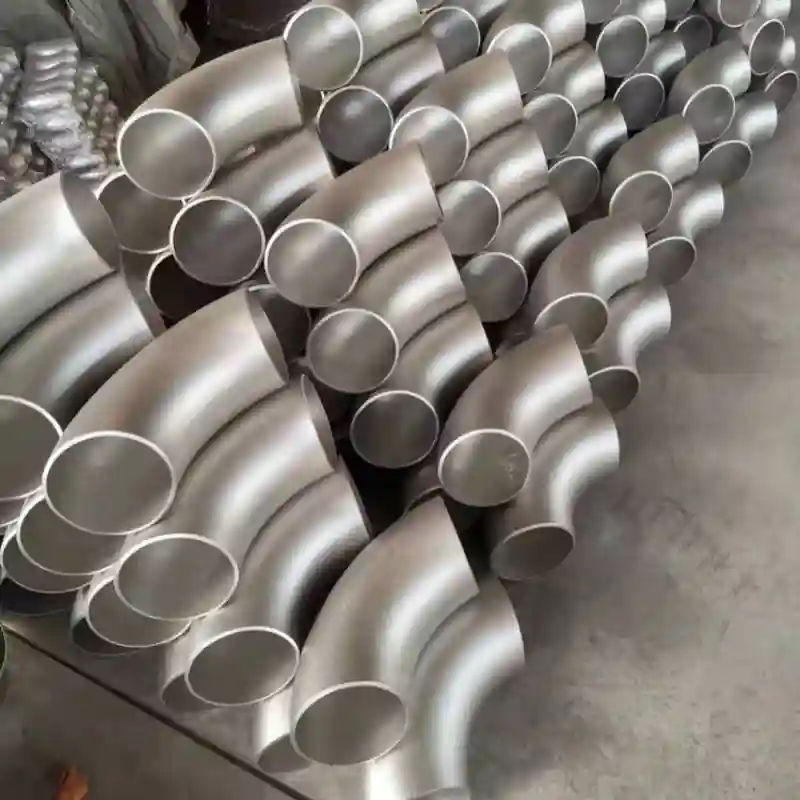
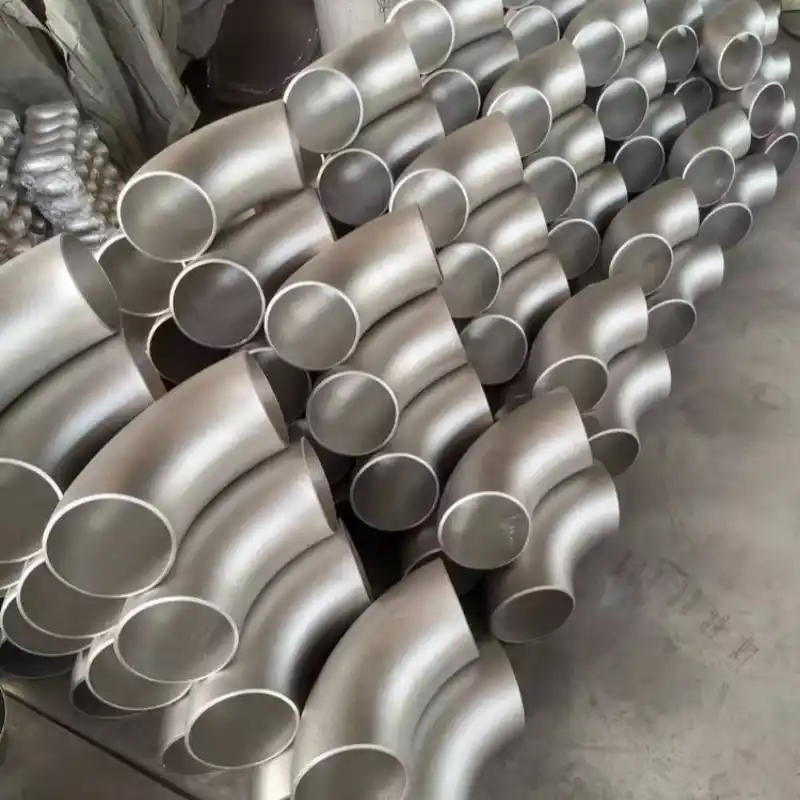
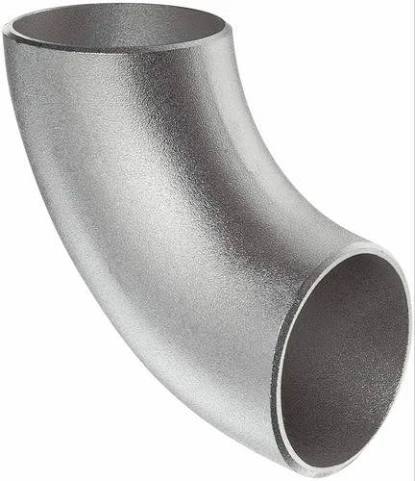
✔️According to the ASME B16.9 standard, the center-to-face dimension of a 36-inch butt-weld elbow depends on the bend radius type. For a Long Radius Elbow, the center-to-face dimension is 1.5 times the nominal diameter, i.e., 36 × 1.5 = 54 inches (approx. 1372 mm); whereas for a Short Radius Elbow, it is 36 inches (approx. 914 mm). In most fluid conveying scenarios, the long radius design is preferred due to its lower pressure loss and reduced erosion rate.
✔️In practical engineering, components like the stainless steel 90 degree square tube elbow mainly appear in air cooler headers or structural ventilation ducts, where the flow cross-section is square and the pressure rating is typically low. In contrast, circular cross-section 90-degree elbows are the standard choice for high-pressure fluid main lines.
II. Dimensional Data and Manufacturing Tolerances for 90-Degree Elbows
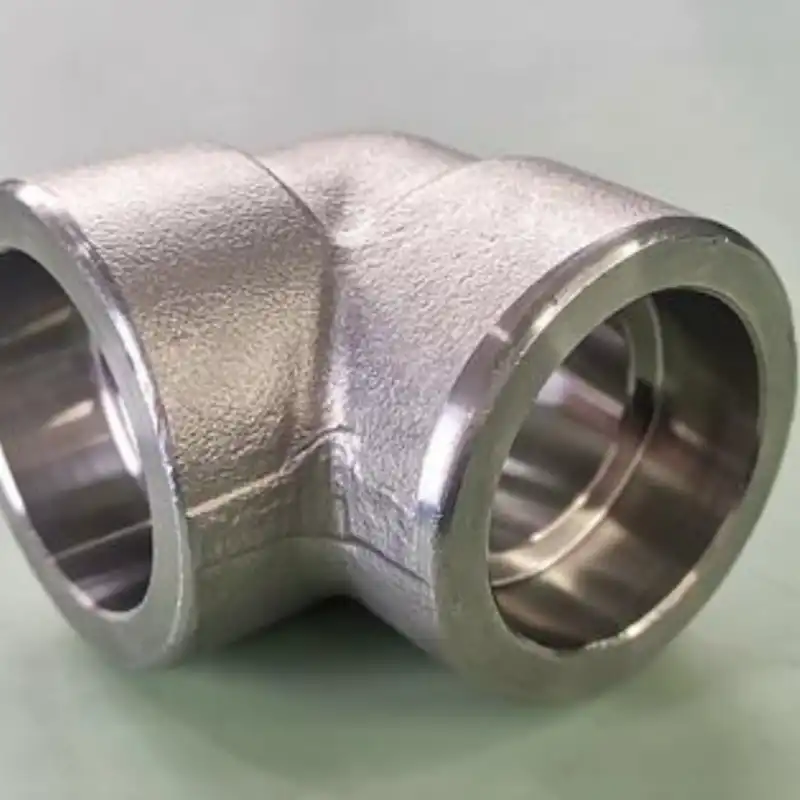
☑️A complete stainless steel pipe elbow dimensions 90 degree parameter table includes not only the center-to-face dimension but also the end outside diameter, wall thickness tolerance, ovality, and end bevel form. Taking a 36-inch long radius 90-degree elbow as an example, ASME B16.9 specifies that the allowable tolerance for the end outside diameter is ±2.38 mm, the wall thickness reduction shall not exceed 12.5% of the nominal wall thickness, and the minimum wall thickness on the intrados side shall not be less than the design wall thickness.
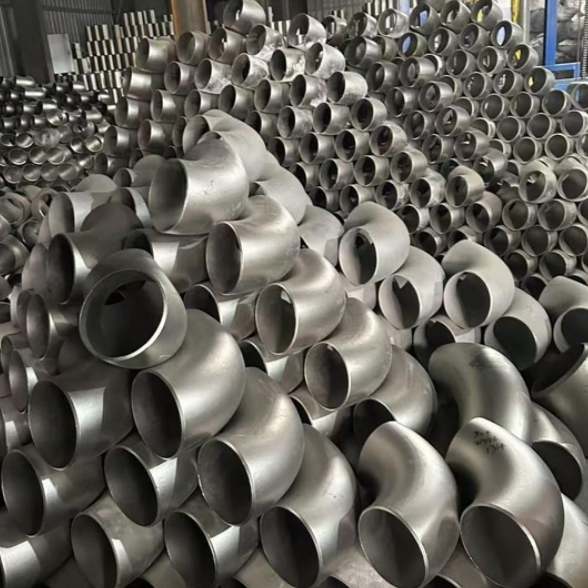
☑️For a stainless steel pipe fitting 90 degree elbow, the manufacturing processes are mainly divided into Hot Push forming and Hot Induction Bending. Hot push forming is suitable for mass production of standard sizes, while hot induction bending can be used for non-standard bend radii or special angles, especially suitable for extra-large diameters like 36 inches.🌈 During the hot working process, the heating temperature (approx. 1050°C for austenitic stainless steel) and cooling rate must be strictly controlled to avoid susceptibility to intergranular corrosion.
☑️It is worth noting that when pipeline design requires reducing erosion on the extrados side of the elbow, engineers typically choose a stainless steel pipe sweeping 90 degree elbow with an extended radius. This “sweeping” elbow can have a bend radius of 3D, 5D, or even higher, significantly reducing turbulence intensity. In slurry pipelines containing solid particles or catalytic cracking slurry oil lines, 5D or 10D sweeping elbows can reduce local wear rates by more than 40%.
III. Elbow Technology for Sanitary and Clean Applications
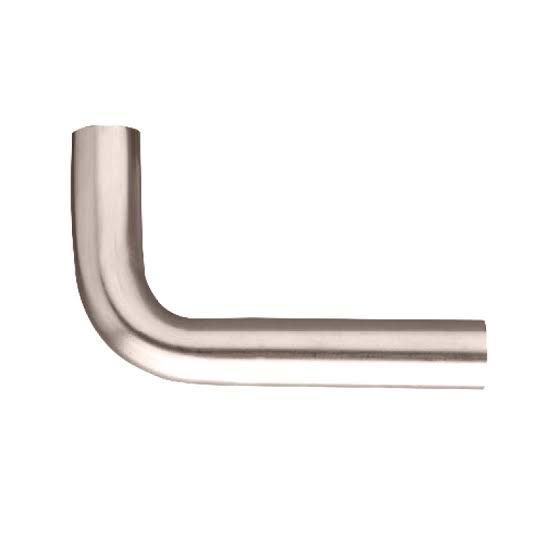
In food, dairy, biopharmaceutical, and electronic-grade high-purity water systems, the internal surface quality of fittings is more critical than pressure-bearing capacity. The stainless steel sanitary 90 degree bend fittings elbow is specifically designed to meet sanitary standards such as ASME BPE, 3A, and EHEDG. Its main features include:
-
Internal surface polishing: Mechanical or electropolishing to Ra ≤ 0.4 µm, with some high-purity processes requiring Ra ≤ 0.25 µm.
-
Dead-leg free design: Long radius (R ≥ 1.5D) or special R=3D bend design ensures that CIP (Clean-In-Place) media can be completely drained without risk of fluid accumulation.
-
End connections: Typically tri-clamp (Tri-Clamp) or butt-weld joints, avoiding thread gaps that could create microbial breeding points.
Although 36-inch ultra-large diameters are not common on single fermenter lines, they still play a critical role in utility main headers within biopharmaceutical industrial parks – for example, in Clean Steam distribution systems, Water for Injection (WFI) circulation loops, and inlet/outlet lines of large buffer preparation tanks. 🌈In these applications, the elbow must pass ferrite content testing, intergranular corrosion testing, and surface residue testing before being put into service.
V. Key Considerations for the Food & Pharmaceutical Industry
In pipeline engineering for the Food & Pharmaceutical industry, in addition to the sanitary requirements mentioned above, the following points require special attention:
-
Material traceability: All stainless steel fittings (including 36-inch sizes) must be supplied with material certificates (EN 10204 3.1 or 3.2) clearly stating chemical composition, mechanical properties, and heat treatment reports.
-
Surface passivation: After welding or processing, the internal surface of the elbow must be acid pickled and passivated to restore a complete chromium-rich oxide film.
-
Microbial challenge testing: During validation, sanitary elbows must pass tests for bacterial endotoxins, particle counts, and biofilm formation tendency.
-
Drainability verification: For large 36-inch sanitary elbows, a 3D or 5D bend radius is typically required, combined with a minimum drain slope of 0.5%, to meet GMP requirements for no residual fluid.
📝AIFN Fittings Company has end-to-end quality control capabilities from raw material re-inspection, hot forming, heat treatment, non-destructive testing, to surface treatment. We can provide global customers with 36-inch and larger carbon steel and stainless steel elbow fittings, including standard LR/SR elbows, sweeping elbows, and customized sanitary elbows. 📞For specific dimensional drawings or pressure-temperature rating tables, please contact our engineering support team.