What Is the Radius of a Pipe Bend? An Authoritative Interpretation
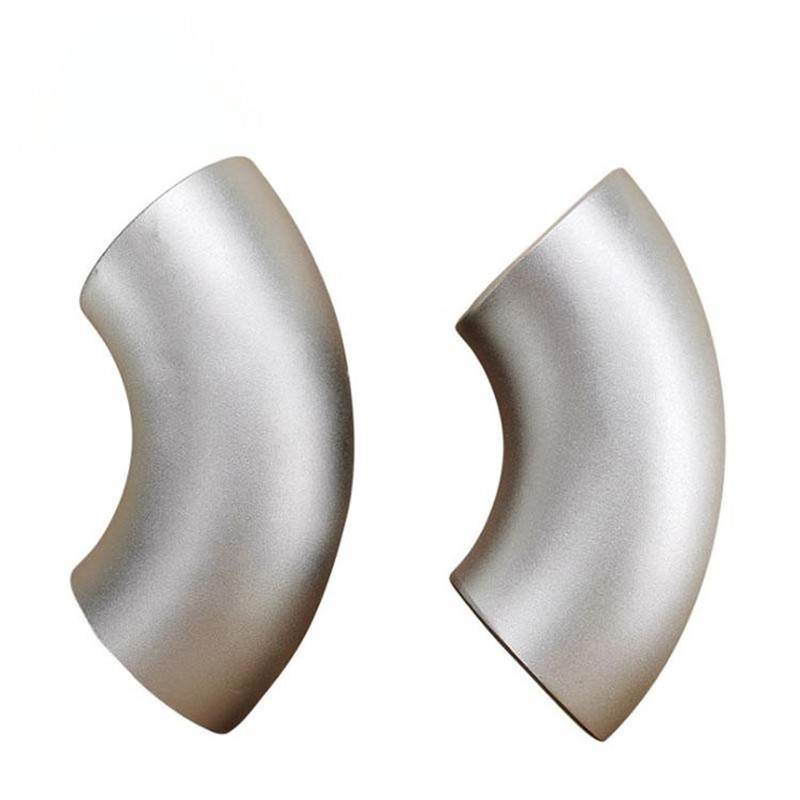
✔️In the design and installation of piping systems, the bend radius is a core geometric parameter that determines fluid efficiency, pipeline service life, and installation costs. Simply put, the bend radius of a pipe refers to the distance from the centerline of the elbow to the center point of the curvature.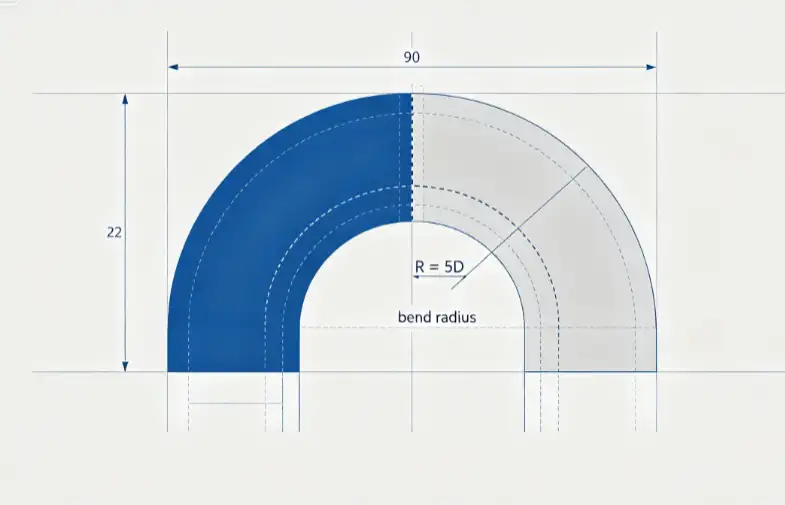
Why Is the Bend Radius Critical?
✔️For professional engineers, selecting the correct bend radius (typically denoted as R) is not merely a matter of spatial layout, but a rigorous subject involving material stress and fluid dynamics. An excessively small bend radius can lead to wall thinning, stress concentration, and increased fluid resistance, while an overly large radius results in material waste and redundant installation space.
How to Interpret Common Elbow Designations?
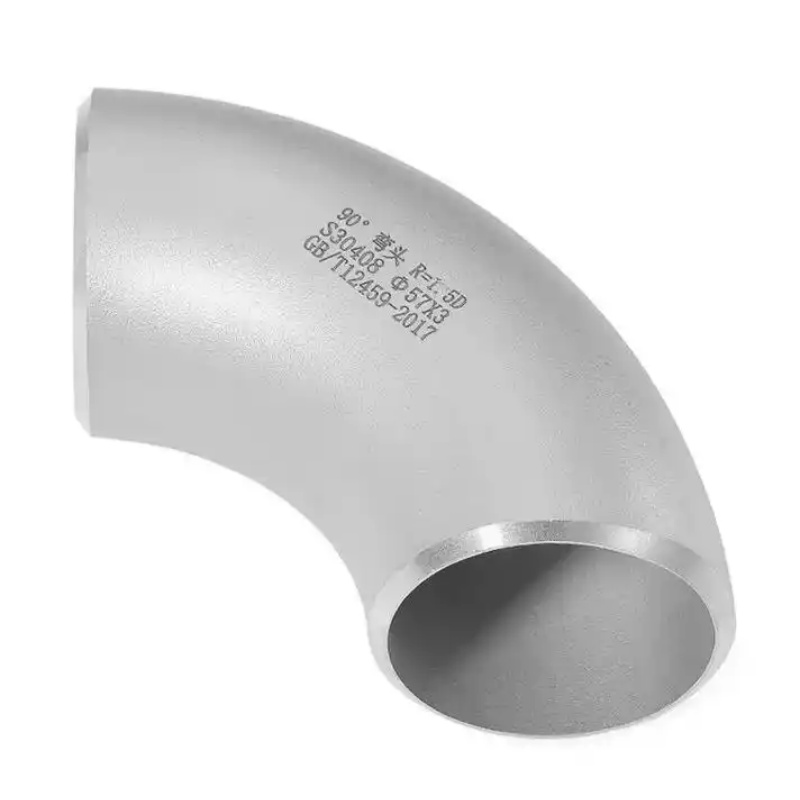
✔️Take the elbow marking R = 5D, which you often encounter, as an example: this indicates that the bend radius of the elbow is 5 times its nominal diameter (D). This type of long-radius elbow is a standard configuration in industrial pipelines. Within the dimensional standards for stainless steel pipe elbows, it effectively balances pressure drop and wear, making it the preferred choice for demanding, high-durability service conditions.
Key Dimensional Parameters and Standards
✔️When consulting stainless steel pipe elbow dimensions, you will find that dimension tables typically strictly adhere to international specifications such as ASME B16.9 or ASME B16.11. These standards rigorously define the center-to-end distance (i.e., the bend radius), center-to-center distance, and end wall thickness.
✔️For high-pressure or high-temperature environments requiring field welding, we must refer to stainless steel weld elbow dimensions. The radius accuracy of butt-weld elbows directly determines the fit-up quality of the weld bevel, which in turn affects the pressure-bearing capacity of the entire pipeline. For example, for a common schedule 40 stainless steel elbow, its standard radius ensures that its wall thickness series perfectly matches the pipe material, thereby guaranteeing consistent pressure-bearing performance throughout the piping system.
Selection Recommendations Based on Radius
☑️In actual procurement, be sure to confirm whether your design drawings specify long radius (R = 1.5D) or short radius (R = 1.0D). Although both can fulfill connection requirements, long-radius elbows (such as R=5D or R=1.5D) are the preferred choice for most severe service conditions due to their superior flow characteristics and lower erosion-corrosion rates.
Choose AIFN – we not only supply various elbows that meet international standards, but also provide you with professional technical support for selection, ensuring that every bend radius is precisely matched to your application scenario.