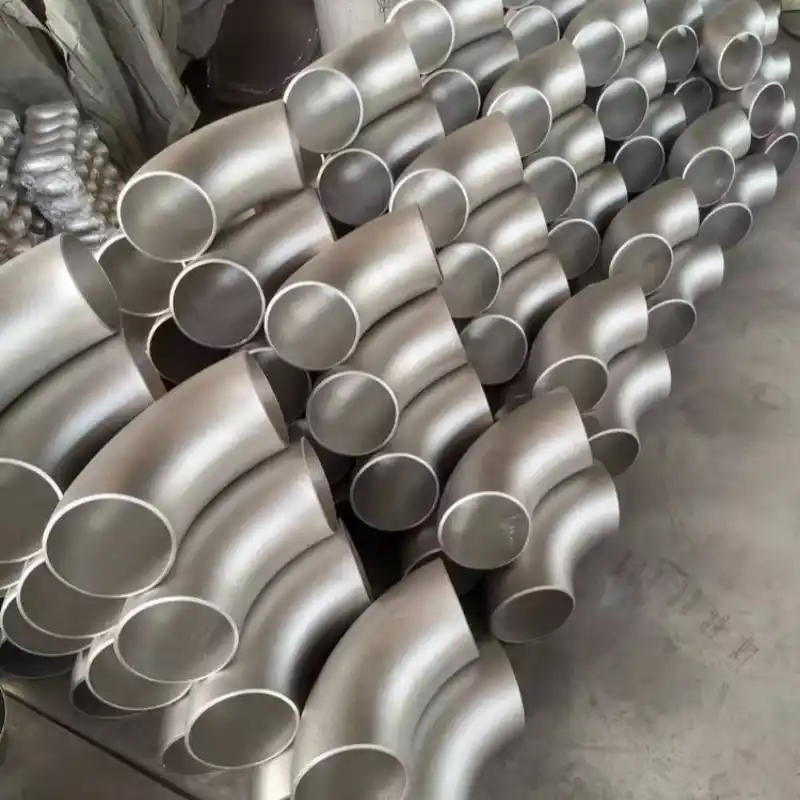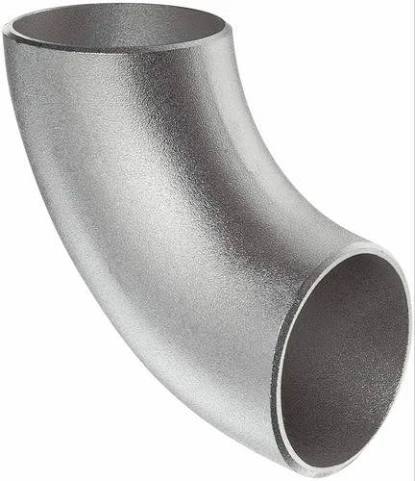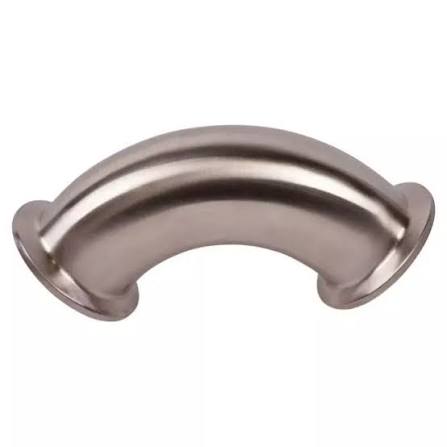
Full Analysis of Stainless Steel 90 Degree Elbow Price: How Do Material, Specification, and Manufacturing Process Affect Cost?
Even for the same “stainless steel 90 degree elbow”, price quotes from different suppliers can vary by several times. Why does this happen? What are the core variables affecting stainless steel 90 degree elbow price?
This article breaks down key factors such as material grade, manufacturing process, bending radius, and wall thickness standards, helping you make smarter, more cost-effective procurement decisions.
1. Material Grade: 304 vs 316 – Where Does the Cost Difference Come From?
The price of a stainless steel elbow is primarily determined by the raw material grade. The two most commonly used austenitic stainless steels are 304 and 316.
304 stainless steel (UNS S30400) contains 18% chromium and 8% nickel, offering good corrosion resistance and workability. It is suitable for general industrial water, oil, gas, and food-grade pipelines.
316 stainless steel (UNS S31600) adds 2-3% molybdenum, significantly improving resistance to pitting corrosion from chlorides and aggressive chemicals. It is widely used in marine engineering, chemical, and pharmaceutical industries.
Based on current international stainless steel slab prices (2025 reference): 304 cold-rolled coil is about 2,400/ton,while316reaches2,400/ton,while316reaches3,200/ton – a price difference of approximately 30%. This difference directly translates to the finished elbow cost. When you choose a 304 stainless steel elbow, the price is relatively economical. However, if your application requires resistance to seawater or strong corrosive media, you must choose 316, with a unit price typically 20%~40% higher. Additionally, nickel content fluctuations in stainless steel 90 degree elbow also affect pricing – every $1,000/ton increase in nickel raises elbow costs by about 5-8%.
2. Size and Specification: Pricing Logic for 4″ vs 1/2″
The nominal pipe size (NPS) is another critical factor affecting unit price. Taking common butt-weld elbows as an example:
-
Small bore (NPS 1/2″ ~ 2″) – Typically formed by cold forming or hot push processes, with high material utilization and low unit cost. For example, a 1/2 inch stainless steel elbow (Sch40, 304 material) has a factory ex-factory price of about 2.5–2.5–4.0.
-
Medium bore (NPS 3″ ~ 8″) – Uses seamless steel tubes or welded plate blanks, increasing processing difficulty and leading to non-linear price increases. A typical 4 inch stainless steel 90 degree elbow (Sch40, 304) falls in the range of 18–18–30.
-
Large bore (NPS 10″ and above) – Often manufactured from welded plate (two half-shells welded together). Material waste is low, but welding labor costs are high, and the unit price can be dozens of times that of small-bore elbows.
Under the same bore size, wall thickness schedule also greatly affects price. From Sch10 (thin) to Sch160 (extra thick), each increase in schedule adds about 15%~25% in raw material weight, with a corresponding price increase of 10%~20%. Therefore, always specify both size and wall thickness when requesting quotes to avoid deviations due to vague specifications.
3. Bending Radius: Long Radius vs Short Radius – Balancing Performance and Price
Per ASME B16.9, 90 degree elbows are classified as Long Radius (LR) and Short Radius (SR).
-
Long radius elbows have a centerline bend radius of 1.5 times the nominal diameter (R=1.5D). They offer low fluid resistance and low erosion/corrosion wear, suitable for high-velocity media or pipelines containing solid particles.
-
Short radius elbows have a radius of 1.0D (R=1D). They are compact but create higher local pressure drop, typically used only in space-constrained equipment connections.
From a manufacturing cost perspective, a long radius stainless steel elbow requires longer pipe blanks and larger forming dies, consuming about 20% more material than a short radius elbow, hence a 15%~25% higher price. However, in long-distance pipelines or high-pressure systems, using LR elbows reduces pumping energy consumption, and the long-term operational savings far outweigh the initial purchase difference. For example, a DN100 pipeline transporting 100,000 tons of fluid per year can save about 300–300–500 in electricity annually by using LR elbows instead of SR elbows.
4. Manufacturing Process: Seamless vs Welded – Balancing Quality and Cost
The forming process for stainless steel 90 degree elbows mainly falls into two categories: seamless and welded.
-
Seamless elbows – Formed entirely from seamless steel tubes via hot push or cold drawing. No weld seam, uniform mechanical properties, high pressure resistance, suitable for high-temperature, high-pressure, and corrosive media (e.g., steam, chemical materials). The process requires strict billet quality and heating control, making the price typically 30%~50% higher than welded elbows.
-
Welded elbows – Made by rolling stainless steel plate into a cylinder, welding, then press-forming. The weld seam must undergo 100% radiography or penetrant testing. When qualified, they meet most conventional service conditions. Their advantage lies in lower cost, especially for large diameters (≥DN200) where material utilization is high. The unit price is only 60%~70% of seamless elbows.
Example for DN100 (4″) Sch40 elbow: A 304 stainless steel elbow seamless version has a market reference price of about 28,whileaweldedversionisonly28,whileaweldedversionisonly15~$18. However, welded elbows are not recommended for extremely low temperatures (-196°C and below) or high cyclic loading conditions, as the fatigue life of the weld zone is slightly lower than that of the base metal.
5. Standards, Certification, and Additional Treatments: The Hidden Costs
Elbows that comply with international standards (e.g., ASME B16.9, ASTM A403, EN 10253) must undergo dimensional inspection, mechanical testing, and material re-verification before shipment. These processes add quality control costs. Additionally, surface treatment methods affect final pricing:
-
Pickling and passivation – Removes scale and iron-rich layers, improving corrosion resistance – adds 80–80–120 per ton.
-
Mechanical polishing – Achieves mirror finish (Ra ≤ 0.4μm) for pharmaceutical or semiconductor industries – processing cost may exceed the material itself.
-
Sandblasting/coating – For anti-corrosion or fire protection – priced according to coating type.
When purchasing, confirm whether the supplier provides material certificates (EN 10204 3.1) and third-party inspection reports. A compliant stainless steel 90 degree elbow from a reputable manufacturer may have a higher unit price, but the traceable quality assurance avoids production losses due to elbow failure – which are often ten times or more the procurement cost.
6. Purchase Quantity and Cooperation Model: How to Get the Best Price?
Volume discount is a practical factor affecting stainless steel 90 degree elbow price. Typically:
-
Single sample price may be 50%+ higher than standard price (including mold fees and setup costs).
-
Small batch (10–50 pieces) discount of about 5%~10%.
-
Large batch (500+ pieces) or annual framework agreements can reduce prices by 15%~25%.
We recommend that buyers provide a detailed technical specification list (size, wall thickness, material, standard, quantity, delivery date) and request quotes from 2–3 ISO9001-certified factories, comparing processes and quality commitments rather than focusing solely on the lowest quote.
Conclusion
The factors affecting stainless steel 90 degree elbow price are interconnected – from the choice between 304/316 material, to the trade-off between long radius and short radius, and the balance between seamless and welded processes.
As a professional pipe fitting supplier, AIFN recommends determining the service conditions (pressure, temperature, media, flow velocity) at the project design stage and selecting the appropriate elbow rating in accordance with codes such as ASME B31.3. For a precise quotation for your project, please provide your technical data, and our engineering team will match you with the most cost-effective solution.