How to Accurately Locate the Center Point of a 90° Elbow?
In pipeline system installation or maintenance, quickly determining the center position of a 90° elbow (i.e., the intersection of the elbow centerline to the end face) is key to ensuring pipe alignment and welding accuracy. 🌈Whether for carbon steel, stainless steel, or alloy elbows, mastering the correct method helps avoid material waste and rework.
1. Understand the Basic Parameters of Elbow Center
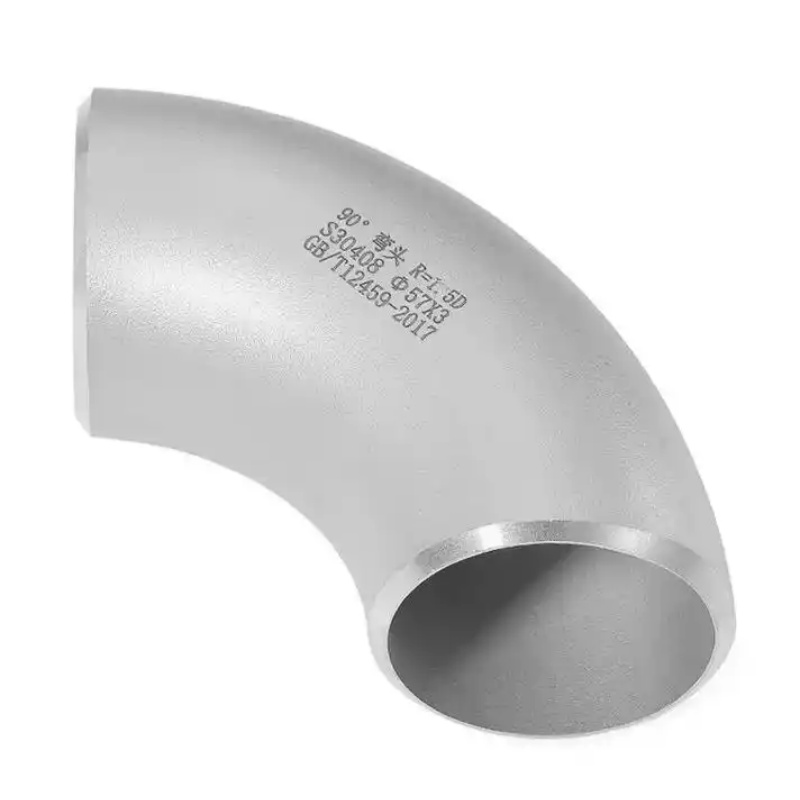
According to the ASME B16.9 standard, the commonly used industrial long radius 90° elbow (Long Radius Elbow) has a center-to-end dimension (Center-to-End Dimension) of 1.5 × nominal pipe size (NPS, in inches) or 1.5 × DN × 25.4 (mm). 🌈For example: an NPS 4-inch long radius elbow has a center height = 4 × 1.5 = 6 inches ≈ 152.4 mm. For a short radius elbow (SR Elbow), the center height equals the nominal diameter (1 × NPS).
2. Practical Steps: Three Locating Methods
Method 1: Formula Calculation Method
✔️ If the elbow dimensions are known, directly use the standard formula for center of elbow pipe fitting:
Center-to-end distance = radius (R)
For LR 90° elbow, R = 1.5 × NPS (inches) or 1.5 × DN (mm)
📌Example: For a DN100 (4-inch) elbow, R = 152.4 mm. Measure the distance R along the axis from the end face, and the marked point is the projection of the elbow center onto the axis.
Method 2: Chord Length Measurement Method (suitable for on-site unlabeled elbows)
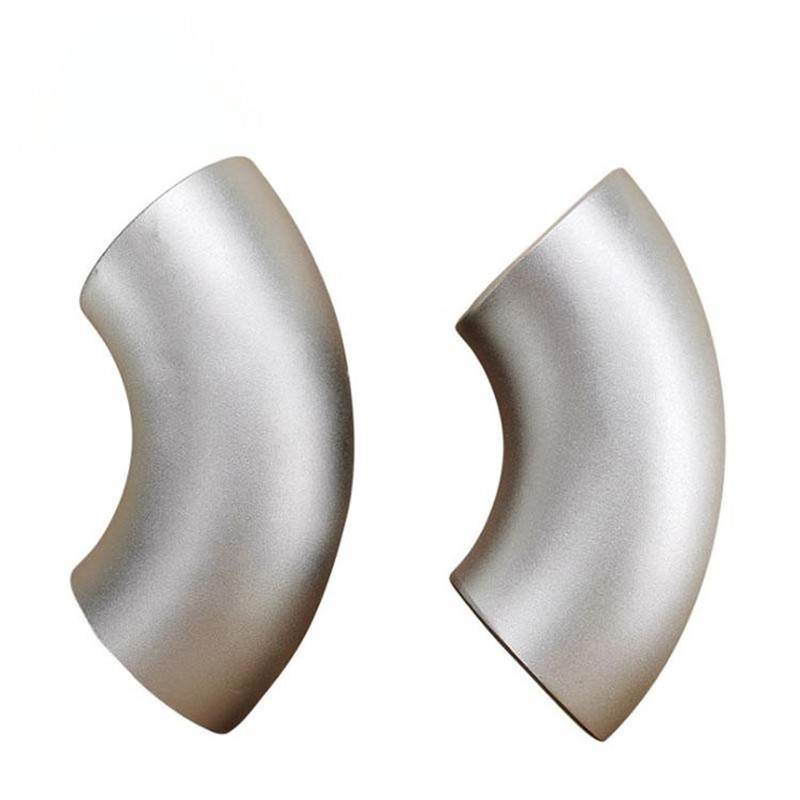
✔️Place the elbow with its outer arc facing upward, and use a ruler to measure the straight-line distance between the outer edges of the two end faces (chord length L). For a 90° elbow, the relationship between chord length L and center radius R is:
L = R × √2 ≈ 1.414 × R
✔️Therefore, R = L / 1.414. After measuring the chord length, substitute into the formula to get R, then extend R distance from the end face into the pipe to obtain the center. This 90 degree elbow center formula is especially suitable for old pipe fittings or those with missing nameplates.
Method 3: Horizontal Platform Auxiliary Method
Place one end of the elbow tightly against a vertical stop plate, and rest the other end flat on a horizontal platform. Measure the horizontal distance from the end face to the stop plate (i.e., the offset of the end face center), and combine with the elbow outer diameter to back-calculate the radius. Using a vernier caliper with 0.5 mm precision or a laser rangefinder, the error can be controlled within ±1 mm.
3. Verification and Precautions
✅When actually measuring the elbow center radius measurement, it is recommended to repeat the measurement at least three times and take the average. If the elbow has ovality, measure both the major and minor axes and calculate separately. For high-pressure conditions (Class 3000 and above) for socket weld elbows, the deviation of the center position must not exceed 1 mm, otherwise stress concentration may occur.
✅By mastering the above methods, you can efficiently locate the center of any 90° elbow. Remember: accurate center finding relies not only on formulas but also on rigorous on-site verification – this is the essence of a pipeline engineer’s experience.