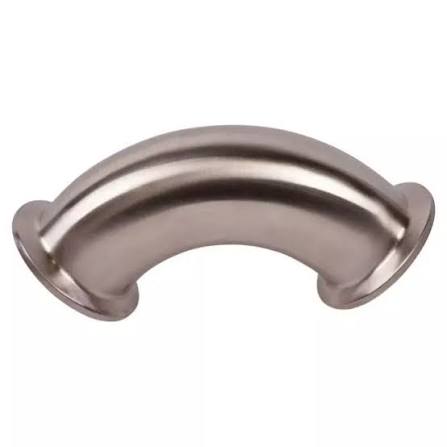
In low-pressure fluid transmission and lightweight structural projects, Schedule 10 (SCH 10) stainless steel pipe is a common choice for engineers due to its good cost-effectiveness and moderate pressure-bearing capacity. At the same time, let purchasers and design newcomers know that Schedule 10 is not a fixed wall thickness value.
The wall thickness of Schedule 10 (in millimeters) increases progressively with the nominal pipe size (NPS).
Core Standard Basis
✔️To accurately obtain SCH 10 wall thickness data, you must refer to the industry foundation standards issued by ASME (American Society of Mechanical Engineers) – ASME B36.10 (for carbon steel and alloy steel) and ASME B36.19 (for stainless steel). These standards define the minimum wall thickness requirements for different nominal diameters to ensure structural integrity of the pipe under corresponding pressure ratings.
Key Dimensional Data (in millimeters)
✔️To help you select precisely, we have compiled the core physical parameters for SCH 10 pipes in the common size range (NPS 1/2 to NPS 12) according to international standards. Note that the outside diameters and wall thicknesses below are nominal values; actual project acceptance should refer to standard tolerances:
| Nominal Size (NPS) | Outside Diameter (mm) | Wall Thickness (mm) | Theoretical Weight (kg/m) |
|---|---|---|---|
| 1/2 inch | 21.34 | 2.11 | 1.00 |
| 3/4 inch | 26.67 | 2.11 | 1.28 |
| 1 inch | 33.40 | 2.77 | 2.09 |
| 1¼ inch | 42.16 | 2.77 | 2.69 |
| 1½ inch | 48.26 | 2.77 | 3.11 |
| 2 inch | 60.33 | 2.77 | 3.93 |
| 2½ inch | 73.03 | 3.05 | 5.26 |
| 3 inch | 88.90 | 3.05 | 6.45 |
| 3½ inch | 101.60 | 3.05 | 7.41 |
| 4 inch | 114.30 | 3.05 | 8.36 |
| 5 inch | 141.30 | 3.40 | 11.57 |
| 6 inch | 168.28 | 3.40 | 13.84 |
| 8 inch | 219.08 | 3.76 | 19.96 |
| 10 inch | 273.05 | 4.19 | 27.78 |
| 12 inch | 323.85 | 4.57 | 36.00 |
(Note: The above data are calculated based on carbon steel density of 7850 kg/m³. For stainless steel, weight varies slightly, but wall thickness dimensions are consistent with the standard.)
Special Note: The “S” Suffix
✔️For stainless steel materials (e.g., 304/316L), the standard often designates them as Schedule 10S. In the size range of NPS 1/8 to NPS 12, the wall thickness of 10S is exactly the same as that of 10. However, for large diameters (NPS 14 and above), the two standards diverge; be sure to verify the material certificate when selecting.
Engineering Selection Logic: Why Not Choose Heavier SCH 40?
✅Understanding wall thickness essentially means matching it to the operating conditions. For the same nominal size, SCH 10 has a larger internal diameter than SCH 40, which means lower fluid resistance and higher flow capacity.
✅At the same time, its weight per unit length is only 40%~50% of that of SCH 40, significantly reducing support loads and lifting costs. Therefore, in non-corrosive low-pressure scenarios (such as HVAC chilled water, fire sprinkler branch lines), SCH 10 is an ideal solution that balances safety margins and project economy.
AIFN Professional Tip
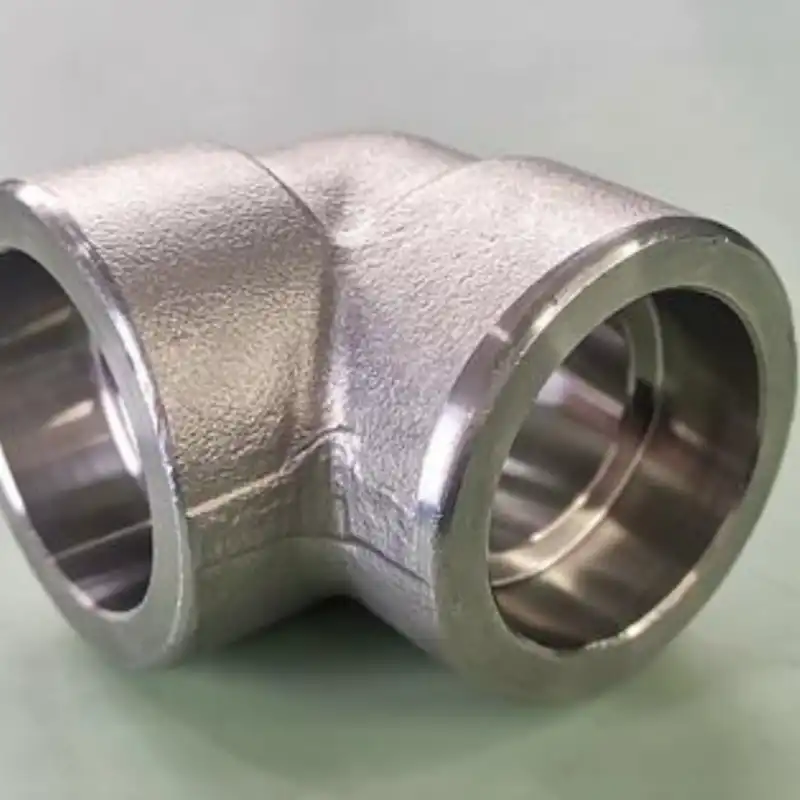
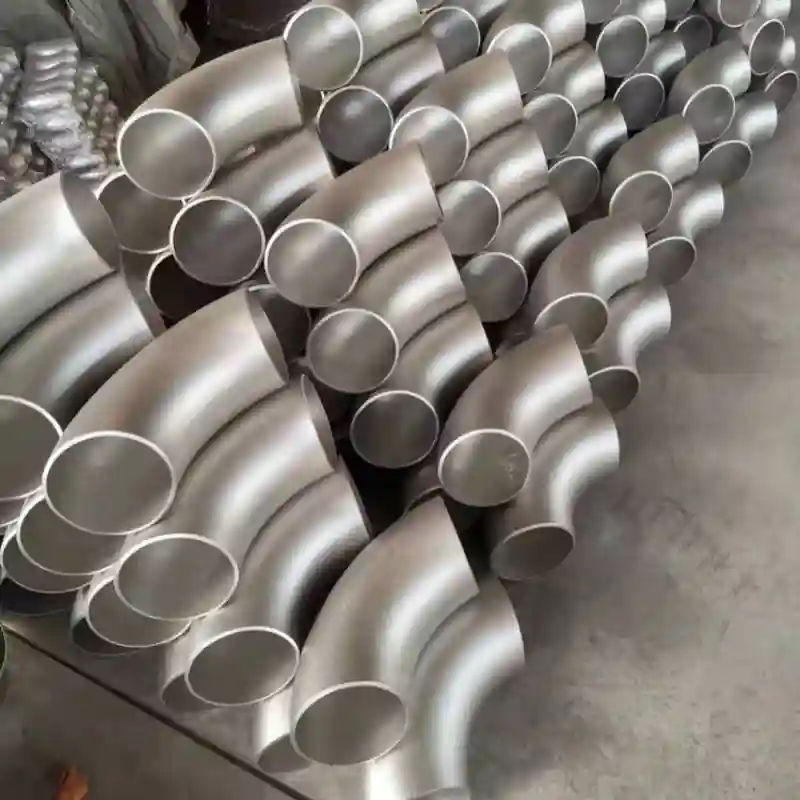
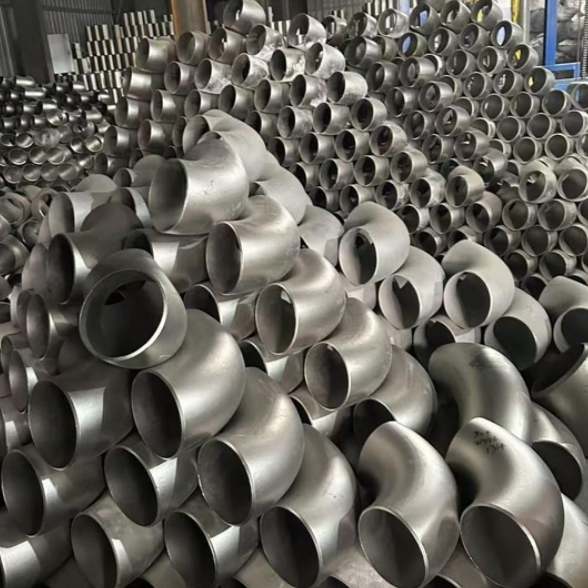
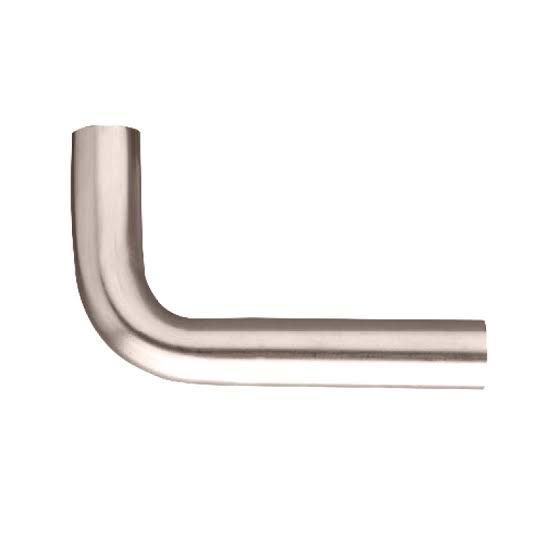
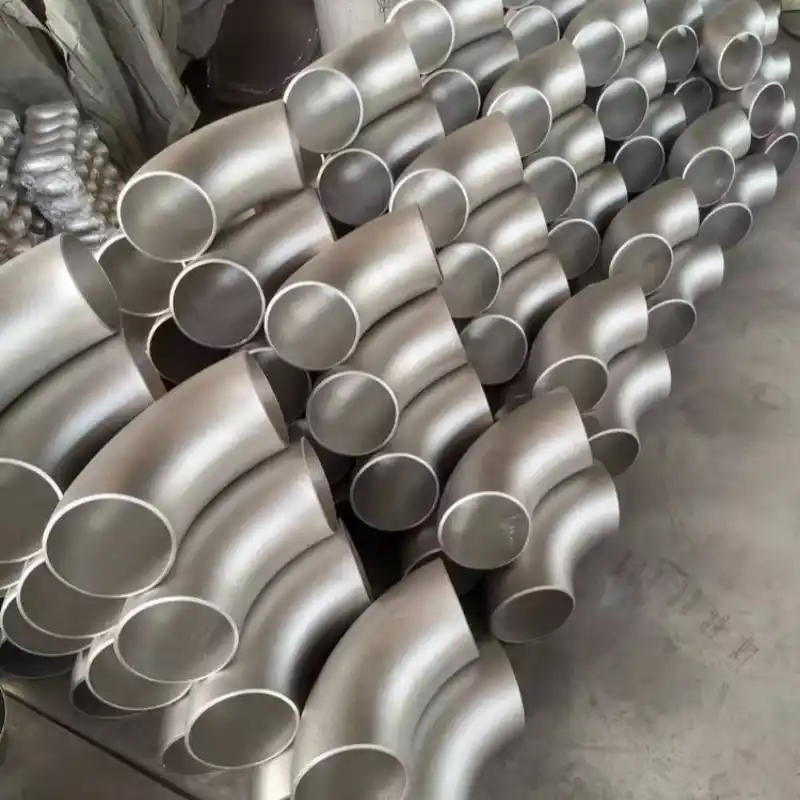
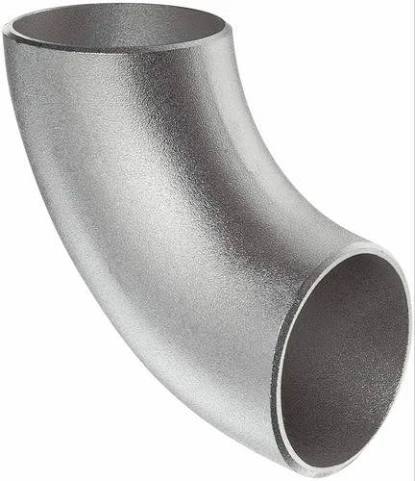
✅As a fitting supplier, we recommend that when purchasing elbows, tees, or reducers, you must clearly specify the wall thickness series (Schedule 10) to the manufacturer, rather than just providing outside diameter and inside diameter. For the same nominal size, wall thickness directly determines the pressure resistance of the fitting and the weld bevel dimensions. Substituting a thinner wall thickness can cause serious safety hazards such as weld stress cracking.
✅Mastering the precise millimeter-level wall thickness of SCH 10 is the first step to ensuring long-term reliable operation of your piping system.
📌For customized elbow fitting solutions with specific materials or non-standard sizes, please contact the AIFN technical team for a selection calculation sheet.